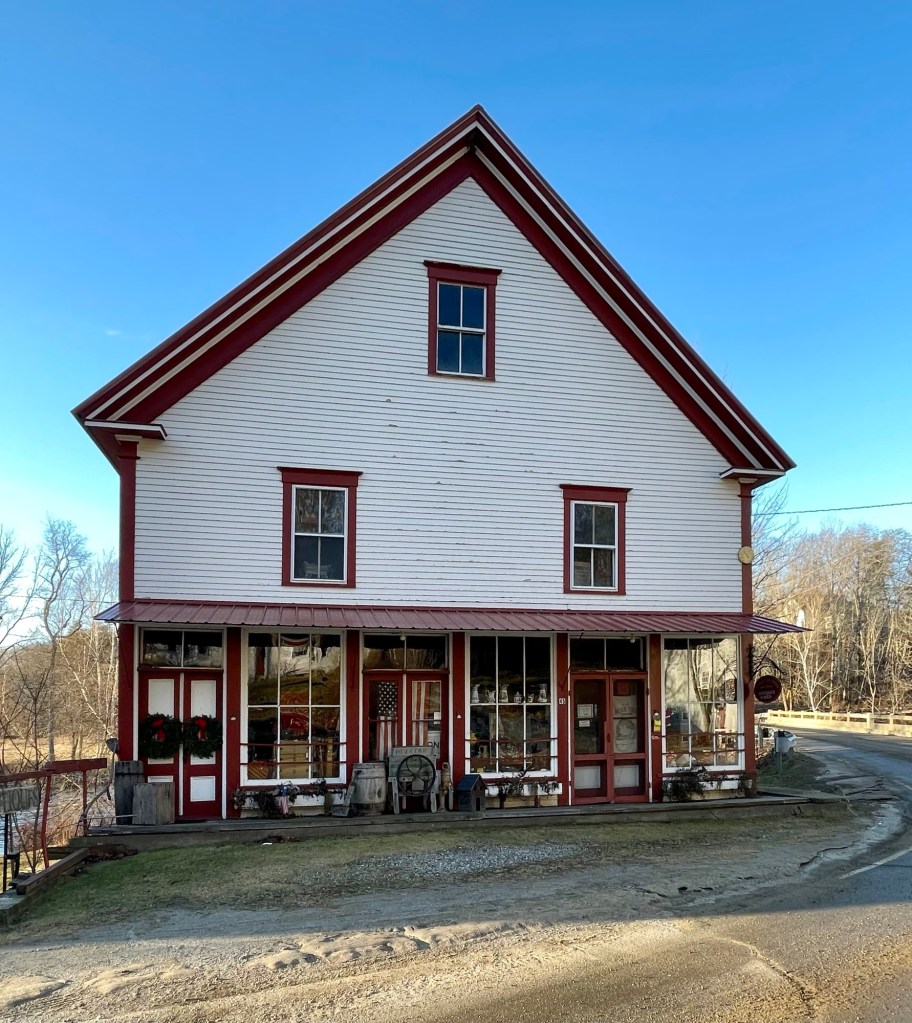
Every village needs a general store, and the store in the Head Tide village of Alna was this vernacular building constructed around 1886. The store was operated for years by John Allen Jewett, who’s ancestors settled in Alna generations before. Jewett sold grain from the building to local farmers and residents and lived across the street in the family home. Vernacular “mom and pop” stores like this are becoming more rare, but they are among the most charming in New England. Be sure to shop local and support small businesses when you can!
David Belding (1785-1860) was born in Swanzey, NH and at 25 years old, moved to Moretown, Vermont in 1810, marrying an eighteen-year-old Florinda Freeman a year later. The couple built a farmhouse on the outskirts of town near a brook. David worked as a farmer and would later officiate as a justice of the peace, the town lister, selectman, and represented the town in the State Legislature for two terms. From his enhanced wealth, David appears to have expanded his farmhouse in the 1820s or 30s with this vernacular Federal and Greek Revival style residence. The Belding Homestead would remain in the family for decades and eventually became the Belding House Bed & Breakfast.
The township of Moretown, Vermont was chartered on June 7, 1763 by Governor Benning Wentworth of New Hampshire. The original charter contained approximately 23,040 acres of land to be divided into about 65 shares of proprietors. Active settlement did not occur until after the Revolutionary War with early buildings constructed on the Winooski River (the northern boundary of the town) and subsequent development along the Mad River (which cuts through the middle of town). Saw and grist mills were built and the town developed as a rural farming and industrial community on the rivers. The Moretown Town Hall was erected in 1835 in the Greek Revival style. It has a pedimented portico with Doric columns that support a large pedimented gable peak in imitation of a Greek temple. Like most buildings in the Mad River Valley, the building is unapologetically Vernacular which means it relies on local materials, local builders, and not on architect-designed finishes. This is an aspect of Vermont architecture that makes the state so charming.
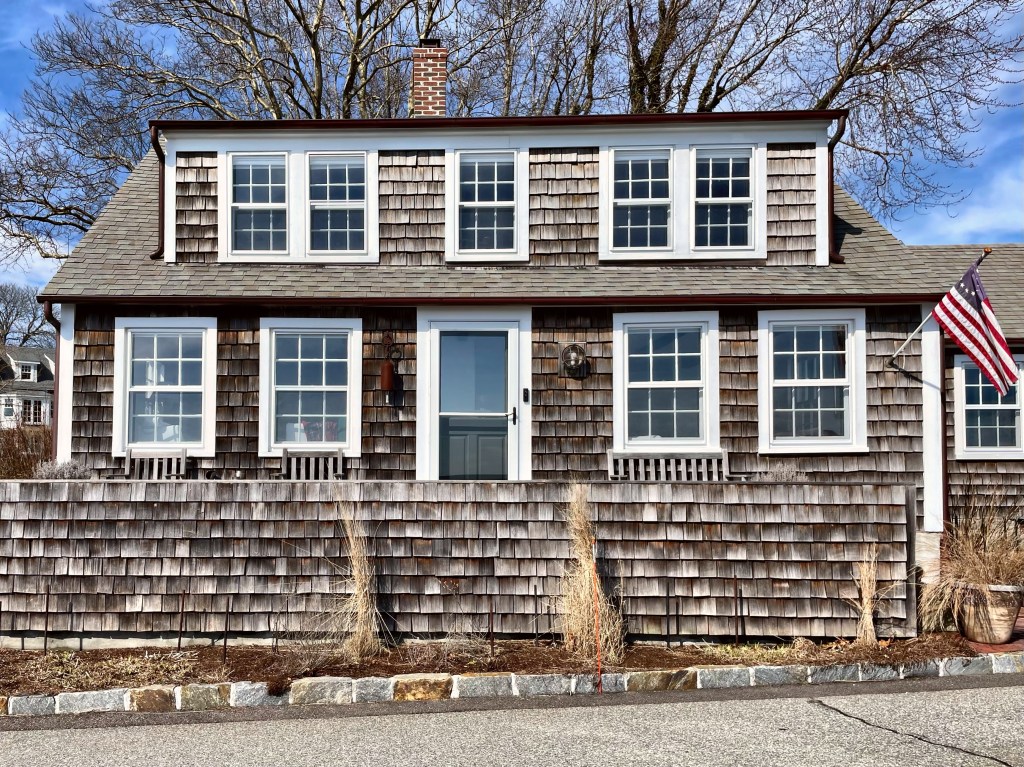
One of the oldest extant homes in the charming fishing village of Noank, CT, is the 1754 Pelatiah Fitch House which has survived nearly 300 years on the waterfront site. The home was built for a Pelatiah Fitch (1722-1803) upon the time when he relocated to Noank to work as a doctor. Dr. Pelatiah Fitch came from a long line of distinguished ancestors, and was born in Norwich, CT. After practicing medicine twenty-eight years in Noank, he removed to Vermont, later moving a to Salem, NY about 1780 where he lived out his final days. This Georgian seaside cottage was built by Dr. Fitch and his new wife Elizabeth when they were in their mid-twenties. After the Fitch Family moved out, the cottage was expanded a few times, notably with the addition of the oversized dormer at the roof.
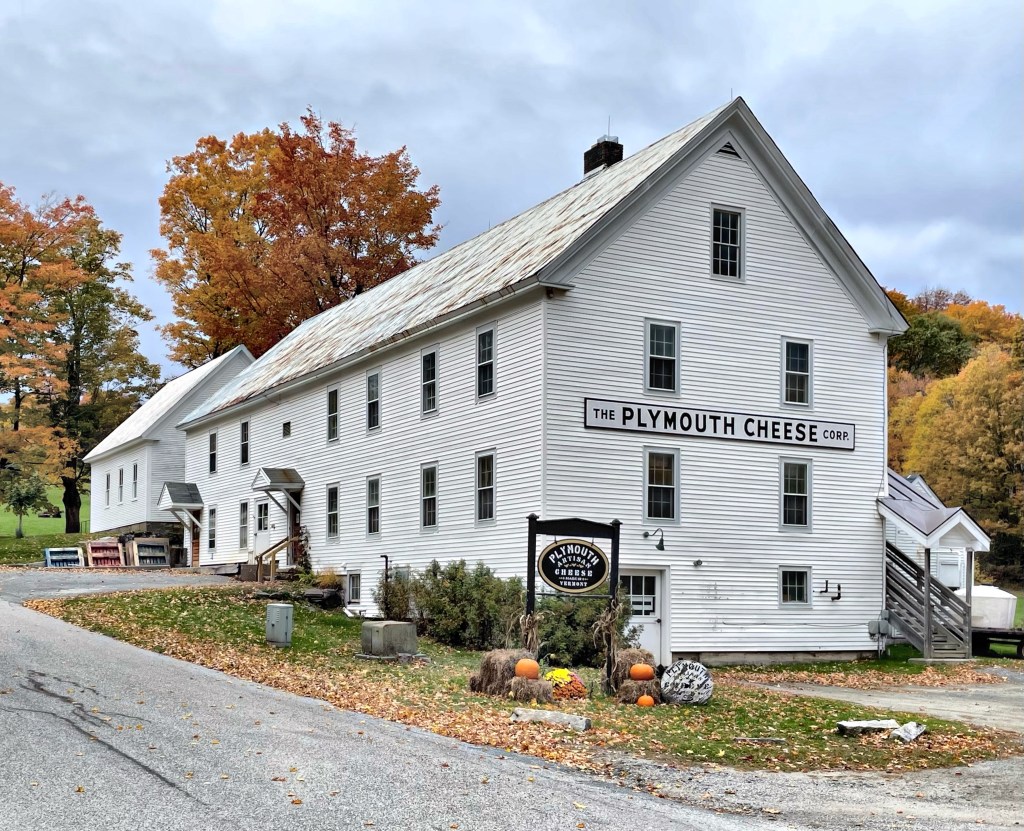
Does it get more Vermont than a cheese factory?! The Coolidge Cheese Factory in Plymouth Notch, Vermont was built in 1890 by Col. John Coolidge (President Calvin Coolidge‘s father), James S. Brown, and two other local farmers so that they would have a convenient market processing milk produced by their farms into cheese. The vernacular building was a short walk from the original Coolidge home and is evocative of many such buildings in rural Vermont. The cheese factory continued to operate until the 1930’s. The factory was renovated in the early 1970s in honor of President Coolidge’s 100th birthday and now produces cheese according to the original formula. The cheese would make a great Christmas gift!
This absolutely charming vernacular Greek Revival home was built in the mid-19th century in East Dorset Village. By the end of the 19th century, it was converted to a cheese factory a model in adaptive reuse and historic preservation. In the late 1930s, as Dorset became a popular summer colony for artists and upper-middle class residents of New York and the Mid-Atlantic, the cheese factory was purchased by artists Norman and Silvia Wright. The artists relocated the small building to the Kent Hill neighborhood of town, restoring the home and adding wings onto it. I also love the chocolate color paint!
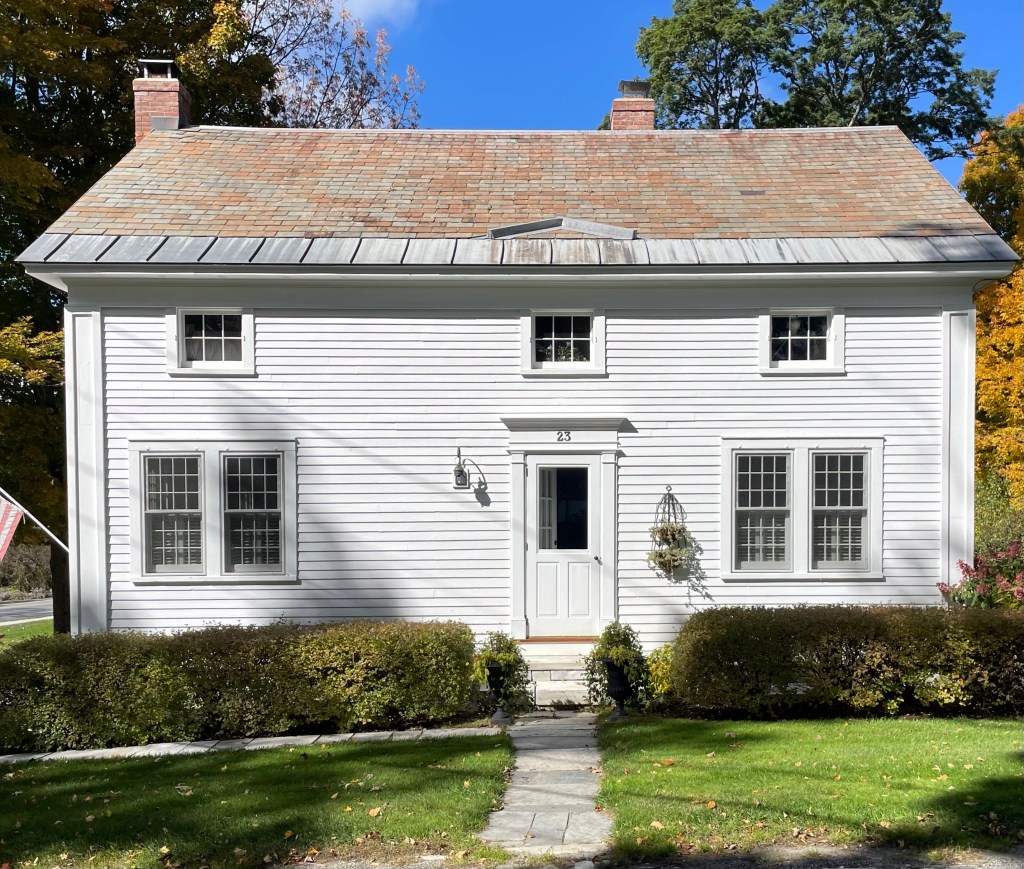
This charming cottage in Dorset is one of four houses in the village which were moved here by Charles Wade in the 1920s and ‘30s. Wade was born in Dorset and saw declining population with the marble industry failing. He sought to re-invigorate the town by advertising its natural beauty and brought in homes and buildings from nearby to fill the “missing teeth” (including the building that presently houses the Dorset Historical Society). Assembled from parts of various Enfield, Massachusetts buildings moved to Dorset this 1½-story, wood-framed, clapboard house stands on a marble ashlar foundation and is said to have been built by Wade for his daughter, Laura Wade.
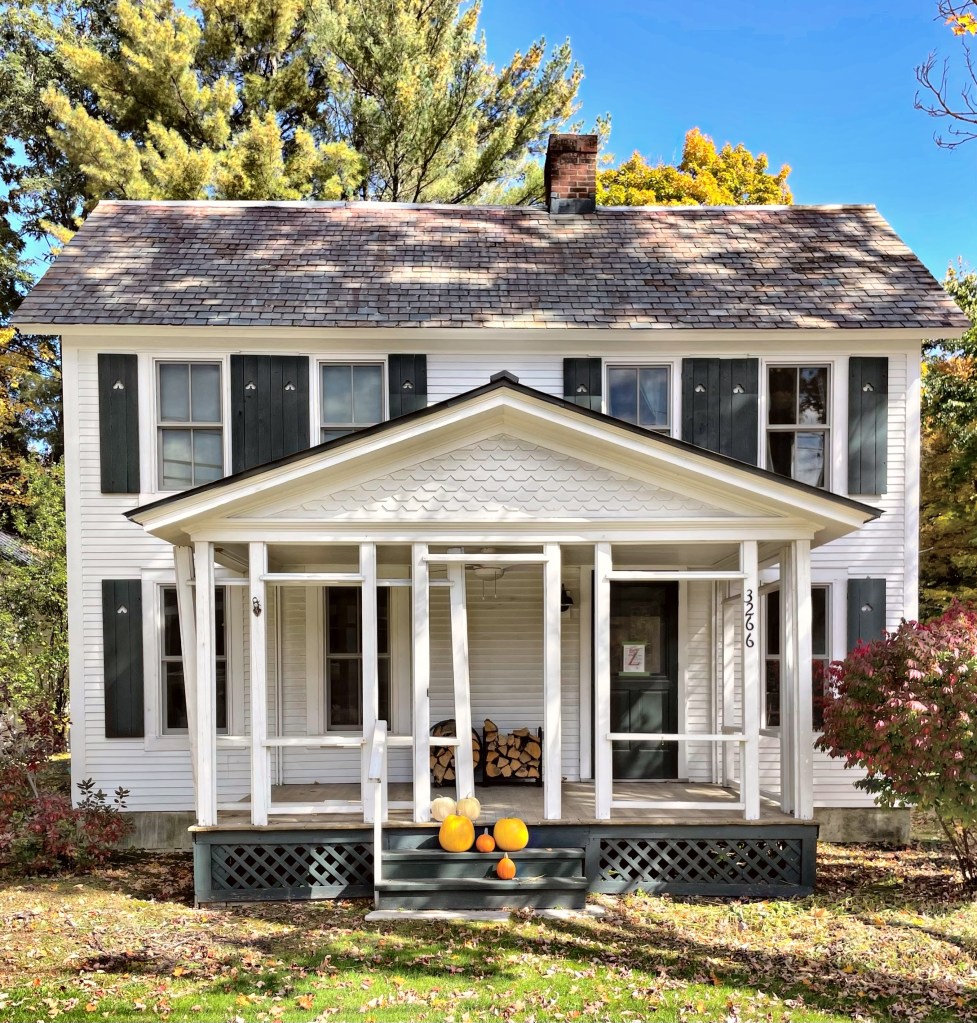
Originally owned by marble dealer Daniel Kent (1793-1858) in the 1850s at the height of marble quarrying in the town of Dorset, Vermont, this house shows the history of Dorset very well in its alterations and ownership. After the marble dealer Kent passed away, the property was owned by watchmaker Luke B. Gray (1825-1878). Soon after, homeopathic physician Charles Farrar Harwood (1833-1902) and family moved in. His son, Elmer Harwood (1885-1960), the first Rural Free Delivery mailman in Dorset, continued living here, likely renovating the home with the oversized front porch and charming rustic quality. Harwood oversaw the delivery of mail to the rural farmhouses and village of Dorset, which previously made individuals living in remote homesteads had to pick up mail themselves at sometimes distant post offices or pay private carriers for delivery. In 1965, the home was remodelled and sold it to Hugh Vanderbilt, the son of Robert Thurlow Vanderbilt (yes of that family) whose primary residence was in Greenwich, Connecticut. This new ownership showed how the town of Dorset became popular as a rural/country retreat for the wealthy, many of those families remain here today, preserving these old homes.
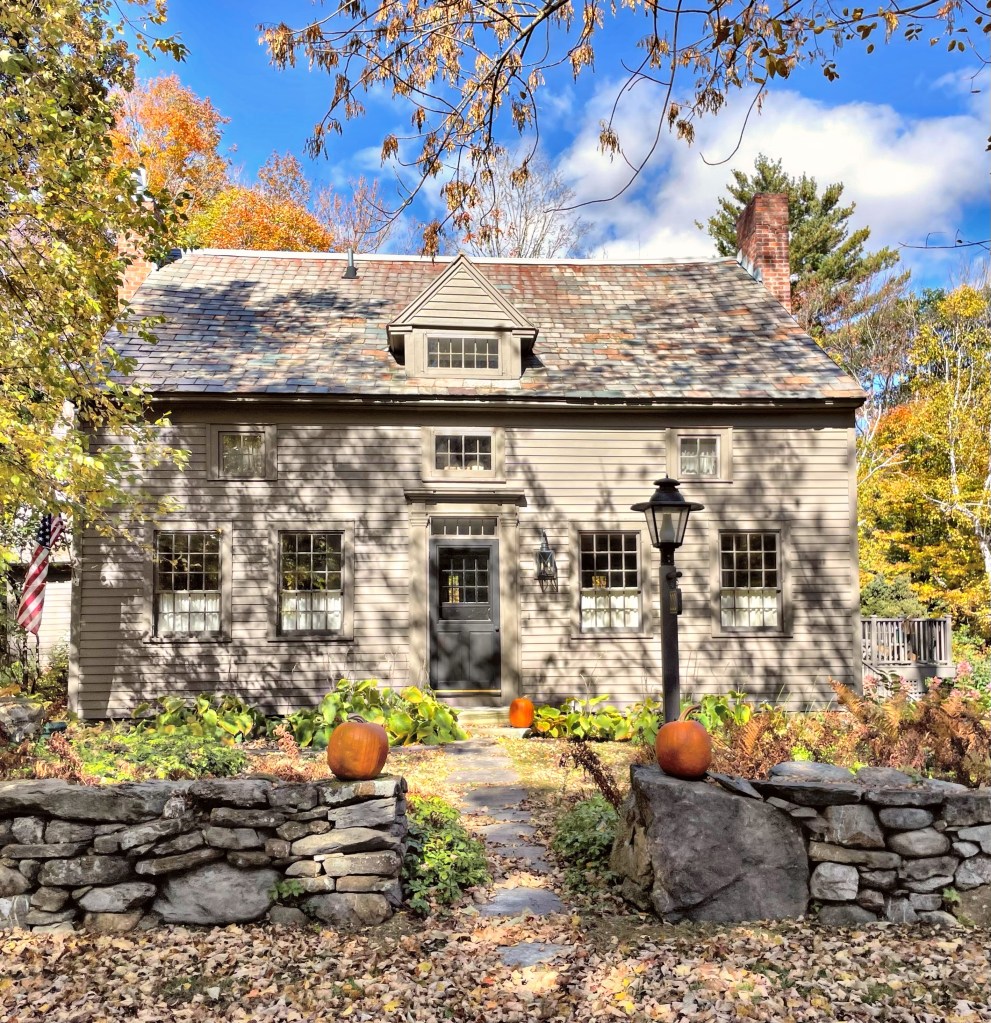
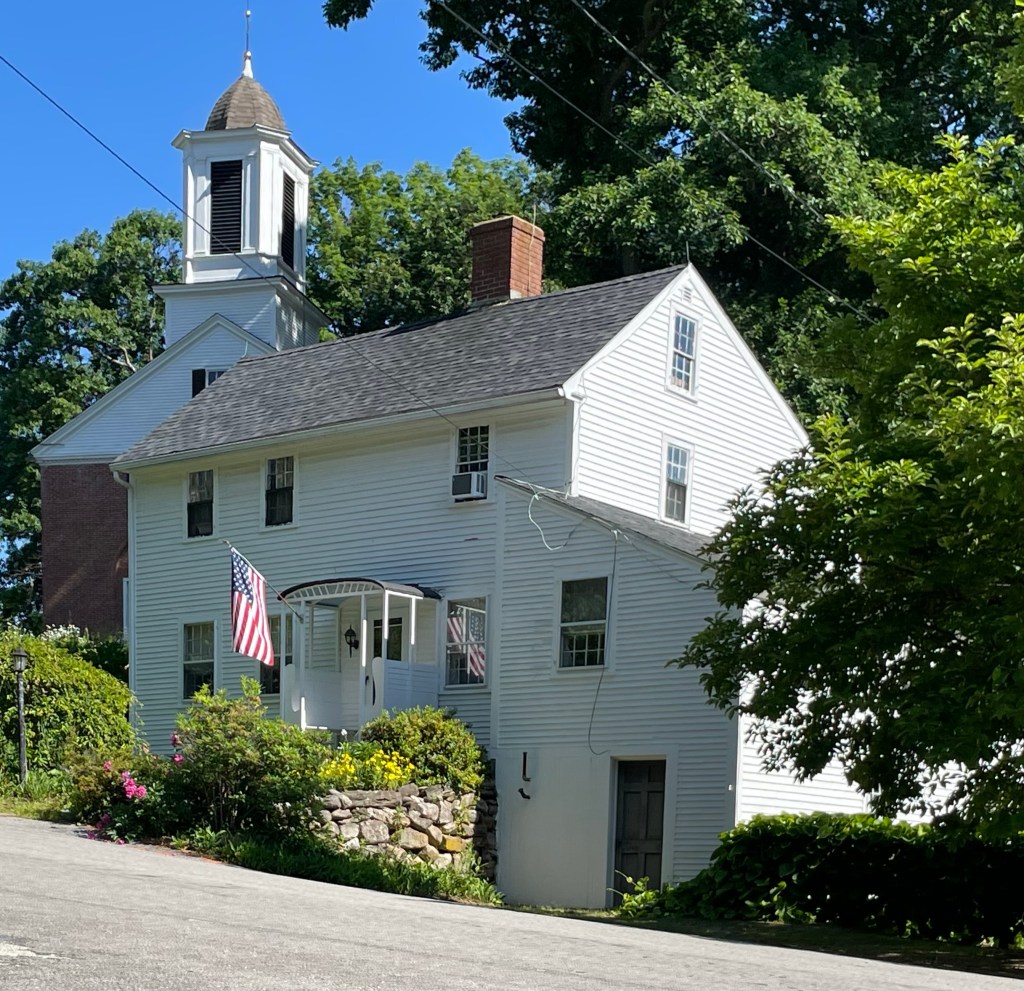
One of the oldest extant homes in Wilton Center is this Revolutionary-era Georgian house. The home was likely built in the 1770s and has a sloping saltbox roof at the rear. The house was the property of the Blanchard Family to this day. The house shows the more rural, vernacular Georgian style common in small towns in New Hampshire from the 1700s.
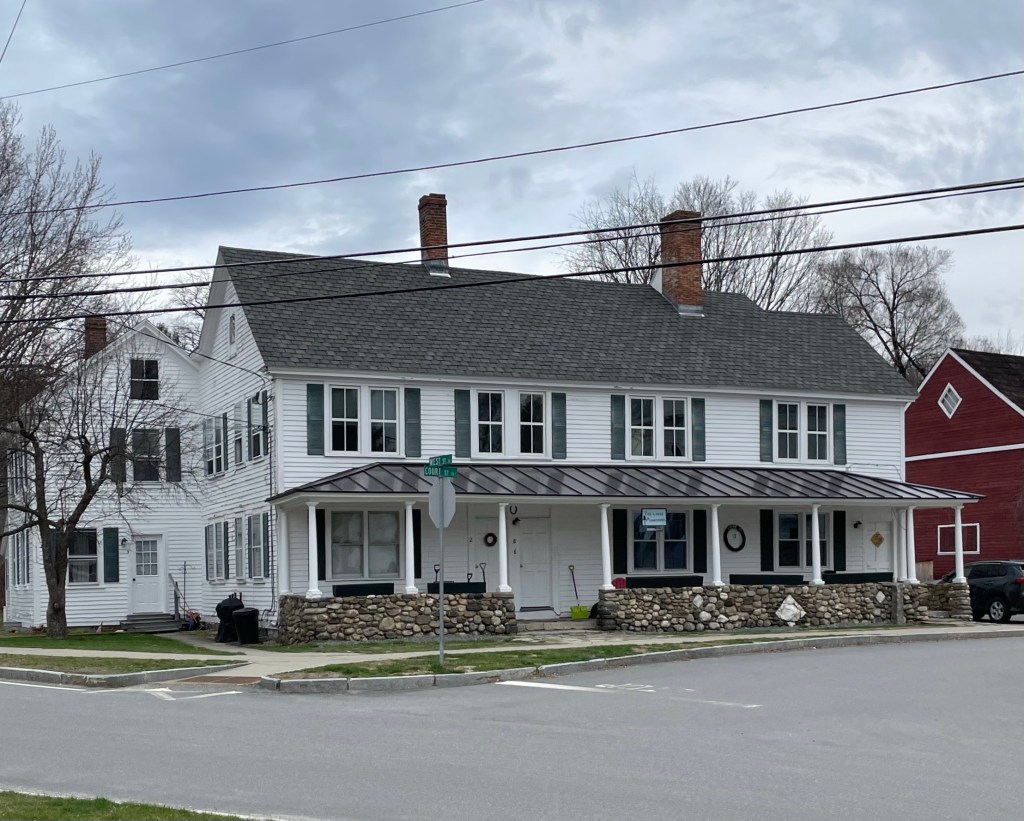
Constructed circa 1830 for Anthony Jones, this clapboard building in Newfane, Vermont originally contained tenements and was called the “long building” during the nineteenth century. Around the turn of the 20th century, a federal judge acquired the building and some of its rooms were used as offices during sessions of the county courthouse across the street. Subsequently, the local Odd Fellows Group (I.O.O.F.) occupied a hall on the second story, and for a half century after 1910, part of the first story served as Newfane’s telephone exchange. In 1971, the building was converted to apartments and has remained so since that time.


 Buildings of New England