Mount Washington Hotel // 1902

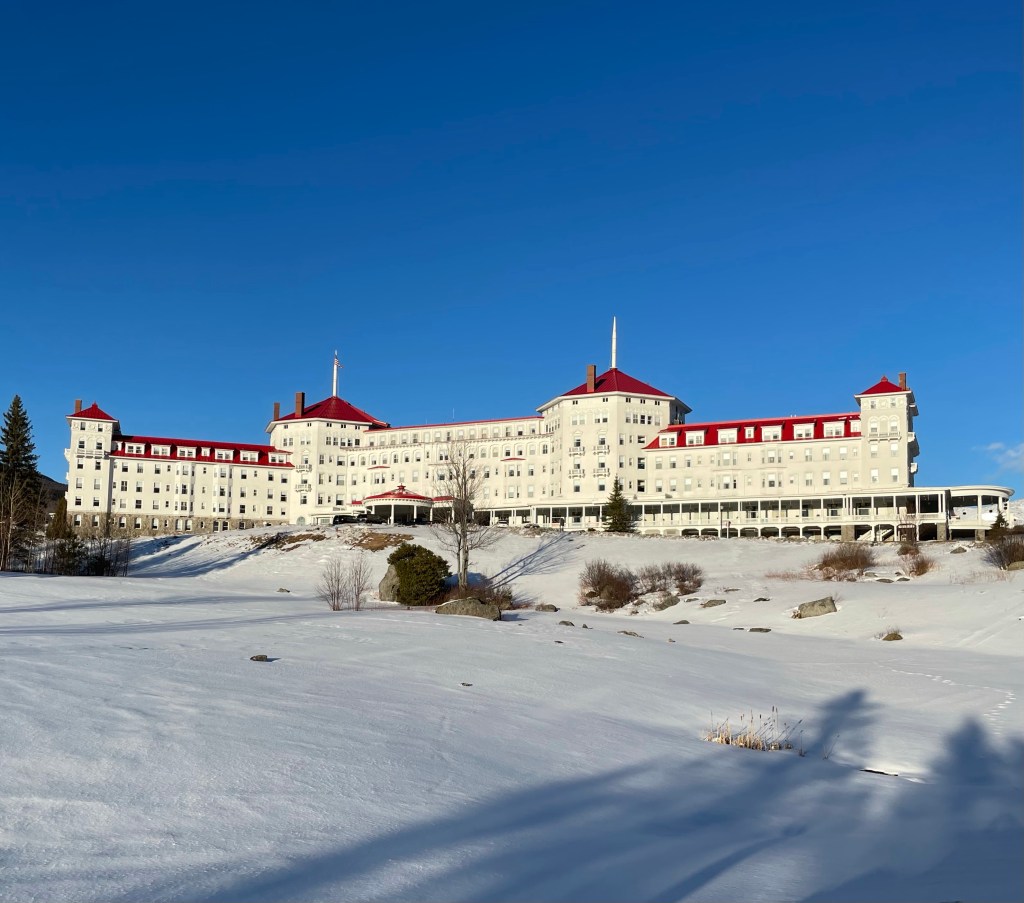
The Omni Mount Washington (originally the Mount Washington Hotel), surrounded by the great White Mountains of New Hampshire, was completed in 1902, at the end of the Gilded Age and the grand hotel era of America. The grand hotel was financed by Joseph Stickney, a native of New Hampshire, who made a fortune before the age of 30 investing in the coal business in Pennsylvania. In 1881, Stickney purchased the Mount Pleasant Hotel, a nearby summer resort and enlarged it, and acquiring a taste for hospitality development in the White Mountains (it was later demolished in the 1930s). He hired architect Charles Alling Gifford to design a new, larger resort across the street which in total, cost him over $50,000,000 in today’s dollars! Ironically, Joseph Stickney, had famously told the press on the opening day: “Look at me, for I am the poor fool who built all this,” as the economy was starting to turn right as the hotel opened. He died one year later in 1903. Nevertheless, up to fifty trains a day unloaded the families of the country’s wealthiest people, mostly from New York City, who stayed here for Summers at a time, leaving behind “the yellow fever and cholera in the cities” for fresh air and open space. The hotel’s design incorporated some of the most cutting-edge innovations of its age, including a steel-frame superstructure, an electrical power plant, and a sophisticated internal heating system. Roughly 250 Italian artisans were brought in to provide artistic touches to the structure by working on its exterior granite and stucco masonry including the two massive octagonal towers, and installing Tiffany stained glass windows.
After Joseph Stickney’s death in 1903, Carolyn his widow, became extremely rich (the couple never had children). Carolyn spent her summers at the hotel for the next decade, a nearby chapel honoring her late husband. The hotel did well in the subsequent decades until the advent of income tax, Prohibition, and the Great Depression, which harmed many large resorts’ profits. In 1936, Mrs. Stickney’s nephew, Foster Reynolds, inherited the hotel, but it closed in 1942 because of World War II. A Boston syndicate bought the extensive property for about $450,000 In 1944. The Bretton Woods monetary conference took place that year, establishing the World Bank and the International Monetary Fund. After subsequent owners, in 2015, the hotel and the Bretton Woods Mountain Resort were purchased by Omni Hotels & Resorts, who have been advocates to the history and preservation of the building and surrounding area, also overseeing the hotel’s inclusion to the illustrious Historic Hotels of America list.

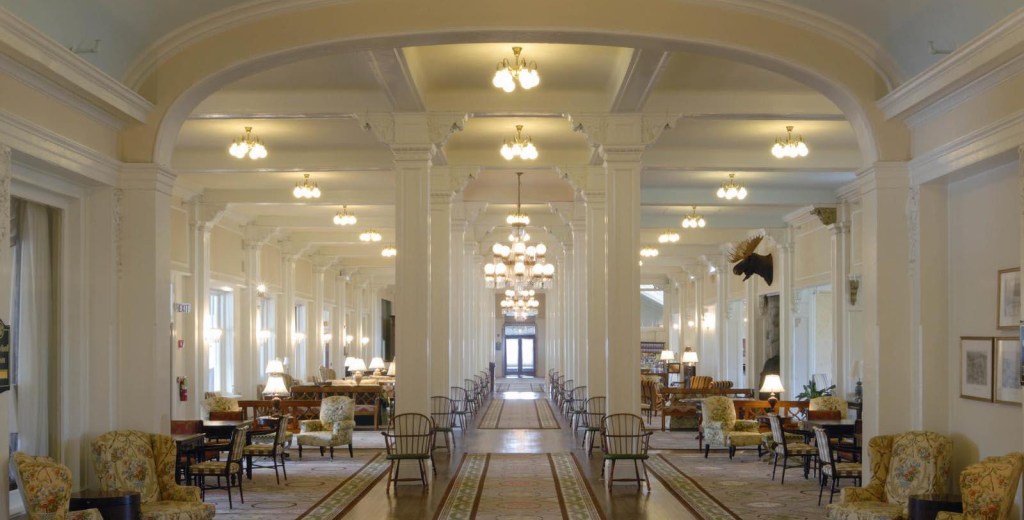
There is so much more I could write about the Omni Mount Washington Resort, from the incredible interior spaces, to Carolyn’s marriage to a French prince, to the supposedly haunted sites… So much history to uncover, so little time!
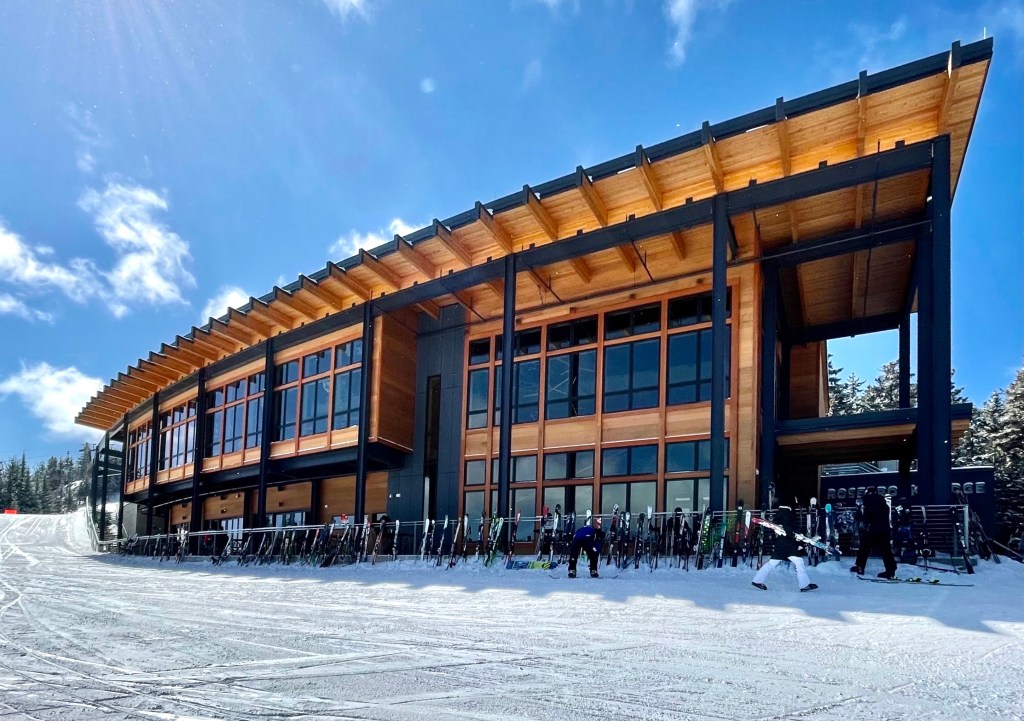
Rosebrook Lodge // 2020

Located at the top of Rosebrook Mountain in the Bretton Woods Ski Resort, this stunning modern lodge building provides possibly the best mountain views in New England. After a couple runs on the slopes, I took the gondola up to the top, exiting to a sweeping view of the White Mountains and the iconic Mount Washington Hotel (more on that later). At the top, is this large, well-sited lodge which is perched upon the mountainside, and an excellent example of Contemporary design done right! Appropriately named Rosebrook Lodge, the new building was just completed in 2020 by designs from architectural firm Bull Stockwell Allen from San Francisco, with help from TruexCullins on the interior design. The two-story lodge is constructed from of timber, steel, stone and glass, which complement the region’s rugged natural beauty and provide a sleek space for on-mountain dining or aprés ski. Inside, the building highlights the outside with walls of windows with warm lighting and woodwork that make relaxing effortless.

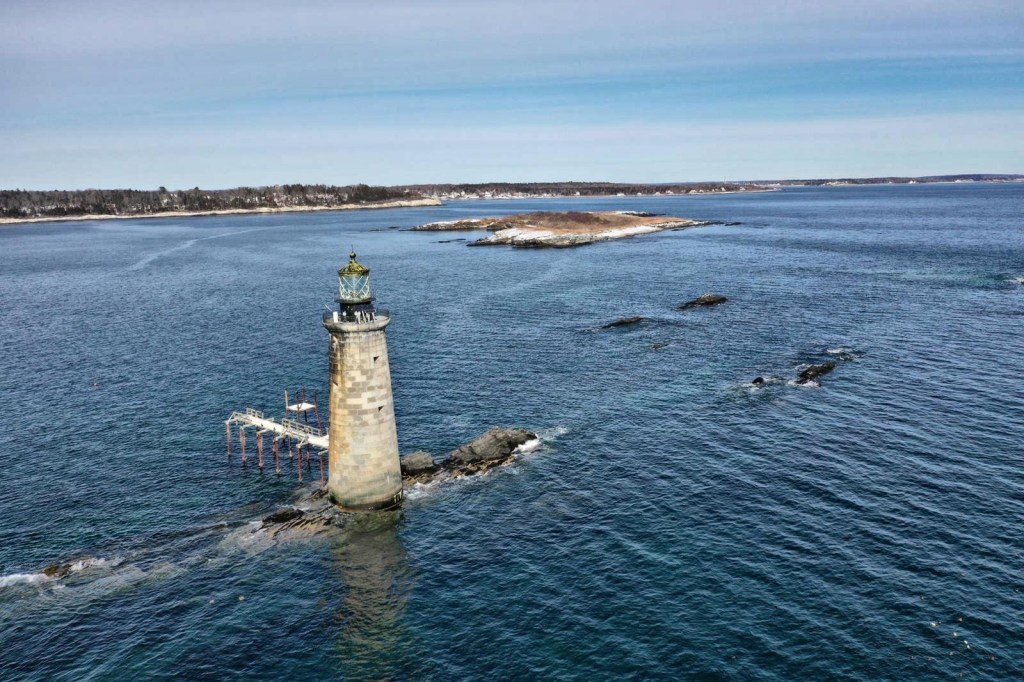
Ram Island Ledge Lighthouse // 1905

Ram Island, about a mile offshore from Portland Head near the entrance to Portland Harbor in Maine, is surrounded by dangerous ledges. For as long as ships have been navigating Portland Harbor, they have crashed into the rocky shore, losing supplies and lives. Because of this, a Congressional act on June 28, 1902, authorized the construction of a lighthouse and fog signal on Ram Island Ledge, to work together with the Portland Head Light to guide ships through the treacherous channel. The next year, the federal government purchased Ram Ledge from two Cape Elizabeth families for $500, to erect a new lighthouse. Before the lighthouse could be constructed, at least two ships, the Glenrosa and the Cora & Lillian schooner sunk in the bay. As the ledge was underwater for much of the year, a stone tower was required. Granite from Vinalhaven was shipped in and a crew of 25 men built the tower which was complete in 1905. The iconic double flash of light has guided sailors ever since. The lighthouse was manned by multiple keepers until the late 1958, when an underwater power cable was laid between Portland Head and Ram Island Ledge, allowing the ledge lighthouse to be automated. In 2008, the structure was deemed “excess to the needs of the United States Coast Guard” and auctioned off. After a bidding war, a local doctor from Maine purchased it for an estimated $190,000.

Sleepy Hollow Farm // c.1780

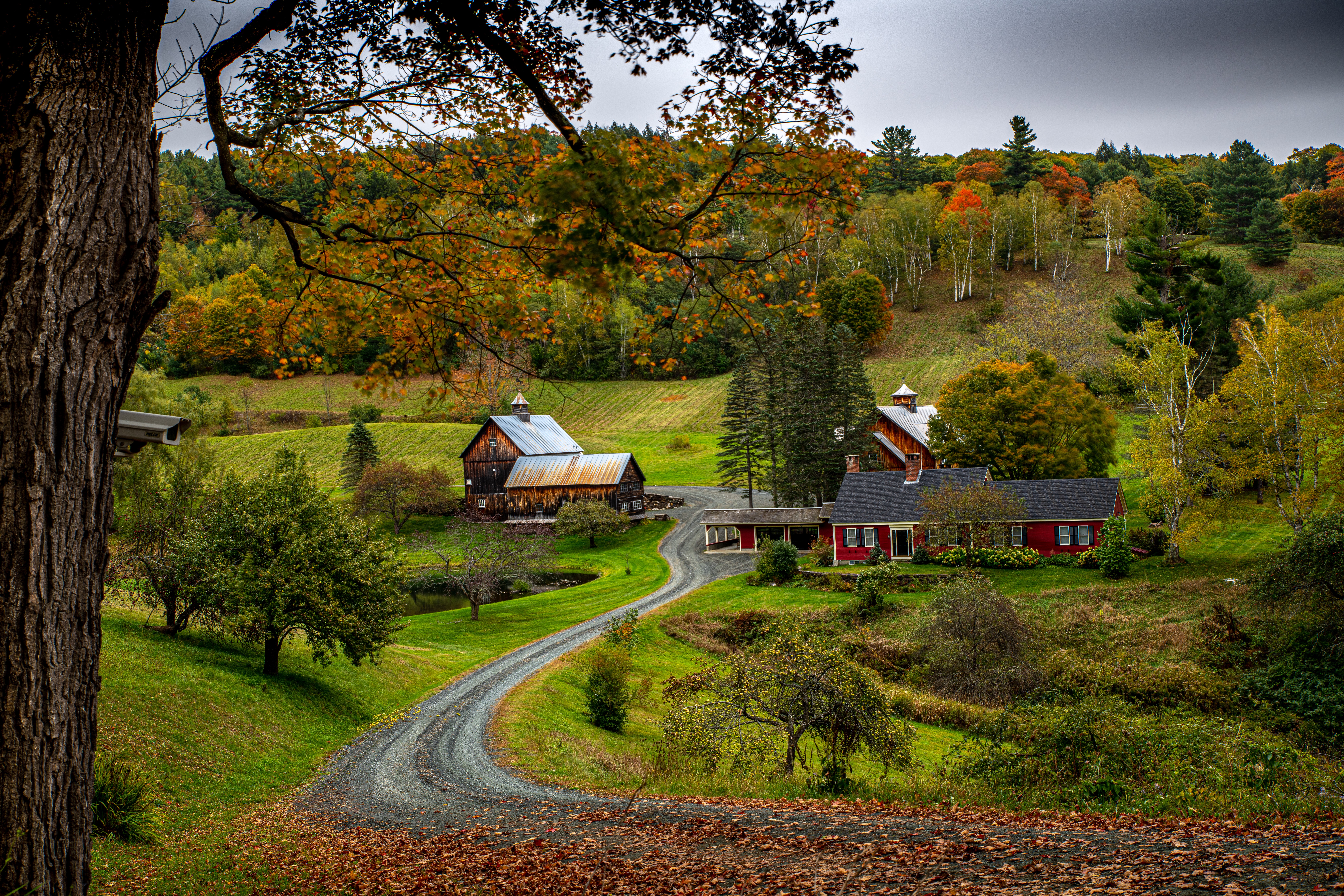
Without question, this property is the most photographed site in the tiny town of Pomfret, Vermont, if not the state. The property dates to the late 18th century when John and Samuel Doten moved to the newly settled town of Pomfret Vermont, overlooking the growing town of Woodstock in the valley below. The two brothers acquired vast farmland on the hills of Pomfret and each built farmhouses adjacent to eachother, with Samuel getting elevated land and John developing the land sunken off what is now known as Cloudland Road into this stunning property. Sleepy Hollow Farm remained in the Doten family for centuries until the 1950s, when the owners sold the property to move to Woodstock and work for Laurance Rockefeller, the famous philanthropist and conservationist, who later donated his Summer home in Woodstock to the National Park Service. The property sold numerous times in the late 20th century, and is presently owned by Aerosmith guitarist Joe Perry and his wife, Billie. They are clearly great stewards to the property’s rich history and various outbuildings, and must not care too much to have swarms of photographers at the end of their driveway year-round!

Great Stone Dwelling // 1837

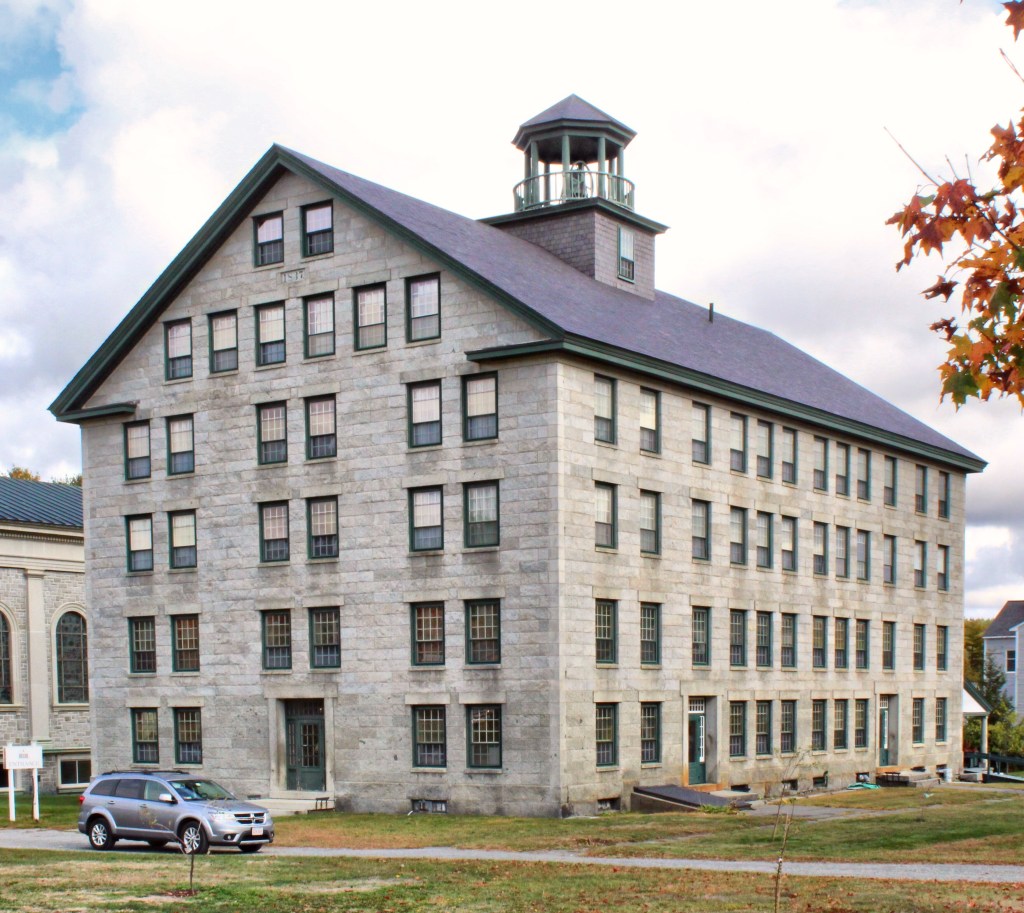
Located on the west bank of Mascoma Lake in Enfield, New Hampshire, an architecturally and historically significant collection of Shaker buildings can be found, all very well maintained. Founded in 1793, this village was the ninth Shaker community to be established in this country. At its peak in the mid 19th century, the community was home to three “Families” of Shakers. Here, they practiced equality of the sexes and races, celibacy, pacifism, and communal ownership of property. There were 132 members of the village by 1803, and by 1840 there were nearly 300 people.

Within the village was the largest Shaker dwelling ever built in the country and the largest residential dwelling north of Boston, the Great Stone Dwelling. The Shakers here hired leading Greek Revival Architect Ammi Young to design the building. Ammi had experience in larger building projects having designed the current Vermont State House and several structures at nearby Dartmouth College. Young would later go on to be the Supervising Architect for the United States Department of the Treasury.

The Enfield Shaker Village in Enfield is open for tours, and you can even spend a night in the 1837 Great Stone Dwelling!