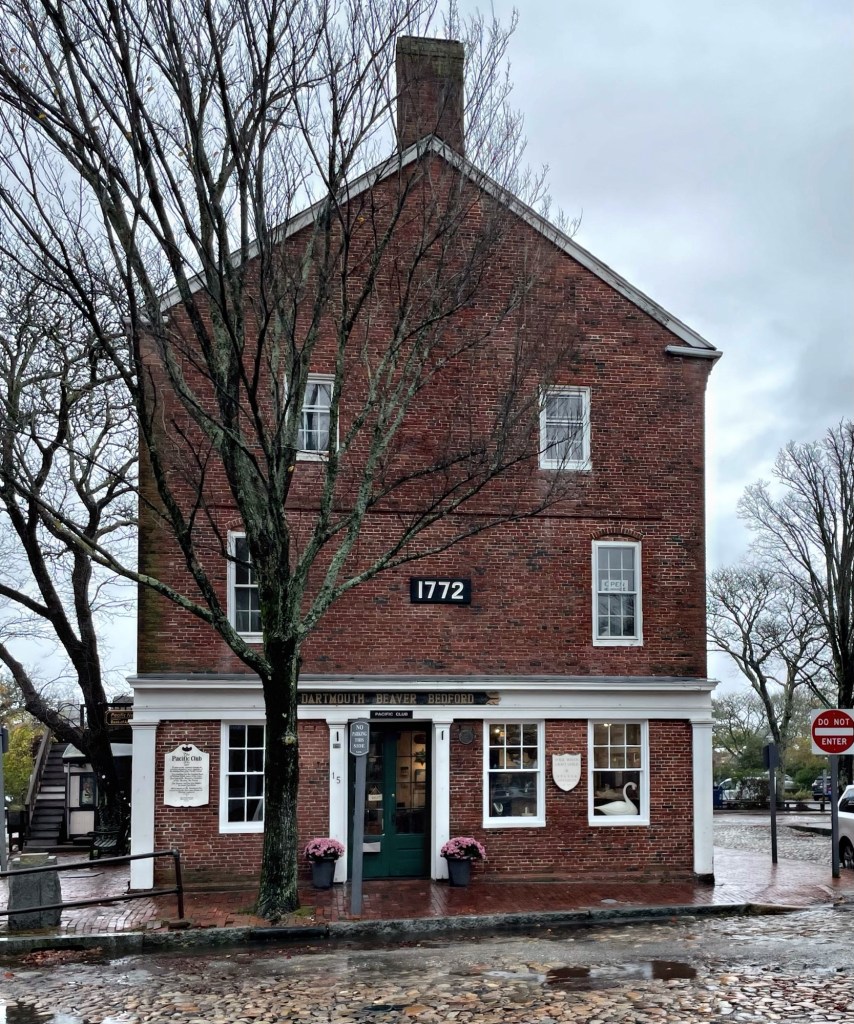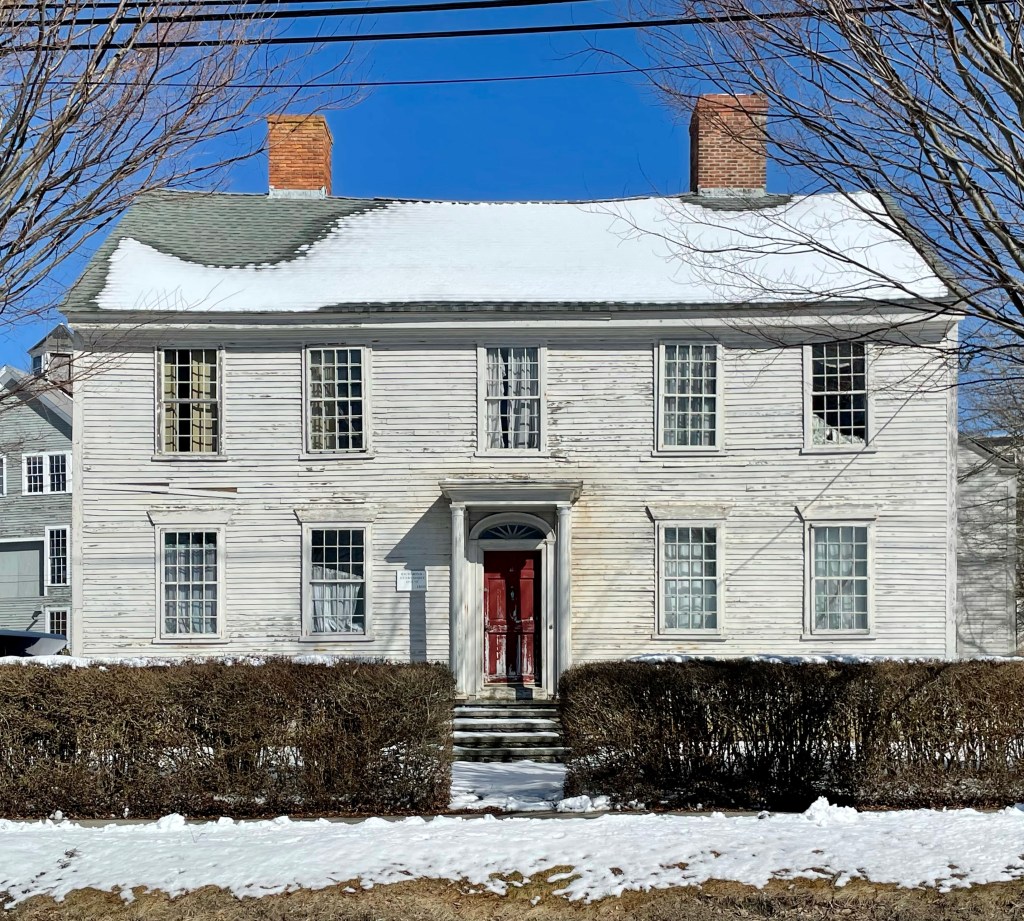
Rotch Counting House // c.1775

Members of the Rotch family dominated Nantucket business and politics across three generations. The rise of this family was linked to the rise of the island as a whaling center. The well-connected family owned two of the three ships involved in the Boston Tea Party on December 16, 1773. According to the Nantucket Historical Association, this warehouse and counting house building was in fact, built in 1775, not 1772, as erroneously stated on the wood plaque mounted on the outside of the building, for William Rotch, one of the pre-eminent figures in Nantucket’s whaling industry. The handsome brick building served as the Rotch Counting House. William Rotch subsequently moved his business to New Bedford. In 1861, the building was purchased by a group of former whaling masters who formed the organization known as the Pacific Club, and the building has been known by its eponymous name and is still owned by the members of the Pacific Club, who are invited into membership on a referral basis and are responsible for its maintenance.

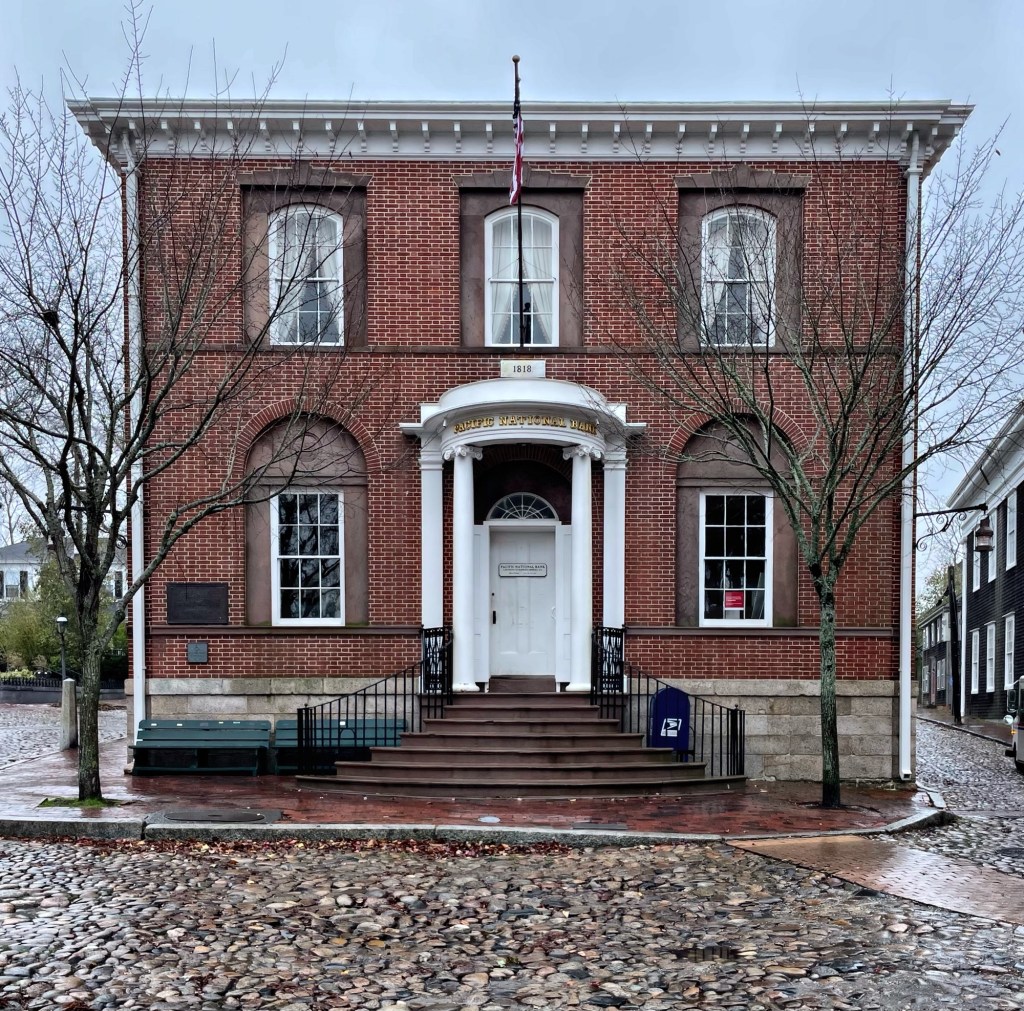
Pacific National Bank // 1818

Whaling captains and crew upon returning to the island of Nantucket, would be flush with cash and goods and needed a safe and secure institution to hold their earnings. By the late 18th century, the depletion of the whale population in the Atlantic required whaling vessels to travel further and further in search of oil to fill the barrels in their holds. Ships began sailing to the Pacific and due to the distance, would be out at sea for years rather than months. Money from the Pacific voyages flowed back to the island, which soon required real banking facilities, and the Pacific Bank was established in 1804 and immediately prospered. The bank erected this stately brick building at the end of Main Street Square. Details such as the blind arches filled with sandstone panels that surround the building’s windows, the semi-circular Ionic entry portico and the high brown sandstone stoop with wrought-iron railings are unique on Nantucket and among the finest examples of their type in the region. Also interesting about the building is the fact that it contained living quarters for the cashier whose presence was intended to provide security. The building is now (of course) home to a Bank of America.

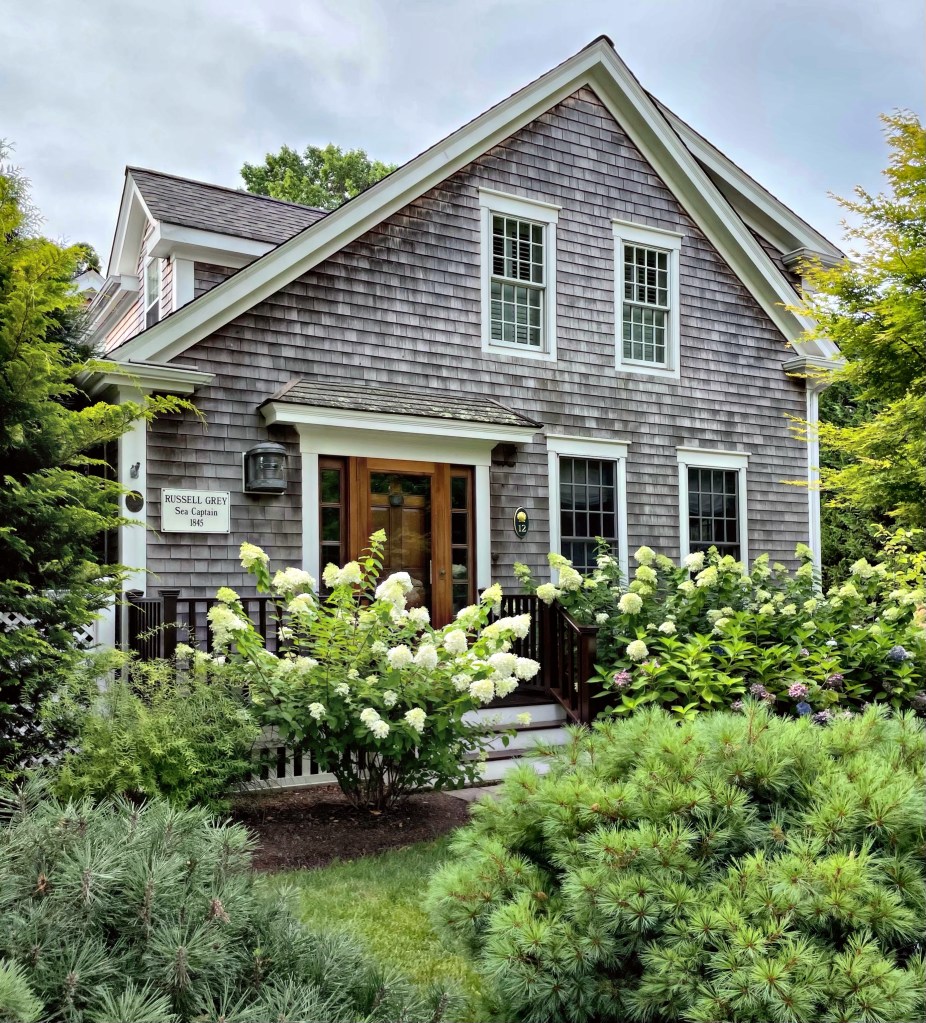
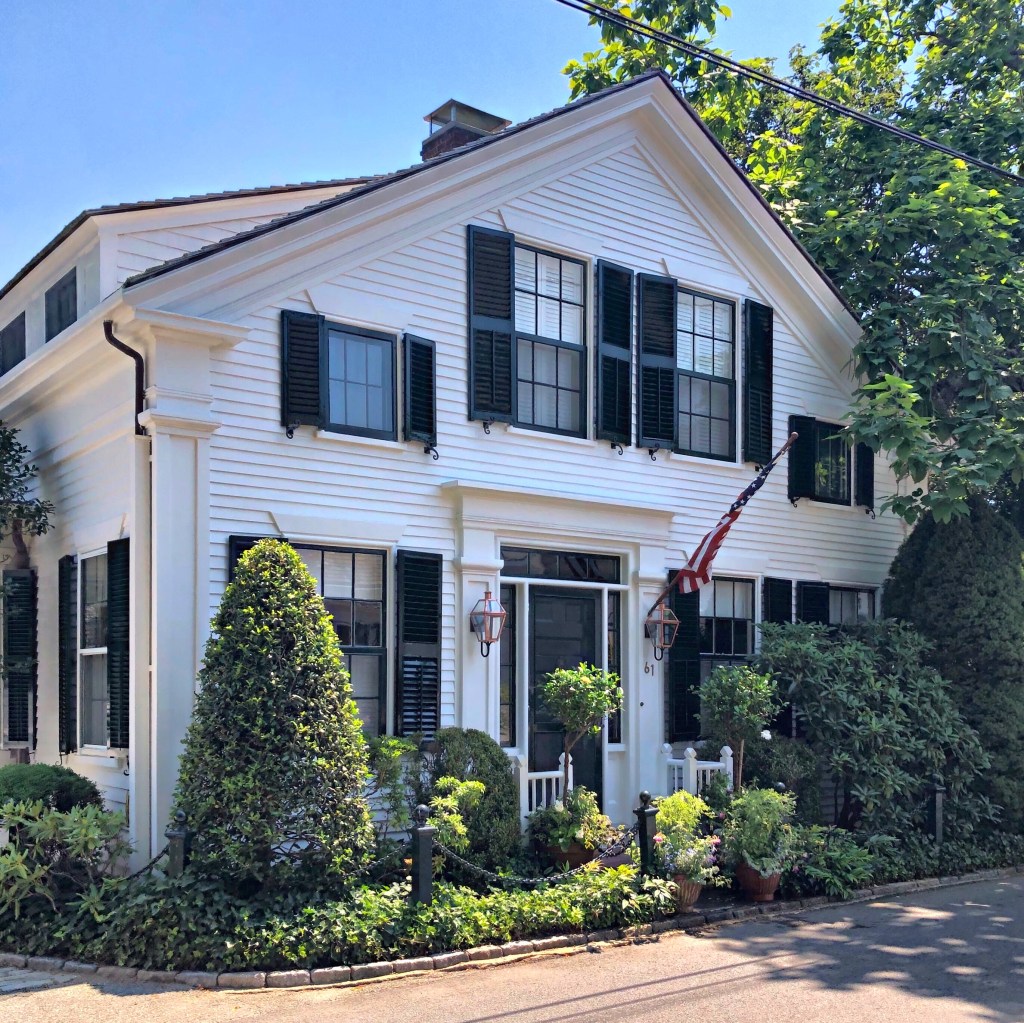
Captain Grey House // 1845

Captain Russell Grey (Gray) was one of a handful of sea-captains who lived in Wharf Village, the downtown of present-day Marion, Massachusetts. The men would own ships that were docked in the harbor or in nearby New Bedford, and would leave for months-long excursions chasing whales, fish, or other treasures. Behind, they left their young wives and growing families, who braved the harsh New England winters and the unpredictable coastal weather events. This small cottage was built around 1845, for a young Russell Grey and his wife, Sarah Luce, who’s own family was full of mariners as well. The couple’s Greek Revival style cottage remains as one of the most charming in the village.

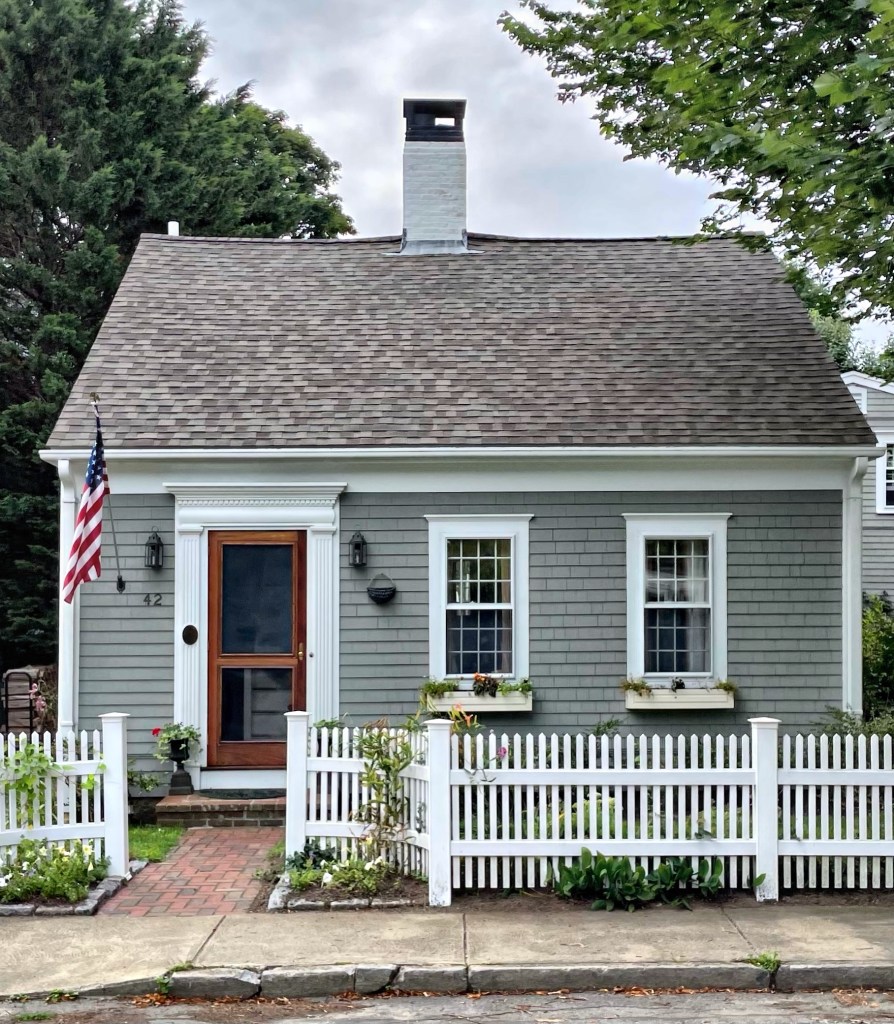
Briggs House // c.1850

This tiny half-cape house in Marion was built in the mid-19th century for Timothy Hiller Briggs (1822-1877), a whaler. Based on the Federal/Greek detailing on the house, it is also likely the home was built much earlier for Timothy’s father, Silas, a sea captain, and was willed to his only son upon his death in 1833. Timothy died at the young age of 54 and his widow, Josephine, maintained the cottage until her death in 1924! The home is a half-cape as it has an off-center door with two bays of windows at the facade. A full-cape would be symmetrical with a central door and two windows on either side. The central chimney would provide heat to all rooms in the cold winter months.

Richmond-Herreshoff House // c.1803

Located on Hope Street, just south of the downtown area of Bristol, Rhode Island, this beautiful Federal-style home overlooks the water, and once oversaw a large ship-building empire. The home was built by Lemuel Clarke Richmond (1782-1876), possibly in response to his marriage to Hannah Gorham in 1803. Richmond was a wealthy whaler who owned nearly twenty ships, including the Empress, a Bristol-built bark. The Federal style home features a five-bay facade with central entry. A modest portico surrounds the door which has a fan light transom above. Oh, and there are some gorgeous 12-over-12 windows on the home, at the ground floor the windows have flared lintels above. The home was sold by Richmond in the early 1850s and rented out to Charles and Julia Ann Herreshoff, who resided there with their eight children! It was here where sons John and Nathanael overlooked the water as young boys and became consumed by the beauty of the ships that sailed by their front yard. The brothers later ran the internationally renowned Herreshoff Manufacturing Company, which occupied land all around the home (and was featured previously). The home was acquired by the family in the 1860s, and often changed hands within the family over the next decades until it was inherited by Norman F. Herreshoff. A collector of Americana, Norman Hcrreshoff completed a series of renovations to the family home, including remodeling of the kitchen to be “old-fashioned” and replacement of the front porch with the small Ionic portico which we see today. The home is owned by the Herreshoff Marine Museum, but has seen better days.

Capt. Sands House // c.1840

Edgartown on Martha’s Vineyard, became a primary whaling port in the early 19th century. Ships from all over the world would dock in its sheltered bay and captains would build grand mansions for their families on the tree lined streets, with sweeping views of the harbor. This modest whaling captain’s home was built around 1840 for Captain John Sands and his wife Eliza. John Sands worked as crew on various whaling ships based out of New Bedford, from the vessel Hector at age 22 before becoming a captain on the vessel Benjamin Tucker. Sands even brought his wife along on whaling ships, including a nearly four year excursion hunting for whale oil. The Sands home is the Greek Revival style with a gable front, six-over-six windows of varying sizes with flared lintels, and an off-center front door with sidelights and transom with an entablature above.

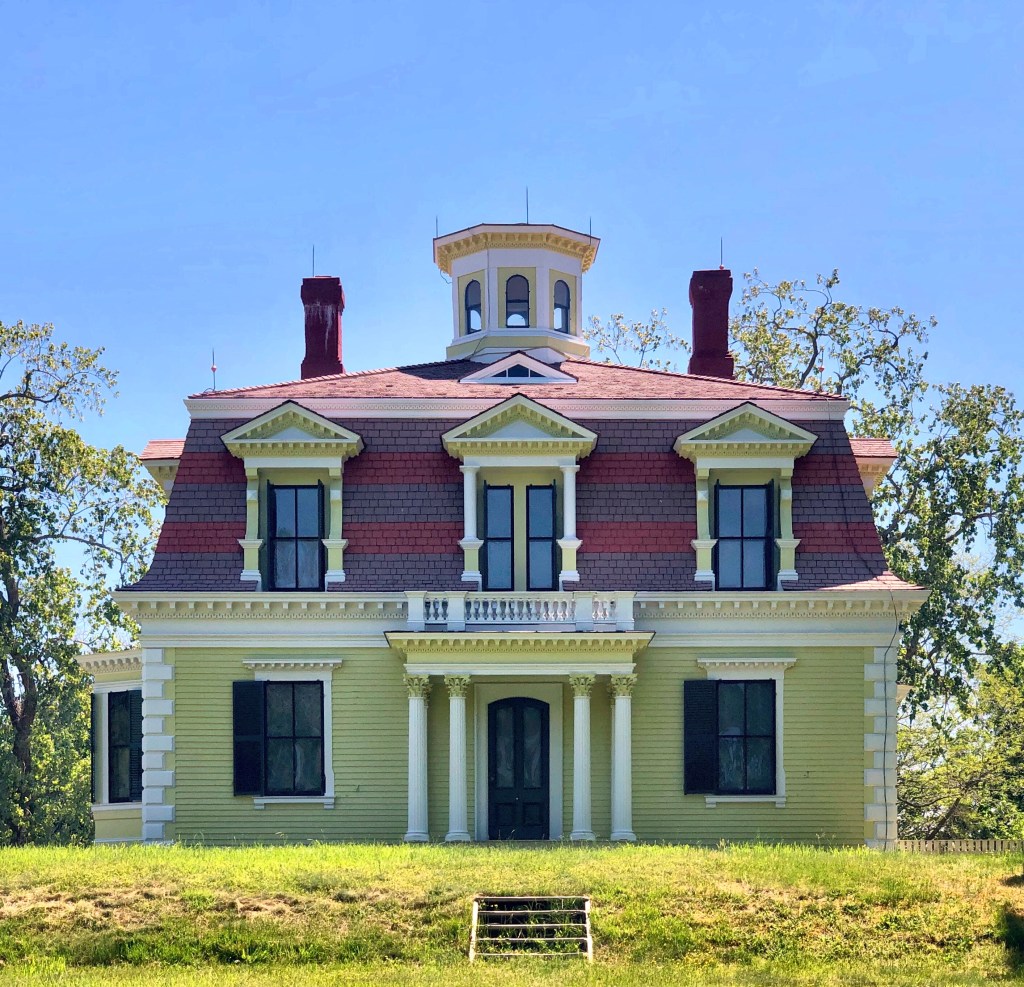
Captain Edward Penniman House // 1868

The Edward Penniman House is the finest example of Second Empire style in Eastham, and is one of the finest examples of this architectural style on Cape Cod. The grand home was designed and occupied in 1868 for Edward Penniman (1831-1913), one of the most successful whaling captains in New England.

Born in 1831 in Eastham, Edward Penniman set sail for the first time at age 11. The voyage was to the dangerous and unpredictable waters of the Grand Banks, a rich fishing ground off the coast of Canada’s Newfoundland. Nantucket had a flourishing whaling industry as early as the late 1600s, but it was New Bedford with its deep water harbor and railway system that would become New England’s whaling capital. In 1852 at the age of 21, Penniman would journey to New Bedford and sign on to his first whaling expedition. Later when Penniman became a captain he would select New Bedford as his home port setting sail seven times to hunt whales.

With whale over-harvested in the Atlantic along the shores of New England, whalers were forced to go further and further from home to hunt. Whaling expeditions often spanned three or four years, and it was not uncommon for wives and families of ship captains to go along on the trip. Penniman’s wife, Betsy Augusta Penniman, called “Gustie” by her husband, went on three such voyages often assisting with navigation and other shipboard matters. In addition, each of the three Penniman children accompanied their parents on various journeys with eldest son Eugene eventually becoming a whaling captain himself.

After the Captain’s death in 1913, Mrs. Penniman and their daughter, Betsey, continued to live in the home. Mrs. Penniman’s died in 1921. Betsey Penniman, who never married, stayed around and raised her niece, Irma. Upon Betsey’s death in 1957, the home was left to Irma Penniman Broun. Irma and her husband sold the house with twelve acres to the National Park Service in 1963 when the Cape Cod National Seashore was formed.