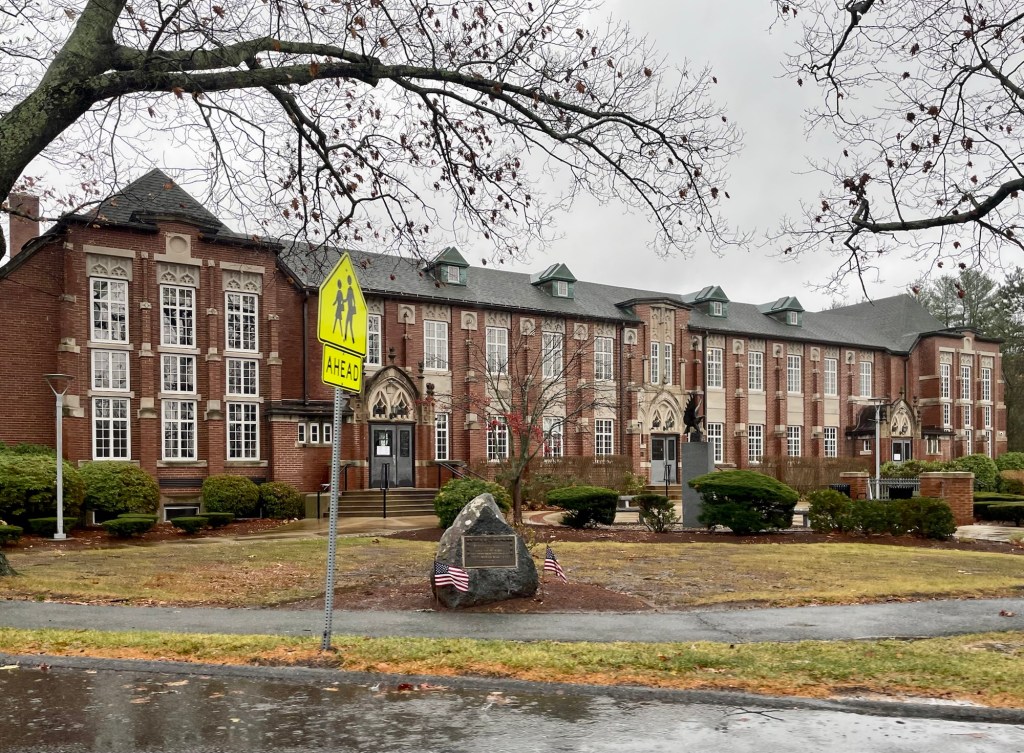
Built in 1925 as the cafeteria for St. John’s Prep School in Danvers, Massachusetts, this handsome brick building is sited across Summer Street from Porphyry and Xavier halls, both built decades earlier. The structure was designed by architect, Matthew Sullivan, a member of the notable firm, Maginnis, Walsh & Sullivan, who specialized in ecclesiastical design in the Boston area. The firm disbanded in 1907 with Sullivan creating his own practice, where he won the commission for this building years later. The cafeteria is Neo-Gothic in style with Gothic tracery, lancet arches, buttresses and pinnacles at the entrances. This is a really underrated and stunning structure. I am glad to see it so well-preserved 100 years later!
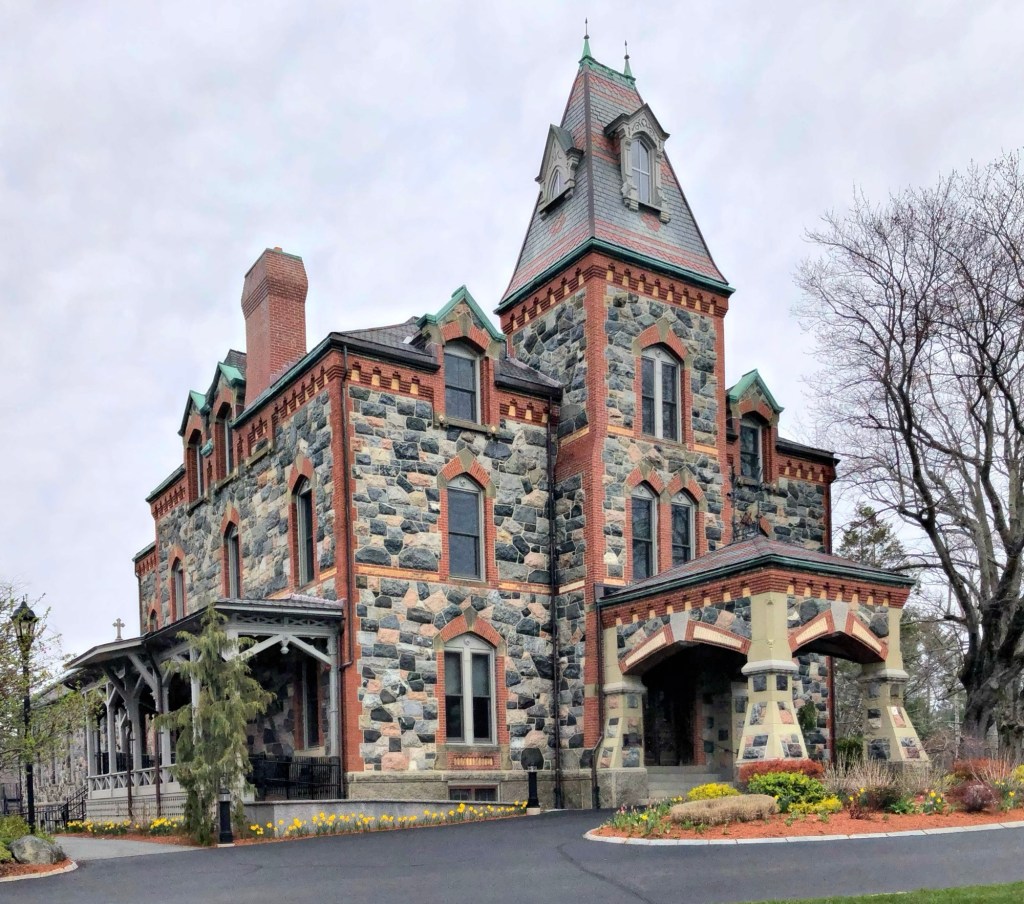
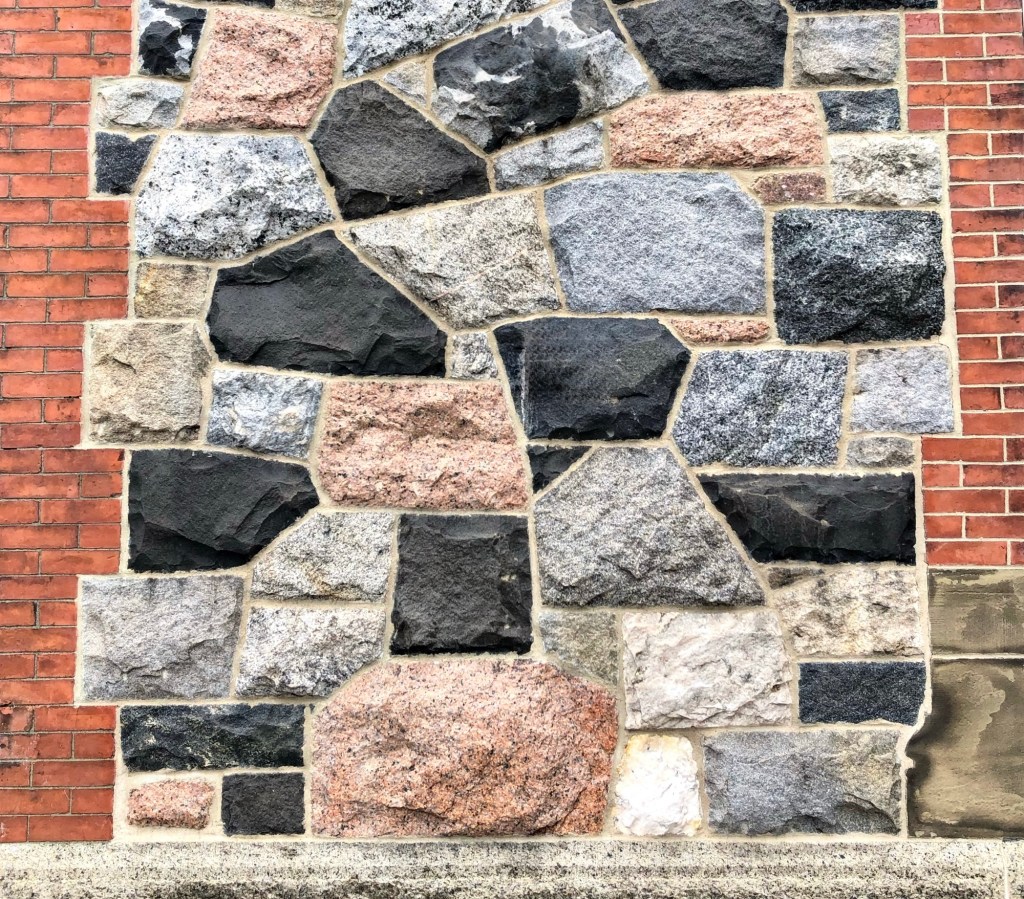
The Jacob E. Spring Mansion, also known as Porphyry Hall, is a high-style estate house located in Danvers, Massachusetts, that is one of the finest and most unique in the state! The house was built in 1880 for Jacob Evans Spring (1825-1905), who was born in Brownfield, Maine, and at the age of twenty, he went to Argentina and amassed a fortune in the wool business in Buenos Aires between 1845 and 1865, when he returned to the United States. Jacob and his wife, Sara Duffy, would purchase a large farm in Danvers and began planning for their family country home. Their residence was built on a high hill over two years and constructed of over 40 types of stones of irregular size and color with door and window sills of Nova Scotia freestone with arches of the doors and windows and corners of brick. The mansion was designed by architect George M. Harding of Boston, and built by several skilled masons over many months. Mr. Spring named his estate, “Porphyry Hall” with Porphyry meaning an igneous rock with large crystals in a fine-grained matrix; suitable for the walls of their mansion. The Spring’s lived lavishly at this home and spent nearly all of their fortune, selling the property after just ten years to the Xaverian Brothers, who opened it as Saint John’s Normal College. In 1907, the compound was re-organized as a Catholic boys prep school. In 1915, a chapel was added to the rear of the building, constructed from gray fieldstone to blend with the main house. Have you ever seen a building like this?
 Buildings of New England