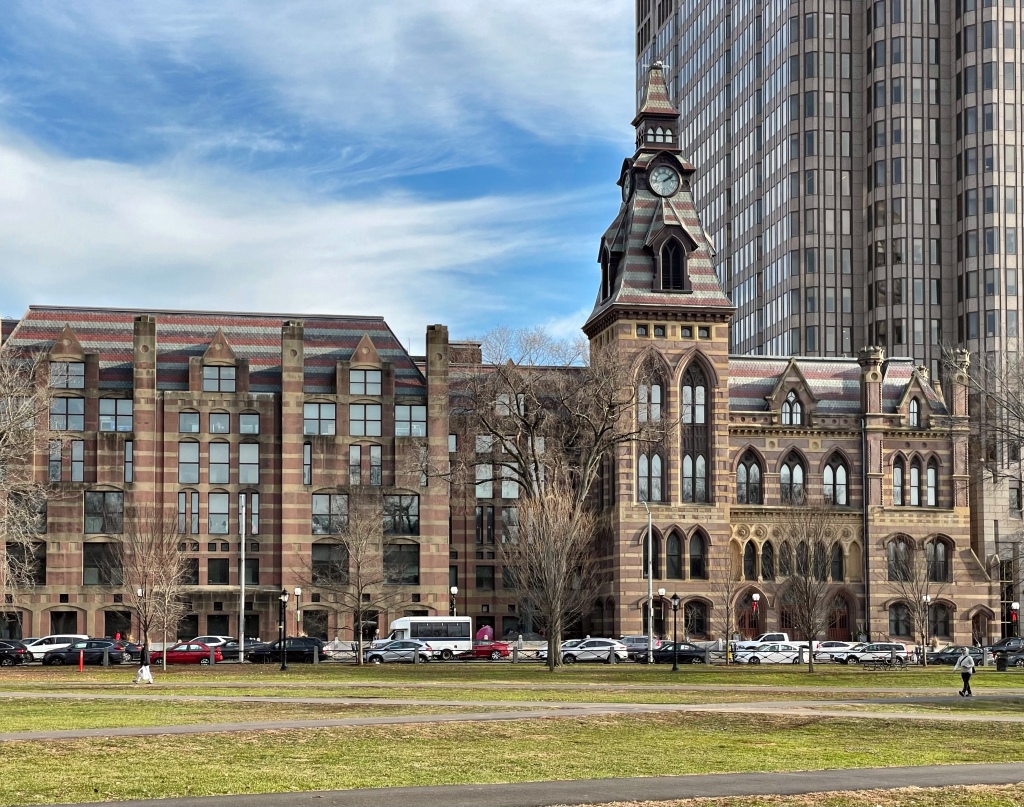
The Connecticut Financial Center is the tallest building in New Haven, Connecticut, and the sixth tallest building in the state. The 383-foot postmodernskyscraper was designed by the Toronto architectural firm Crang and Boake and completed in 1990, replacing the Powell Building (last post), New Haven’s first skyscraper. The Connecticut Financial Center is sited facing the New Haven Green wedged between the iconic New Haven City Hall and Federal Courthouse, and dwarfs both in size, creating a really unpleasant addition to the block. The building is at least clad in stone, a subtle nod to the adjacent buildings and has a more traditional first floor lobby set back from the street.
Even skyscrapers face the wrecking-ball…The Powell Building was among New Haven’s first building recognized as a “skyscraper.” Built in 1921, the commercial building is Neo-Gothic Revival in style with the two bottom stories and the two top stories are detailed in Gothic motifs, with eight more plain floors between. The resulting shaft-like appearance distinguishes the Powell Building from other contemporary commercial structures in the city, which are essentially heightened versions of various historical styles. The architect, Roy W. Foote, was among New Haven’s leading architects in the first half of the 20th century, largely due to his local efforts in high-rise construction. The Powell Building was erected as a speculative venture by Albert H. Powell, whose primary business was a wholesale coal dealership. Early occupants were professional offices and a bank at the first floor. The building historically was located at the New Haven Green, between the Victorian Gothic City Hall and Classical Federal Courthouse. The building was sadly razed by 1990 by the New Haven Redevelopment Authority, who were VERY active in town knocking down neighborhoods in the second half of the 20th century. It was replaced by the Connecticut Financial Center skyscraper, currently New Haven’s tallest building.
Historically, inns and taverns offered short-term stays for visitors to New Haven, Connecticut. As the town developed and Yale College grew, land-owners began to realize the potential for larger, centrally located hotels. Established in 1824 and fronting the Town Green, the Tontine Hotel stood for less than 100 years, but was a prominent establishment in the city. The hotel was designed by architect David Hoadley and it hosted many well-known individuals including Native American chief and orator Red Jacket, who gave a speech here in 1829, and Daniel Webster, who came here in 1832. When more modern hotels were built in the early 20th century, the Tontine saw declining and less fancy clientele. The site was slated for redevelopment and the block was demolished in 1913 for the new Federal Courthouse and Post Office (last post).
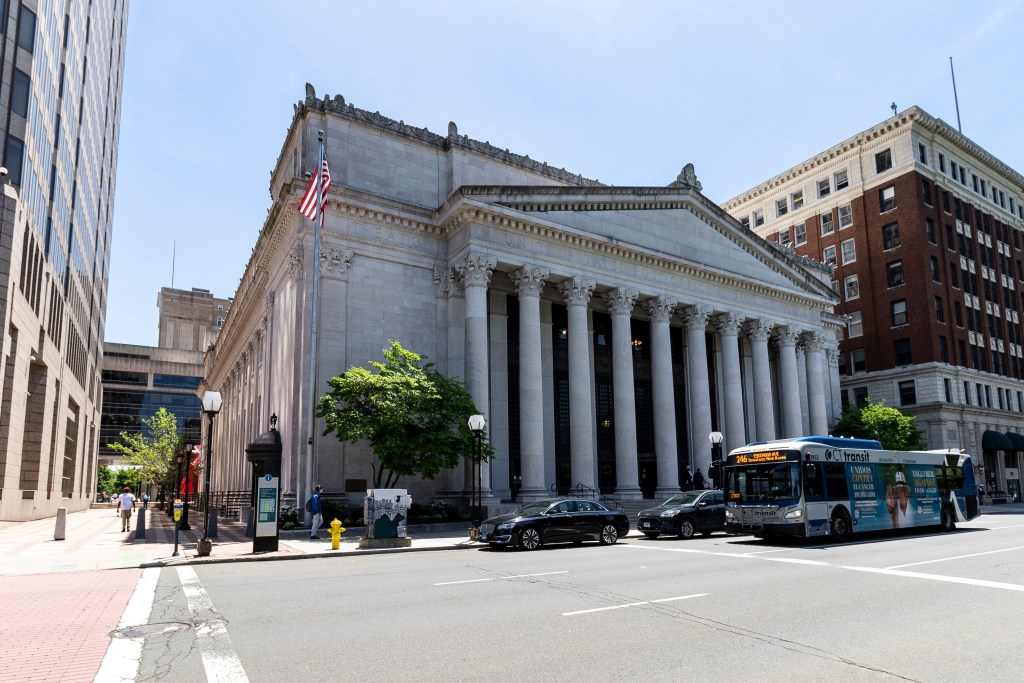
The monumental Richard C. Lee U.S. Courthouse is located on the west side of the Town Green in New Haven, Connecticut, a stone’s throw from the New Haven City Hall. The building is an excellent example of Classical Revival architecture. The building originally served both as a courthouse and post office, although the post office moved to another location in 1979. James Gamble Rogers designed the building, which was constructed between 1913 and 1919. Rogers was also the architect for structures at Yale University, his alma mater (more on some of those later). The building was the last to be designed under the auspices of the Tarsney Act (1890-1912), which allowed the Treasury Department to hire private architects rather than use only designers employed by the federal government. Classical architecture was commonly seen in federal building design during the early twentieth century because officials believed it conveyed the dignity of the federal government. The New Haven courthouse displays several hallmarks of the style, including the colossal portico and pediment with columns capped by Corinthian capitals. The courthouse was slated for demolition in the 1960s as part of an urban renewal plan. However, a coalition of federal judges and local historic preservationists rallied to save it. In 1998, the building was renamed to honor Richard C. Lee, a former New Haven mayor who was a pivotal figure in the building’s preservation as well as the city’s revitalization.
Less than four centuries ago the area which is now New Haven, Connecticut, was the home of a small tribe of Native Americans, the Quinnipiac. White settlers arrived by 1638 and made a deal with the local sachem (leader) to protect the native Quinnipiac from raiding bands of Pequots and Mohawks in return of purchasing some of the tribe’s land by the Puritans. By 1640 a complete government had been established and the settlement, originally called Quinnipiac, was renamed Newhaven (later New Haven). The town plan was based on a grid of nine squares. In accordance with old English custom, the central square, now the Green, was designated a public common. By 1718, in response to a large donation from East India Company merchant Elihu Yale, an early college relocated from Old Saybrook to New Haven, and its name was changed to Yale College. The city grew exponentially with industry, education, and commerce, becoming one of the wealthiest and diverse cities in the state. As the city grew after the Civil War, a new City Hall was built. The New Haven City Hall was constructed in 1861-2 and was designed by local architect Henry Austin. To the left of City Hall and set back further from the street was the old Courthouse (1871-3) designed by David R. Brown (1831-1910). Together the buildings provide a united facade marking the first phase of the High Victorian Gothic Style in America. By the 1980s, plans for a new Government Center were discussed following decades of deferred maintenance and a decaying building. Luckily, cooler heads prevailed, and the facades of the building were preserved with a modern structure constructed behind to house city offices, from plans by local architect Herbert S. Newman. The Victorian Gothic and Post-Modern building stands proudly today, anchoring the east end of the Town Green.
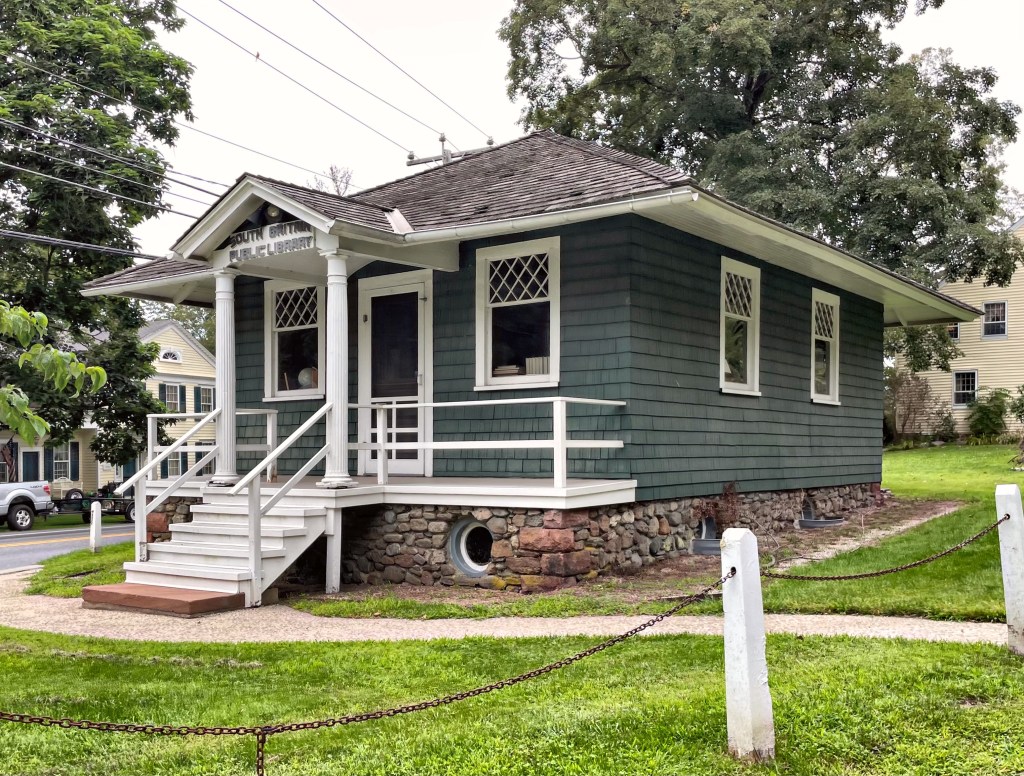
Historic library buildings might just be my favorite building type in New England. This charming example is the former South Britain Public Library in Southbury, Connecticut. The library was constructed in 1904 and blends Shingle and Arts & Crafts styles with the shingled walls atop a raised rubblestone foundation with a pyramidal roof with broad overhanging eaves with exposed rafter ends. The library was outgrown and rather than add onto the small building on its lot, a new library was built in 1969. The former library is now maintained by the Southbury Historic Buildings Commission and is operated by the Southbury Historical Society as a local history and genealogy research center.
The South Britain Congregational Church in Southbury, Connecticut was built in 1825 and was originally known as the Meeting House of the South Britain Ecclesiastical Society. The congregation dates back to 1766 and its first pastor, Jehu Minor, a Yale educated minister from Woodbury, was chosen in 1768. Members met at the Moses Downs House before its first meetinghouse was built in 1770. When the pre-Revolution church building was deemed inadequate, funds were raised to erect a new house of worship. In 1825, boards and other usable parts from the old building were used to construct the present Federal style church that stands in the middle of the village today. History states that pulleys were attached to an ox cart to hoist the bell up the steeple which is by far the tallest structure in the neighborhood. It is an exceptional example of the Federal style, with beautifully balanced proportions, a front pavilion, fine detailing and an elegant three-story steeple. The church made more history when in on September 25, 1937, 178 acres of land in Southbury, Connecticut was purchased for the German-American Bund, intent on building a Nazi camp. Similar camps were popping up around the nation, in an effort to promote an anti-semitic and pro-Nazi agenda. Led by Reverend Lindsay, the pastor of the church, the townspeople quickly established a zoning commission whose first ordinance forbade land usage in the town for “military training or drilling with or without arms except by the legally constituted armed forces of the United States of America.” Stunting the proliferation of nazism in Connecticut before WWII. This is why Southbury is sometimes known as “The town that said no to the Nazis”.
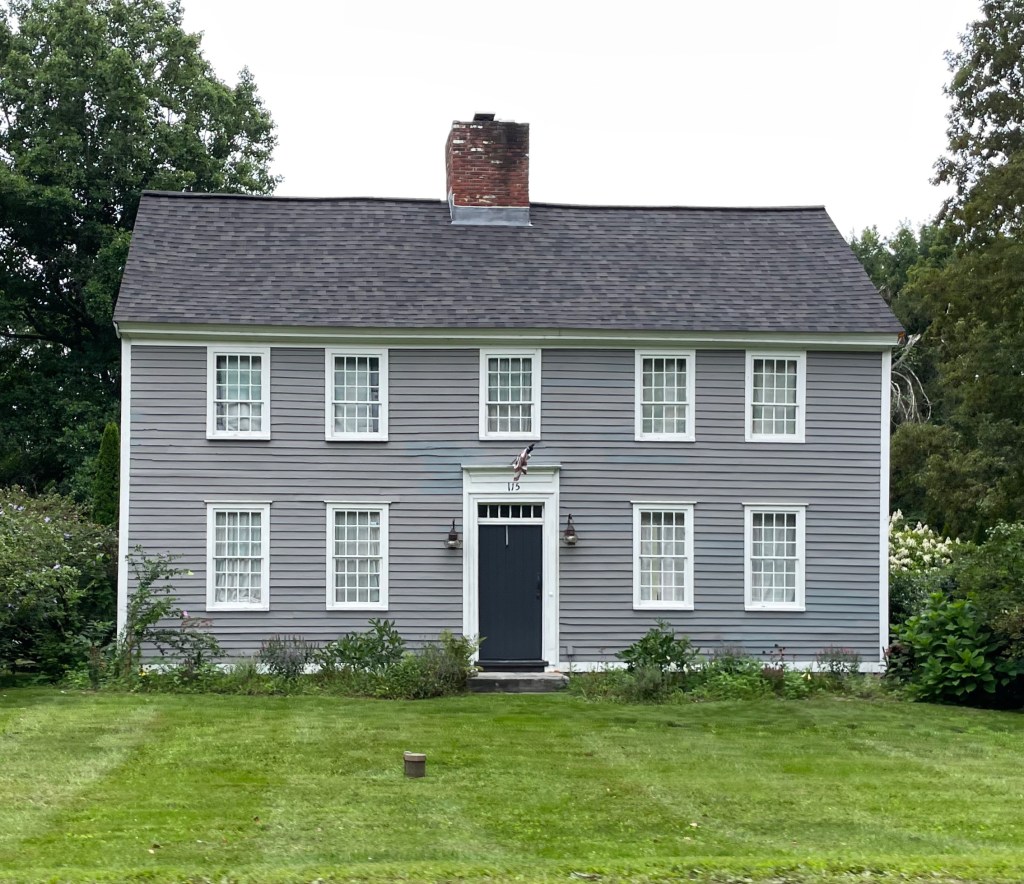
Less is definitely more when it comes to old Colonial houses! One of several pre-Revolutionary buildings in the South Britain Historic District is this residence, which was the home of South Britain’s first physician, Dr. Wheeler, in around 1750. From 1807-1822 the property was owned by Rev. Bennett Tyler, who would later become the fifth President of Dartmouth College. The house is a classic 18th century homestead of wood-frame construction with a side gable-roof, symmetrical five-bay façade, simple paneled entry door with a rectangular transom, and a central chimney. This is a beauty!
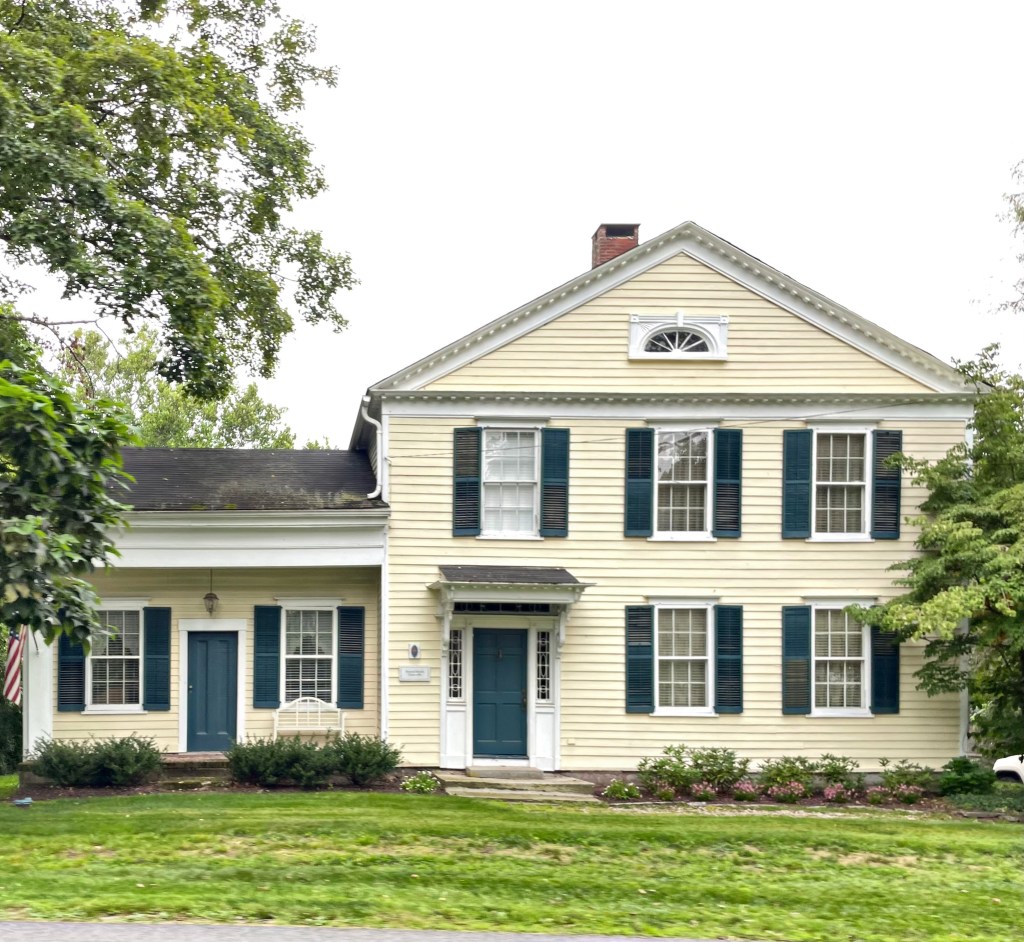
This transitional Federal-Greek Revival style house sits on the main street in South Britain, Southbury, Connecticut. The based on the style, the house was likely built around 1829 for Samuel Smith (1804-1856) who married Caroline Curtiss that year. Federal elements include the entry at the gable end, a pedimented facade embellished with modillions, and a doorway with sidelights and a leaded transom. Some moldings, the six-over-six windows and the simplicity of design are Greek Revival. It is one of the best preserved old houses in this part of Southbury.
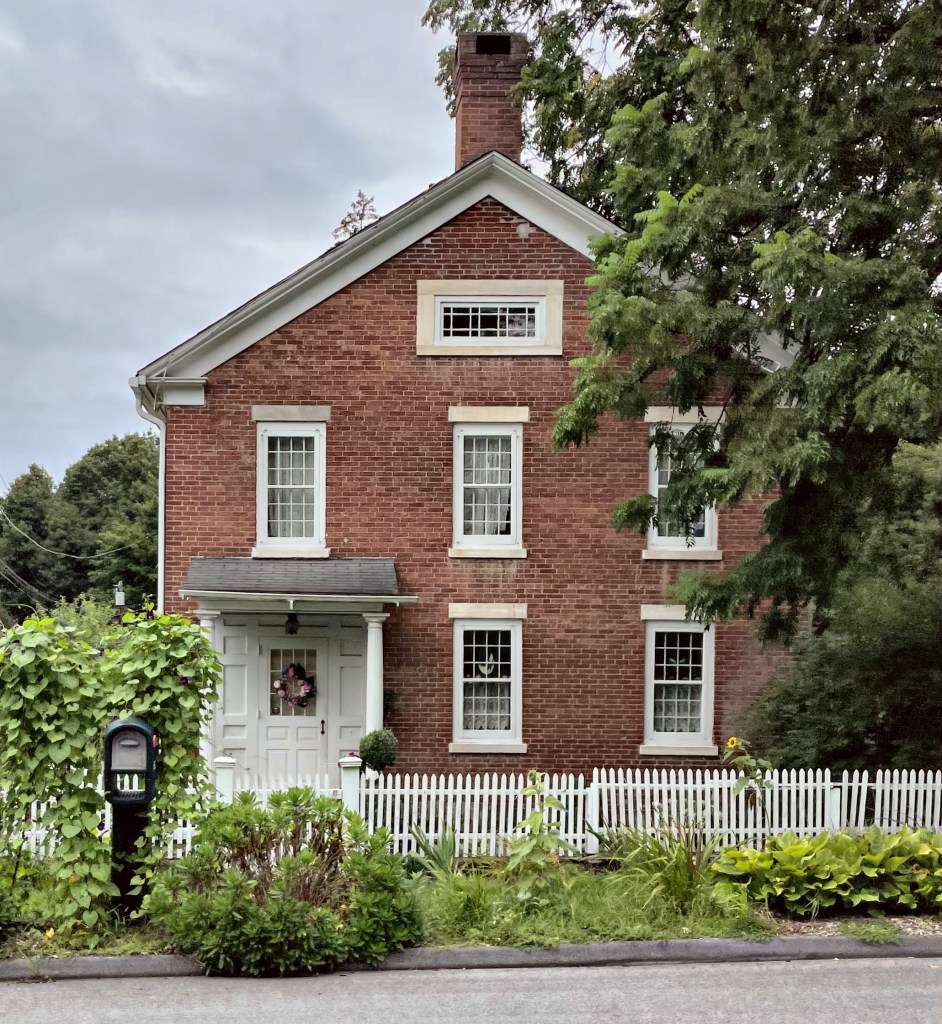
Located a stone’s throw from the Judson Manville House (last post) another uncommon brick Greek Revival style house in South Britain, Connecticut, this house stands out for its outstanding proportions and well-preserved exterior. This residence was built around 1830 for Benjamin Downs on the site of his family’s old property. The simple lines, portico at the entry supported by Ionic columns, and the window in the gable are all typical of the period.



 Buildings of New England