St. Mary’s Catholic Church, Ridgefield // 1896

Located just a block of Main Street in Ridgefield, Connecticut, St. Mary’s Catholic Church stands out as a rare example of Victorian Gothic architecture in a village full of Colonial (and Revival) and mid-19th century buildings. The first known Catholic to arrive in town was James Brophy, who’s family settled in Ridgefield in 1848. While growth of a local Catholic church in Ridgefield was slowly being established, the character of the town was changing by the second half of the 19th century, with wealthy New Yorkers building homes for vacationing in the summers. From this, many Irish Catholic immigrants were hired to work on the new estates. The first permanent Catholic church in town was built in 1867 as a modest wood frame church. As the congregation grew, a new church edifice was needed, and after a capital campaign, funds were gathered to erect a new church. Connecticut architect Joseph A. Jackson (who specialized in ecclesiastical design), was hired to furnish plans for the new church. The building exhibits eclectic architectural styles. Gothic design is seen in the pointed or lancet windows, arches and cast iron finials. The Queen Anne style is reflected in the use of textured and varied building materials, such as brick, brownstone, and shingles. And St. Mary’s most unique feature, its unusual steeple with its four turreted abutments and conical roof worked in shingles, is representative of the Shingle style.
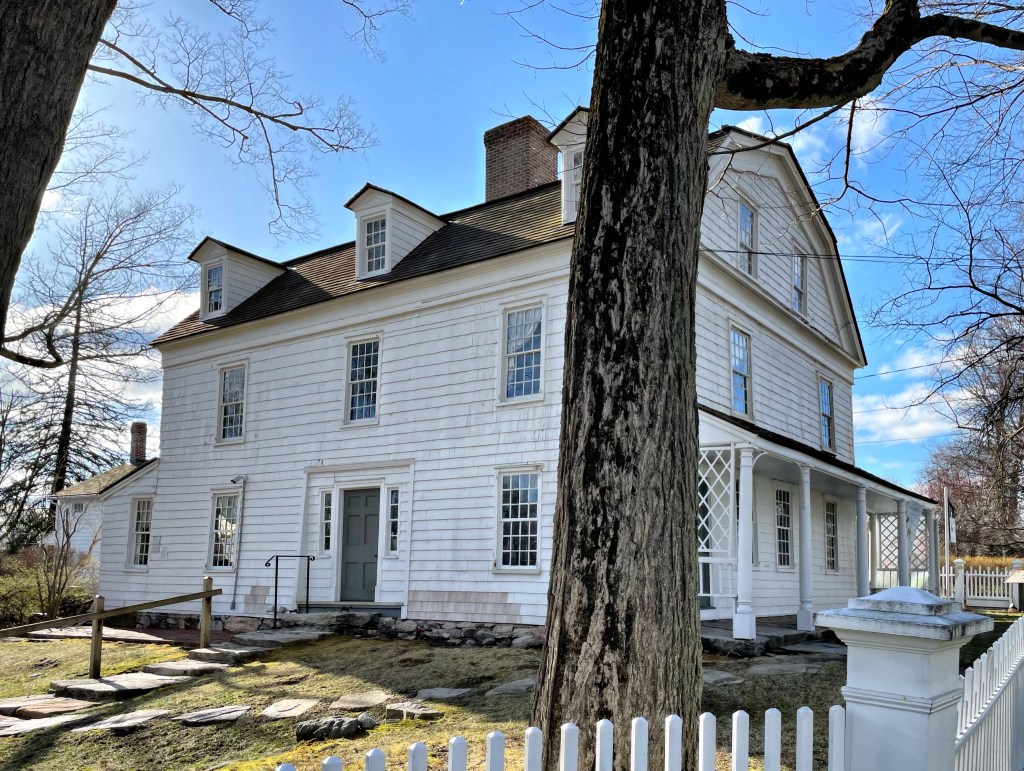
Keeler Tavern // 1713

Around the year 1713, Benjamin Hoyt built a home for himself and his family on Lot 2 of the laid out building lots along Main Street of Ridgefield CT. The building was originally a one room dwelling with a stone fireplace and no basement and was located next to the David Hoyt mansion (aka The Fountain Inn). After several years, he expanded the property by building around and above the structure, to give it the gambrel roof and size we see today. More than 50 years later, in 1769, the property was purchased by Hoyt’s son-in-law, Timothy Keeler. Timothy Keeler and his wife converted the building into an inn in 1772, just prior to the beginning of the American Revolutionary War. Keeler sided with the American revolutionaries and was active in the local militia. After the Battle of Ridgefield, British forces fired on the Keeler Tavern, because Keeler was an enemy. One of the cannons used to pummel the tavern is still lodged in a corner post of the house to this day. After later owners in the Keeler Family, the property was purchased by world-renowned architect Cass Gilbert, who turned it into his family’s summer home in 1907. In doing so, he made various improvements and additions to the building, in particular he designed a Garden House and added a sunken around the year 1910. Gilbert would also design a fountain as a gift to the town, which sits almost opposite his family’s summer residence. The property was purchased in the 1960s and has since been a historical museum.

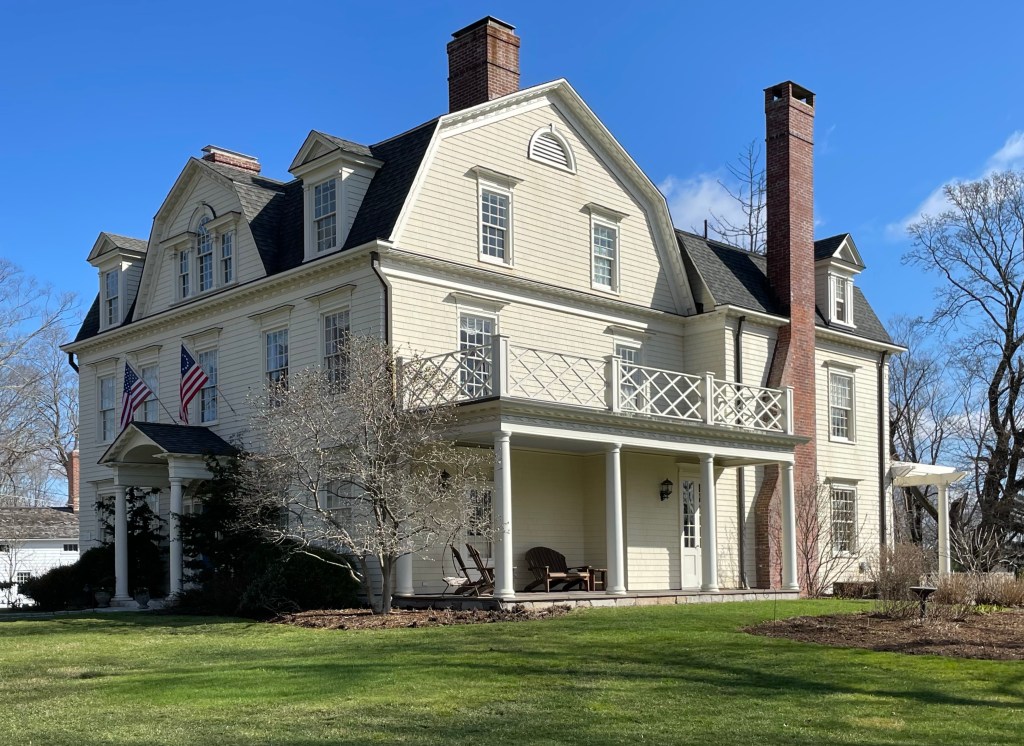
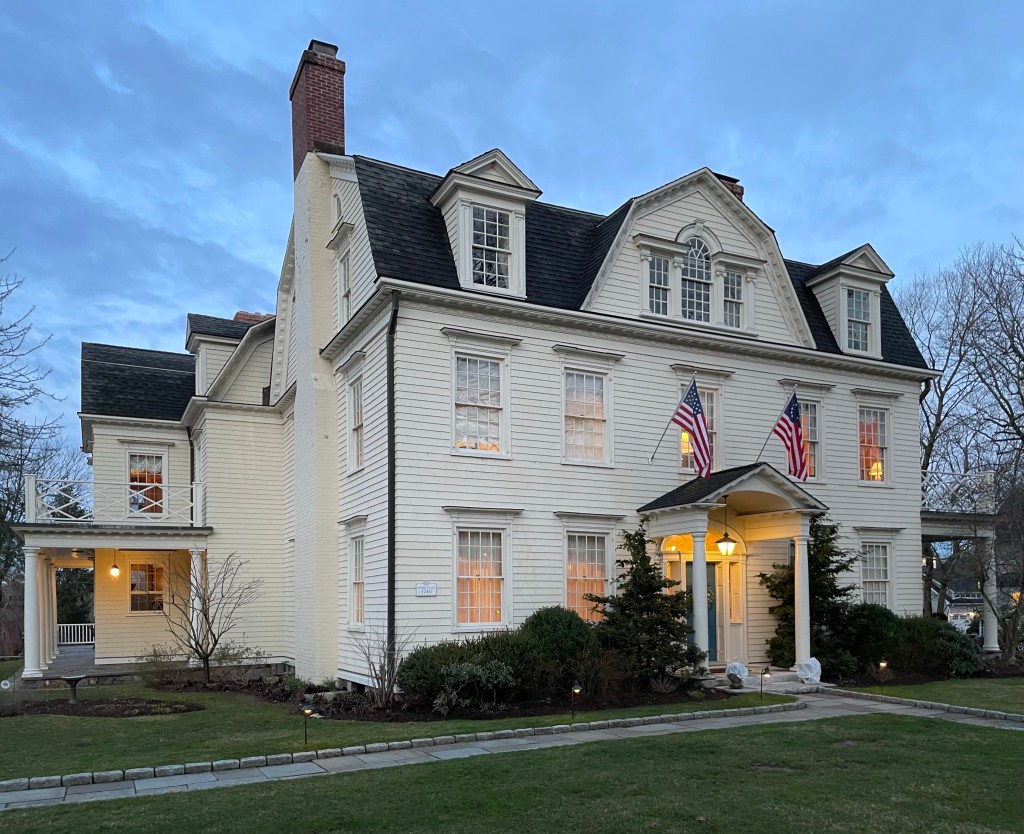
The Fountain Inn // 1740

Located on Main Street in idyllic Ridgefield, in Fairfield County, Connecticut, The Fountain Inn provides one of the most welcoming and historical bed and breakfast experiences in New England! The Fountain Inn was built in 1740 as a “city home in the country” for David Hoyt, who showed off his wealth and stature in the young town by having such a high-style home built at the time. Decades later during the Revolutionary War, David Hoyt’s house became a part of the Battle of Ridgefield. After defeating the Colonial militia elsewhere on Main Street, British Gen. William Tryon‘s troops turned their attention to nearby Keeler Tavern, the local militia’s headquarters, which just happened to be neighbors with the mansion owned by David Hoyt, a known Loyalist. General Tryon’s troops practiced their artillery-firing skills on the building pummeling it with cannonballs, sending a message to the head of the local militia. David Hoyt formally demanded a cease-fire, as he was concerned about wayward cannonballs damaging his home. By 1790, with Ridgefield’s British influence diminishing by the day, David Hoyt finally left his Connecticut home and sailed back to England. The home was expanded and modernized over the next two hundred years until the present owners purchased the property and underwent a massive restoration of the Colonial house inside and out as their family residence. In the past year, the inn opened as the Fountain Inn so-named after a Cass Gilbert-designed fountain across the street.