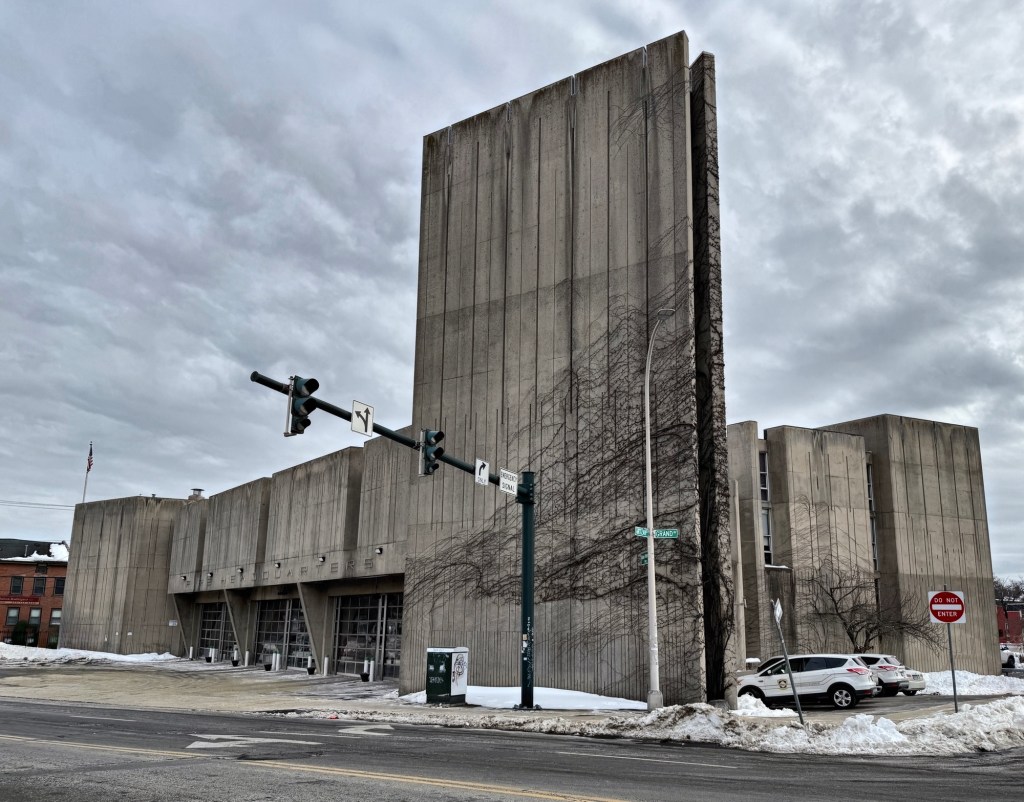
Brookline Town Hall // 1965

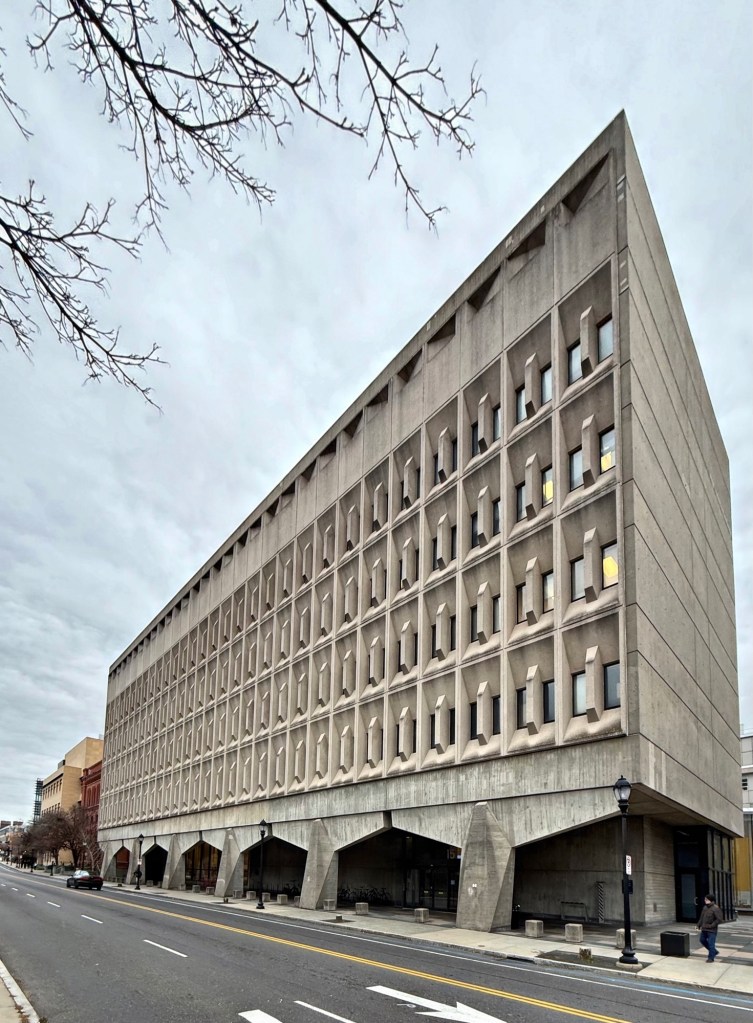
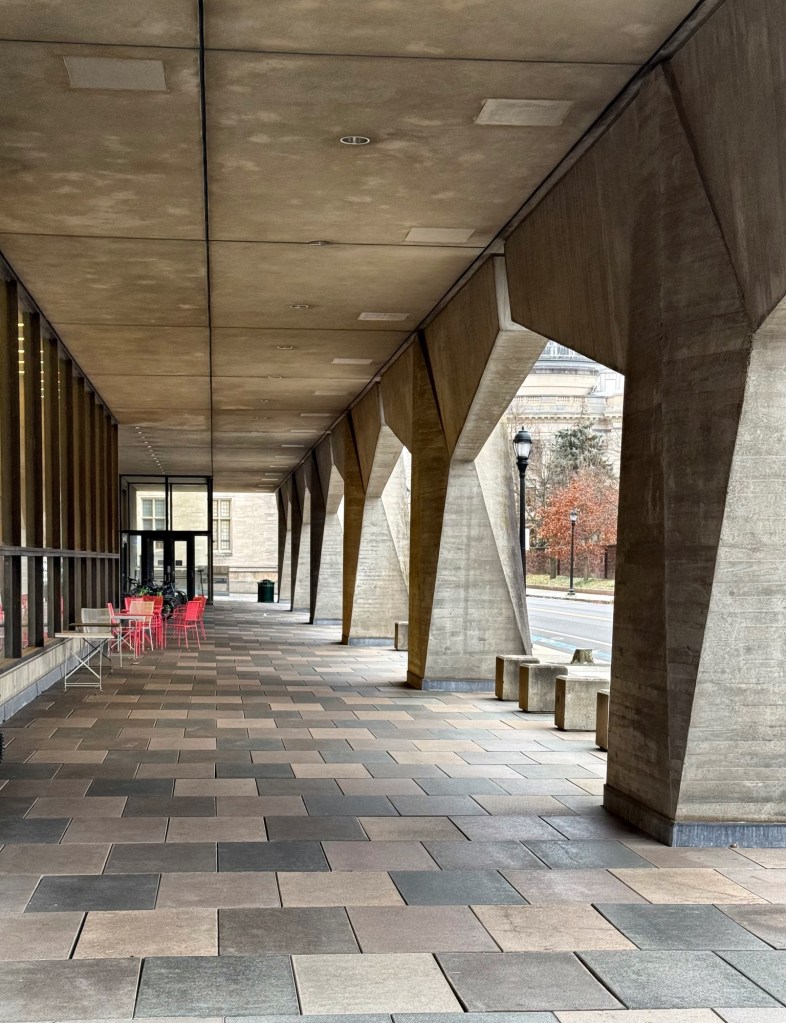
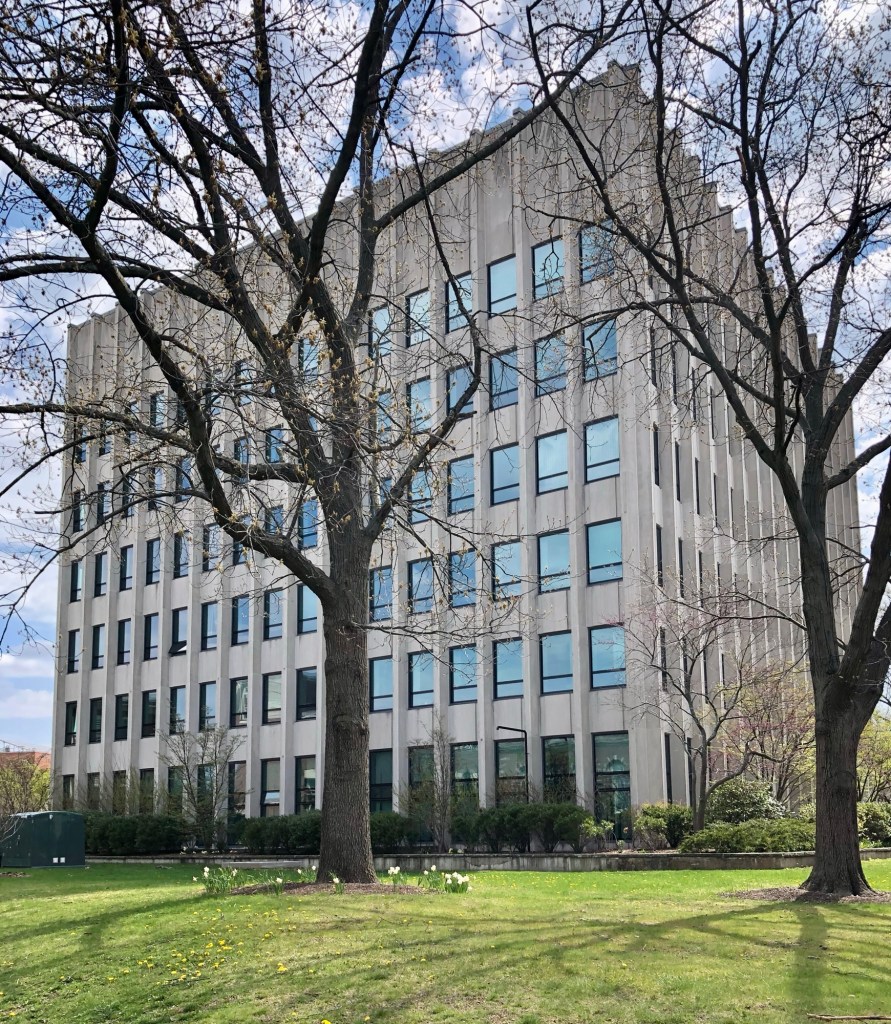
The modernist Brookline Town Hall building stands in stark contrast to the many historic buildings in Brookline Village, and even more-so from the town’s third Town Hall, a Victorian Gothic design by architect Samuel J. F. Thayer. Completed in 1965 as a six-story municipal “skyscraper”, the structure was designed by Anderson, Beckwith, and Haible, architects who specialized in sleek, clean, Modernist designs, primarily in office parks and college campuses. The unadorned box is broken up only by the rows of identical windows and slightly projecting fins, which break up the bays in their own monotony. Like many such municipal and office buildings of the time, the structure is set back from the street and surrounded by landscaping, with surface parking behind. While the building was lauded when it opened in 1965, tastes shifted and like in many communities, a majority of the public (and likely the employees who work here) would have preferred its predecessor.

Former Newton Savings Bank Building // 1962

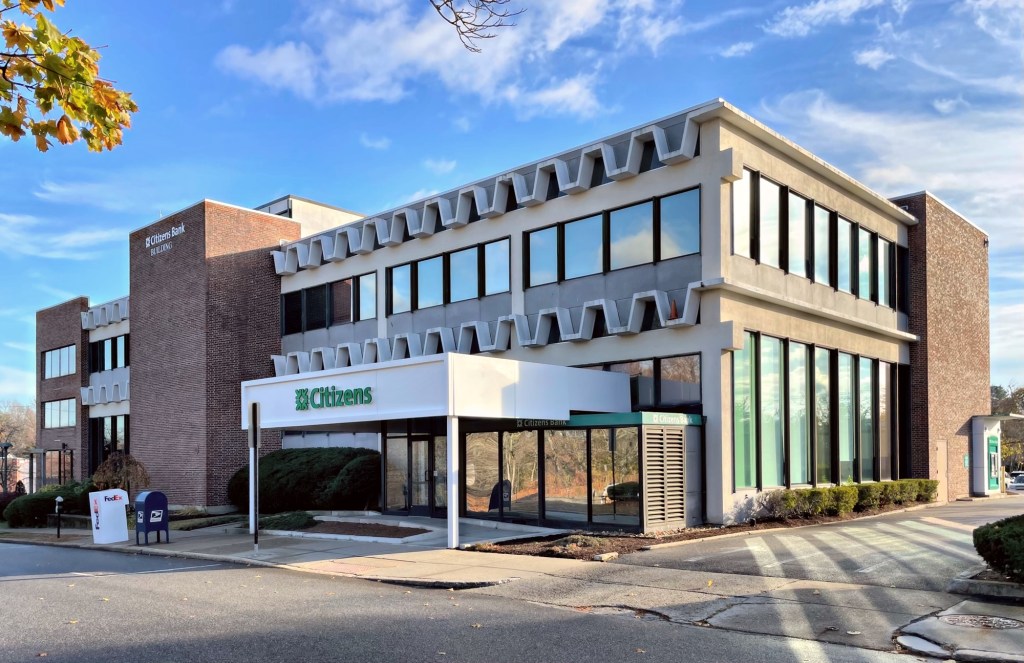
Opened in 1962 as the Newton Savings Bank, this unique Mid-20th century Modern banking structure showcases the forms and materials not conceived in previous decades. The building is located on the Newton Centre Green, adjacent to the former Newton Centre Methodist Episcopal Church, and provides a sharp contrast between the stone building in the Romanesque style and more contemporary forms. The bank was designed by Bastille and Halsey Associates, established in 1953 by partners, Robert Adams Bastille and William Ashbaugh Halsey. Now occupied by a Citizens Bank with professional offices also inside, the building exhibits precast concrete “zipper” banding between floors that are broken up by solid brick masses in the facade. What do you think of these corporate modern buildings?

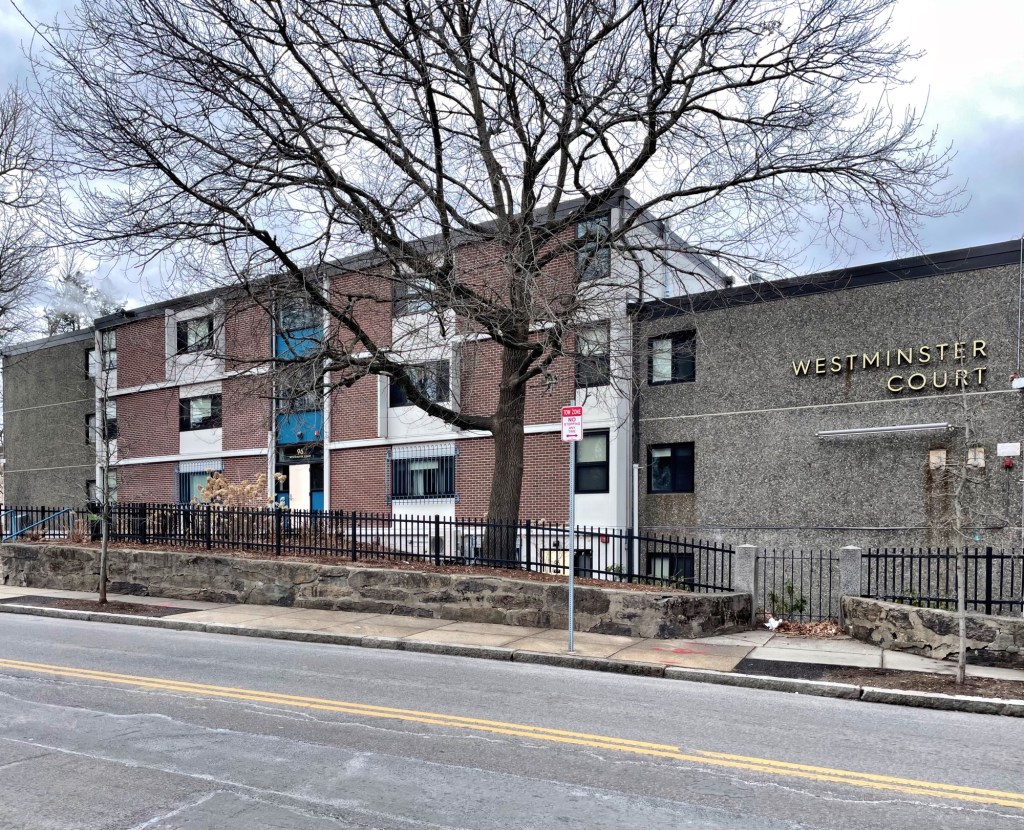
Westminster Court Housing // 1967

As populations boomed in the decades following the conclusion of WWII and suburbs drew wealthier residents to single-family neighborhoods, city governments were desperate to keep tax dollars in city limits. As a result, many cities instituted a policy called Urban Renewal, where neighborhoods (often with higher percentages of minority or immigrant populations) and historic housing were demolished as a form of “slum clearance” and modern housing centered around the automobile sprouted up in their place. The Washington Park section of Roxbury in Boston was one of the hardest-hit neighborhoods in the 1960s as part of a series of neighborhood plans by the Boston Redevelopment Authority. This housing development, called Westminster Court, was developed on one of the new Urban Renewal parcels in Washington Park. Designed by famed modernist architect Carl Koch, the Mid-Century Modern buildings were constructed in modular units to cut costs and expedite construction time. The buildings utilize precast frames with contrasting exterior panels of brick, exposed aggregate concrete, and aluminum. While many dislike these buildings, it is important to understand the history behind them and how they are part of the complex history of many cities.

Beneficent House // 1967

Located on the same block as the Arnold-Palmer House (last post) in Downtown Providence, this apartment building is the work of one of the most prolific Modernist architects of the 20th century, Paul Rudolph. During Downtown Providence’s period of urban renewal, which saw the demolition of much of Cathedral Square (much of which remains surface parking lots), planners sought a high-rise apartment building to house displaced elderly residents and others who hoped to reside close to downtown shopping and amenities. Architect Paul Rudolph, who was at the time Dean of Yale’s Architecture School, designed the brick building which employs horizontal bands in concrete which marks off floor levels and provides some breaks in the materiality. The building was originally designed in 1963, but after years of delays and budget cuts from rising construction costs, the balconies and other design features were removed from the final product, leading to its present simplicity. While simple, the building retains intrigue, especially with the projecting window bays and offset openings, a departure from the block apartment buildings at the time.

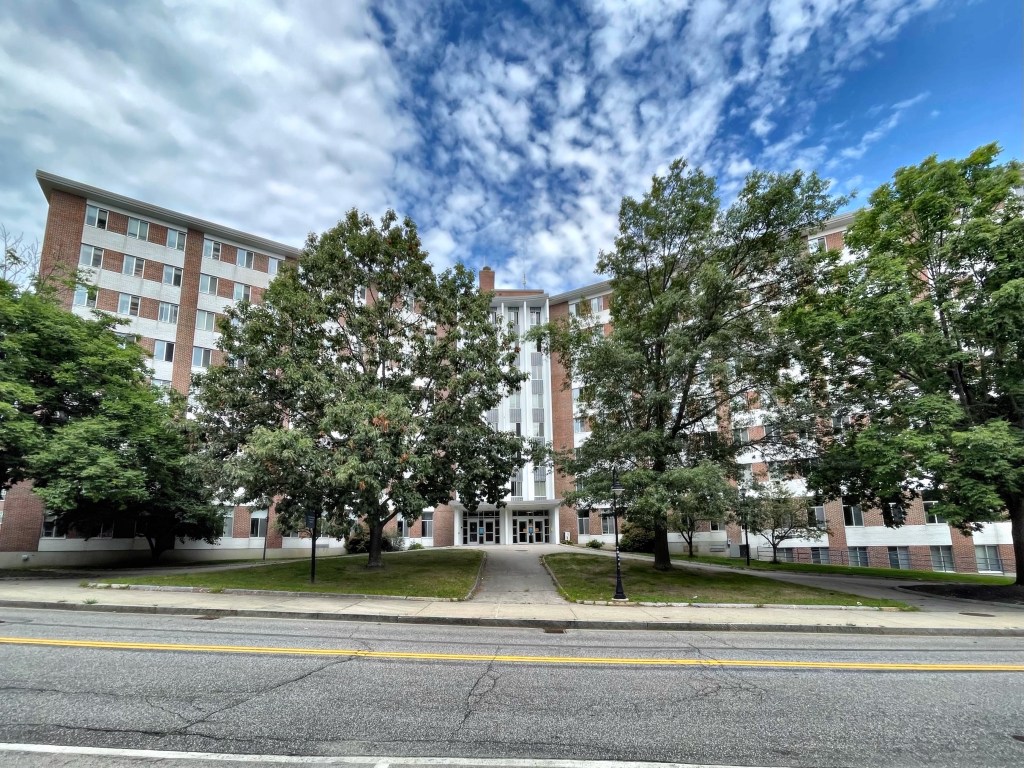
Stoke Hall – University of New Hampshire // 1965

One of the most recognizable buildings (largely due to height) on the University of New Hampshire campus in Durham is Stoke Hall, a large dormitory on the outskirts of campus. The building was designed by Leo Provost, a New Hampshire-based architect, who actually graduated from UNH in 1936. Stoke Hall is named for Dr. Harold Walter Stoke, President of the University of New Hampshire from 1944-1947 during an enrollment surge that more than tripled enrollment and the beginning of a massive building program that continued for decades. The surge began with the conclusion of WWII, and the increase in young men going to college thanks to the GI Bill. Mr. Stoke got around as a President, as after three years at New Hampshire, he became President of Louisiana State University (LSU) until 1951. He later served as President at Queens College, New York, for six years. The Y-shaped building was constructed in two phases, the two wings facing the street were built in 1965, with the rear wing added the summer later. The design blends mid-20th century styles from New Formalism to Mid-Century Modern in a graceful way, especially for a college dormitory, though, I cannot speak for the interiors.