RISD Museum – Chace Center // 2008

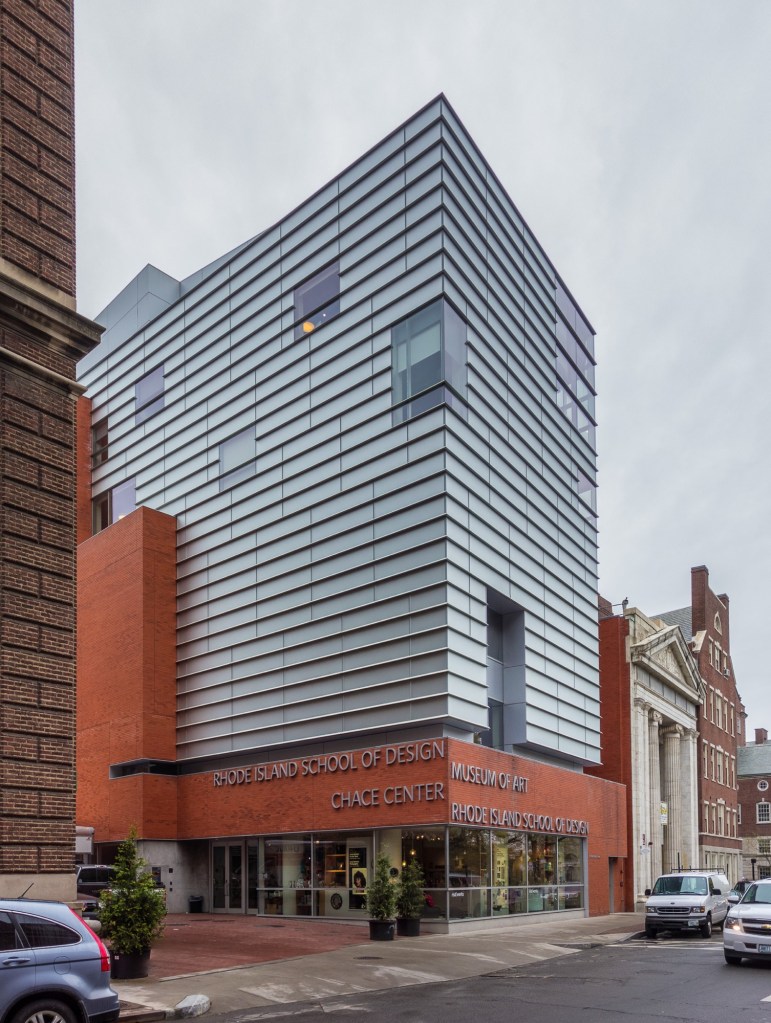
The Chace Center, also known as the RISD Museum in Providence, Rhode Island, is a contemporary infill project that serves as both an expansion of one of the region’s premier art museums as well as a front-door to a prestigious world-class college. The college hired the firms of Rafael Moneo Arquitectos of Spain as design architect and Perry Dean Rogers as the architects on record, for the project, which includes an auditorium, student exhibit spaces, museum shop, cafe, and information center as well as being an important connector between various buildings within the block, including Memorial Hall, a significant former church built in the 1850s, and the People’s Savings Bank, a 1913 Neo-Classical building. The $34 million center was built on a former parking lot in one of the few remaining open spaces near RISD, and it was named in honor of the late Beatrice and Malcolm Chace. It is not easy to fit a contemporary museum on a tight site surrounded by historic brick buildings, but the RISD Museum does just that, with the use of contemporary brick to set the building within its context with the contrasting pearl-glass volume at the facade providing a face to the steel and glass towers in Downtown Providence.

Beneficent House // 1967

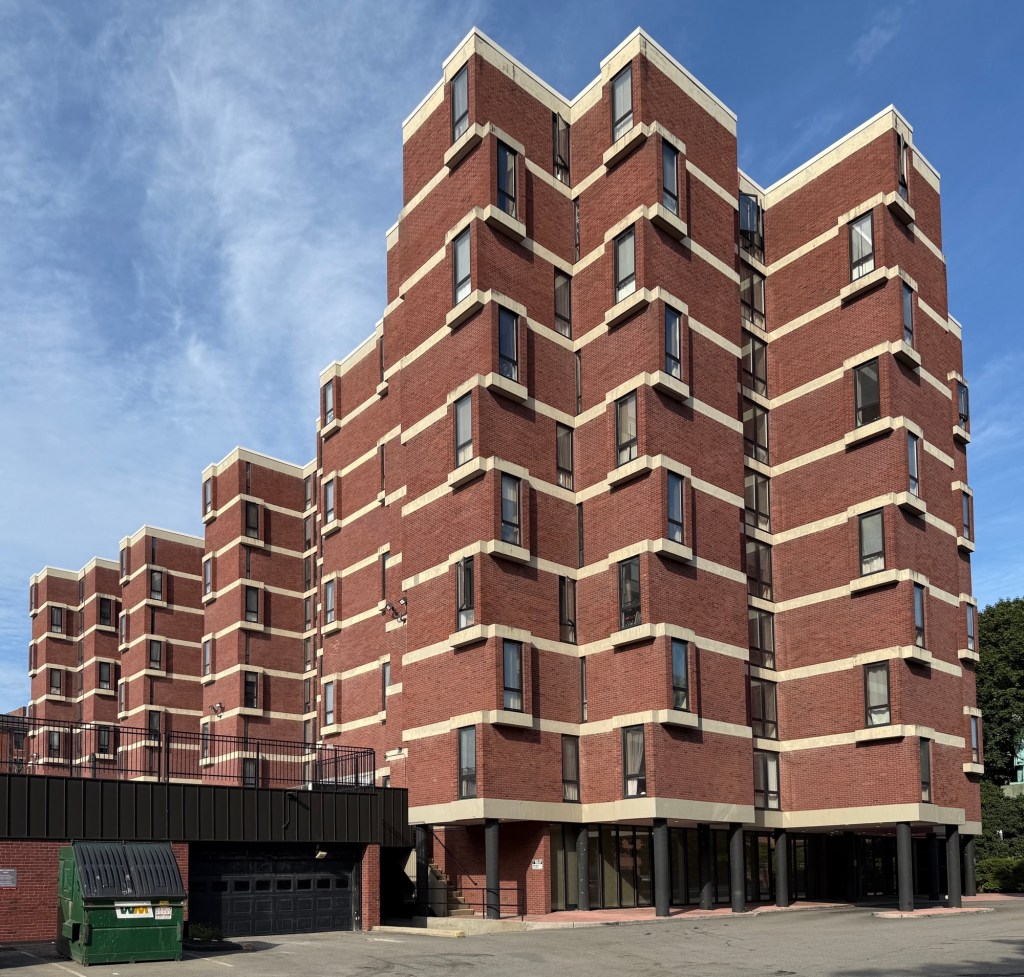
Located on the same block as the Arnold-Palmer House (last post) in Downtown Providence, this apartment building is the work of one of the most prolific Modernist architects of the 20th century, Paul Rudolph. During Downtown Providence’s period of urban renewal, which saw the demolition of much of Cathedral Square (much of which remains surface parking lots), planners sought a high-rise apartment building to house displaced elderly residents and others who hoped to reside close to downtown shopping and amenities. Architect Paul Rudolph, who was at the time Dean of Yale’s Architecture School, designed the brick building which employs horizontal bands in concrete which marks off floor levels and provides some breaks in the materiality. The building was originally designed in 1963, but after years of delays and budget cuts from rising construction costs, the balconies and other design features were removed from the final product, leading to its present simplicity. While simple, the building retains intrigue, especially with the projecting window bays and offset openings, a departure from the block apartment buildings at the time.