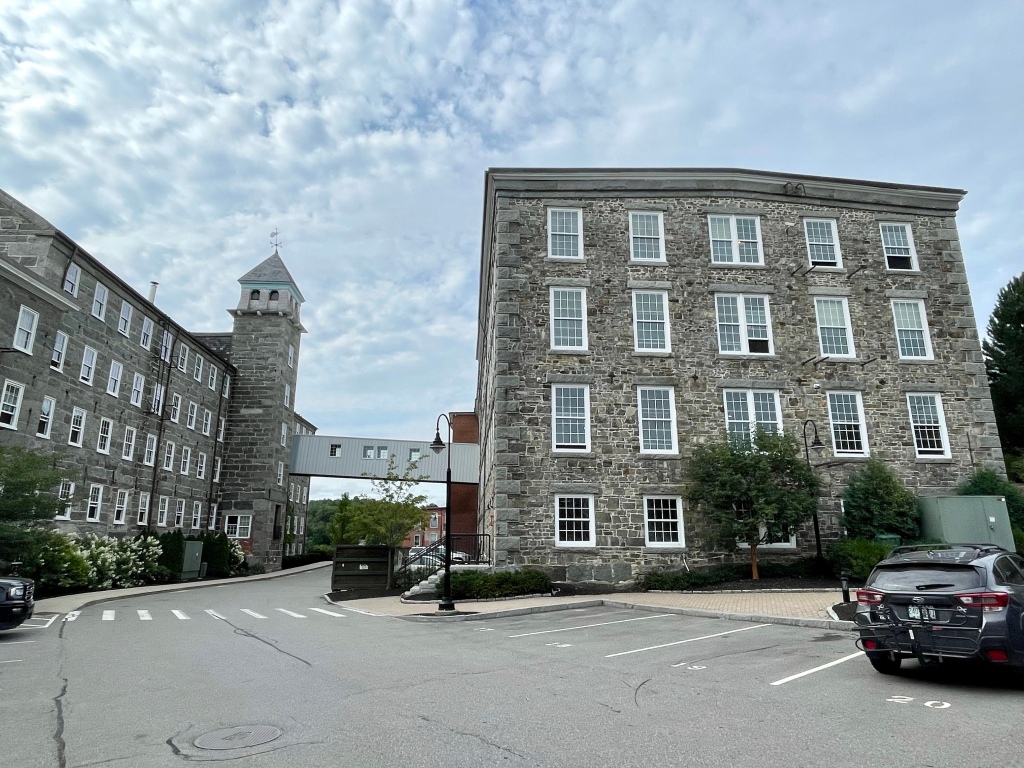
Lapham Woolen Mill // 1879

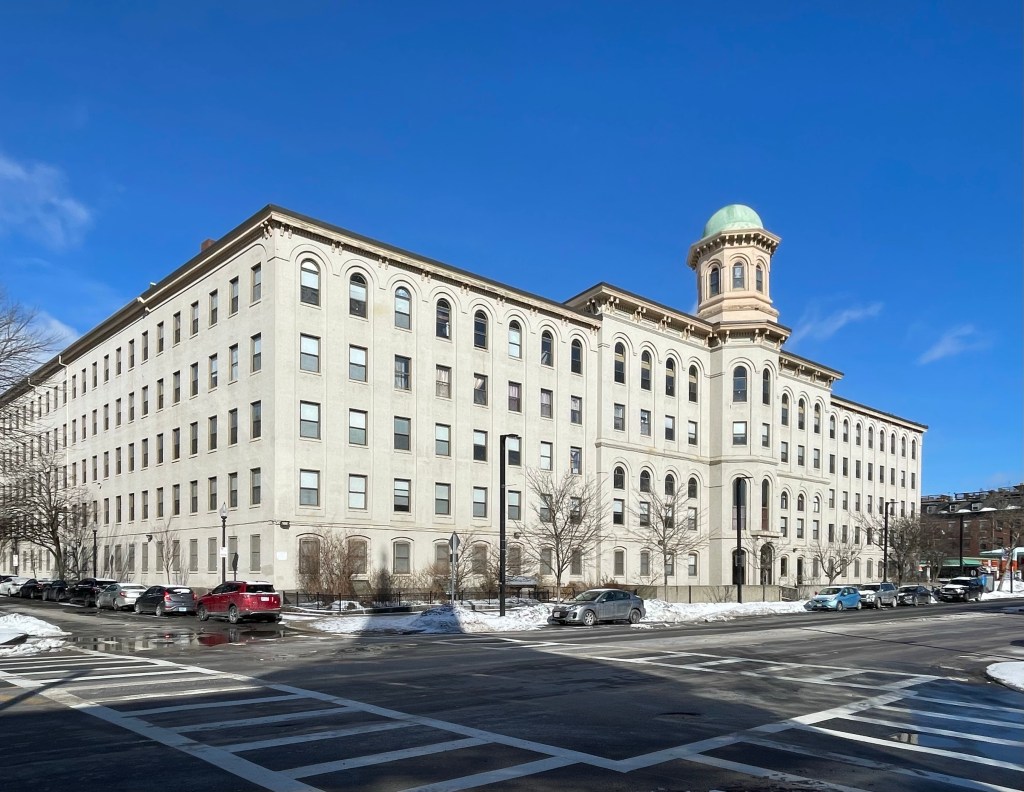
I have gotten a lot of requests recently to feature an old New England mill town, and I wanted to highlight a lesser-known one, so here is Millbury, Massachusetts! This gorgeous mill building was constructed between 1879-1919, impacted by over forty years of growth and design. The Lapham Woolen Mill is the largest and most intact 19th century industrial building in Millbury and sits in the middle of Bramanville, an industrial village in the town, off Singletary Brook, a branch of the Blackstone River. The Lapham Woolen Mill was built on the location of the former Burbank paper mills, which were in operation in Bramanville between 1775-1836. The Lapham Woolen Mill was started in the mid-1870s by Mowry A. Lapham, who oversaw the company’s growth after the Civil War, manufacturing clothing and other woolen goods. After Mowry’s death, the company’s pollution into the brook got the best of them and they disbanded, selling it. The mill was then purchased by Josiah and Edward Mayo, and their business partner Thomas Curtis. The group renamed the existing business the Mayo Woolen Company. The complex was occupied by Steelcraft Inc., a manufacturer of medical supplies, until recently. The building’s future was threatened until 2020, when a proposal to restore the old mill, and add new housing on the site was proposed. Fingers and toes are crossed to see this gorgeous building restored!

Collins Axe Company Factory // 1826-1966

Image courtesy of Keith Thom

The first ready-to-use axes produced in the United States came from the Connecticut-based Collins Company, which was founded in the early 1800s. Prior to the firm’s establishment, consumers either purchased unground axes imported from Europe or looked to a local blacksmith who, along with his other activities, might also make axe heads. The Collins Company factory opened in 1826 by Samuel W. and David C. Collins, with the purchase of an old gristmill and a few acres of land along the Farmington River in Canton. As the company grew, the village of South Canton grew around it, and was later renamed Collinsville after the company (imagine if we had Starbuckstown or Walmartville!) In the 1840s, the company expanded and sold internationally with their machete; it sold more than 150 varieties of machetes in 35 countries, supplying 80% of the world’s machetes at that time. In the 1860s, the company built several dams along the Farmington River to produce hydroelectric power to run its factory. It saw steady growth during World Wars I and II. However, after the Flood of 1955 wiped out the railroad line, the company could not match the foreign competition. Portions of the business were sold to the Stanley Works in New Britain and to other firms. In 1966, the Collins Company closed after 140 years in business. Some of the old buildings along the river have since been demolished, others left vacant. Some have been repurposed into other uses, thankfully.

Lancaster National Bank – Central Fire Station // 1836

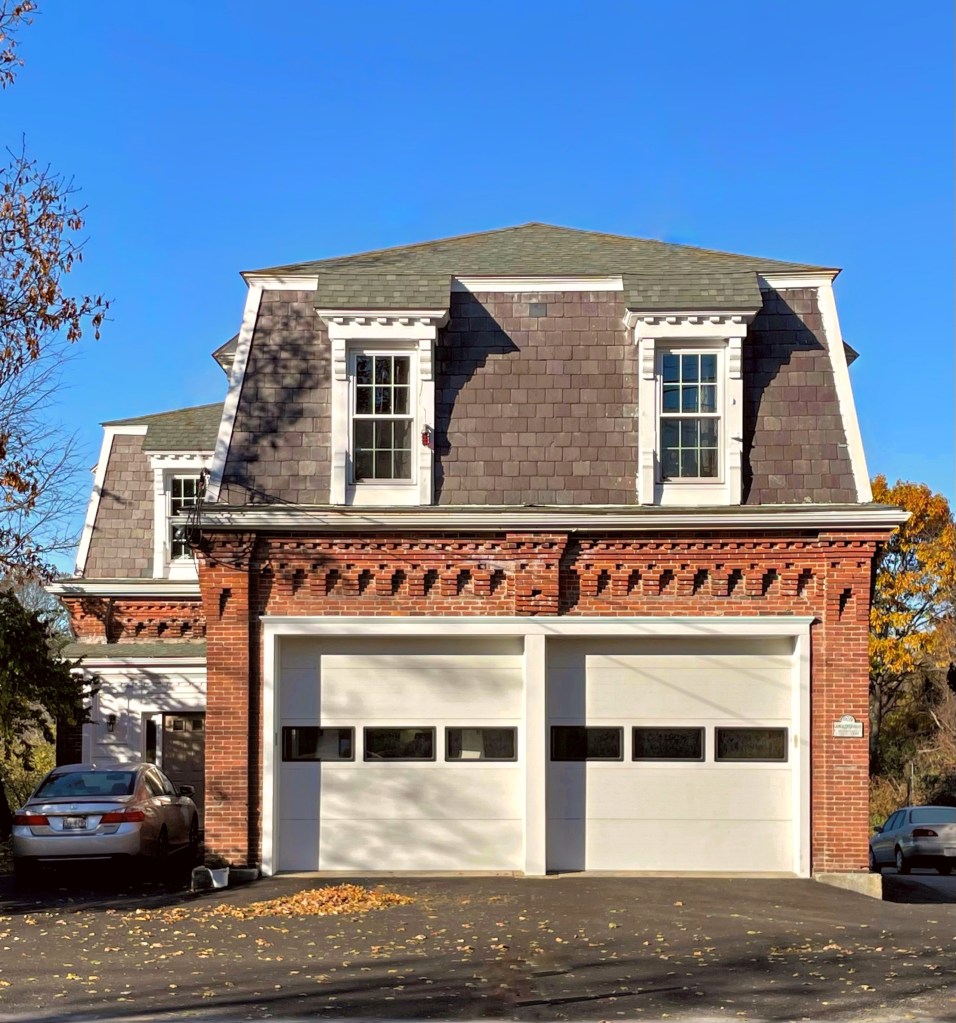
Located on sleepy Main Street in Lancaster, Massachusetts, this cute mini-mansard building caught my eye immediately, and I had to take a picture! The building was constructed in 1836 for the Lancaster National Bank. The brick building was just one story with storefront windows and a central entrance, and was the only bank in the small town. When the neighboring town of Clinton saw a large increase in population due to industrial growth, the Lancaster National Bank decided to relocate to be closer to a larger clientele. They sold this building to the Town of Lancaster in 1882 and moved out. Within a year, the town added the mansard roof to the building, being careful to preserve the original cornice (now where the brick meets the roof), and converted the building to a fire station with double doors. The Central Fire Station was in operation here until 1967 when a new building was built nearby, with doors large enough to easily house modern engines. The building was then used as storage and offices for the Lancaster Water Department. Sadly, the replacement fire station doors really diminish the appeal of the building.

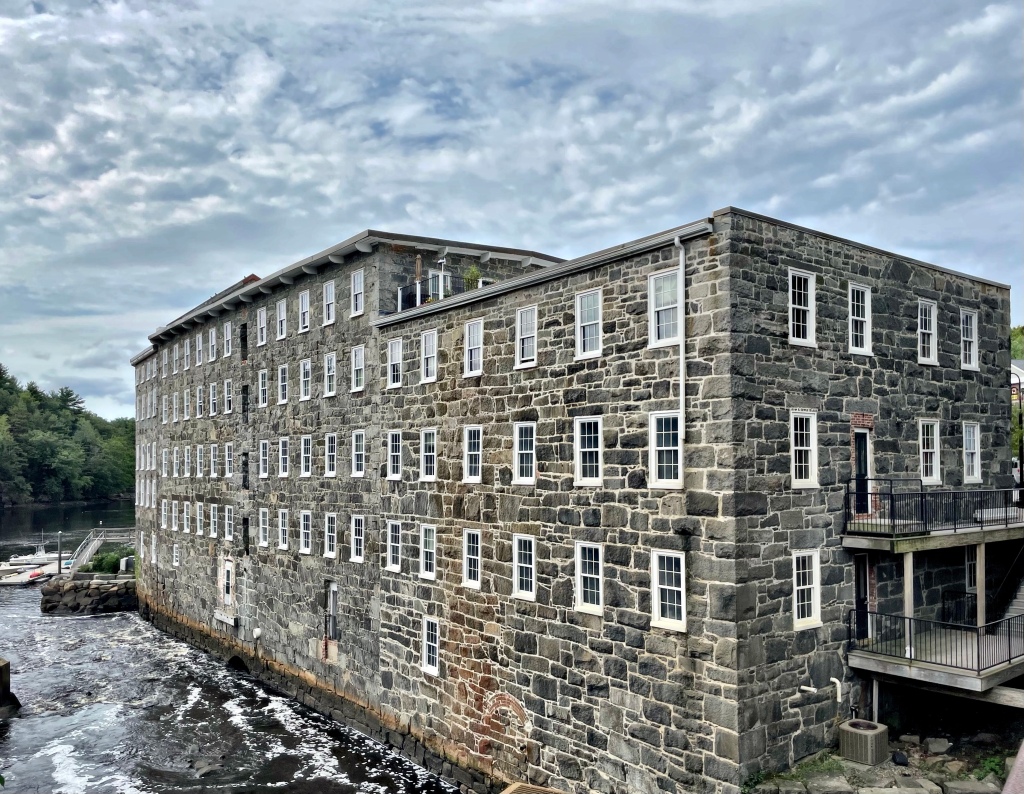
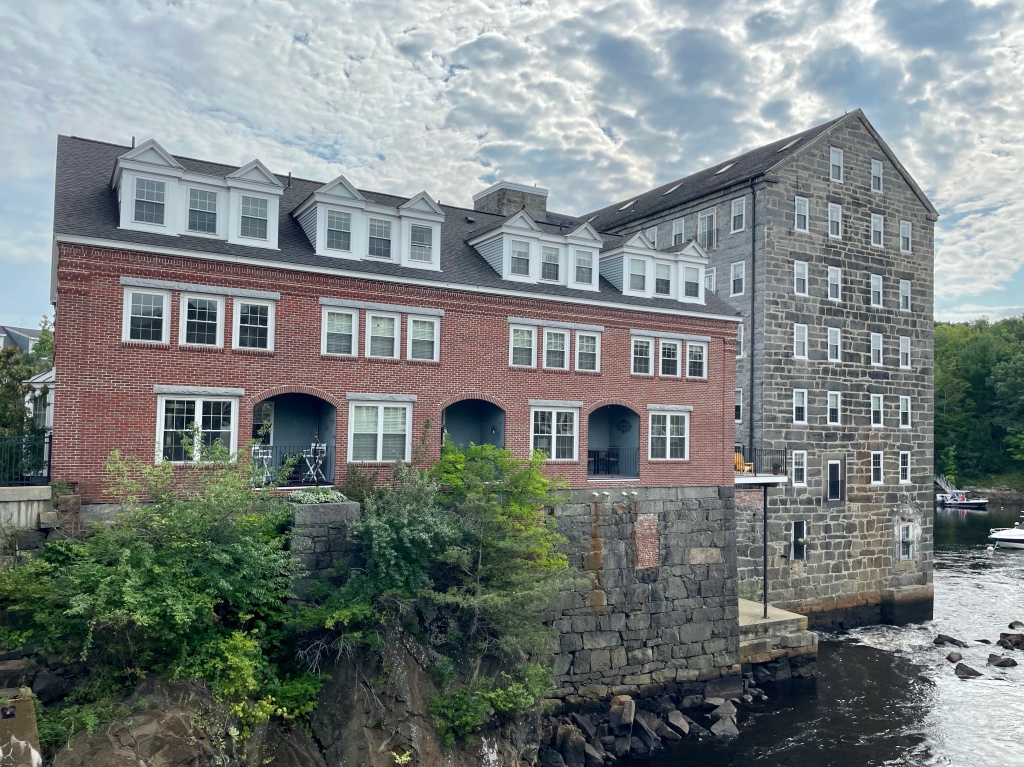
Newmarket Manufacturing Company Complex // 1823+

In 1823, the Newmarket Manufacturing Company built its first mill along the Lamprey River, dominating the waterfront and the economy of Newmarket, New Hampshire. Harnessing water power at the base of the falls, the cotton textile manufacturing community grew to include seven textile mills, with factory buildings, a machine shop, office, storage buildings, and corporate boarding houses; totaling some 140 buildings in all. During its peak production, 700 employees made up to 300,000 yards of cotton products each week, and 2.7 million yards of silk cloth each year. The mills operated continuously at this site until 1929 when a dispute between mill owners and workers erupted leading to their closure. Between 2010 and 2012, eight large mill buildings within the Newmarket Manufacturing Company property underwent a conversion to mixed use, including residential, retail, and office units, thanks to Historic Preservation Tax Credits, and many professionals who worked together with the vision to see such a large project through. Today, the complex is a excellent case-study on the power of adaptive reuse and historic preservation.

First Universalist Church, Marion // 1830

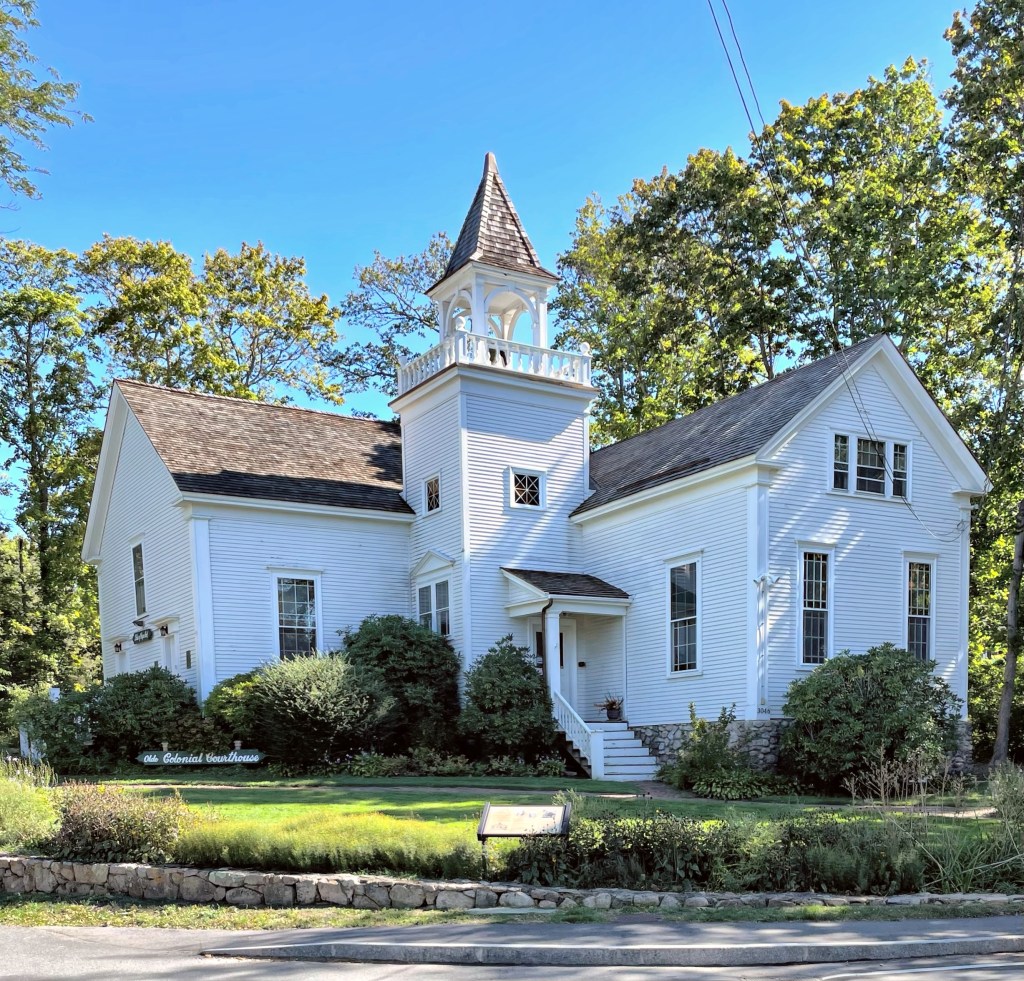
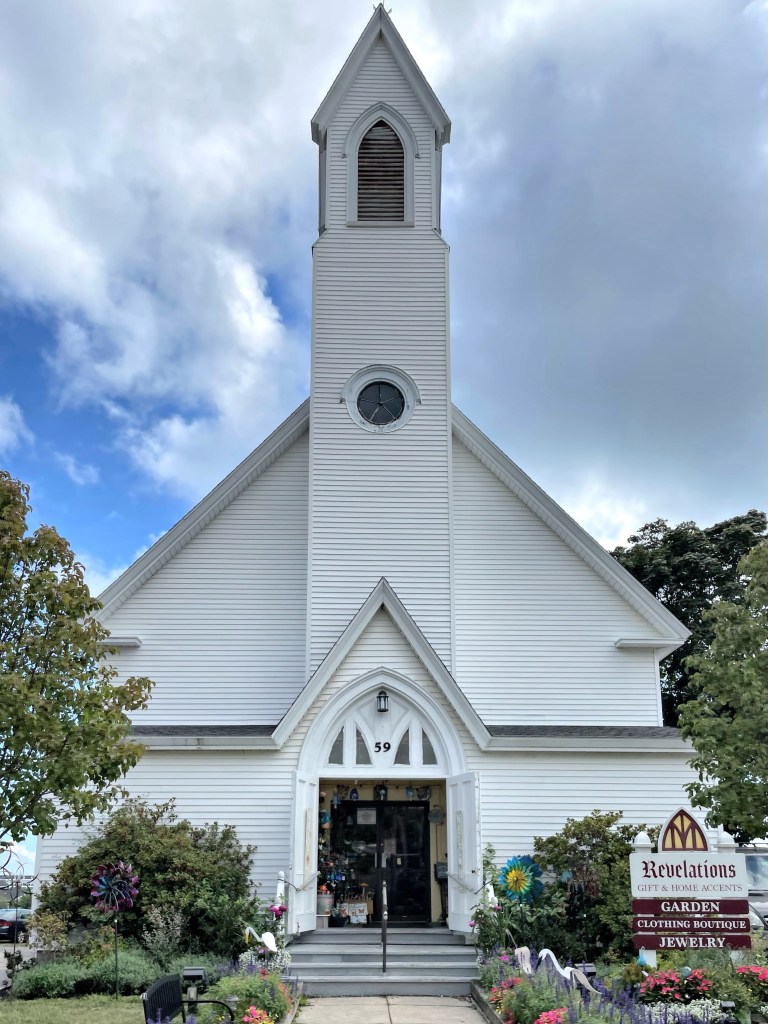
I do love a good adaptive reuse story! This Marion, Massachusetts church building was constructed in 1830 for the town’s growing Universalist congregation. Architect Seth Eaton was hired and furnished plans, likely relying on neighbor, Warren Blankinship, a carpenter and congregant, to construct the building. It blends together the Greek and Gothic Revival styles well, but in a less sophisticated form. By the mid 20th century, membership of the church dwindled, and it finally shuttered its doors. With the building’s future uncertain, at a time where demolition for surface parking lots was the go-to solution, Marion residents Andrew and Dorothy Patterson, purchased the building and soon after worked with local artists in town to restore the building for use as an art space. The Marion Art Center was thus founded in 1957, and to this day, serves as a non-profit community cultural organization dedicated to promoting the visual and performing arts.

Old Stone Studio // c.1820

Just a stone’s throw away from the Marion Town Hall and Elizabeth Taber Library (yes, pun intended), this beautiful 200 year old stone building oozes charm. The building was constructed around 1820 as a salt works storage facility, and is an extremely rare surviving storage facility associated with the early 19th century salt industry. While many storage facilities we know today are void of architecture and soul, this building looks like it was plucked from the French countryside. The salt industry in Massachusetts began on Cape Cod during the Revolution. Salt was a vital necessity for the preservation and curing of fish and meat for sale in this country and overseas. According to local lore, the Old Stone Studio was originally “a place for the conversion of sea water into salt.” Around the Civil War, the building was being used as a whale oil refinery, a fitting use for a fireproof structure. It had fallen into disrepair by the 1880s, until New York magazine editor Richard Watson Gilder bought and restored it as a studio for his wife, artist Helena de Kay Gilder. Gilder renovated the building in the early 1880s as the town of Marion was becoming a vibrant summer colony. He added a massive stone fireplace and new windows to flood the interior with natural light. The towering fireplace, with its 9-foot long mantle, was apparently designed by leading 19th-century American architect and Gilder’s friend Stanford White of McKim, Mead & White. The fireplace provided a stunning backdrop for guests, including President Grover Cleveland and First Lady Frances Folsom Cleveland, who summered in town. Ms. Gilder even painted the First Lady in the studio, and hosted her on occasions.

Wilmot Center Schoolhouse // 1854

Driving through the quaint village of Wilmot Center in New Hampshire, I had to pull over to snap a photo of this little library building. When I got home, I learned that the building was constructed in 1854 not as a library, but as a schoolhouse! The vernacular Greek Revival school served as one of many district schoolhouses in the region, dispersed around small towns to be within walking distance of the sparsely developed parts of the state. With population growth in the 20th century and the proliferation of the personal automobile, these small regional schools became obsolete. Many of these buildings were converted to other civic uses or as personal residences, but most were demolished. The Wilmot Public Library located in the former schoolhouse in 1972 and is now connected to the town offices next door.

Bristol Customs House and Post Office // 1858

Completed in 1858 from designs by architect Ammi B. Young, the Bristol Customs House and Post Office is a two-story rectangular Italianate style building, that stands out as an uncommon building of the style in town. Ammi B. Young was the first Supervising Architect of the U.S. Treasury Department. As federal architect, he was responsible for designing many custom houses, post offices, courthouses and hospitals across the United States. He was a master of the Greek Revival style so it is interesting to see how he diverged from his trusted style in a town so populated by homes and buildings in the style. The design is more subdued compared to other Customs Houses he designed around the time, likely a response to the declining economy in town from whaling and shipping. The building was occupied as a customs house and post office until 1962, when it was abandoned. The adjacent YMCA purchased the building soon after, connecting it via a small addition and occupying it as additional programming space until 1990. The building was restored and is now home to the Bristol Oyster Bar.

Bristol County Courthouse // 1816

Located on the Bristol Town Green, facing the main commercial area and harbor, the old Bristol County Courthouse is a well-preserved example of a building for civic use in town, at the height of its growth. It is believed that the courthouse is the work of architect Russell Warren, who lived in a home he designed just blocks away. This Federal-style stone building is faced with brick and subsequently stuccoed, giving it the unique composition it has today. The focus of the symmetrical facade is the large central arched window with granite quoins, and Y-tracery that echos Gothic design. As part of the 1836 state Bicentennial, the stucco facing was added over the original brick facing, and the exterior was painted a Gothic Revival sand color with darker trim, replicated in a 1976 restoration. From 1819, the courthouse served as one of the five state houses used in rotation by the Rhode Island General Assembly (in 1854, the General Assembly decided to meet only in Providence or Newport). In 1853, it reverted to courthouse use, a function which ceased in the early 1980s. The Bristol County Sheriff maintained offices there until 1997, when the building was purchased from the state for $1 by the Bristol Statehouse Foundation. The nonprofit foundation has worked to restore and maintain the building. Today, the building is used for education, community programs, meetings, and events.

Ebenezer Baptist Church // 1860

On September 15, 1847, a ship carrying 66 men and women and children docked at Long Wharf in Boston. This group of ex-slaves, led by Rev. Peter Randolph, emancipated by their former slave master Carter H. Edlow from the Brandon Plantation in Prince Georges County, Virginia. Members of the Boston Anti-Slavery Society, led by William Lloyd Garrison met the newcomers and made them welcome by securing lodging and work for self-support.  The group settled in the South End on Ottaway Court not far from the Holy Cross Cathedral. The group first joined the Twelfth Baptist Church of Boston before establishing their own congregation. They eventually occupied this church in 1887, the building was designed by architect Nathaniel Bradlee in 1860, which was built for what was then the Third Presbyterian Church of Boston. The church has remained here for nearly 150 years, seeing the rapid change in the neighborhood. The church building accommodated meetings including the Professional Black Women’s Business Club, which bolstered Black women in business, many members owned stores in the South End. Many members left the area amid growing gentrification in the 1980s and 1990s, and from that, the aging population remaining made keeping the doors open difficult. Sadly, the church relocated out of the building in 2020 and appears to have sold the building, leaving its future uncertain.