What do this unique Victorian house and sideburns have in common? Well, you are about to find out!
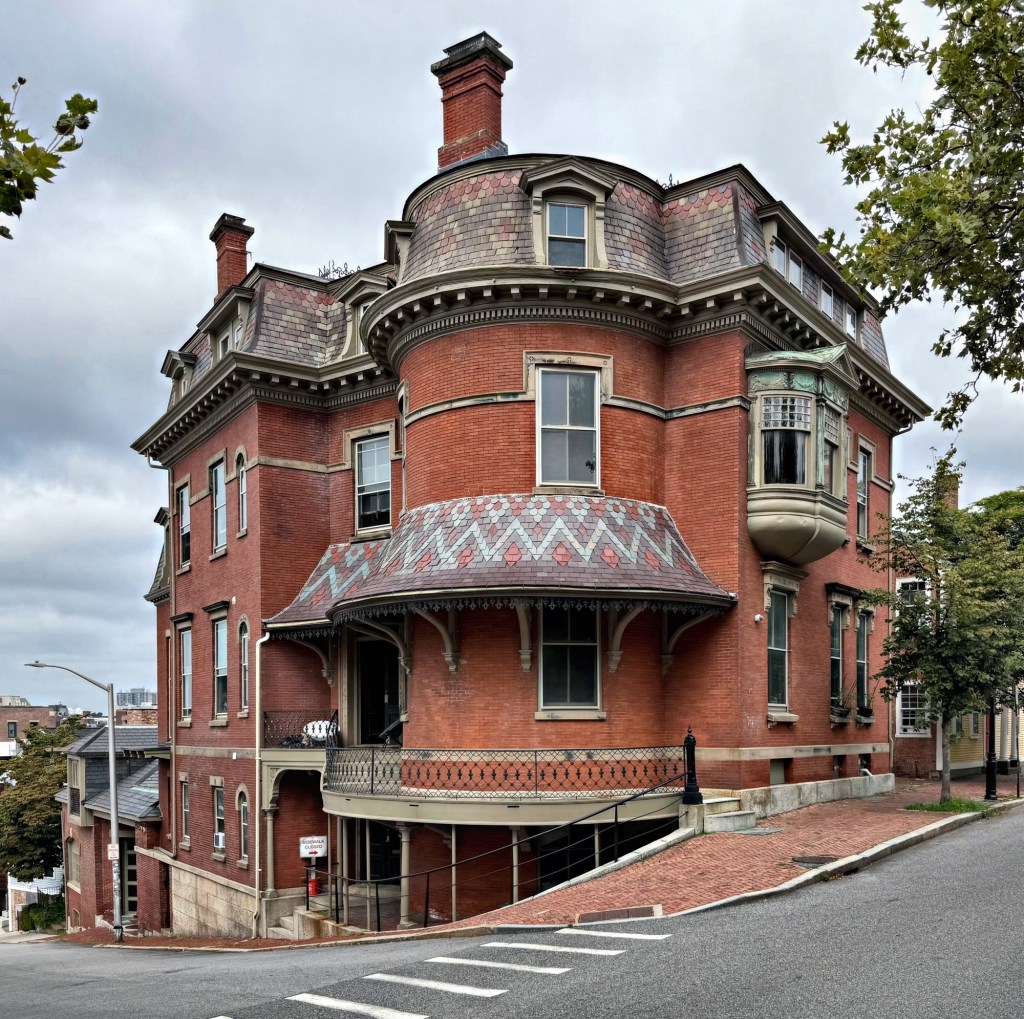
The Ambrose Burnside House is sited on an oddly shaped, and sloping corner lot on Benefit Street in Providence’s East Side neighborhood, and is one of the most unique Second Empire style residences in New England. The house was built in 1866 for General Ambrose Burnside (1824-1881), a Union general in the American Civil War, who returned to Providence and was about to begin a term as governor, followed by two terms in the United States Senate. Ambrose Burnside hired local architect, Alfred Stone, to design his new city mansion, which upon completion, was deemed one of the most “modern residences” in Providence. Built of brick with Nova Scotia stone with a concave slate mansard roof and one-of-a-kind rounded corner bay, the Ambrose Burnside House does not disappoint! Ambrose Burnside died in 1881 and the property was occupied by his sister-in-law until the property was sold in 1884 and housed the Providence Children’s Friend Society House for Aged Women and the Providence Association for the Benefit of Colored Children, providing shelter and food for elderly women and children of color without parents or guardians. After WWII, the Burnside House was converted to apartments.
Now, to the sideburns… Ambrose Burnside was noted for his unusual beard, joining strips of hair in front of his ears to his mustache but with the chin clean-shaven; the word burnsides was coined to describe this style. The syllables were later reversed to give sideburns.
 Buildings of New England
