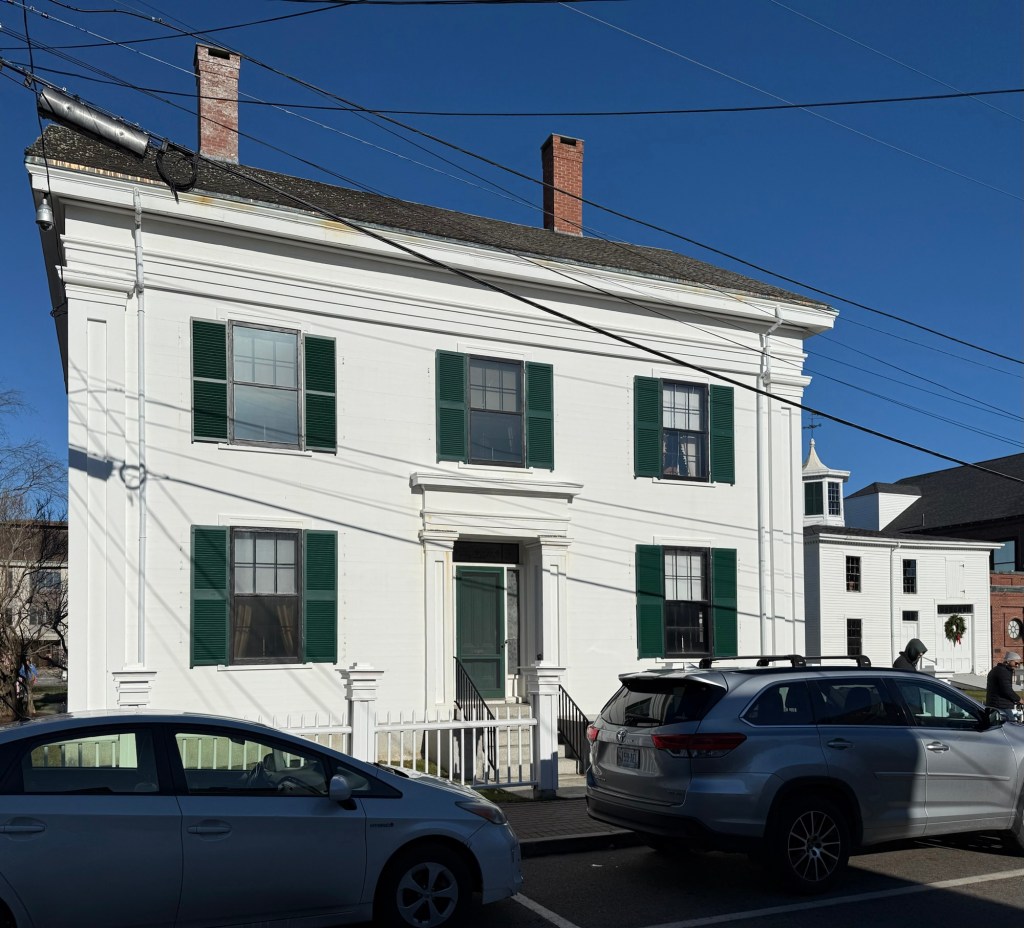
The Farnsworth Homestead is located on Elm Street in Downtown Rockland, Maine, and is an excellent example of a mid-19th century residence in the Greek Revival style. The home was built in 1850 for Rockland businessman William Alden Farnsworth, who gained his income from lime-rock quarries and the Rockland Water Company. Mr. Farnsworth was a leading businessman who helped establish Rockland as the number four port in the United States, largely exporting lime for masonry construction all down the east coast. After William died in 1873, the property was inherited by his heirs, the last of which, Lucy Farnsworth, lived here until her own death in 1935. The 96-year-old Lucy Farnsworth died in the home and in her will, bequeathed the family property and ample funds to establish the Farnsworth Art Museum, and included preservation of the family homestead as a mid-19th century house museum, which it remains to this day. The Greek Revival style house with its flushboard siding and bold pilasters, was recently restored by the museum, along with the carriage house which stands to its east.
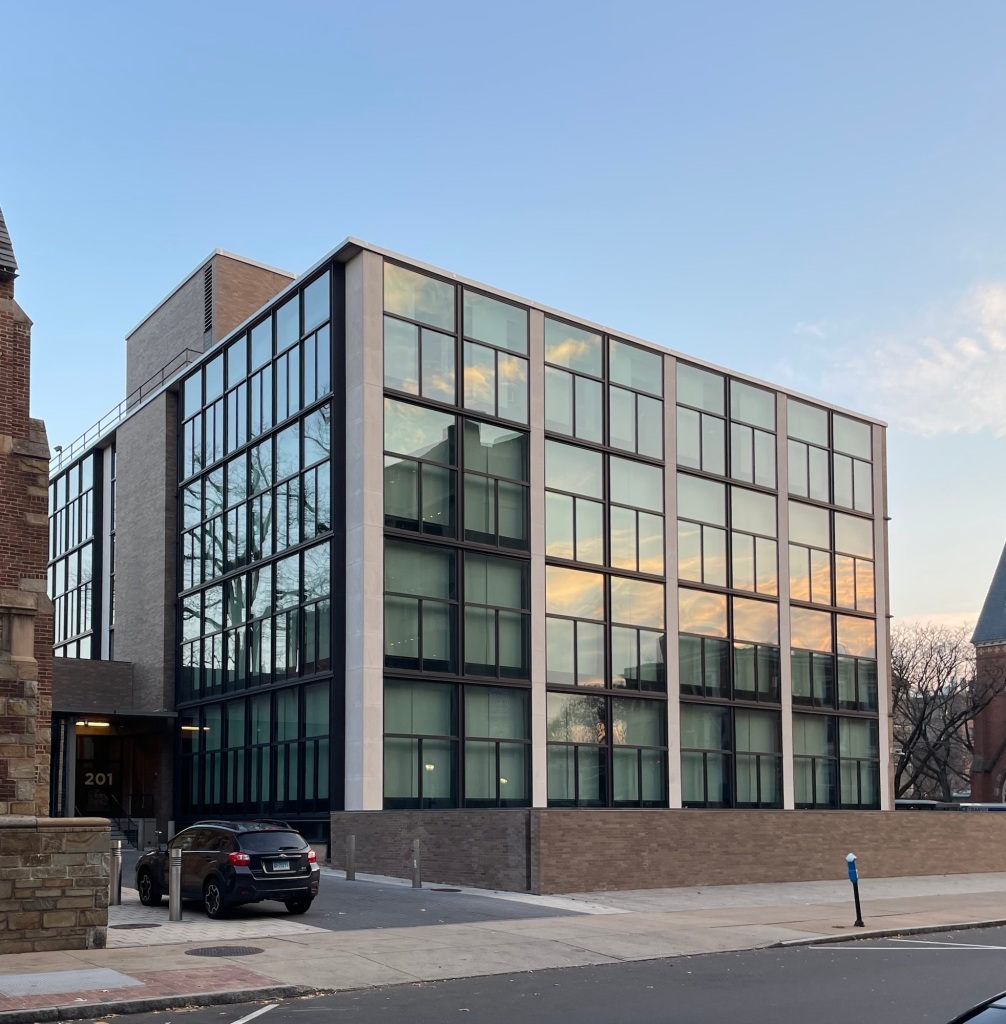
Yale University’s School of Architecture was in the midst transition when Louis Kahn joined the faculty in 1947. The post-war years at Yale trended away from the school’s Beaux-Arts lineage towards the avant-garde, and Modernist principles brought over from European architects. When the University called for a new wing for its existing Venetian Gothic style Art Gallery Building (1928), they obviously had no choice but to make a statement for the future of the school. Architecture professor Louis Kahn worked with Anne Tyng, who was both a professional partner and his “muse”, who heavily influenced his works, including here where she designed the concrete tetrahedral slab ceiling at the interior galleries. As a professor and practicing architect, Kahn hoped for students and visitors would engage with the building, even interior spaces often overlooked design-wise, such as the stairwells. While the facades are fairly minimal in design details, because the attention was paid to the interiors, which provide protection from natural light while also allowing for large floor plates for customizable exhibitions. The structure is Yale’s first true Modernist building on a campus which soon after was dominated by some of the country’s most iconic examples of the style.
One of the most visually stunning and unique buildings in New England is the 1928 Yale Art Gallery building, which is connected to Street Hall (last post) via a skybridge over High Street. Completed in 1928, the Yale Art Gallery was designed by relatively little-known, but significant 20th century architect, Egerton Swartwout. Swartwout graduated from Yale College in 1891 with a B.A. degree and with no formal architecture training, was hired as a draftsman at the illustrious firm of McKim, Mead & White in New York before running his own office, Tracy and Swartwout. Built in a Gothic Renaissance style inspired by Italian buildings such as the Bargello in Florence, the sandstone masonry structure commands the prominent site with a corner tower and facade fronted by five gothic arched windows. Inside, visitors are transported to a historic Italian art museum within the Gallery Wing, with the full-height Gothic windows with walls, floors and ceilings restored and lined in stone.
Closing out this series on Yale’s Old Campus, I present one of the finest Victorian Gothic collegiate buildings in the United States, Street Hall. Street Hall was designed by Peter B. Wight (who had just completed the Venetian Gothic style National Academy of Design in New York City) and opened in 1866. The building opened as the Yale School of the Fine Arts, which was the first art school on an American college campus. The building was named after Augustus Russell Street (1791–1866), a Yale graduate and New Haven businessman who donated the funds for the building’s construction on the condition that all residents of the city could enroll in the school, wanting a bridge between citizens of New Haven (“Town”) and the college “Gown”). Augustus Street and his wife, Caroline Leffingwell had seven daughters together, all of whom predeceased them. It was likely the fact he was around so many women in his life that he also required the Yale School of the Fine Arts to admit both male and female students (Yale would become co-educational and admit women to all programs in 1969.) Street Hall is a landmark example of the Victorian/Venetian Gothic style with lancet arches, polychromatic stone, and trefoil and quatrefoil stone medallions. Street Hall is now connected to, and is a part of the Yale University Art Gallery.
By 1919, artists from all over the United States and Europe were living and creating art in Woodstock, NY. As a thriving and expanding group of diverse individuals, the need for a welcoming and open-minded gallery space was quickly recognized. To facilitate this, a group of five painters established two complimentary organizations: The Woodstock Art Association (later changed to Woodstock Artists Association in 1933) who would maintain the exhibition space and set its artistic principles, and the Artists Realty Company who would finance the construction and maintenance of the physical space. The five painters being: Carl Eric Lindin (1869-1942), John F. Carlson (1874-1945), Frank Swift Chase (1886-1942), Henry Lee McFee (1886-1953) and Andrew Dasburg (1887-1979). New York City architect William A. Boring was commissioned to design the new museum and art space for the group. Boring (whos career was anything but boring) briefly worked for McKim, Mead and White for a year before starting his own practice with Edward Tilton in 1891. His most noted work is his 1897 Immigration Station on Ellis Island for which he and Tilton won the design competition as relative unknowns. The refined Colonial Revival building for the Woodstock Artists Association sits right in the middle of the village and its symmetrical façade is defined by a central double door entrance with transom and pedimented enframement. Of particular interest is the row of four elliptical windows above the double-hung windows.
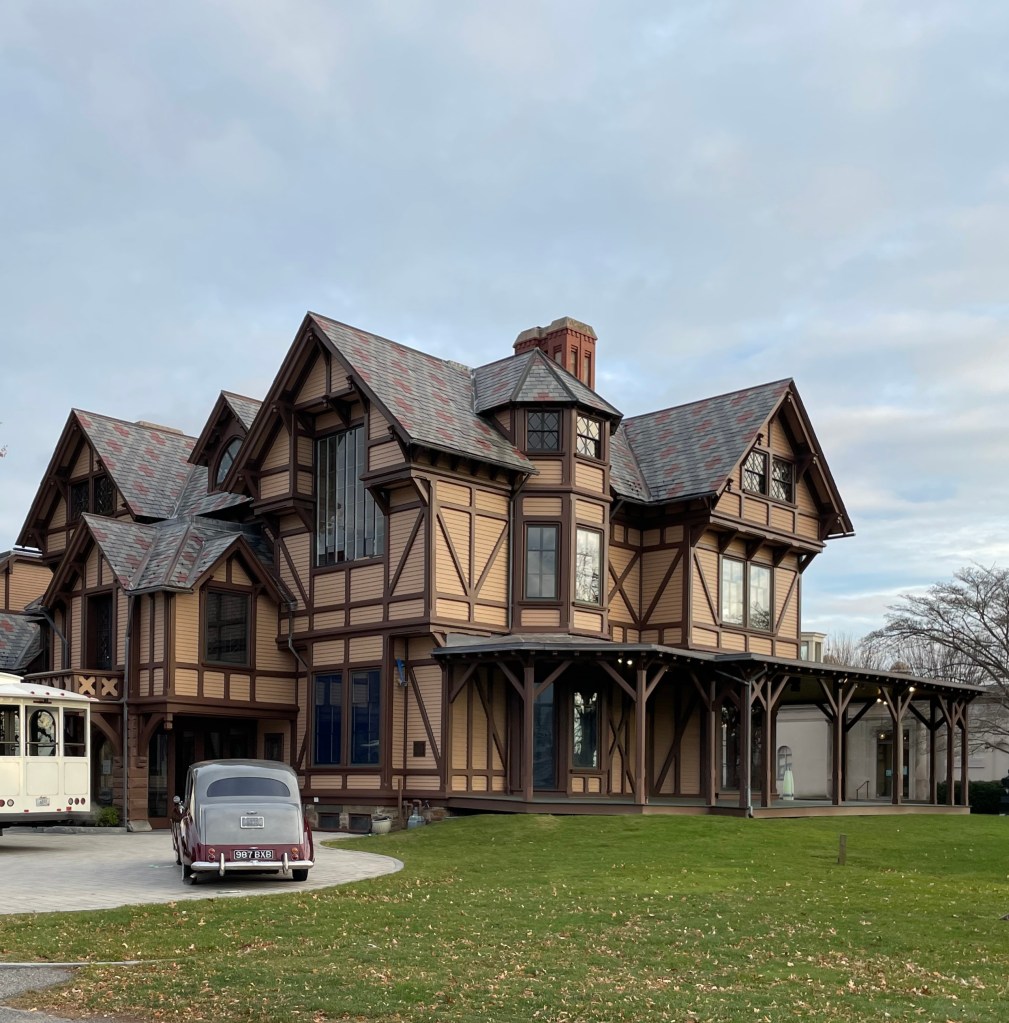
John Noble Alsop Griswold (1822-1909) was born into wealth, with his family business involved in land speculation in New York as well as the N. L. & G. Griswold Company, which imported sugar and rum from the Caribbean on clipper ships. In his 20s, John traveled to China for a trade and within a year of that trip, was appointed United States consul at Shanghai, serving in that role until 1854. Upon his return to America, he helped develop several prominent railroads, serving as president of the Illinois Central Railroad and chairman of the board of directors of the Chicago, Burlington and Quincy Railroad. He eventually settled in Newport and helped shape the sleepy town into a summer resort town for high-society. His statement-piece in town was his own mansion on Bellevue Avenue, built in 1863 from designs by Richard Morris Hunt, and completed that next year. It was the first of Hunt’s many notable works in Newport, and is considered a prototype work of the Stick style of architecture in America. Hunt would go on to design Ochre Court, The Breakers, and other Gilded Age mansions in Newport and all over the northeast. Griswold died in the house in 1909; it remained vacant until 1915, when it was acquired by the Art Association of Newport, which now uses it as a museum gallery. I really want to see the inside of this beauty!
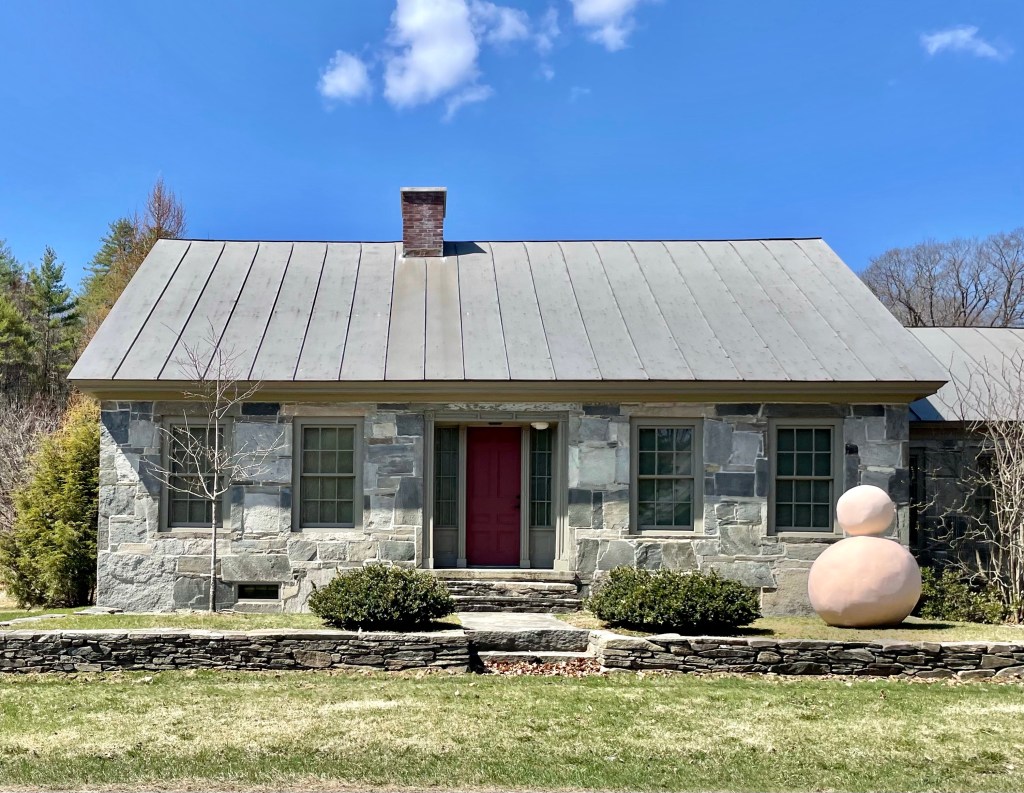
Lexington Farm was built by Elisha Wright Watkins (1805-1886) in around 1835, and was operated as a dairy farm until the 1980’s. Today, the property consists of a snecked ashlar stone farmhouse, cow barn, horse barn and tractor barn, grouped together at the southern extremity of the village of Felchville (also known as Reading). The farmhouse and barns are situated next to a waterfall on a tributary of the Black River, and are surrounded by pastures, hayfields and extensive woodland. A couple decades after Watkins’ death, the property was purchased by Alonzo Goddard. It stayed in that family and was eventually willed to Errol Locke in 1923. Errol, by trade, wasn’t a farmer. He was a Harvard-educated man who graduated there in 1913. Eventually, he went to work for a company called General Radio, which was founded in Cambridge, Massachusetts, in 1915. He started as a clerk, and 37 years later, he retired as president. The company, by that time, had moved to Concord, Massachusetts, which we know, thanks to the important events of April 19, 1775, is not too far from Lexington, where Locke lived. He renamed the Watkins Farm, Lexington Farm, seemingly as a tribute to his home town in the Bay State. In 2009, the Hall Art Foundation began the process of converting Lexington Farm to museum-quality galleries. The former dairy farm’s location and existing structures were ideally suited for this purpose. After approximately three years of restoration, renovation and refitting, Lexington Farm was transformed to approximately 6,000 sq. feet of exhibition space.
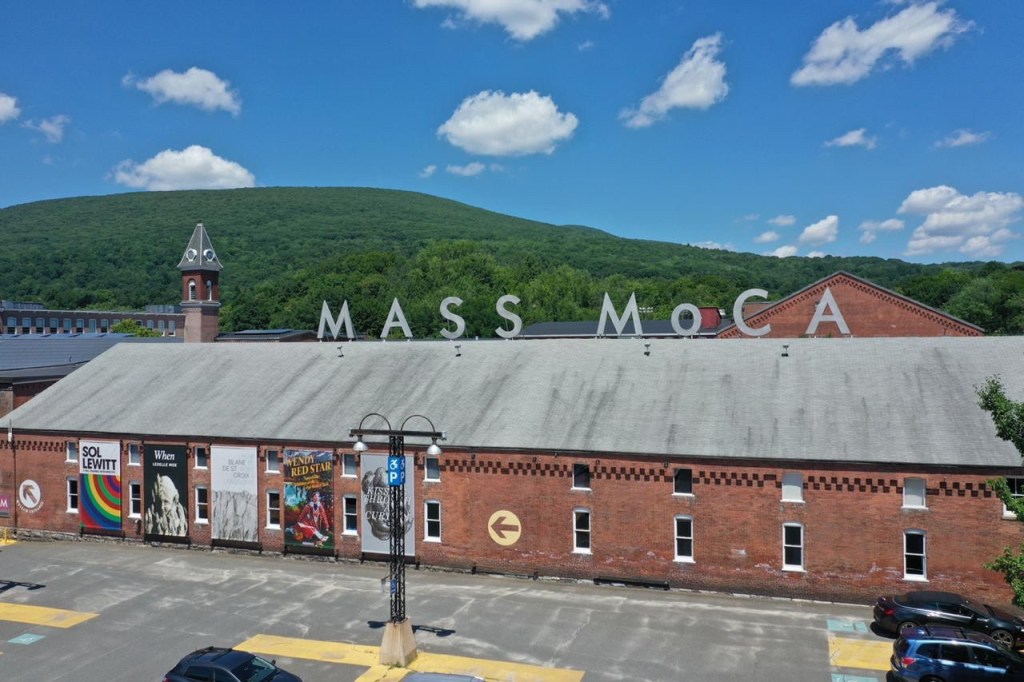
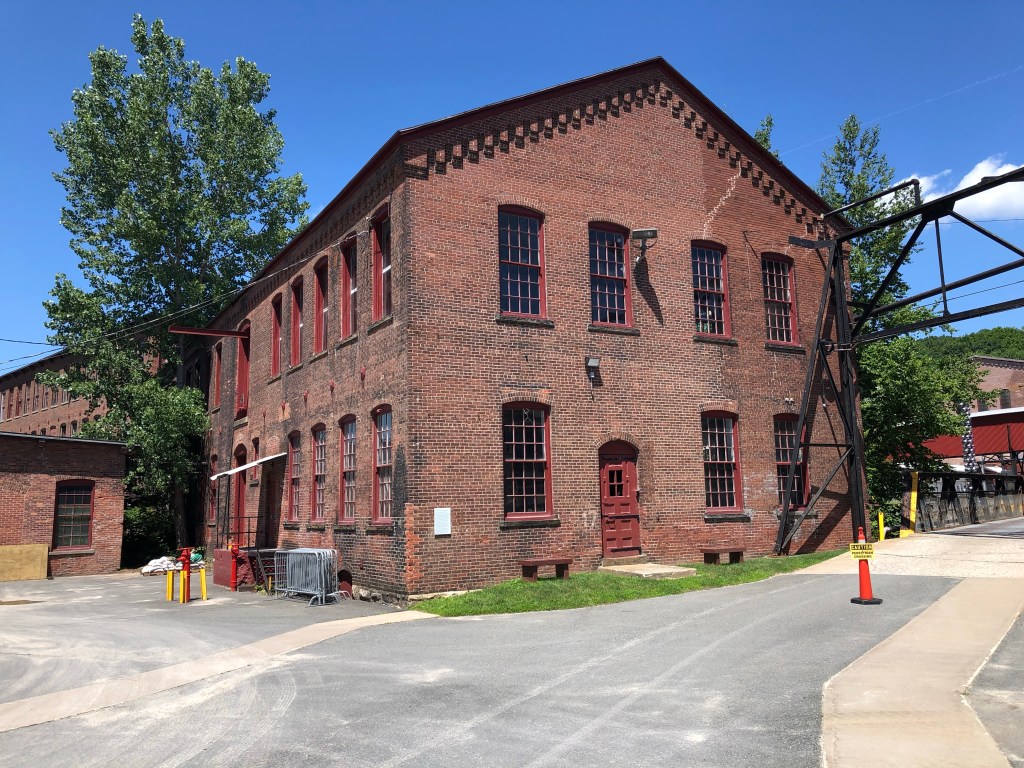
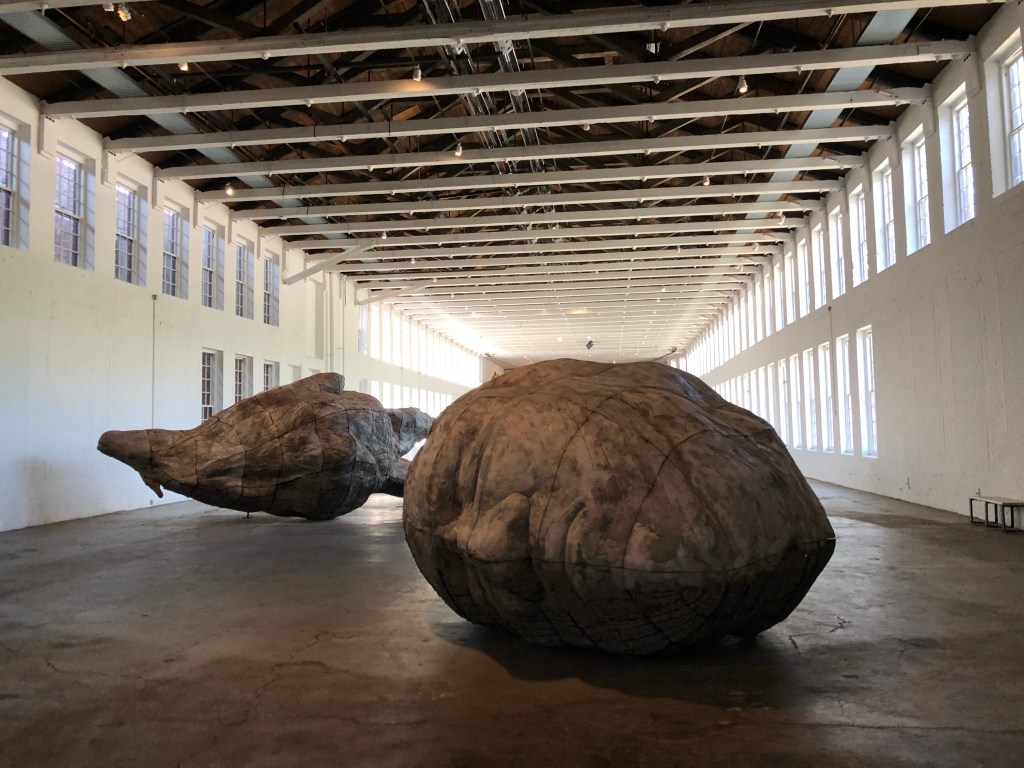
On a last-minute trip to the Berkshires, I couldn’t help but stop at the recently re-opened Massachusetts Museum of Contemporary Art (Mass MoCA) in North Adams. Being a huge nerd for industrial history and repurposed mills and factories, it was an absolute treat to walk through the large brick and steel buildings and wings lined with steel casement windows providing the perfect scenery for some amazing artworks. What is now known as Mass MoCA, – one of the premier art museums in New England – was once Arnold Print Works, a one time world leader in textile manufacturing with offices in New York City and Paris.
The Arnold Print Works were built on the Hoosac River near the center of North Adams. The company was the town’s largest industry during the city’s economic heyday from the Civil War until the early 20th century. The company was founded in 1861 by the John, Oliver, and Harvey Arnold, who began production of printed cloth at an existing cotton mill. At the dawn of the American Civil War, the newly formed company became flush with money due to government contracts for manufacturing Union Army uniforms. The company expanded after the war until a fire destroyed nearly all of the wooden buildings on the site. After the fire, a majority share of the company was purchased by Albert Charles Houghton, who became the first mayor of North Adams, and he oversaw the expansion and prosperity of the company, starting with new buildings of fire-proof construction.
By the early 20th century, many textile and cotton manufacturing shifted to the American South severely crippling the mill’s profits. In 1929, Sprague Electric Company moved to North Adams from Quincy, Massachusetts, and began buying the Arnold Print Works buildings. The print works moved much of its operation to nearby Adams and concentrated on a few particular products in its North Adams plant. The print works was finally sold in 1942 for just $1.9 million dollars, a far departure from its once prosperous past. The plant was shortly thereafter acquired by Sprague Electric Company.
While largely leaving the building exteriors as they were, Sprague made extensive modifications to the interiors to convert the former textile mill into an electronics plant. Sprague physicists, chemists, electrical engineers, and skilled technicians were called upon by the U.S. government during World War II to design and manufacture crucial components of some of its most advanced high-tech weapons systems, including the atomic bomb.
[Outfitted with state-of-the-art equipment, Sprague was a major research and development center, conducting studies on the nature of electricity and semi-conducting materials. After the war, Sprague’s products were used in the launch systems for Gemini moon missions, and by 1966 Sprague employed 4,137 workers in a community of 18,000, existing almost as a city within a city. From the post-war years to the mid-1980s Sprague produced electrical components for the booming consumer electronics market, but competition from lower-priced components produced abroad led to declining sales and, in 1985, the company closed its operations on Marshall Street.] (Mass MoCA History)
The complex sat vacant briefly before the Williams College Museum of Art, led by its director, Thomas Krens—who would later become Director of the Solomon R. Guggenheim Museum—advocated for a museum space for contemporary art that would not fit in traditional art galleries. The nearby Arnold Mills seemed like a perfect, yet daunting task to repurpose. Bruner/Cott Architects of Cambridge were hired to repurpose the mills and oversee the massive adaptive reuse project which today totals nearly 300,000 square feet of galleries and art venues.


 Buildings of New England