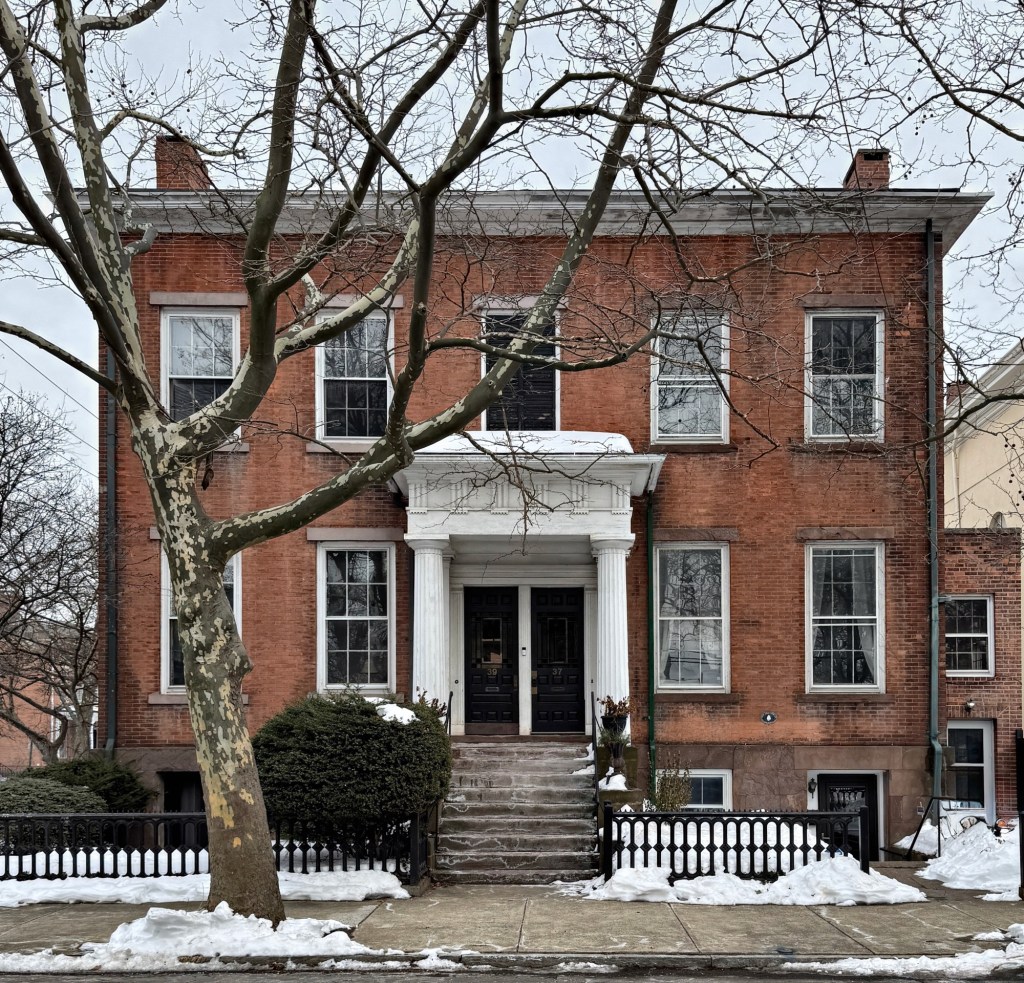
This large, brick, Greek Revival style residence sits on the corner of Wooster Place and Greene Street in New Haven’s iconic Wooster Square neighborhood, and stands as an important example of the style along with its significance of its early owner, who became a prominent local politician. In 1836, Dr. John Brownlee Robertson (1809-1892) married a second time to Mabel Heaton, following the death of his first wife, Mary, a year prior. Mabel’s father Abram Heaton, was an early investor who helped develop Wooster Square into the high-quality neighborhood in the early-mid 19th century, and upon this prominent corner lot, had this residence built for his newlywed daughter and son-in-law. The five-bay, two-story house features its original fluted column portico and a shallow hipped roof and was converted to a two-family around the turn of the 20th century.
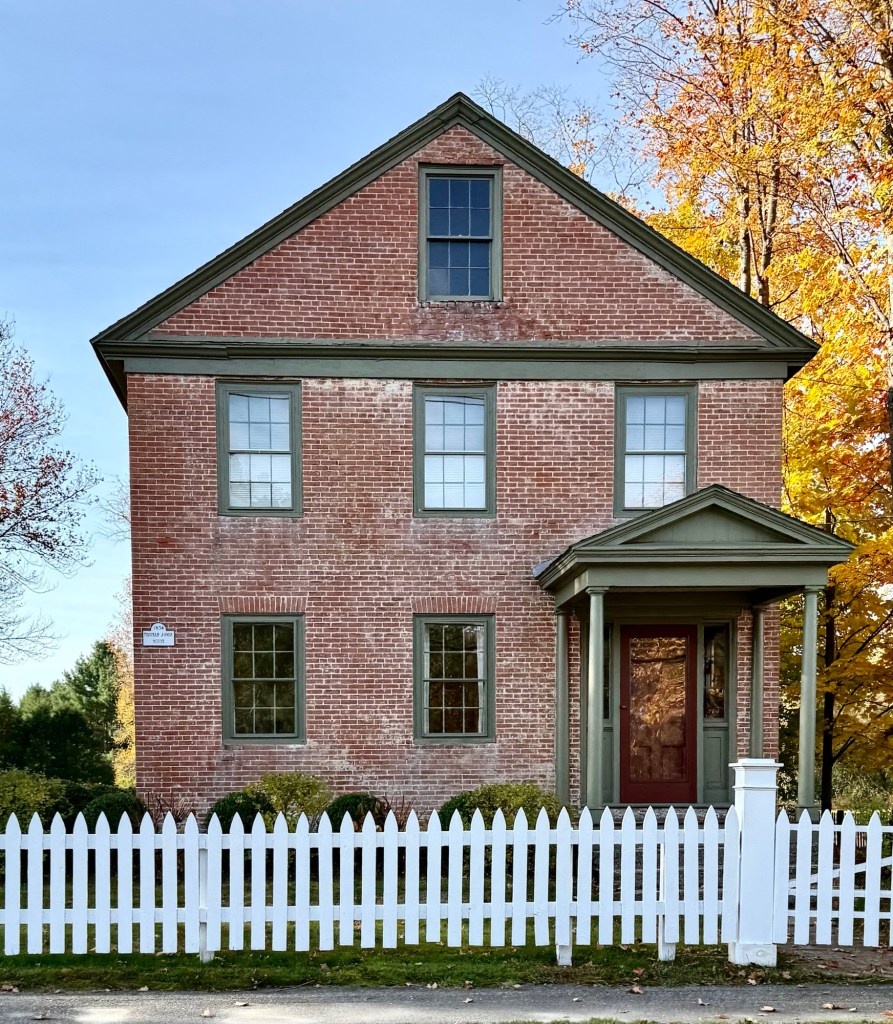
Thomas Jones of Lancaster married Mary Tweed of Lunenburg, Massachusetts, in June 1834 and immediately began building this house on Main Street in Lancaster for his new family. The Greek Revival style house is a refined example of brick with six-over-six sash double-hung windows and a Classical entry portico supported by Doric columns. The house was later owned by Sewell T. Rugg (1821-1892), a blacksmith who had a shop nearby.
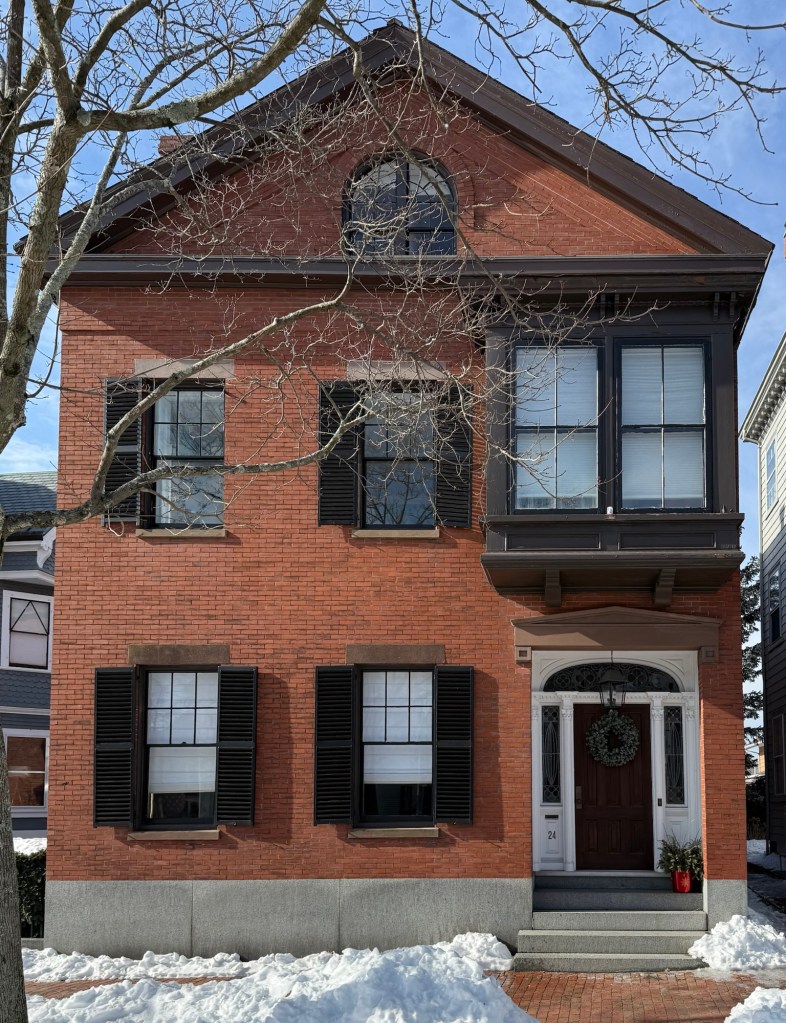
This lovely brick house on Winter Street in Salem was constructed for Capt. John Bertram in 1842-3. John Bertram (1795-1882) as a boy had his first job as a cabin boy and would work his way up to become a commander, ship owner and investor. He was extensively involved in shipping around the world including to Zanzibar, South America, and California and later he invested in railroads and real estate. He retired from actively commanding boats at age thirty-six with a vast fortune which he would become a philanthropist, giving much of it to charitable causes and his home city of Salem. Captain Bertram continued to own this property until 1855, when he moved to his new house on Essex Street, which he later gifted to the City of Salem as its public library. By the time of his death in 1882, he donated funds to the Salem Hospital, Old Men’s Home, Home for Aged Women, and various colleges and scholarships. Bertram sold this Winter Street house to John Jewett in 1855 for $10,000. Jewett began his career as a cabinet maker in Beverly in 1817 and subsequently became a dealer in mahogany, fancy woods, furniture and grain. Jewett died in 1874 and the property was sold by his heirs to Henry Appleton Hale in 1890. Engaged in the hardware business, Hale also served as president of the Salem Gas Light Company and as a vice president of the Salem Five Cents Savings Bank. Mr. Hale also served the country during the Civil War, and was shot in the face at Antietam on September 17, 1862. The bullet knocked out his front teeth and sliced off a piece of his tongue. Despite the severity of his wound, he recovered and returned to the regiment months later, and mustered out in 1865 following another injury. Henry A. Hale died in 1927. The property is significant not only for its owners, but also for its architectural quality and integrity. The transitional Federal-Greek Revival house features a recessed entry with original leaded sidelight and transom windows, brownstone trimmings, and alterations (likely by Hale) from the second half of the 19th century, including the projecting bay and arched window in the gable.
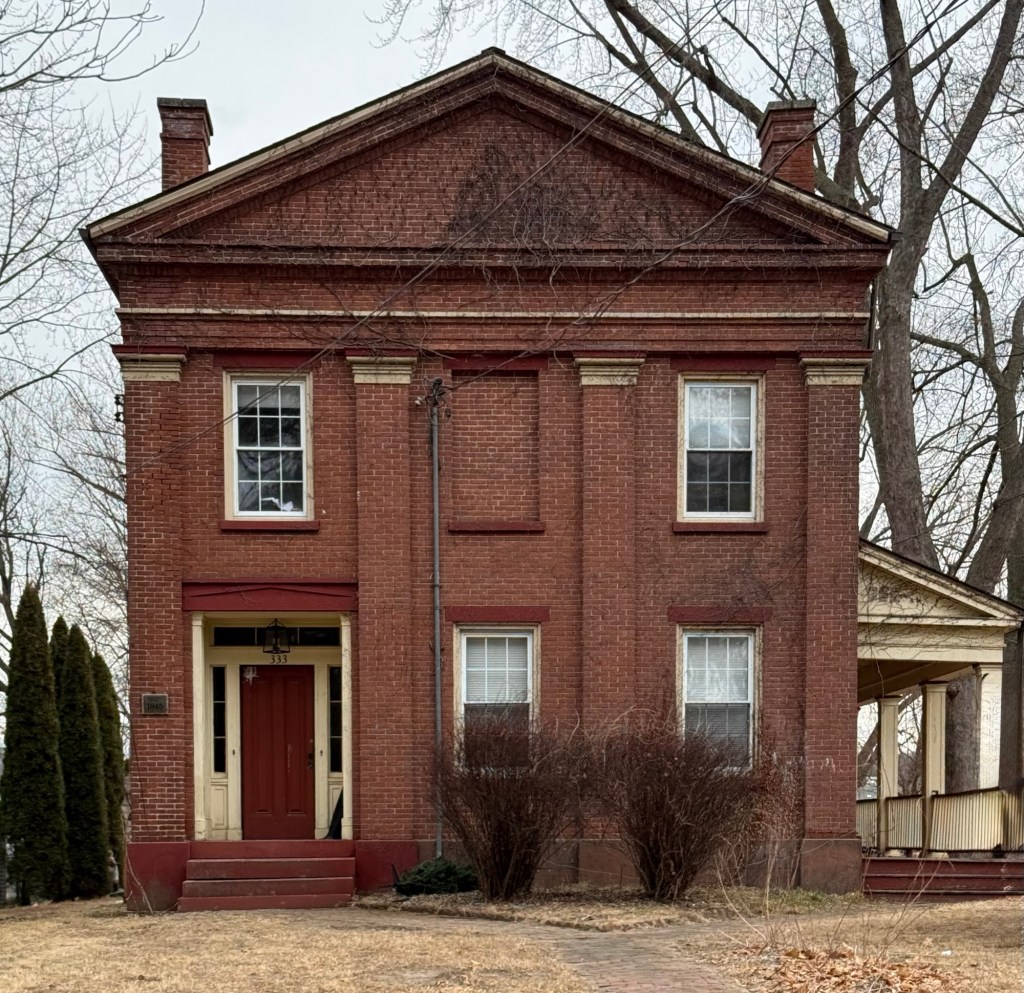
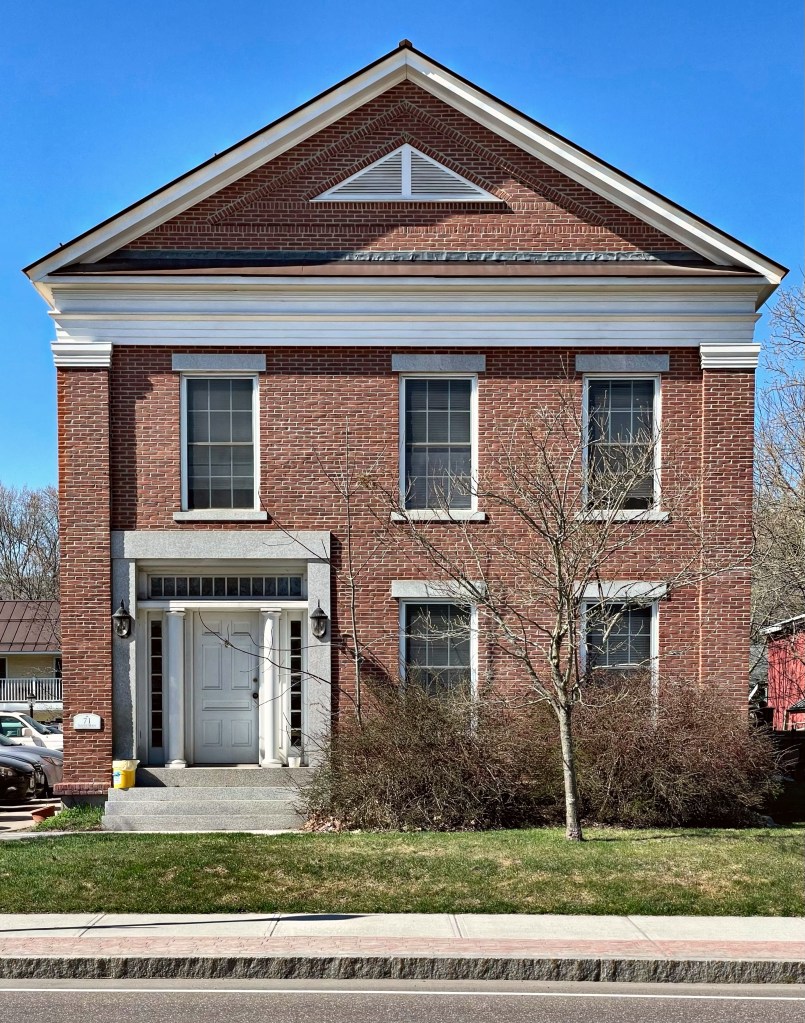
In 1843, Elias Gates (1801-1886) a young farmer, purchased land from the family of his wife, Mary A. Stedman, and had this handsome brick, Greek Revival style house built. The family would reside here less than ten years, and relocate to Albany, where Elias worked as a bookseller. The house was purchased numerous times throughout the 19th and 20th centuries, and operated as a farmhouse until much of the land was sold and subdivided for new housing. The Gates House is a great example of the Greek Revival style with a side hall plan, recessed entry with original sidelights and transom, and bold facade with brick pilasters dividing the bays with brick entablature and gable end facing the street.
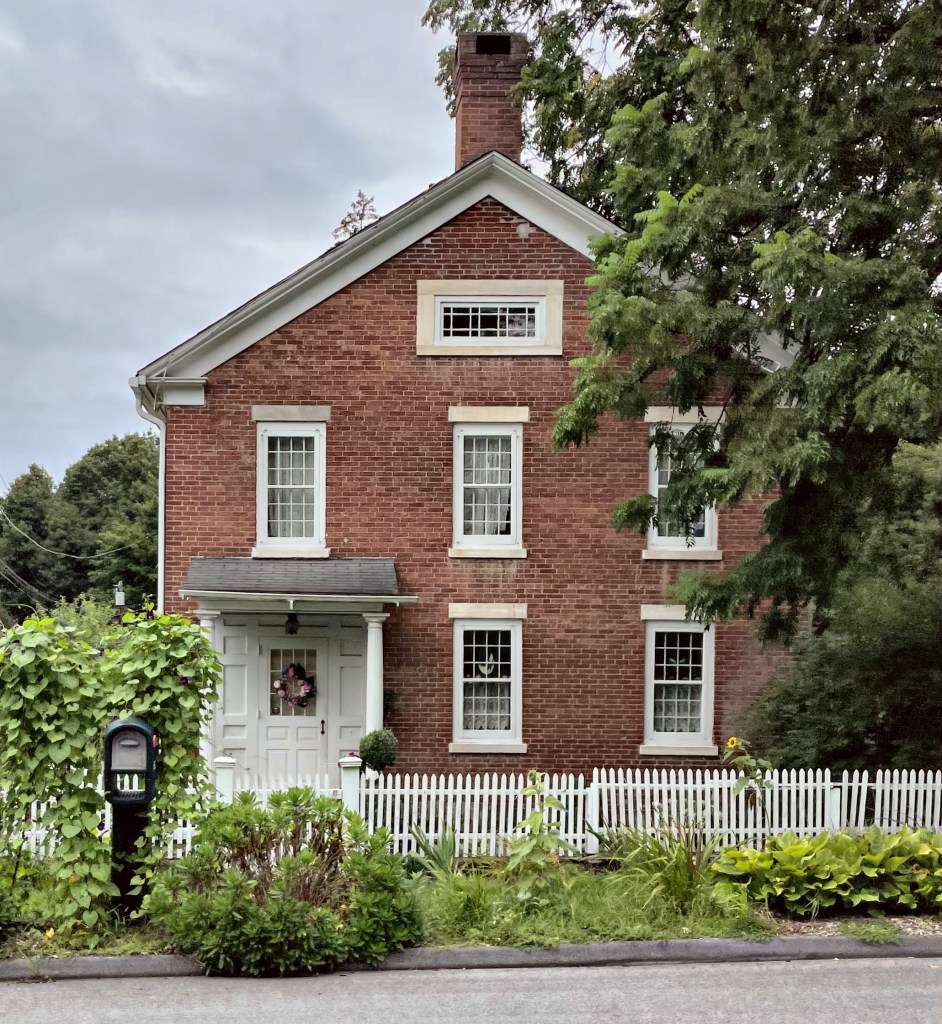
Located a stone’s throw from the Judson Manville House (last post) another uncommon brick Greek Revival style house in South Britain, Connecticut, this house stands out for its outstanding proportions and well-preserved exterior. This residence was built around 1830 for Benjamin Downs on the site of his family’s old property. The simple lines, portico at the entry supported by Ionic columns, and the window in the gable are all typical of the period.
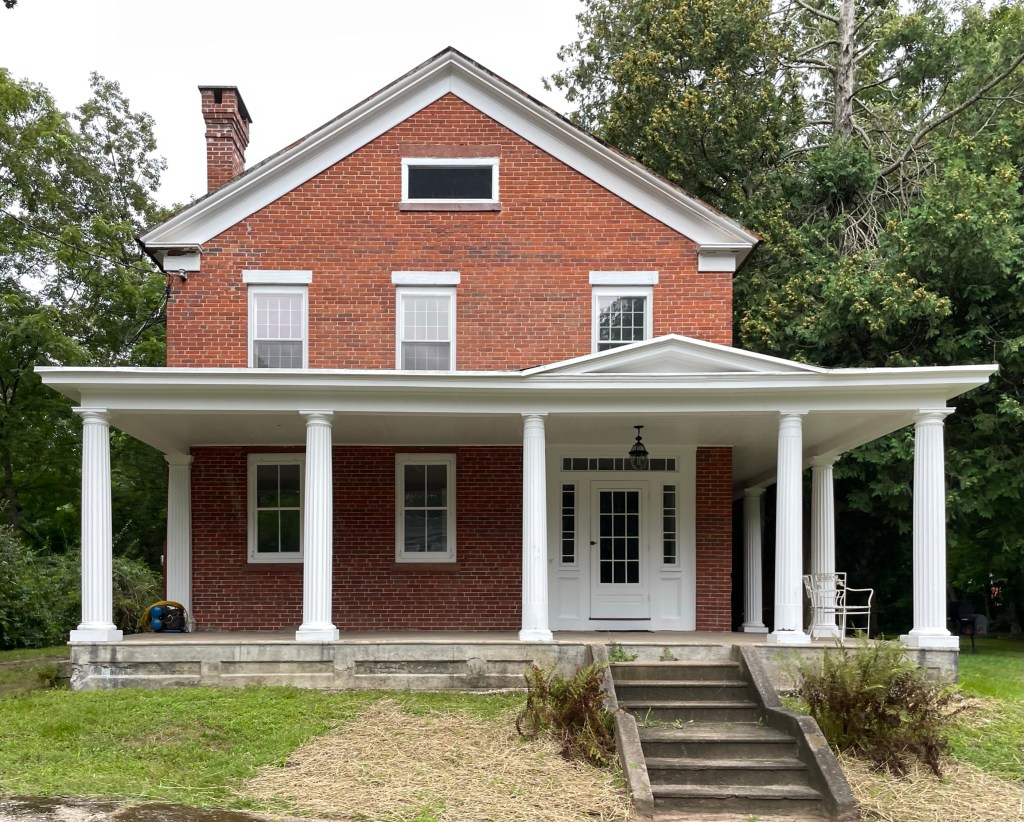
Greek Revival style houses in brick are amazing to find “in the wild”, when I stumble upon them! This example is located in the South Britain village of Southbury, Connecticut. The brick house was built for Judson Manville in 1835 and it was constructed of locally manufactured bricks. Judson operated a hat manufacture next door to this property and it clearly made him some money. The property was eventually acquired by the Hawkins Company at the turn of the 20th century and it was operated as the company offices. It was during this time that the 20th century wrap-around porch was added. It is now a private residence.
One of the most stately and classic homes in central Vermont is this Greek Revival beauty constructed of brick, right on Main Street in Waterbury. The home was built for William Wellington Wells, who was born in Waterbury, Vermont in 1837. He soon became one of Waterbury’s most prosperous merchants of the mid-nineteenth century, starting as a lawyer with business interests including a tannery and grist mill in nearby “Mill Village” and a mop and chair stock business. He served in the Civil War and contributed much to the town’s growth. After successive ownership, the town’s appeal during the winter months shifted the demand towards short-term stays tied to the ski industry. The Wells House was added onto at the rear and converted to a motor hotel called the “Gateway Motel” in the mid-20th century. The use remained for decades until a fire destroyed much of the motel, leaving the 1840s Greek Revival home’s future in limbo. Thankfully, new owners restored the home and built much-needed residential housing at the rear, largely in the same form as the old motel. Love to see preservation at work!
 Buildings of New England