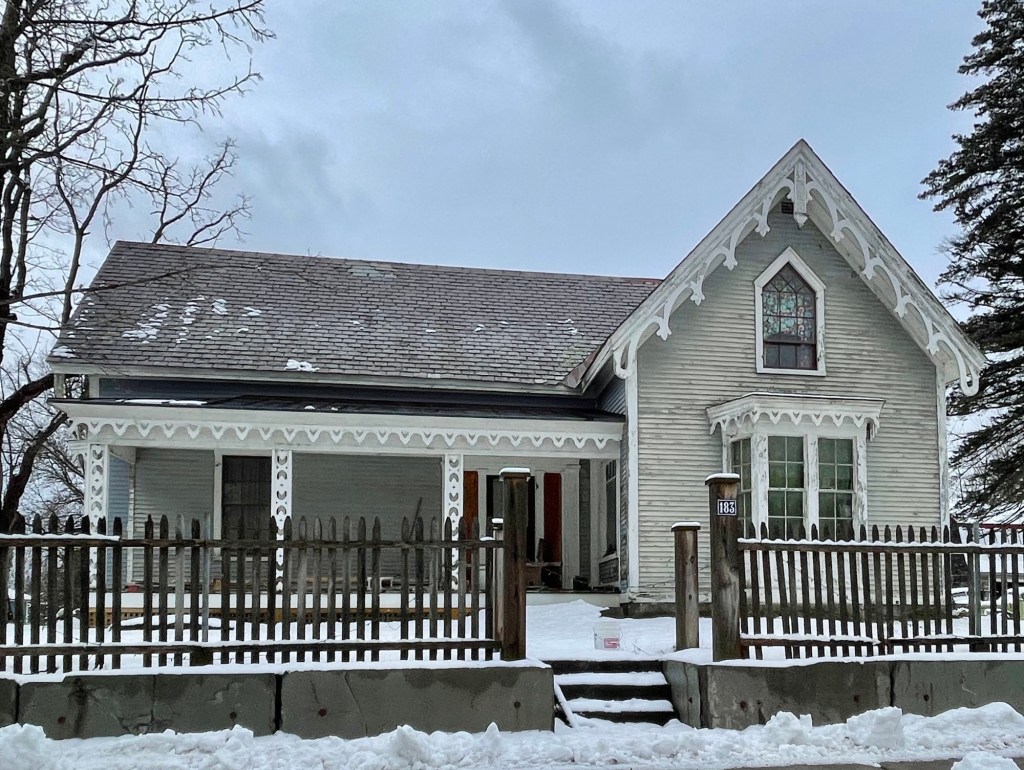
This stunning Gothic Revival style house in Richmond, Vermont, was built around 1850 for Orson Goodrich (1808-1877), likely after the death of his first wife, Ann in 1849. Goodrich was a farmer who had a large property off the Main Street, which likely ran all the way to the Winooski River. The house is an excellent example of Carpenter Gothic, a wooden Gothic Revival home with decorative bargeboards at the roof (which look like icicles in the snow), pierced wooden columns at the porch, and a lancet window at the second floor gable end. The home was such a statement piece, that the home was one of a handful of buildings portrayed in the 1857 Map of Chittenden County, Vermont.


 Buildings of New England