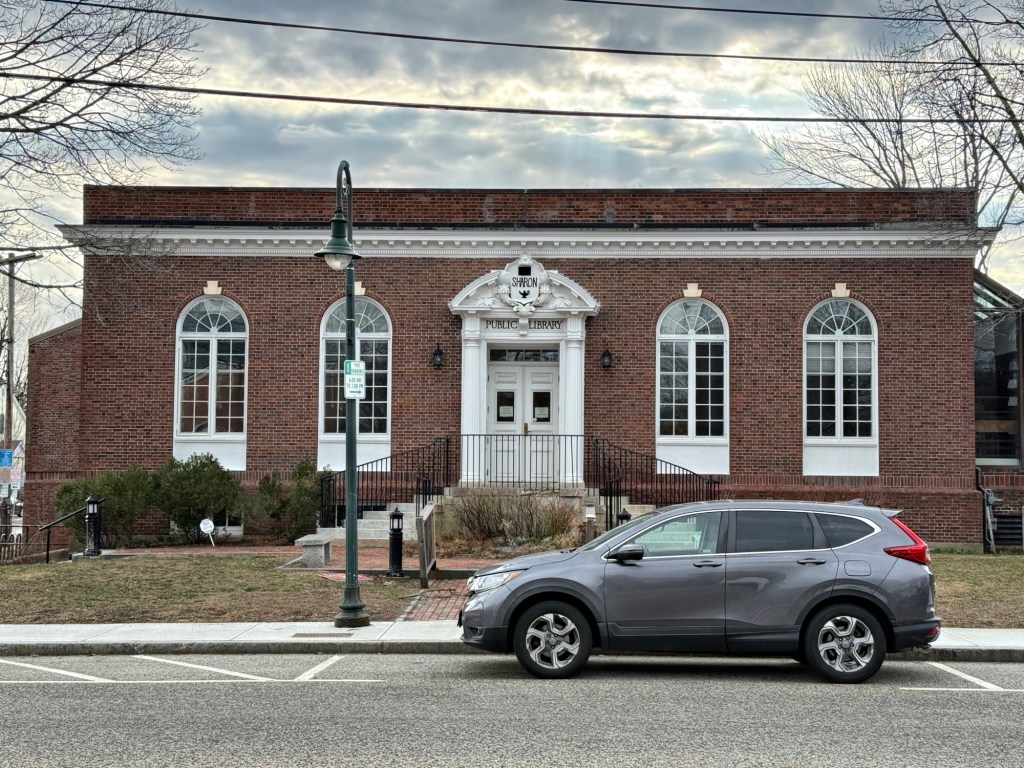
Built with funds donated by Andrew Carnegie as part of his push to expand access to libraries and books to millions of Americans, the former Sharon Public Library in Sharon, Massachusetts, stands as a great example of an early 20th century library built in the Colonial Revival style. Planning for a public library in the town of Sharon began in the 1870s when the town voted to appropriate money gained from charging dog licenses into a fund for a free public library. Additional funds were later added and a collection was set aside in the old Town Hall where the library occupied two rooms. By the 1910s, the circulation and use grew to a point that a new, purpose-built library was needed for the community, but funding was short and Sharon did not have any major benefactors to fund its library like so many other communities in New England at the time. As a result, an application is made to Andrew Carnegie for assistance. Months later, the sum of $10,000 was offered for the planning and construction of the library, costing the community nothing. Boston architect C. Howard Walker was selected to furnish plans for the Sharon Library, which was such a success that the building would be featured in numerous architectural publications after completion. The former Sharon Public Library remains one of a large number of Carnegie Libraries in New England and was subsequently expanded by rear additions in the late 20th century before a new library nearby was completed in 2025. It is not clear what will become of the 1914 library, but it remains in great condition and a lasting landmark on the town’s Main Street.
 Buildings of New England