Liberty Tree Block // 1850

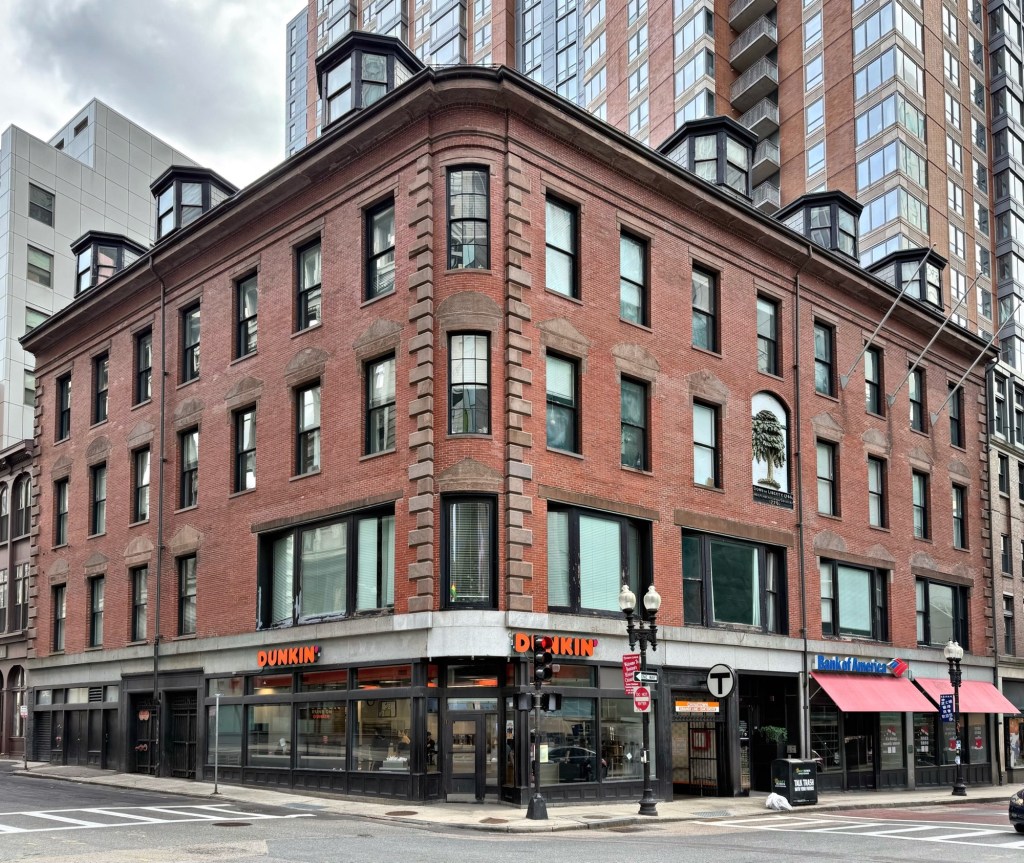
The Liberty Tree Block is located at one of Boston’s oldest and most important intersections, Boylston and Essex streets. It is said that near this site, the Liberty Tree stood, and where in 1765, Patriots in Boston staged the first act of defiance against the British government under its branches, The Stamp Act protests. The tree became a rallying point for the growing resistance to the rule of Britain over the American colonies. The Liberty Tree was cut down by British Loyalists in 1775, but the tree’s symbolism lives on in the building constructed on the site 75 years later. Nineteenth-century real estate developer David Sears had this commercial block built in 1850, which housed stores at the street with ballrooms on the upper floors. The Liberty Tree Block is best-known and named so due to the wooden relief plaque of the Liberty Tree on the Washington Street elevation. The motif stands 8′ high and 5′ wide and was carved by ship carvers. The bas relief is inscribed with “Liberty–1765” across the top, “Law and Order” at its roots, and at the bottom, “Sons of Liberty, 1765. Independence of their Country, 1776.” The building (and its carving) are protected Landmarks in Boston.

Boston Young Men’s Christian Union Building // 1875

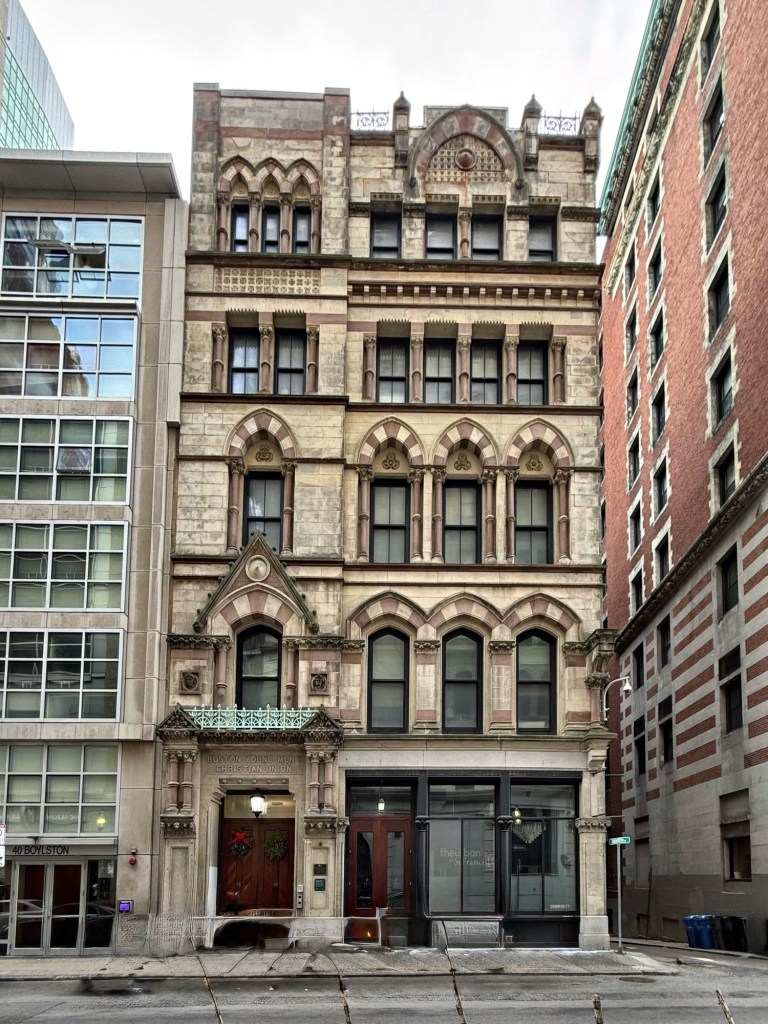
The Boston Young Men’s Christian Union was founded in 1851 by a group of Harvard students as a biblical and christian literature discussion group, which incorporated the following year. First located on School Street, the organization’s activities were to provide a focal point for the intellectual, religious, and social life of primarily middle-class, well-educated Christians. The organization grew to the point that a new building was needed, and in 1873, a site on Boylston Street was acquired as a perfect central location for the group. Architect Nathaniel J. Bradlee of Bradlee and Winslow was hired to design the structure, principally because Mr. Bradlee by then a prominent architect and public figure, was also a life member of the Union and the brother of one of its founders. The building was completed in 1875 and included ground floor retail with an auditorium, gymnasium, library, social and game rooms, and offices for the Union above and behind. Designed in the High Victorian/Ruskinian Gothic style, derived from a mixture of English, Italian, French, and some German Gothic precedents, the style emphasized complicated, asymmetrical massing, polychromy, ornate details, and lancet or Gothic arched openings, in this building a sandstone facade was used. The building became a City of Boston Landmark in 1977. In 2016, the building was converted to an affordable housing development by The Architectural Team Inc., and called “The Union”. The development provides 46 units of affordable housing, including 25 targeted to those who have experienced homelessness. What a great rebirth of the building. Historic Preservation and Affordable Housing can work together and create great projects.

Dorchester Pottery Works // 1896

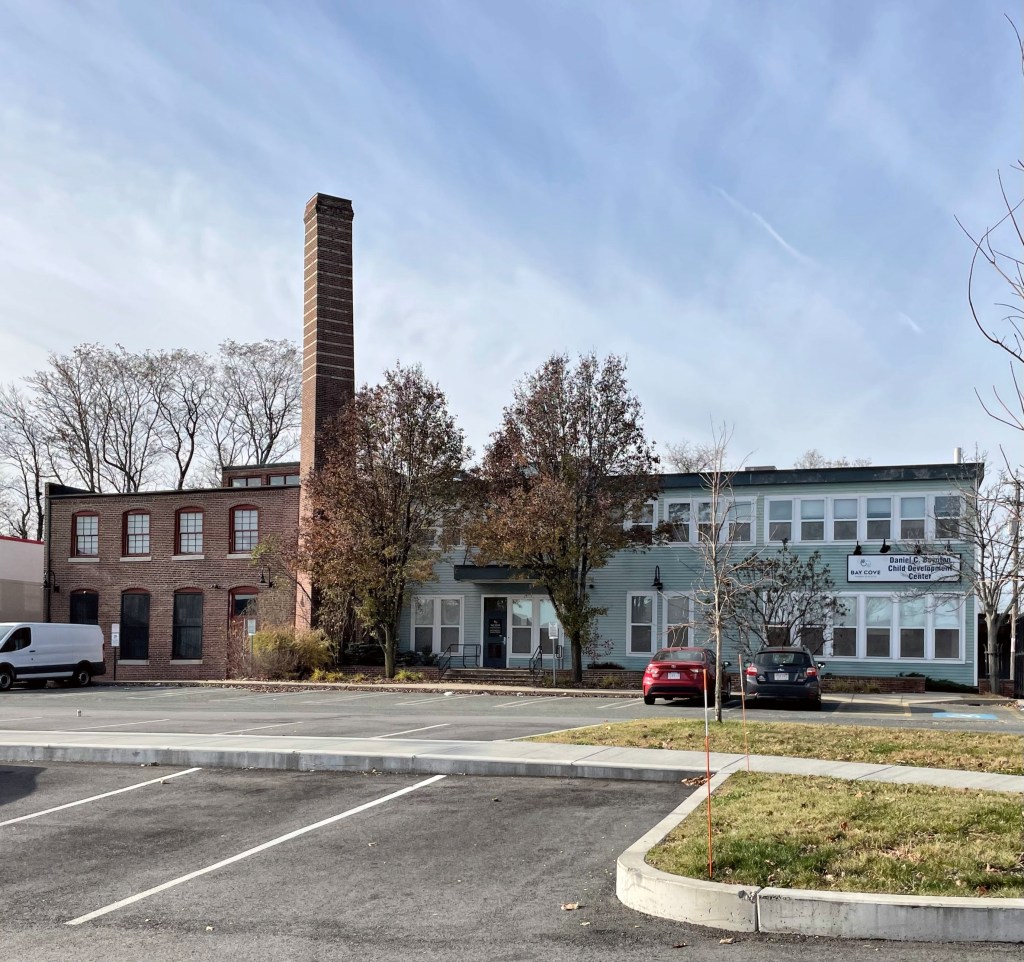
Founded in 1895 by George Henderson, the Dorchester Pottery Works successfully produced commercial and industrial stoneware for many years and its building is a significant piece of Dorchester’s industrial heritage. Located in the Harrison Square/Clam Point area of Dorchester, the building began as a two-story wood-frame industrial structure for the young company. It saw immediate success and Henderson oversaw the construction of a large, brick addition which housed an enormous beehive kiln 28-feet in diameter of his own design made of bricks. Here he could fire pottery and other clay goods from his modern facility. Besides clay pots, tableware, and jugs, the company became known for the production of foot warmers, which became known as the ‘Porcelain Pig’ or ‘Piggy’. Foot warmers were widely used in the days before central heating. These clay vessels would be filled with hot water and placed under bedding for overnight warmth. The company made foot warmers until 1939. The company saw dwindling sales after WWII, and eventually closed in 1979. The structures began to decay and the towering smokestack and brick structure was open to the elements. The local neighborhood advocated for its preservation, listing it on the National Register of Historic Places and protecting it as a City of Boston Landmark. After decades of neglect, Bay Cove Human Services acquired the property in 2001 and renovated the building for its own use, keeping the kiln room and the kiln itself intact for community exhibitions. Today, it provides an important historic survivor of Dorchester’s industrial past.