Shillaber House // c.1768

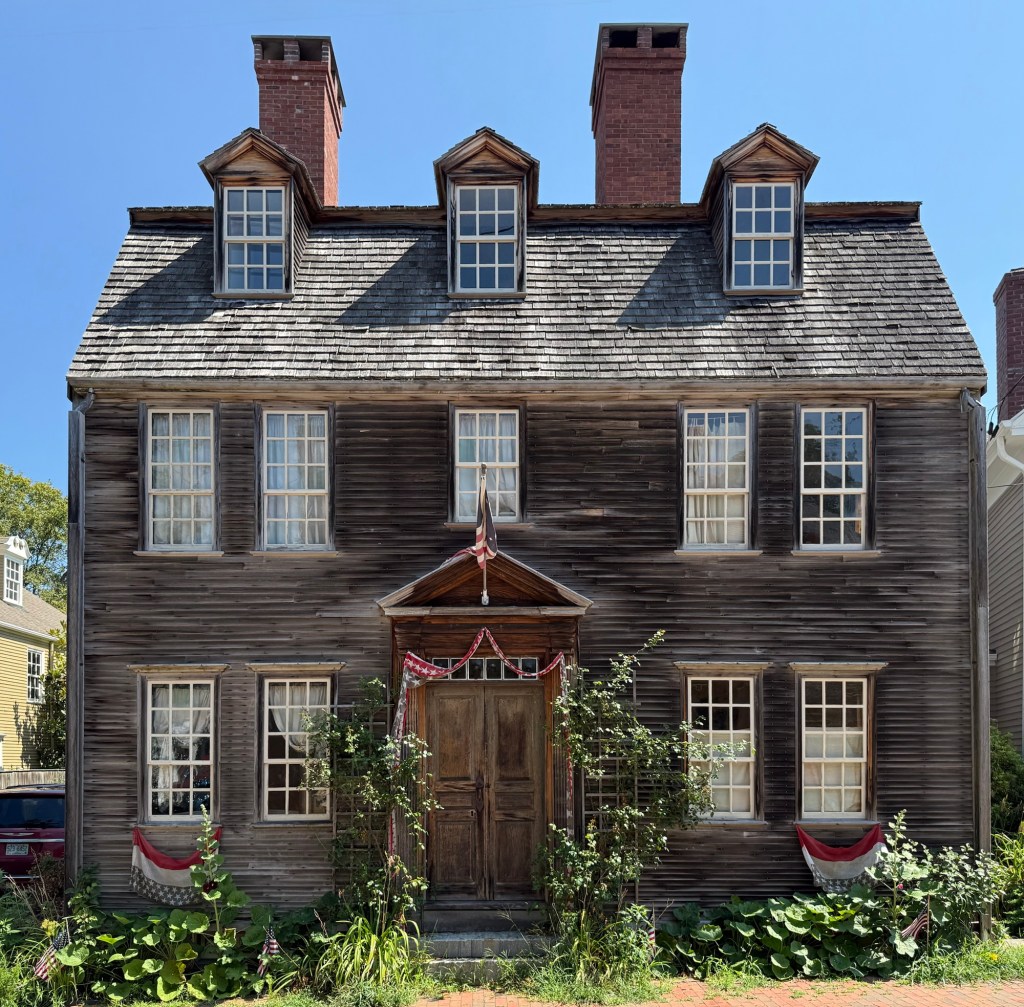
The Shillaber House on Washington Street in Portsmouth, is one of the most photogenic residences in the charming port city. The Georgian-style residence was likely built in the late-1760s, after Joseph Shillaber (1725-1791), a potter, purchased land here in 1766. The residence is of a typical form for 1760s Portsmouth, with a gambrel roof with pedimented dormers and a slightly off-center entry with Georgian style pilasters and pediment. In the later half of the 19th century, the house was “Victorianized” with a bracketed door hood and bay windows at the facade, but the house would be restored by later owners to a version close to its original conditions. The exposed clapboard siding adds to the home’s unique charm.
Benjamin Holmes Jr. House // c.1795

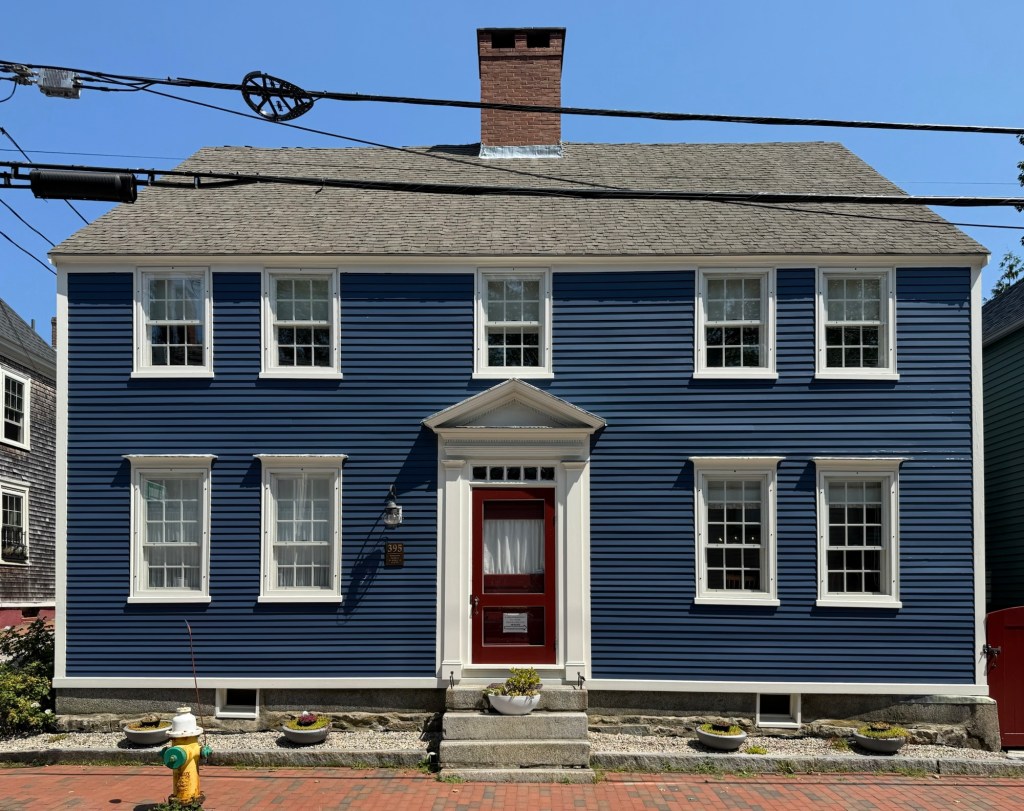
The Benjamin Holmes Jr. House at 395 Pleasant Street in Portsmouth, is a two-story, five-bay, residence with symmetrical facade with a central pedimented entry. In 1795, Benjamin Holmes (1768-1837) married Esther Lewis, and the couple moved into this residence. The late-Georgian house follows the typical form and finishes of many other coastal New England residences of the late 18th century and is in a great state of preservation.

Joshua Wentworth House // 1770

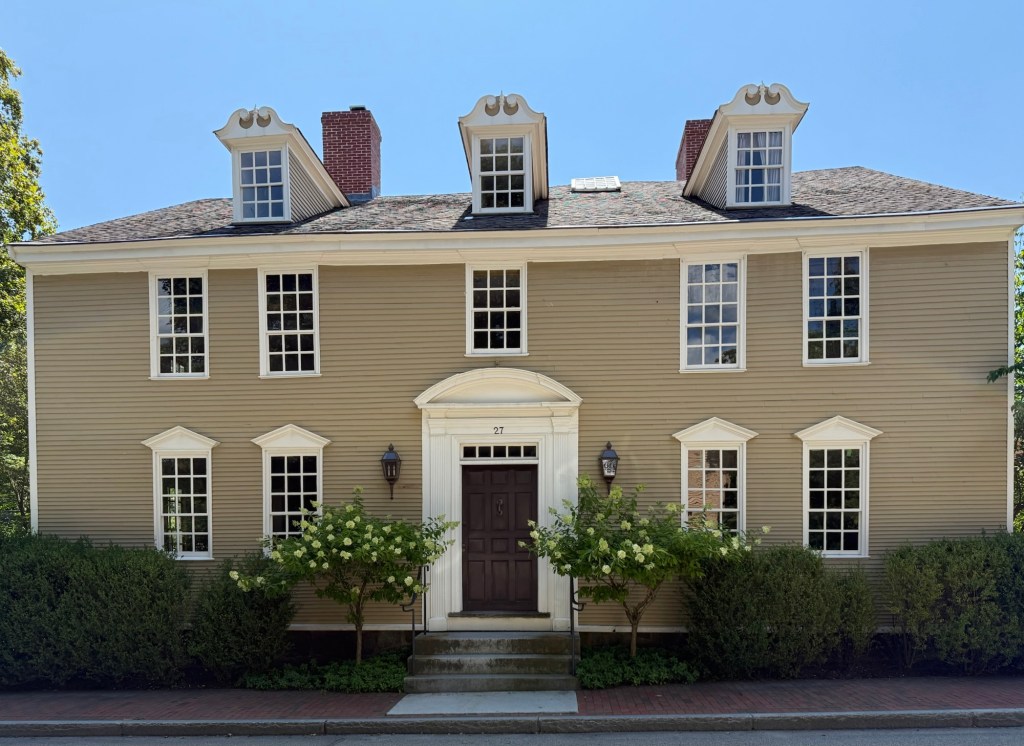
The Joshua Wentworth House at 27 Hancock Street in Portsmouth, New Hampshire, is a high-style Georgian residence built before the American Revolution, and was almost demolished in the name of “urban renewal.” The house has a side-gable roof with three broken-pediment dormers and a wood paneled door with segmental entablature, pilasters, and a five-light transom. Joshua Wentworth (1742–1809) the namesake of the house, was a grandson of John Wentworth (1671–1730), who had served as an early Lieutenant Governor for the Province of New Hampshire, and was himself, a merchant and State legislator. The house was originally located in the North End of Portsmouth, but in the 1970s, urban renewal and local politicians sought to raze portions of the town to “revitalize” the port town. If only they knew that Portsmouth would be the largest tourist draw in the state just for people to see historic, walkable neighborhoods! Businessman Harry Winebaum acquired the house and sought to preserve it. The solution: move the house by barge to the south side of town near Strawberry Banke. Luckily for us, the house was moved in 1973 and was restored. It is a private residence.

Tredick House // c.1802

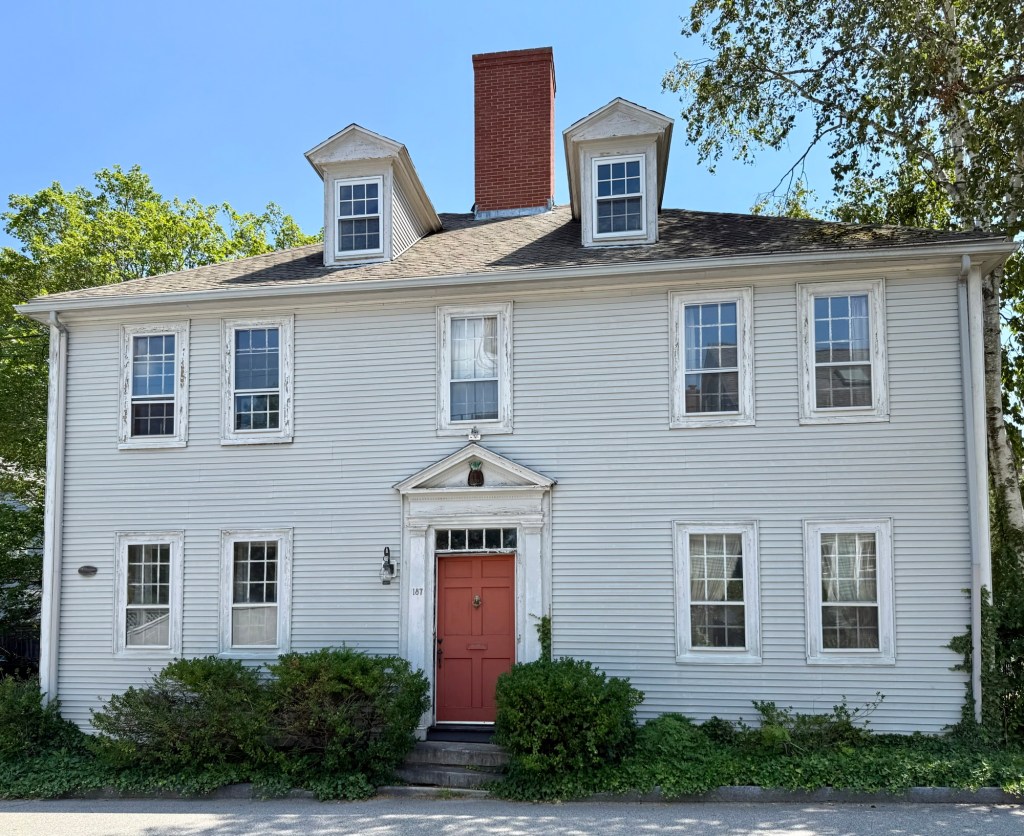
The Tredick House is located at 187 Marcy Street in Portsmouth, New Hampshire and was built in 1802 for Captain Jonathan Martin Tredick (1777-1803) and his new wife, Martha Marshall on land gifted to them by Jonathan’s father, William Tredick. In a tragic shift of fortune, Captain Jonathan Tredick never got to live in his new house as he died at sea, with accounts differing, either from fever or being swept overboard. At the time, Jonathan and Martha had two children, 2 year-old Catherine Marshall Tredick (1801-1822) and newborn Jonathan Marshall Tredick (1802-1875). Martha, a sudden widow at the age of 26 with two children, was aided by her family and that of her late husband, and operated a store nearby to supplement her income until her death at home in 1872, she was 96 and never remarried. The late Georgian style house features a hipped roof with central chimney, pedimented dormers and a pedimented entry and 9-over-six sash windows on the house.

Hart-Rice House // c.1750

Built sometime between 1749 and 1756, the Hart-Rice House, a little-altered example of Georgian architecture, stands out in the densely packed Hill section of Portsmouth, NH. The area contains amazing early homes, largely moved to their sites from nearby, saving them from the wrecking-ball of Urban Renewal in the 1970s. The house demonstrates the high-quality craftsmanship of its owner, ship-joiner Samuel Hart (1701-1766), who likely built the home himself. Decades later, William Rice, a sea-captain, purchased the home. Rice was a known privateer during the War of 1812, causing a lot of trouble for British ships off the shores.