South Britain Congregational Church // 1825

The South Britain Congregational Church in Southbury, Connecticut was built in 1825 and was originally known as the Meeting House of the South Britain Ecclesiastical Society. The congregation dates back to 1766 and its first pastor, Jehu Minor, a Yale educated minister from Woodbury, was chosen in 1768. Members met at the Moses Downs House before its first meetinghouse was built in 1770. When the pre-Revolution church building was deemed inadequate, funds were raised to erect a new house of worship. In 1825, boards and other usable parts from the old building were used to construct the present Federal style church that stands in the middle of the village today. History states that pulleys were attached to an ox cart to hoist the bell up the steeple which is by far the tallest structure in the neighborhood. It is an exceptional example of the Federal style, with beautifully balanced proportions, a front pavilion, fine detailing and an elegant three-story steeple. The church made more history when in on September 25, 1937, 178 acres of land in Southbury, Connecticut was purchased for the German-American Bund, intent on building a Nazi camp. Similar camps were popping up around the nation, in an effort to promote an anti-semitic and pro-Nazi agenda. Led by Reverend Lindsay, the pastor of the church, the townspeople quickly established a zoning commission whose first ordinance forbade land usage in the town for “military training or drilling with or without arms except by the legally constituted armed forces of the United States of America.” Stunting the proliferation of nazism in Connecticut before WWII. This is why Southbury is sometimes known as “The town that said no to the Nazis”.

Wheeler-Tyler House // c.1750

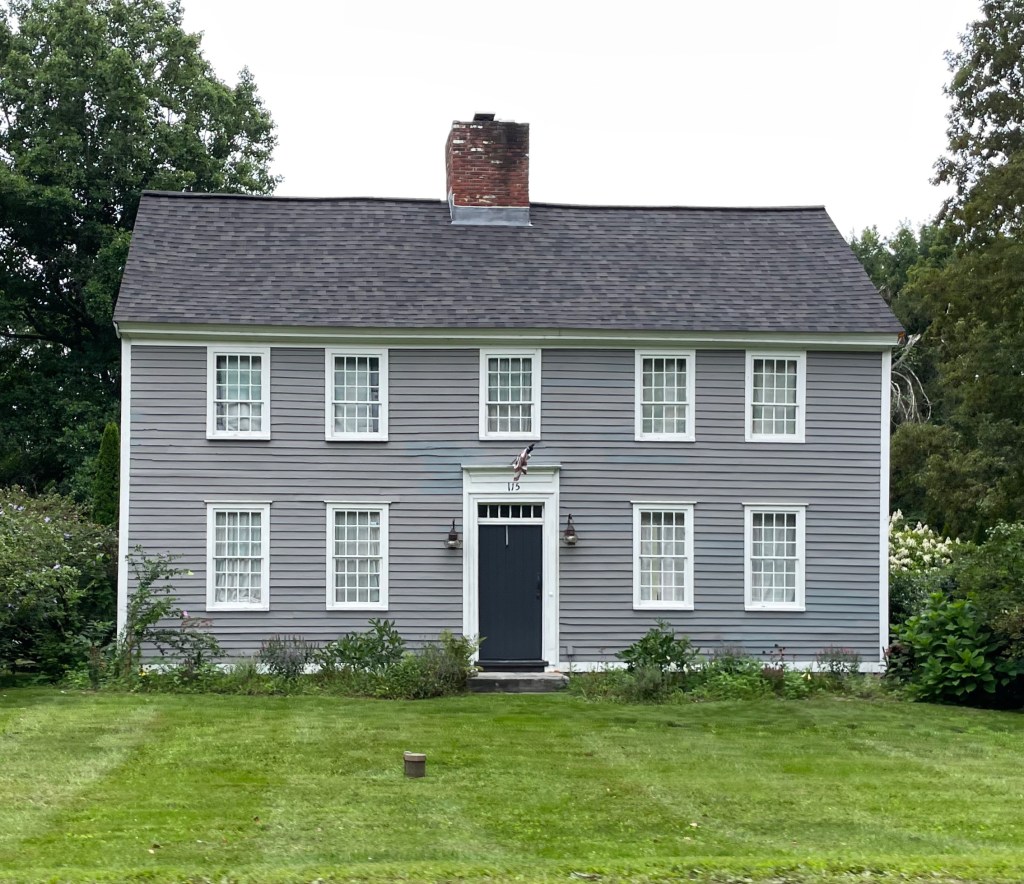
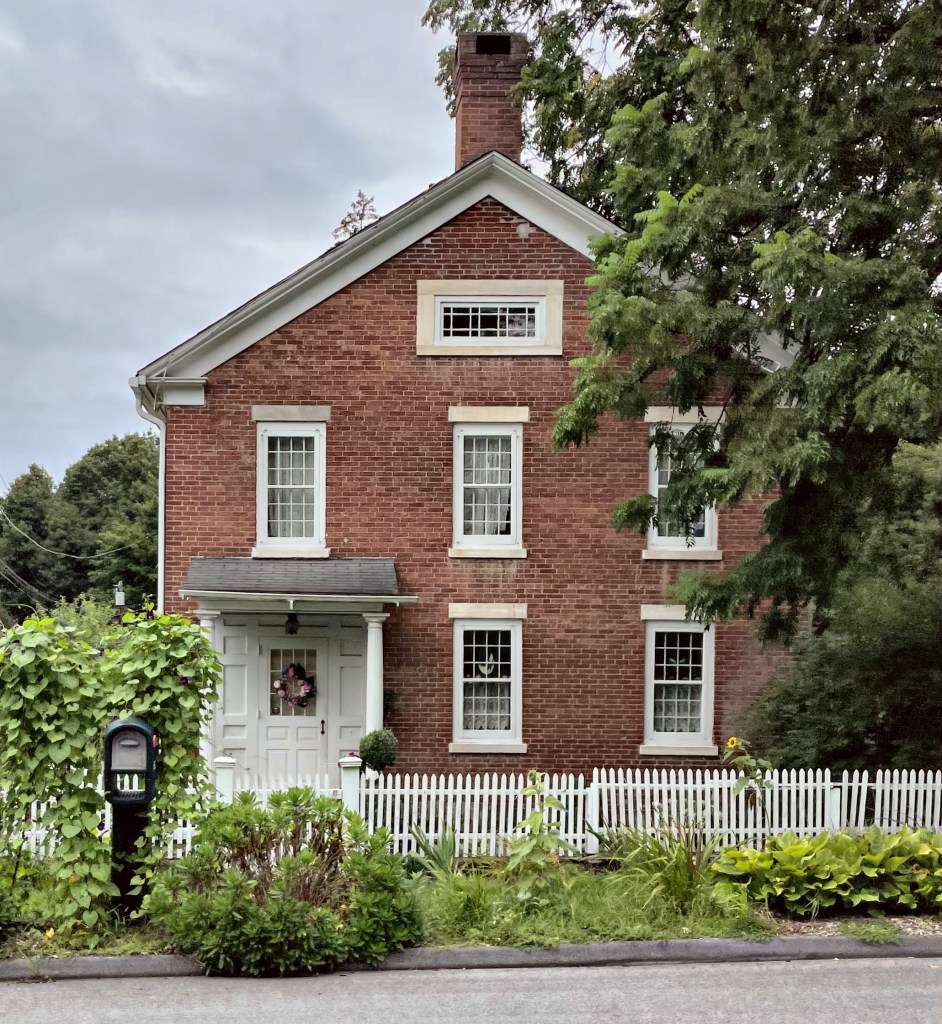
Less is definitely more when it comes to old Colonial houses! One of several pre-Revolutionary buildings in the South Britain Historic District is this residence, which was the home of South Britain’s first physician, Dr. Wheeler, in around 1750. From 1807-1822 the property was owned by Rev. Bennett Tyler, who would later become the fifth President of Dartmouth College. The house is a classic 18th century homestead of wood-frame construction with a side gable-roof, symmetrical five-bay façade, simple paneled entry door with a rectangular transom, and a central chimney. This is a beauty!

Smith-Pierce House // c.1829

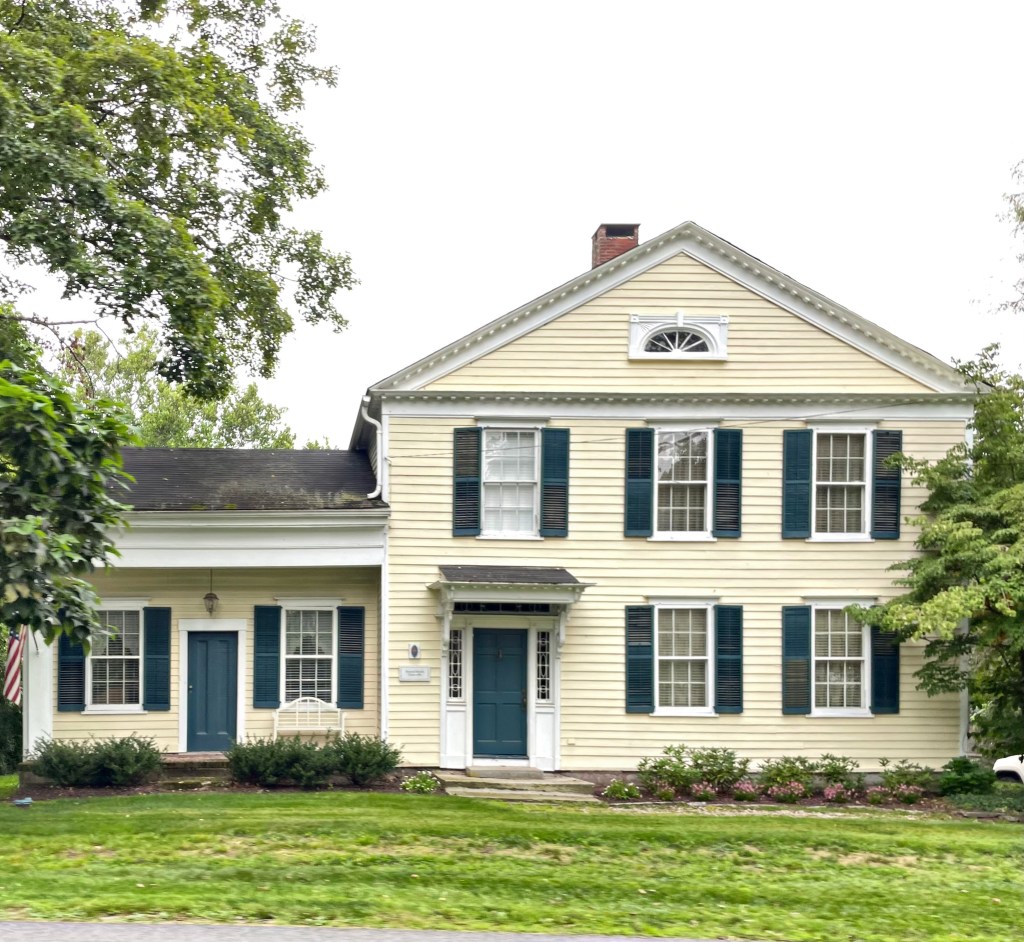
This transitional Federal-Greek Revival style house sits on the main street in South Britain, Southbury, Connecticut. The based on the style, the house was likely built around 1829 for Samuel Smith (1804-1856) who married Caroline Curtiss that year. Federal elements include the entry at the gable end, a pedimented facade embellished with modillions, and a doorway with sidelights and a leaded transom. Some moldings, the six-over-six windows and the simplicity of design are Greek Revival. It is one of the best preserved old houses in this part of Southbury.

Benjamin Downs House // c.1830

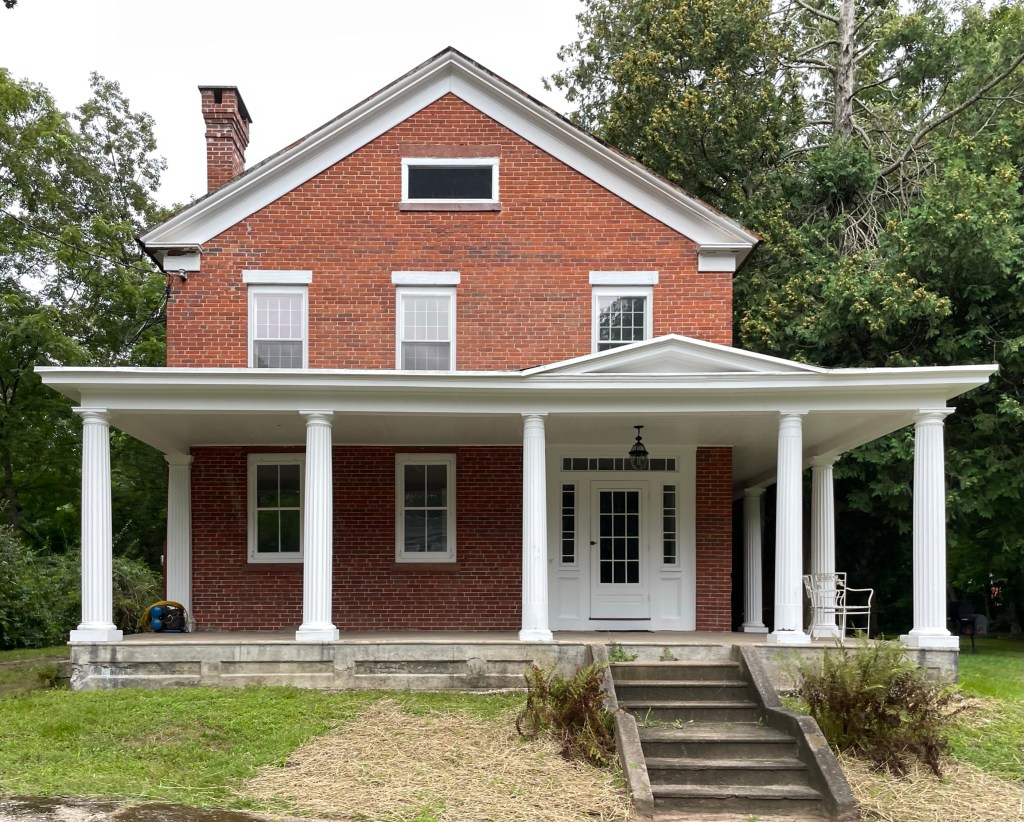
Located a stone’s throw from the Judson Manville House (last post) another uncommon brick Greek Revival style house in South Britain, Connecticut, this house stands out for its outstanding proportions and well-preserved exterior. This residence was built around 1830 for Benjamin Downs on the site of his family’s old property. The simple lines, portico at the entry supported by Ionic columns, and the window in the gable are all typical of the period.

Judson Manville House // 1835

Greek Revival style houses in brick are amazing to find “in the wild”, when I stumble upon them! This example is located in the South Britain village of Southbury, Connecticut. The brick house was built for Judson Manville in 1835 and it was constructed of locally manufactured bricks. Judson operated a hat manufacture next door to this property and it clearly made him some money. The property was eventually acquired by the Hawkins Company at the turn of the 20th century and it was operated as the company offices. It was during this time that the 20th century wrap-around porch was added. It is now a private residence.

Hawkins Company Factory // 1866

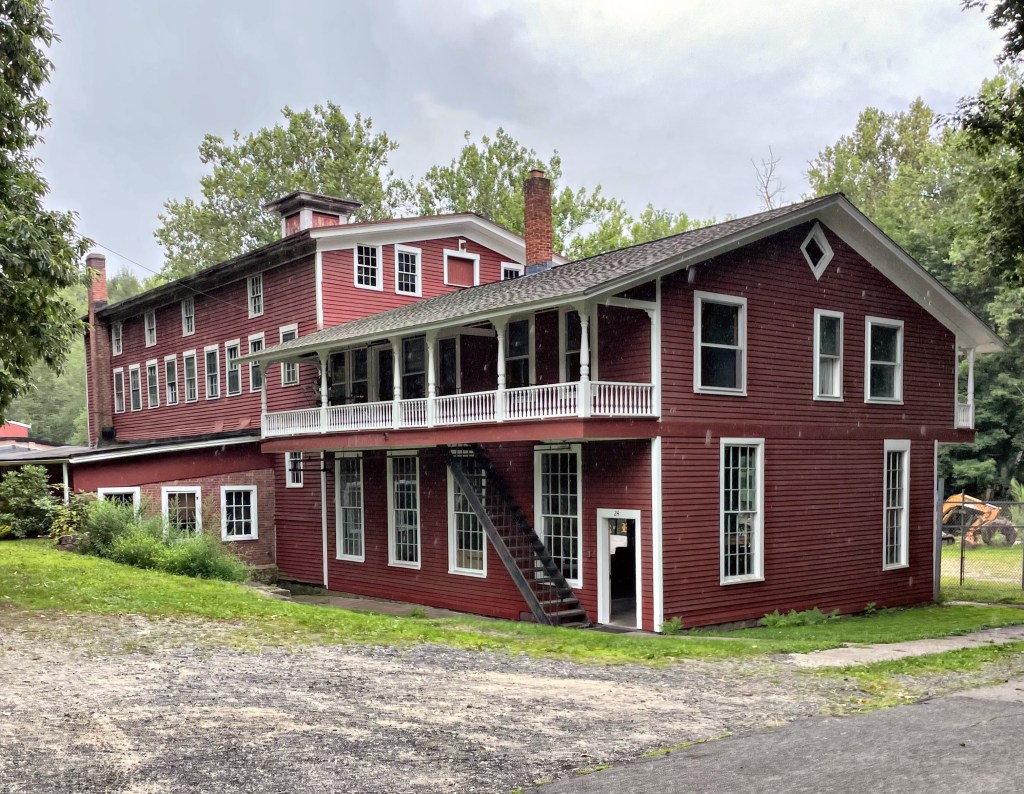
The Hawkins Company was originally organized by Ira L. Hawkins for the manufacture of tacks, buttons, and other metal specialties. The firm appears to have begun operations in Waterbury, Connecticut around 1890 acquired control of the former Blake, Lamb and Company, an animal trap manufacturer established in Waterbury during the mid-19th century. In 1899, Hawkins purchased this four-story woolen mill located in the South Britain section of Southbury that had formerly been operated by the Bradley and Hoyt Company. All of the Hawkins Company’s operations were moved to this plant c. 1900. Production of animal traps quickly became the primary focus of the Hawkins Company and the former Bradley and Hoyt Company mill was enlarged in several phases in order to accommodate demand. The Hawkins Company eventually closed its doors during the late 1960s. The building has been recently painted and maintained well, but it is unclear to me what it is used for, anyone know more?

Southbury Training School // 1940

The Southbury Training School occupies about 1,500 acres of land in Southbury, Connecticut comprised of two major sections: a self-sustaining 400-acre institutional campus and its contiguous 1,100-acre farm complex. Planning for the Southbury Training School began in 1935 at the height of the Great Depression. The State needed to provide housing and services for 1,200 residents on the waiting list for the Mansfield Training School, the state’s only facility for the mentally handicapped at that time. Site planning and development were the responsibility of architect Edwin A. Salmon, later Chairman of the NYC Planning Commission, along with A. F. Brinckerhoff, who was hired as the landscape architect. Two buildings of the nearly 100 that comprise the campus stood out to me the most, they are the Roselle School and the Administration Building. Both structures were built in 1940 and are hallmark examples of inter-war Colonial Revival style buildings for institutional use. Both structures have large cupolas at the roof and symmetrical facades with applied wood ornament over the brick. The Roselle School has a recessed entry and the Administration Building is notable for its hipped roof and pilastered façade. In recent decades, the State of Connecticut has been under-funding the complex, leading to lawsuits and concerns statewide. The state has been moving residents and patients to other facilities, likely in order to sell-off or redevelop the campus in the future. This is one to watch out for!

St. Sergius Chapel // 1932

Formerly known as “Churaevka,” the community known today as Russian Village in Southbury, Connecticut, was established in 1925 as an artistic community for Russians who fled to America after the Russian Revolution of 1917. The village was created by two Russian writers, Count Ilya Tolstoy, the son of Leo Tolstoy (the author of War and Peace and Anna Karenina), and the famous Siberian novelist George Grebenstchikoff. Although Tolstoy was first to discover the area while visiting his translator in Southbury, it was Grebenstchikoff who dreamed of establishing a cultural center and planned to create a rural community of cottages where Russian writers, artists, musicians and scientists could live and flourish statestide. The village was named after a mythical Siberian village mentioned in the works of Grebenstchikoff and the centerpiece is this chapel, St. Sergius Chapel, which was built in 1932-33 from plans by Nicholas Roerich. The small square-plan chapel was likely built of stone gathered from the neighborhood.

Benjamin Stiles House // 1787

Built for Revolutionary War veteran and local lawyer Benjamin Stiles, this stunning Georgian mansion is unique for its use of brick in construction, a material not too common for some of Southbury’s earliest homes. Local tradition holds that a French engineer in General Rochambeau’s army provided assistance in designing the building, using the metric system, likely on the march from Newport to Yorktown. Benjamin’s father was one of the original settlers who migrated from present-day Stratford to the un-developed Southbury. The hip-on-hip roof with pedimented dormers is really a stunner, and unique for the town!

Oldfield – John Moseley House // 1818

Federal style houses are among my favorite styles! From the classical design details to the symmetrical facades, there are so many great examples of Federal style houses in New England. This house in Southbury, Connecticut dates to 1818 and was built by John Moseley (1775-1876), who lived to be 100 years old, and married twice, outliving both of his wives. According to a family history, Moseley personally went to Maine to pick out the wood used to build his house as there were no large trees left in the area when house construction began in 1818. In the early 1900s, the house was updated with a rear addition, built from a structure moved from across the street and attached to Oldfield, and with the addition of the large Colonial Revival style portico at the front entry. The house has been a bed & breakfast since the 1990s, originally called Cornucopia at Oldfield, it is now known as the Evergreen Inn.