Former Eli Whitney School // 1907

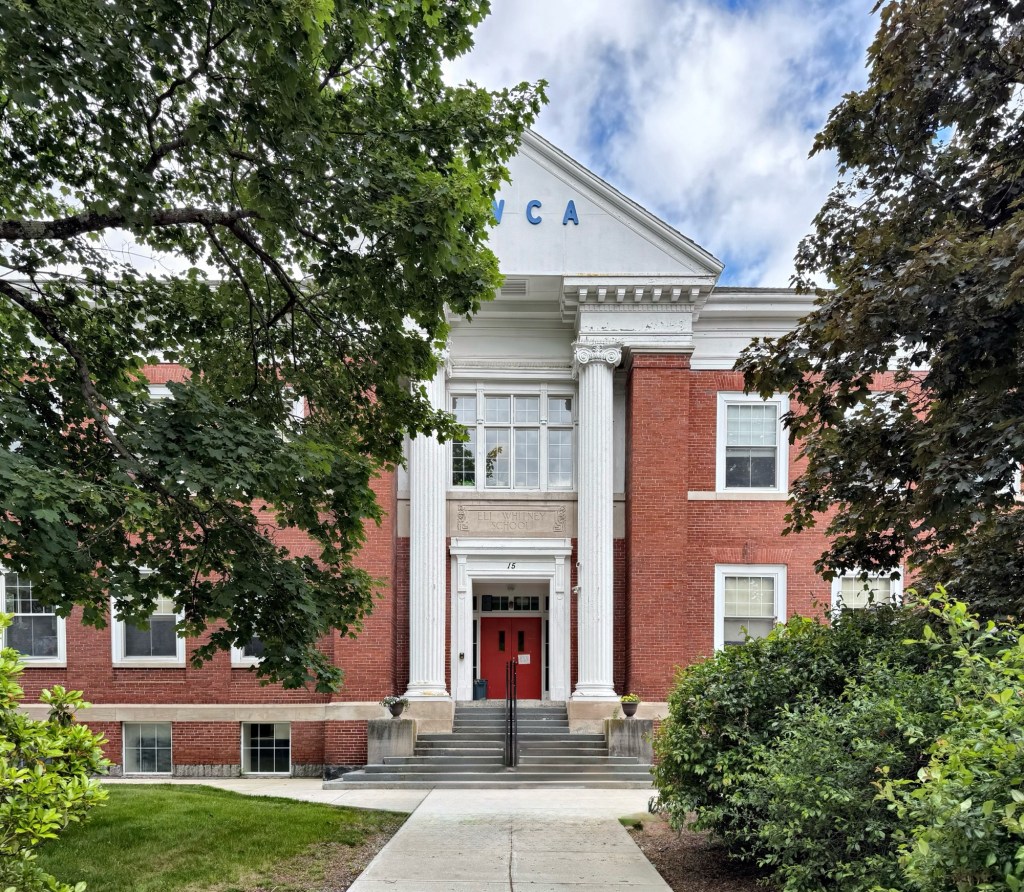
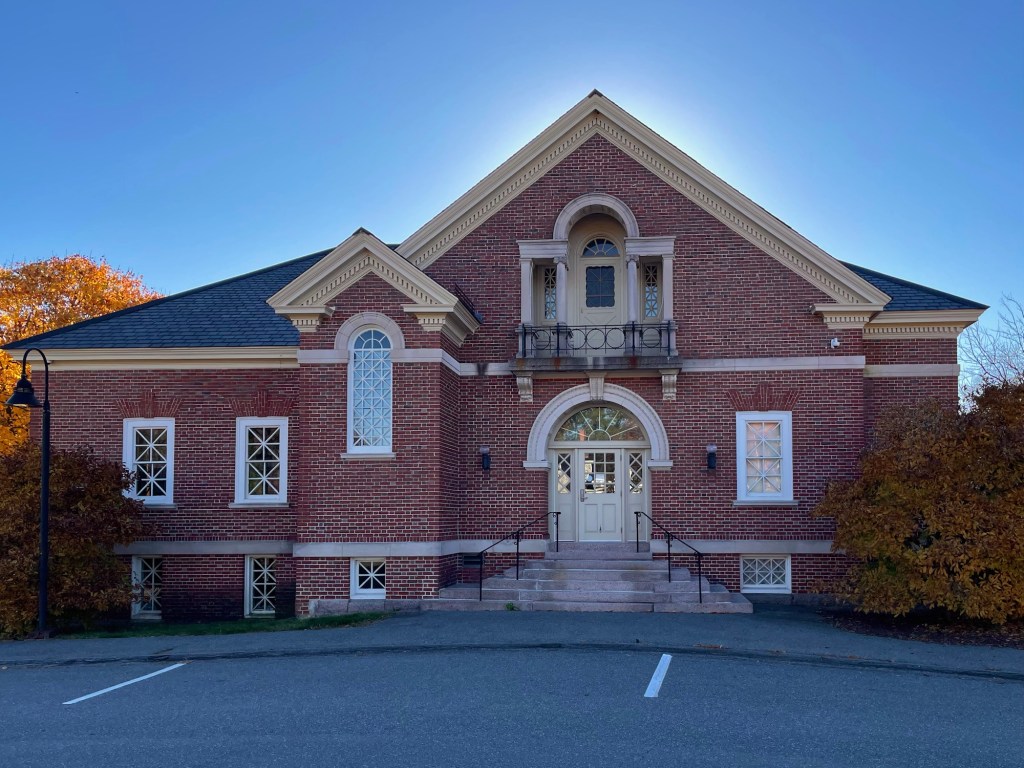
Built a few decades after and located behind the Harvey School in Westborough, Massachusetts, the former Eli Whitney School is a landmark example of an educational building designed in the Neo-Classical style. Built between 1906-7, the school building replaced an earlier school on the site that was outgrown and outdated. Designed by architects Cooper & Bailey, the building stands two-stories tall with a central pedimented pavillion containing the entry that is framed by monumental fluted columns. The school was named after Eli Whitney, the famous American inventor, born in Westborough, who is widely known for inventing the cotton gin in 1793, one of the key inventions of the Industrial Revolution, and later moving to New Haven and manufacturing weapons. When Westborough schools consolidated into modern facilities in the second half of the 20th century, this building was then occupied by the YWCA, and have rented the facilities from the town until it was purchased in 2000.
Old Rockland High School // 1908

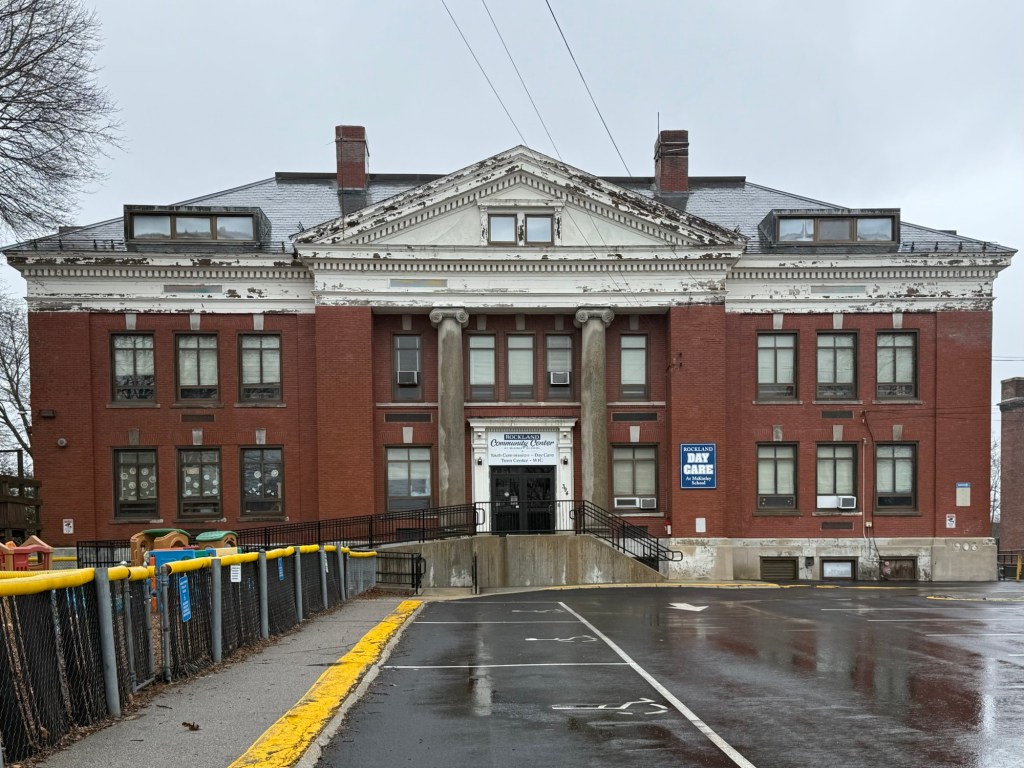
Rockland, Massachusetts, was incorporated in 1874 as the result of a dispute over the construction of an expensive school building in Abington Center in 1871 and the belief that East Abington could develop into a more successful industrial community if separate from Abington. By the turn of the 20th century, there were approximately 900 children in Rockland between the ages of 5 and 15 who were being educated in the local school system, largely comprised of first- and second-generation immigrants, arriving to the area to work in shoe manufacturing. Many smaller, schools dotted the landscape until a larger, consolidated school was built 1892. Decades later, prosperity and a growing population necessitated a new school, and the architectural firm of Cooper & Bailey, designed the town’s first brick school building. Classical Revival in style, the building features a prominent pediment supported by two, two-story Ionic columns and dentilated cornice. The building is now a community center – housing a day care, pre-school and meeting spaces for Girl Scouts. The building also housed Rockland’s senior center prior to the construction of a new senior center elsewhere in town. It suffers from deferred maintenance and is in need of some attention.

Georgetown Peabody Library // 1907

The Georgetown Peabody Library began on September 19, 1866, following a generous gift from George Peabody (1795-1869), a great man who is considered the father of modern philanthropy. George Peabody’s interest in the town was due to the fact that it was the birthplace of his mother, Judith (Dodge) Peabody, and for many years the home of his sister, Mrs. Judith Peabody Russell. Mr. Peabody decided to donate funds for the town’s first public library and also had 2400 books brought from London for its initial book collection. The wooden library building was designed by the Boston architectural firm of Bryant & Gilman and opened in 1869. After a few decades, the first library proved inadequate for the town’s needs and the present building was built with invested Peabody funds. In 1904, construction began on the new, present library building, a robust, brick structure in the Romanesque style with the firm of Cooper & Bailey furnishing the plans. The building has since been added onto as the town grew, but it retains its significance architecturally and historically for ties to Mr. George Peabody.

Georgetown Town Hall // 1905

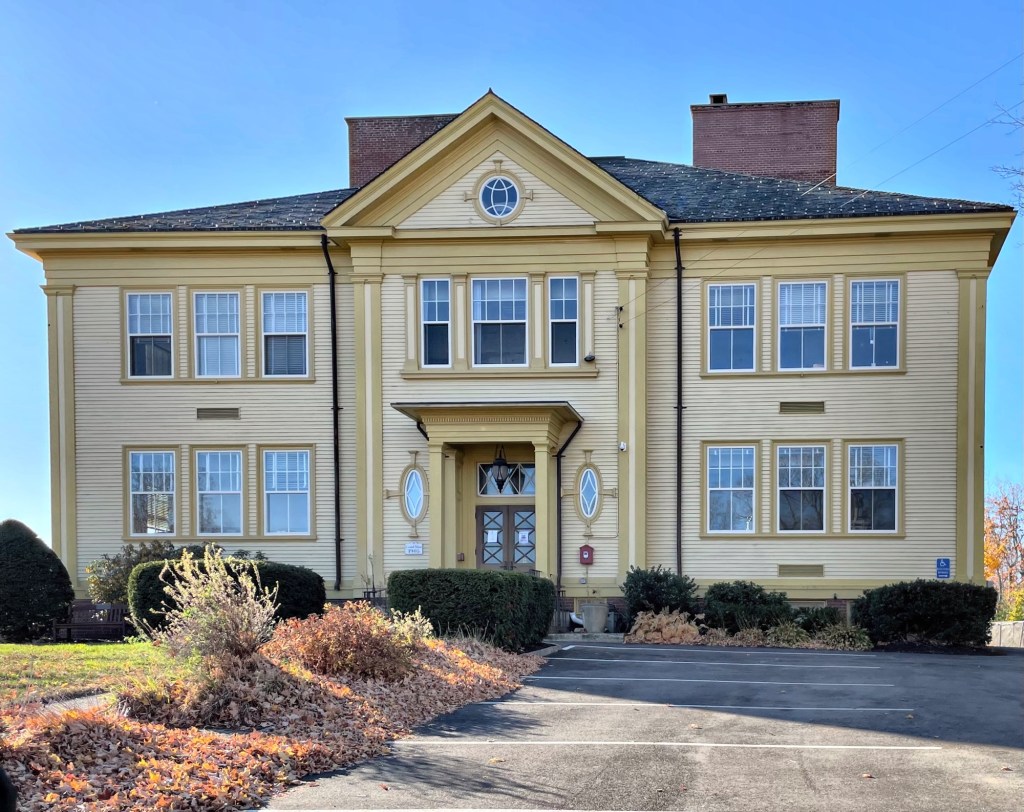
Welcome to Georgetown! The Georgetown Central School, now known as the Memorial Town Hall, stands near the historic commercial center of Georgetown, Massachusetts, a rural community in Essex County located about 28 miles north of Boston. The two story wood-frame building was built in 1905 to a design by the Boston architectural firm of Cooper and Bailey, and located at the site of an earlier one-room schoolhouse built in the 18th century. It was Georgetown’s first multi-room school building, and was built after the town’s first high school/town hall burned down in 1898. The Colonial Revival style school building was eventually outgrown and was no longer needed as an educational facility. It was converted to municipal offices in 1974, a use that has remained ever since. The town has taken pride in this building, restoring much of the exterior details and slate roof.

Colt Memorial School // 1906

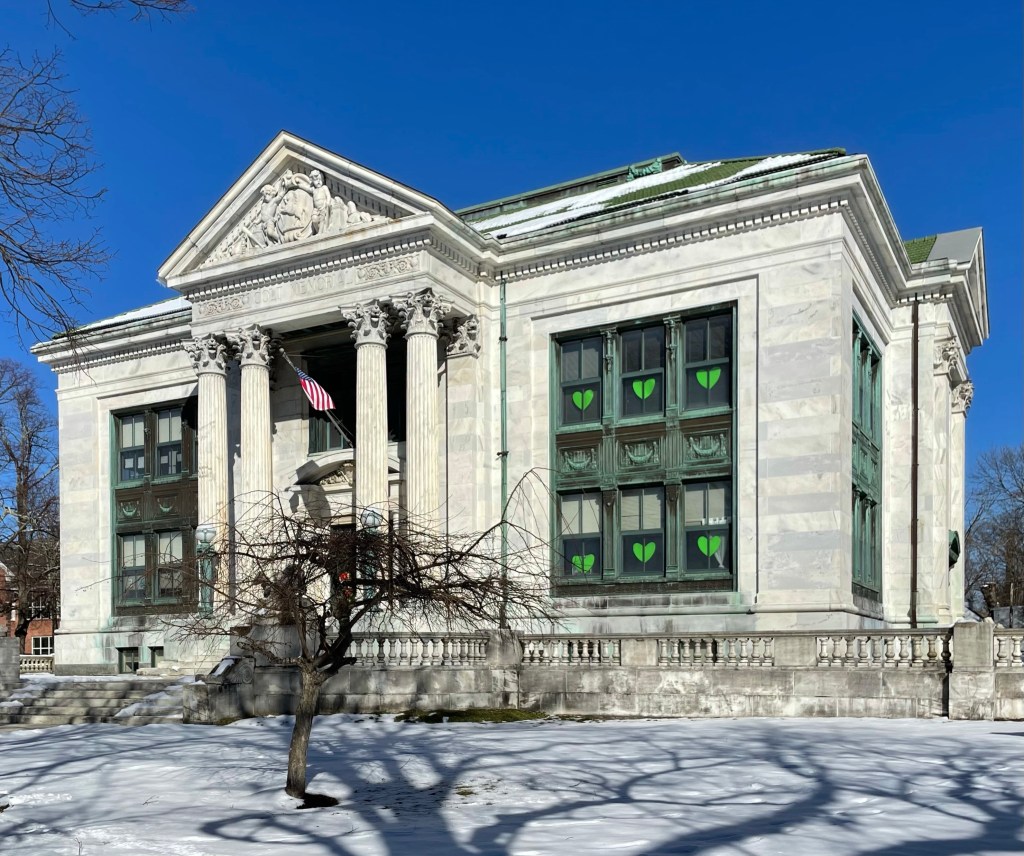
Similar to Burnside Memorial Hall nearby, this school building in Bristol was also constructed as a memorial, in the form of an architectural statement-piece. The school building was gifted to the town of Bristol by Samuel P. Colt, who resided in a mansion nearby, Linden Place, and also owned a massive country estate in town, where his prized cows were cultivated. The school building was funded as a gift in memory of his mother Theodora DeWolf Colt and showcases his everlasting love for her. Designed by Cooper & Bailey of Boston, this monumental, 2-story, hip-roof Renaissance Revival structure was built of white marble with 2-story, cast-bronze window bays. The symmetrical facade has a central Corinthian portico with fluted columns and a pediment containing cherubs around the Colt family crest. The school was used as the town high school until the 1960s when it was outgrown, the building has since been used as an elementary school, the nicest one I have ever seen!