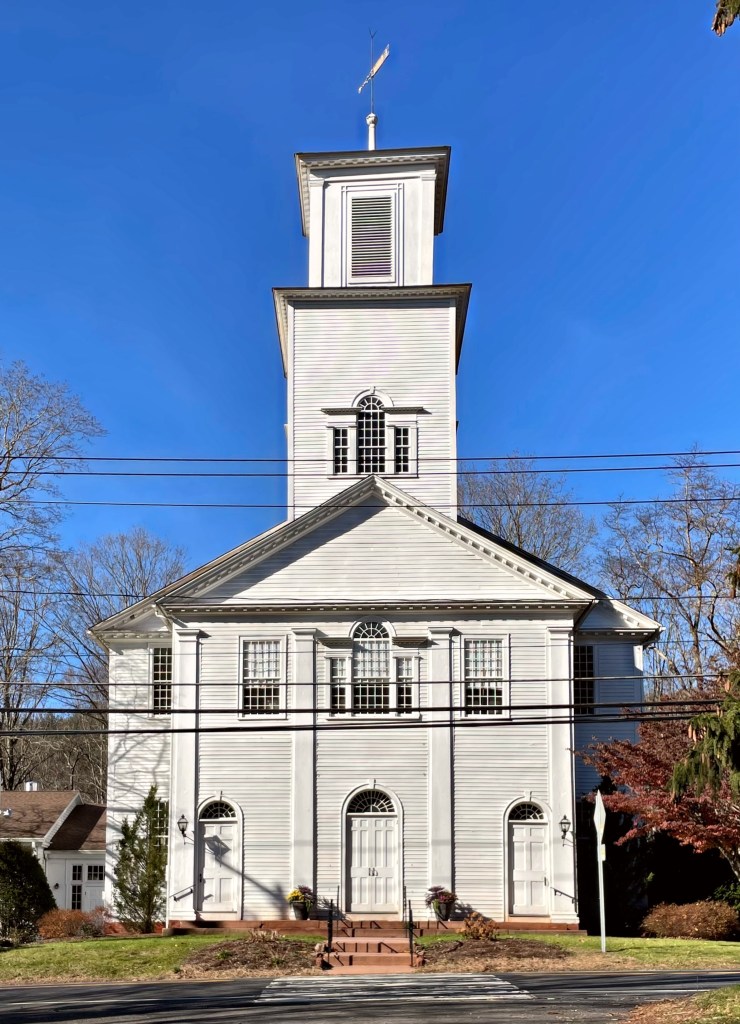
In 1750, a new parish church was established as The First Ecclesiastical Society of West Simsbury, with parishioners meeting in members’ homes. Then, Canton Connecticut was still a part of Simsbury. In 1763, the Parish constructed a meetinghouse with the building also used for town meetings and other public gatherings. In 1806, Canton separated from Simsbury and the congregation soon after decided that the nearly 50 year old primitive building needed replacement. A new building was proposed and materials were harvested. Stories report that the first tree felled for lumber for the new church killed a parishioner. The beautiful Federal style church edifice features Palladian windows, a hallmark of the style. The congregation is active to this day.
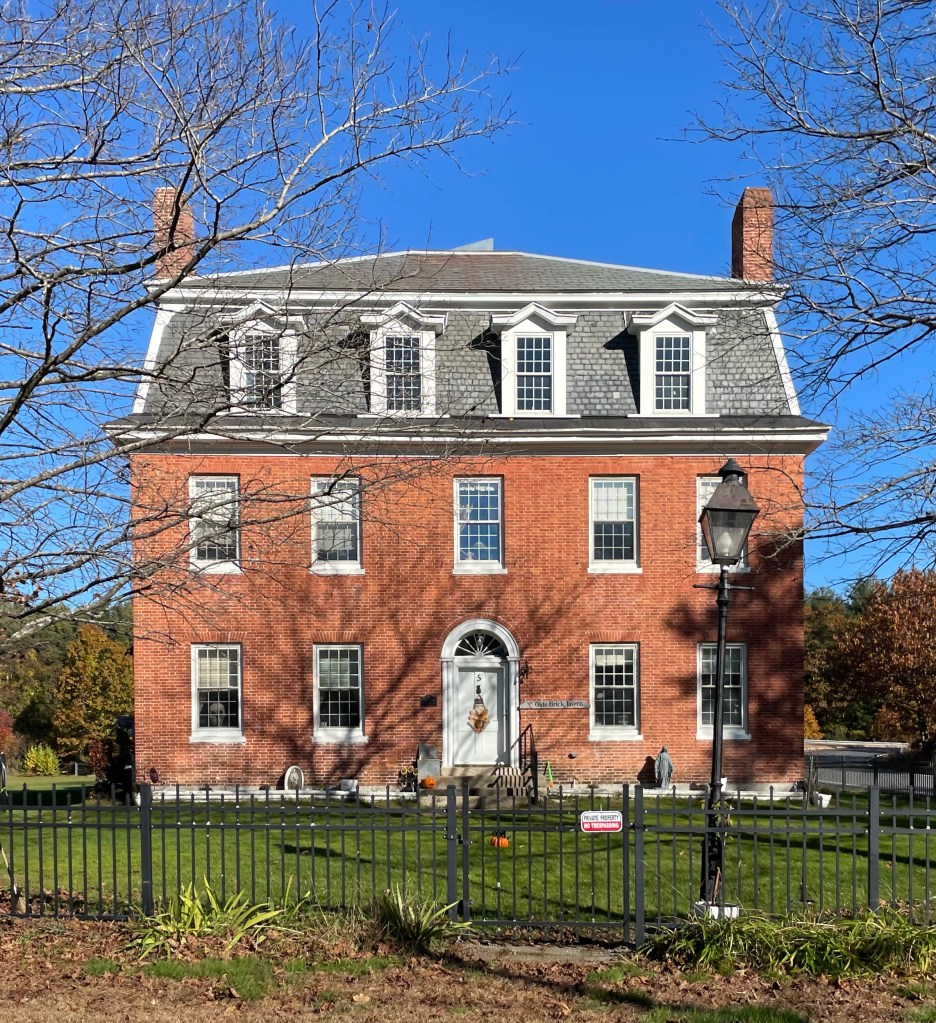
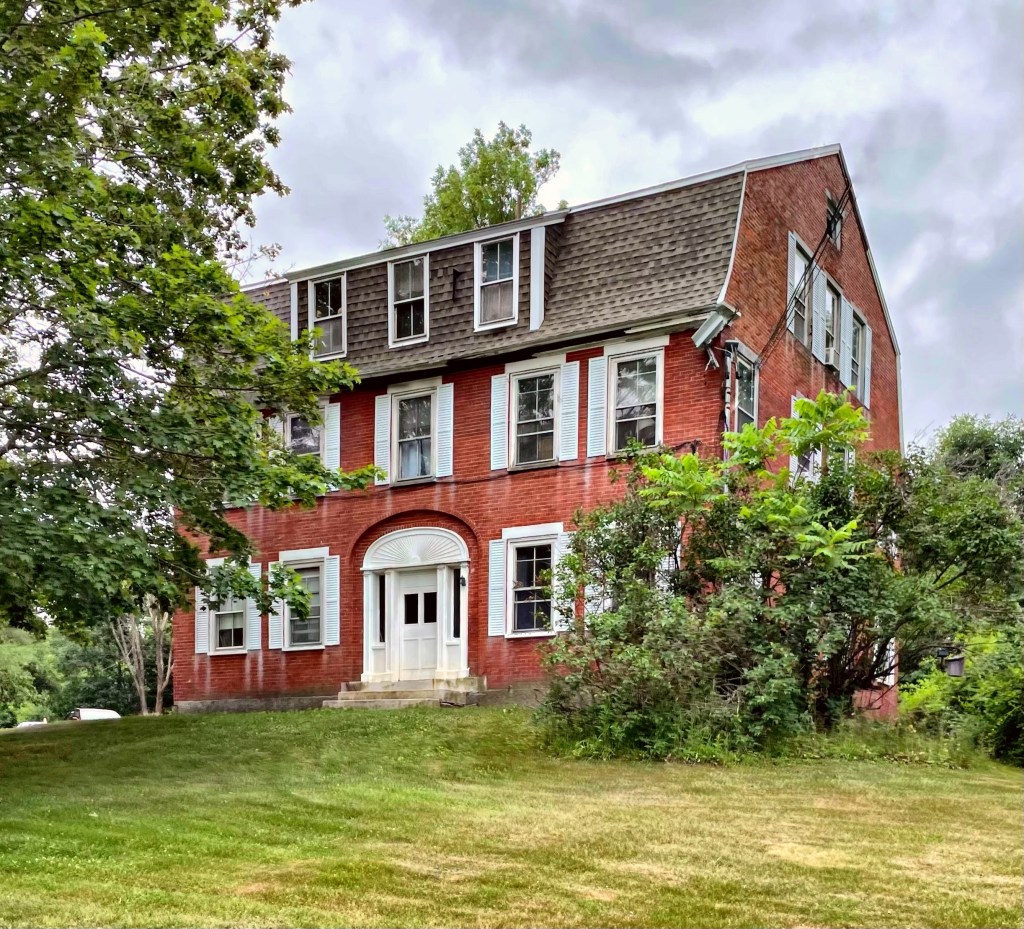
The Brick Tavern was an important stopping point on the old Union Turnpike, and the original two-story brick structure was completed about the time of the turnpike construction by Paul Willard, who with his heirs, operated the inn for 25 years. In the first years of the 1800s, the Union Turnpike Company planned and built a road providing a link for travel from Boston to Albany. Realizing the possibility for an inn along the first leg of the route, Willard financed this substantial brick building for travellers to stop, eat and spend the night. The tollroad was later made free, and less people stayed at the inn. After subsequent ownership, the building started to suffer from deferred maintenance and it was sold to a local Quaker group. The Quakers modernized the building by constructing the mansard roof and updating the interior. They never occupied it, but rented it to tenants for income. After, it was a hospital, boarding house, and in WWII, as a barracks of sorts for soldiers training nearby at a military base. The building is now a house!
The Newhall-Lane House (could be the home of many wives) was built in 1809 by Pliny Newhall, a bricklayer. He purchased the land here at a prominent crossroads in Lancaster in 1808 from his employer who owned a brickyard across the street. At a previous home in town, Newhall’s wife Patty died giving birth to their son, at just 23 years old. Their son also died during childbirth. He remarried and had a full family to grow into the couple’s new house. They relocated to Lincoln and the home was sold to Captain Anthony Lane, who was the son of Deacon Jonas Lane, an important figure in Lancaster town history. Jonas had four wives, outliving three of them. Captain Lane himself, was married twice while living in this house; he had no children from either marriage. Although he was a talented craftsman and cabinetmaker, Captain Lane listed his occupation as farmer. The house is significant architecturally, as a fine example of Federal style architecture in Lancaster . Its sophisticated design is reflected in the graceful entrance. One of the unique features of the house is the pedimented gable of the facade which in combination with the narrow plan of the house, creates a delightful massing in this distinctive combination of Greek Revival and Federal styles.
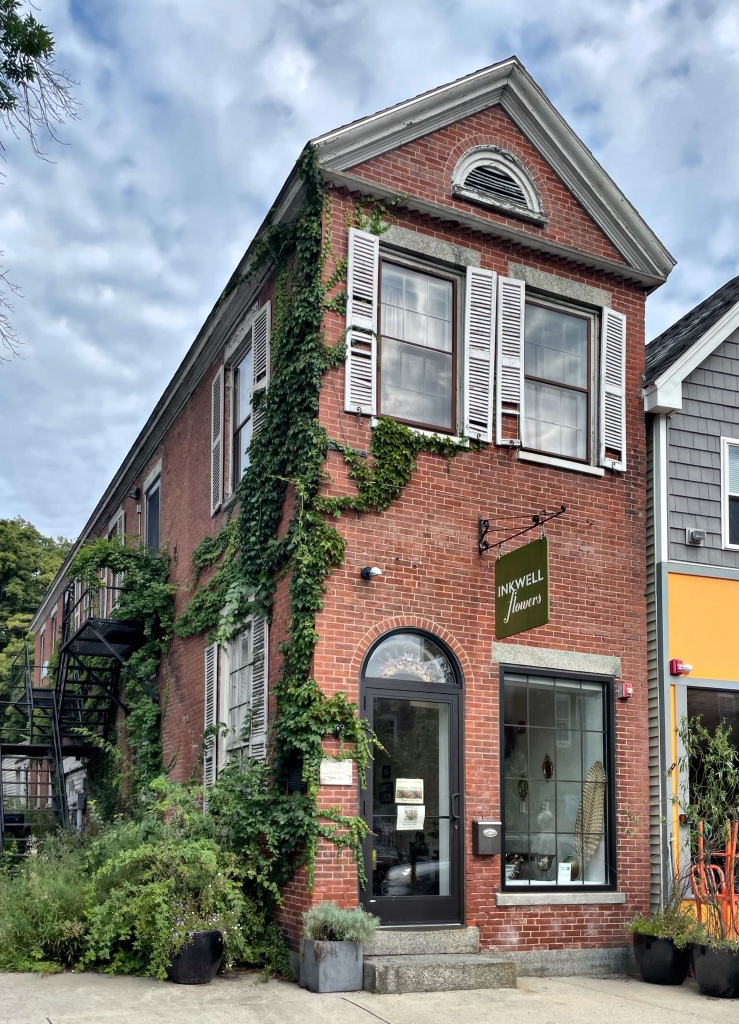
Arguably the cutest little store in Newmarket is the Murray Store, right on the town’s vibrant Main Street. The brick building is one of the earliest such structures on the street and is a great example of a narrow Federal style building with a lunette in the gable end. The structure was built before 1830 and was occupied by a Ms. Charlotte Murray as a millinery (women’s hat store). Main Street USA! What is your favorite Main Street in New England?
Durham, New Hampshire, sits beside Great Bay at the mouth of the Oyster River, an ideal location for settlement, like the Western Abenaki and their ancestors who’ve lived in the region for an estimated 11,000 years. By 1633, English colonists were spread along the tidal shores of the Oyster River, and brought non-native livestock aboard their ships, “thousands of cattle, swine, sheep, and horses,” requiring them to clear acres merely for pasture. Formerly un-molested fields, carefully cultivated across centuries, were trampled and their crops destroyed. Due to this, violence between the native people and colonizers erupted, and livestock were frequently killed. The Abenaki saw them as a direct threat to their food supply. The Oyster River Plantation (as it was originally named by colonizers), was so named Durham in 1732 when it was incorporated, after County Durham in England.
Built in 1825 by Joseph Coe, local merchant and shipbuilder, this brick building was constructed as a prominent corner store with two stories of windows for commercial use and a top floor apartment. The brick structure is an excellent example of Federal style architecture in the Great Bay area of New Hampshire, and its location at the end of Main Street, where it converges with Dover and Newmarket roads, historic routes to the town’s neighbors, provided a lot of traffic of potential customers.After years of meeting in taverns and schoolhouses, the town selectmen voted in 1840 to purchase Coe’s Store for use as a town hall. They purchased the building, later opening the top two floors into one large meeting space. The town outgrew the building and relocated across the street, and since 1961, the building has been occupied by the Durham Historic Association and Museum.
Before the days of cars and even trains ruled, people in New England would get around by horseback or stagecoach (horse-drawn carriages) from town to town. Due to the long travel times to get everywhere, many New Englanders built taverns, which served as inns and bars for the weary traveller on their journey. In 1812, a recently married Caleb Handy built this house to serve as a residence and source of income, as a tavern for travellers on the Plymouth-New Bedford stagecoach route. He married Sophia Dexter in 1811, who died just two years later at the age of 22. Two years after the death of his first wife, he married Sophia’s sister, Mary, who just turned 18 (he was 33). The tavern had a ballroom for local dances and a room for serving drinks, based principally on West Indian rum, that was shipped in from sugar plantations, owned by many wealthy white families in New England (many of whom exploited the slavery abroad). The Tavern was later owned by Benjamin Handy, who continued to operate it as a Tavern until the railroad made the stagecoach route obsolete in the middle of the 19th century. It then became a family home. The house was sold to the Sippican Women’s Club in 1923, who renovated and restored much of the building, and held luncheons and events inside. They maintain the building to this day.
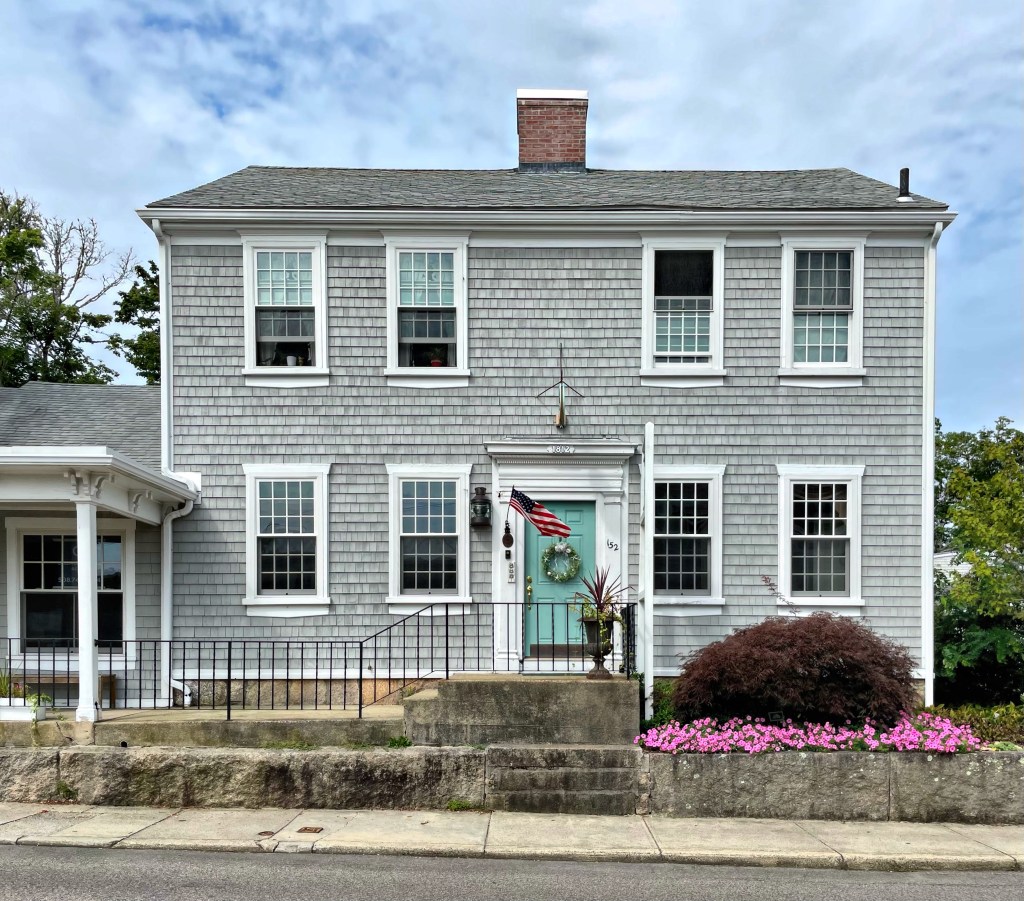
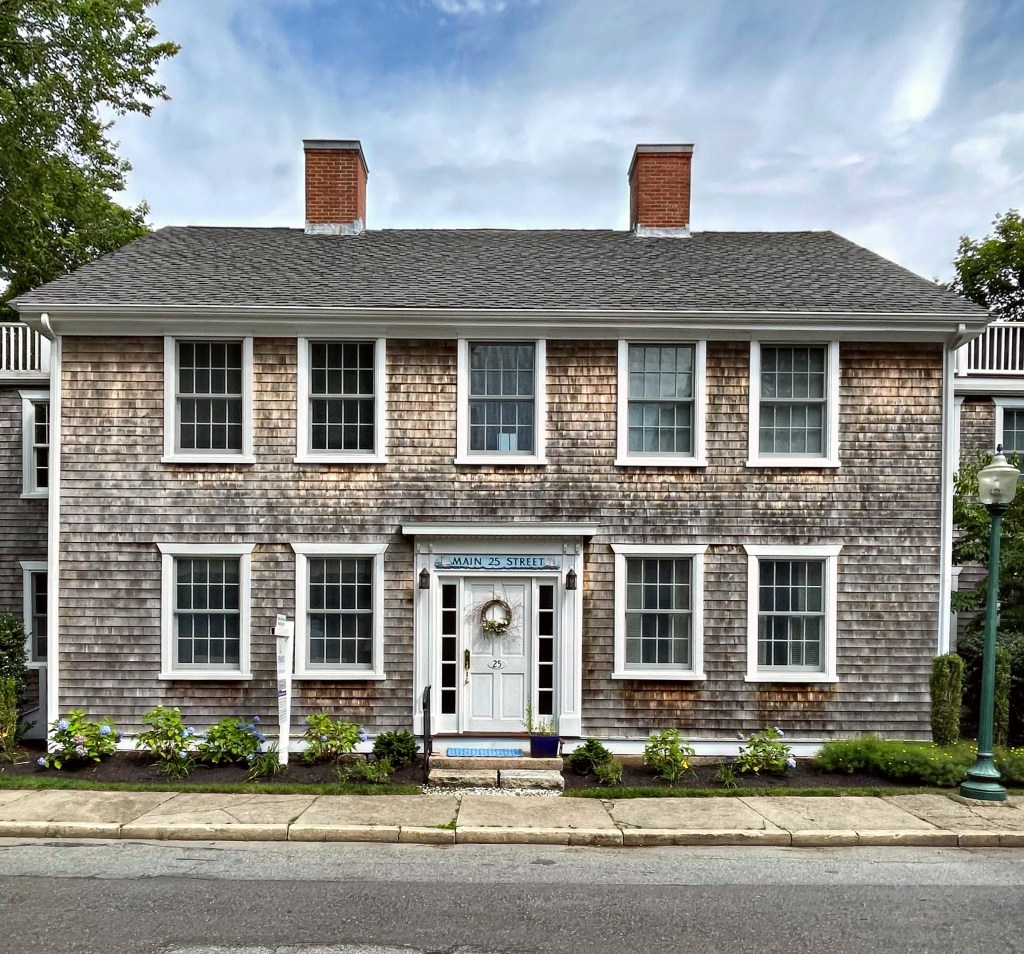
Built around 1790 for Rowland Luce (1756-1835), this Federal home oozes character and charm, and is located right on Main Street in one of my favorite towns, Marion, Mass. Luce was born in Tisbury on Martha’s Vineyard into a very religious family. While studying to become a Deacon like his father, the Revolutionary War broke out, and Rowland served to fight the British, leaving service as a Major. He eventually settled in Marion’s Sippican/Wharf Village and worked as a Deacon for the Congregational Church. The simple house is clad in cedar shingles and has two chimneys, a departure from earlier homes with one, large central chimney.
The “Old Parsonage” was built in 1813 by Capt. John Pitcher, brother of Elizabeth Pitcher Taber, benefactress of the town of Marion. The side of the building that faces the street (what we see) is actually the back of the original dwelling. The Federal period house sits on a raised stone foundation with a central door and shingle siding above. Behind his home, a large pasture was situated where his sheep and cows grazed on fields. Pitcher used to hang a ship’s bell from the branch of an oak tree and ring it every evening at 9 p.m. as a curfew bell for the town. The bell is now located in the Marion Natural History Museum. When Capt. Pitcher died, he left his house to the Congregational Church, which used it as a parsonage for many years. It was sold in May of 2021 and is likely a private home now.
This large brick Federal house was built on the outskirts of Gardiner, Maine, in 1834. Ebenezer Moore, the builder, worked as a carpenter and house-wright in town and showcased his skill on his own brick mansion, selling it to a C.E. Bradstreet. By the late 1840s, the town of Gardiner decided that it would need a new almshouse, city-provided housing for the poor, so they purchased the Bradstreet house and 14-acres of land. In the 1848 town report documents noted, “The establishment is a brick one, of two stories, containing thirty-six fine rooms, including seven fitted for the insane in the most admirable manner, together with a spacious hall. The building is every way a most excellent one for the purpose, and is a monument of the humanity and generosity of the city.” The almshouse served as a working farm where the poor could harvest their own crops and contribute in a small, closed society. The almshouse burned in 1909, and was immediately rebuilt using the outside brick walls. In the Colonial Revival manner, a gambrel roof replaced the former gable roof, which added a third story to the almshouse. The building was eventually sold, as new housing models for low-income residents took off. The former almshouse was converted to an apartment building in 1970, a use that appears to continue to this day.
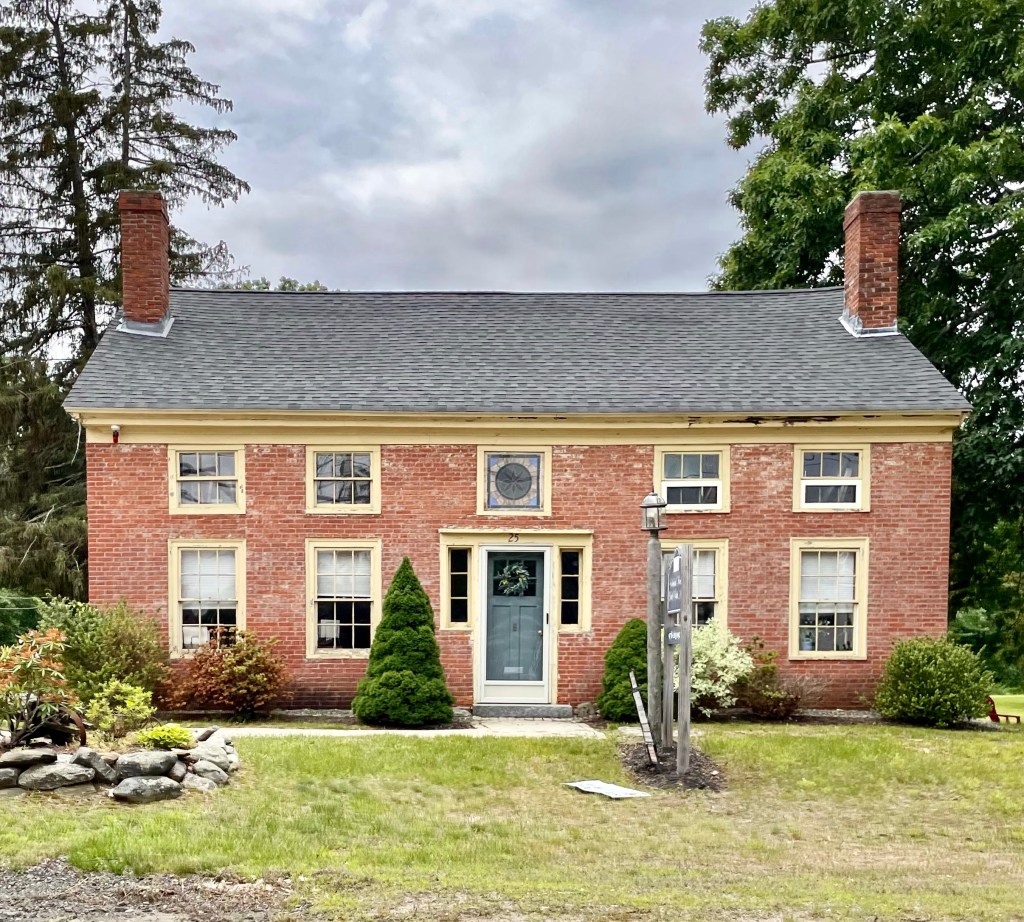
This cute brick house in Boxborough, MA, was built c. 1832 by the Revolutionary War veteran Peter Wheeler where he lived until his death in 1847. The home sits on a heavily trafficked street, yet retains much of its architecture and even historic windows, despite its conversion to commercial use! The brick house features e 6/6 double-hung units on the first story and 3/3 in the second, with the central window featuring stunning stained glass.



 Buildings of New England