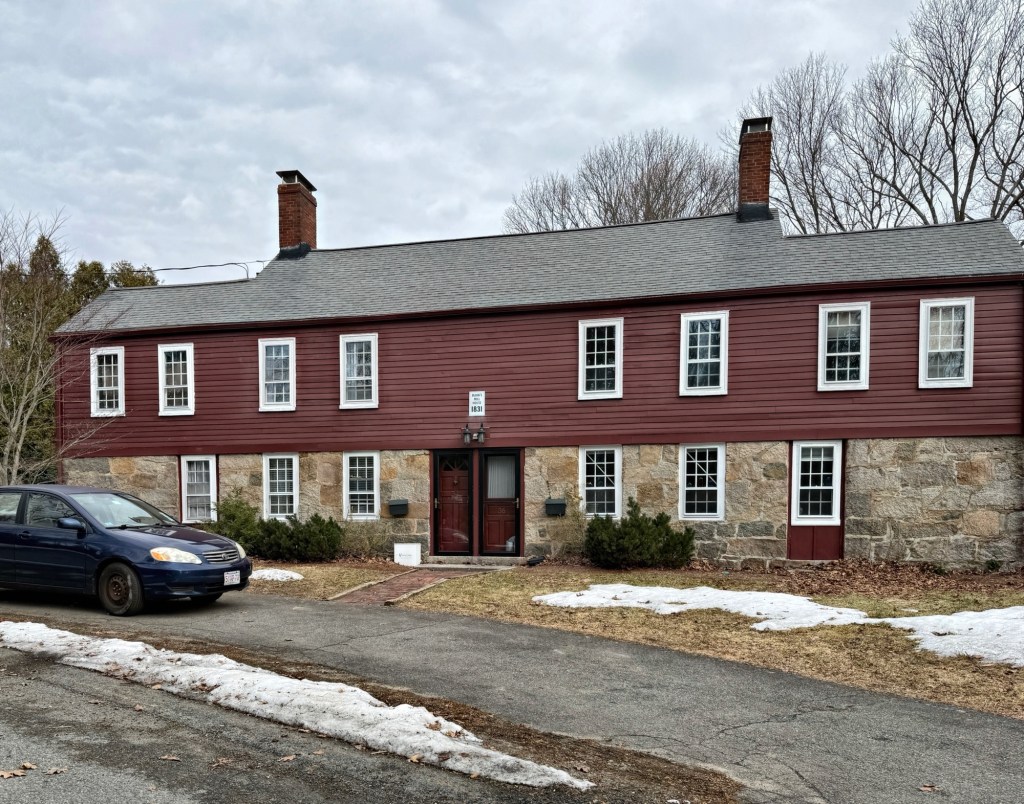
Billings Coggeshall Double House // c.1784

This unique double-house on Mill Street is stopped me in my tracks when strolling around Newport. The two-family house was built around 1784 by Billings Coggeshall (1733-1810) and is unique architecturally as it is comprised of two houses, each with its own separate pedimented entry, into a single lengthy block. Both houses have interior chimneys and are just one-room deep! When urban renewal hit Newport in the second half of the 20th century, traffic patterns and revitalization of the waterfront were top of mind (not necessarily slum clearance and wholesale redevelopment of neighborhoods like in Boston). To bring traffic into the downtown shopping area, Memorial Boulevard was laid out by 1969, and the Newport Restoration Foundation was integral to saving this building from the wrecking ball, as it was in the path of the new road. As luck would have it, an area around Trinity Church was cleared to establish Queen Anne Square, a town common-like park in the center of town. To provide the quintessential “New England charm”, many historic buildings were relocated to line the square, including this house. When the Billings Coggeshall House was moved here, it replaced a gas station, and it was given an even longer side addition with breezeway, providing screened parking and a rear addition for offices. Here’s to preservation!

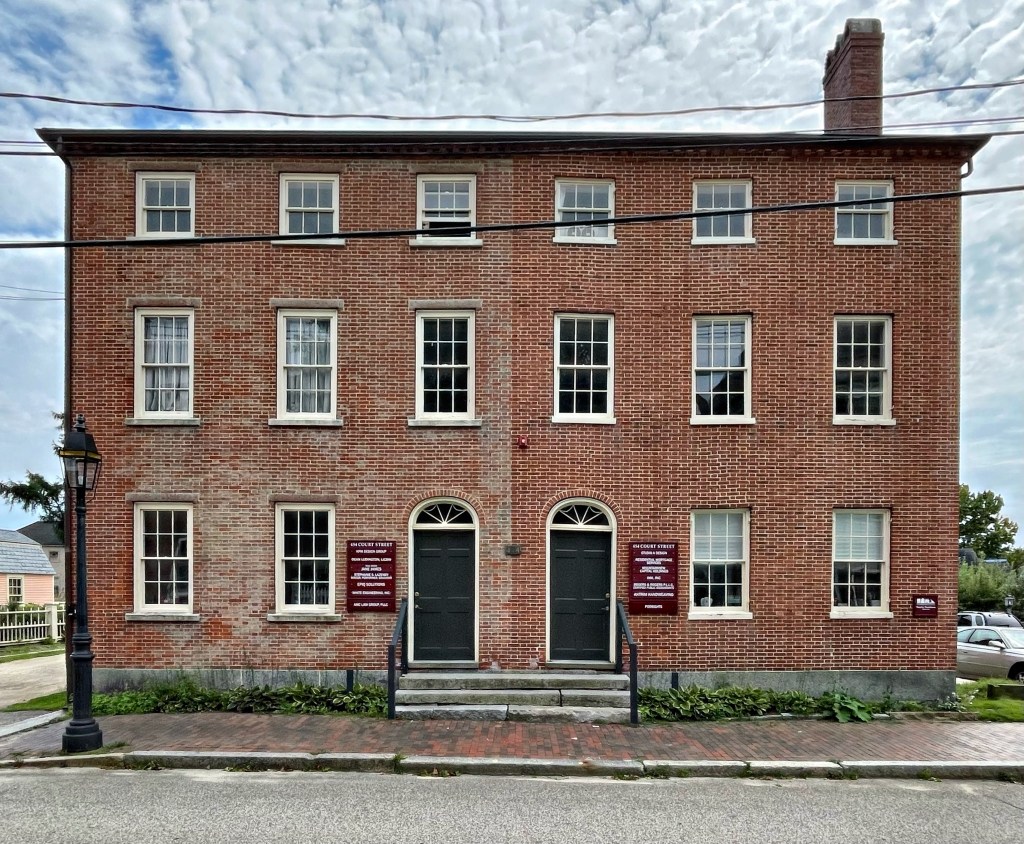
Shapley Townhouses // 1815

The Shapley Townhouses in Portsmouth, New Hampshire sit on Court Street and were built around 1814-15, after the Great Portsmouth Fire of 1813 had destroyed the center of town. It was constructed to conform with the new Brick Law that required all new buildings in downtown Portsmouth to be built of “fireproof” brick. The paired townhouses are unusual in the city as a particularly well-preserved example of a Federal period double-house. The house was built by Captain Reuben Shapley, a ship’s captain and merchant. In about 1973, this building was remodeled into a temporary home and counseling center for troubled youth. Suffering from deferred maintenance and the direct proximity to the Strawberry Banke Museum, the Strawberry Banke Foundation purchased the double-house who rent out spaces inside to offices, providing a revenue stream to maintain and further showcase the history of the port town.