Poland Springs House // 1876-1975

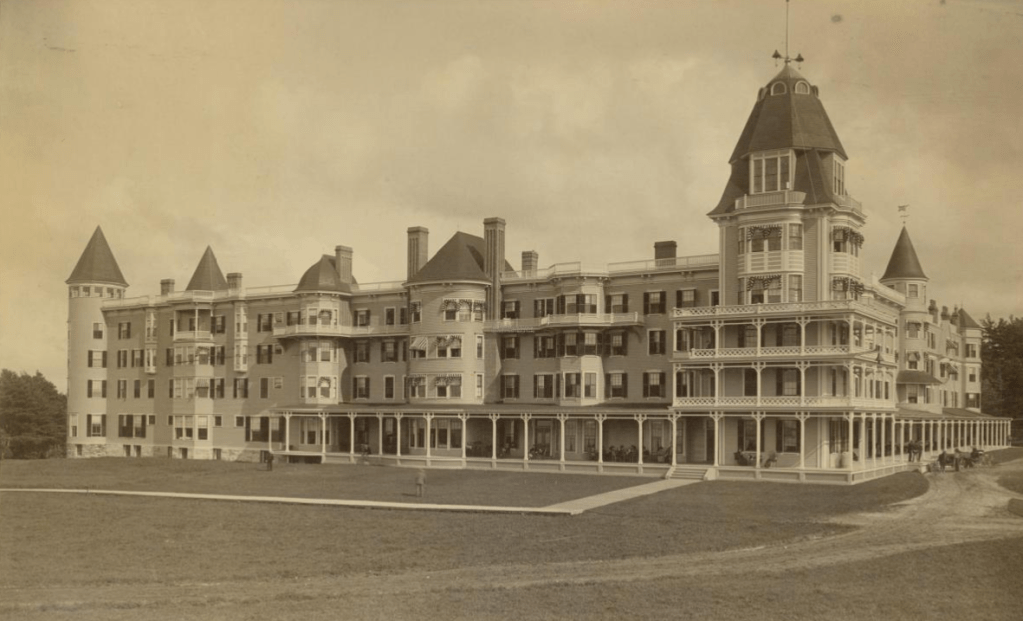
In 1844, Hiram Ricker (1809-1893) of Poland, Maine, drank spring water on his property and found that his chronic dyspepsia was cured. As a result, he began touting the medicinal qualities of the water and in 1859 started selling the water commercially. While the first water was bottled and sold in 1859, it was not until after the Civil War that Hiram Ricker and his sons began heavily promoting the spring as a destination for medical cures – and at the same time promoted the inn and resort that they were building in association with the spring. From this, the Poland Springs Resort (and Poland Springs bottled water) was born. The development saw swarms of tourists looking to escape the polluted cities for clean Maine air and natural spring water, therefore, the Ricker Family built the great Poland Spring House in 1876 to cater to resort visitors taking its waters. The original hotel was Second Empire in style and stood four-stories tall containing 100 rooms. Throughout the 1880s and 1890s, the resort building was expanded, quadrupling its size to 450 rooms as the demand for the resort increased every summer. An annex was also built nearby, named the Riccar Inn, providing even more hotel rooms for guests. By the early 20th century, the 1870s hotel was completely remodeled in the Beaux Arts style by architect Henry Wilkinson with domed roofs and sweeping verandas. After WWII, the resort saw diminishing visitors and would ultimately close in the 1960s. During a period in the 1960s, the hotel was operated as the country’s largest Women’s Job Corps Training Center, but deferred maintenance caught up to the building and it was ultimately shuttered, suffering a devastating fire in 1975, it was demolished soon after. While the large hotel no longer stands, there are many other amazing buildings on the grounds, stay tuned!
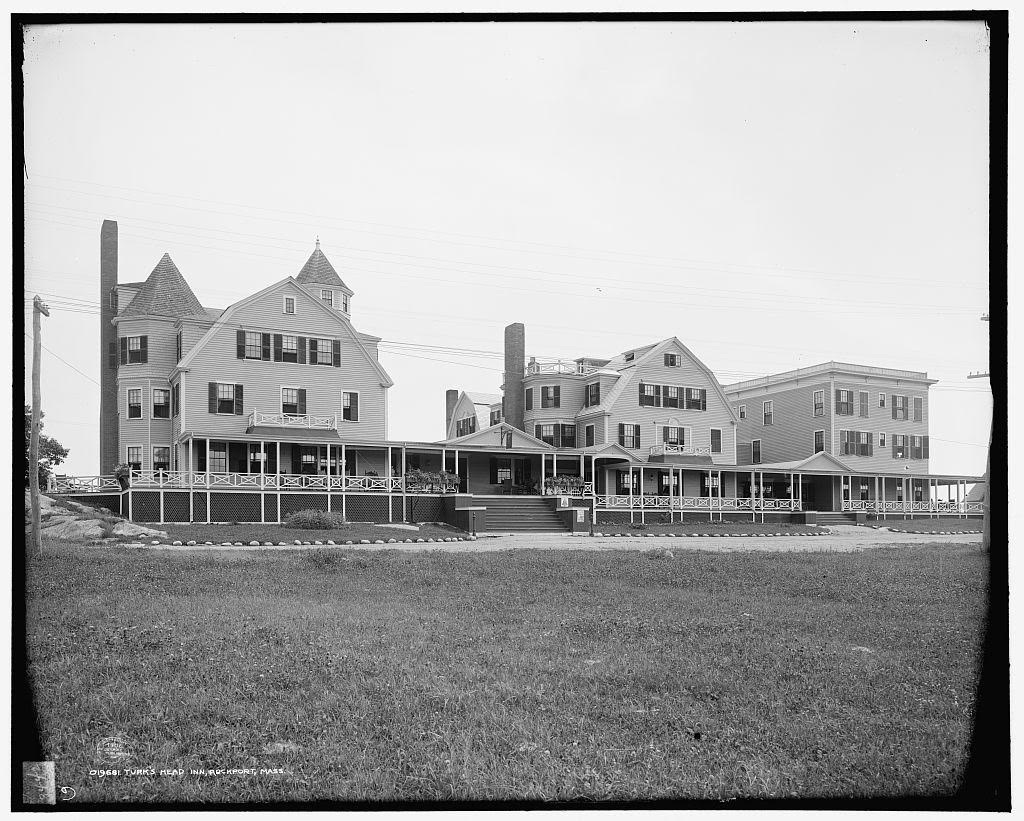
Turk’s Head Inn // 1890-1970

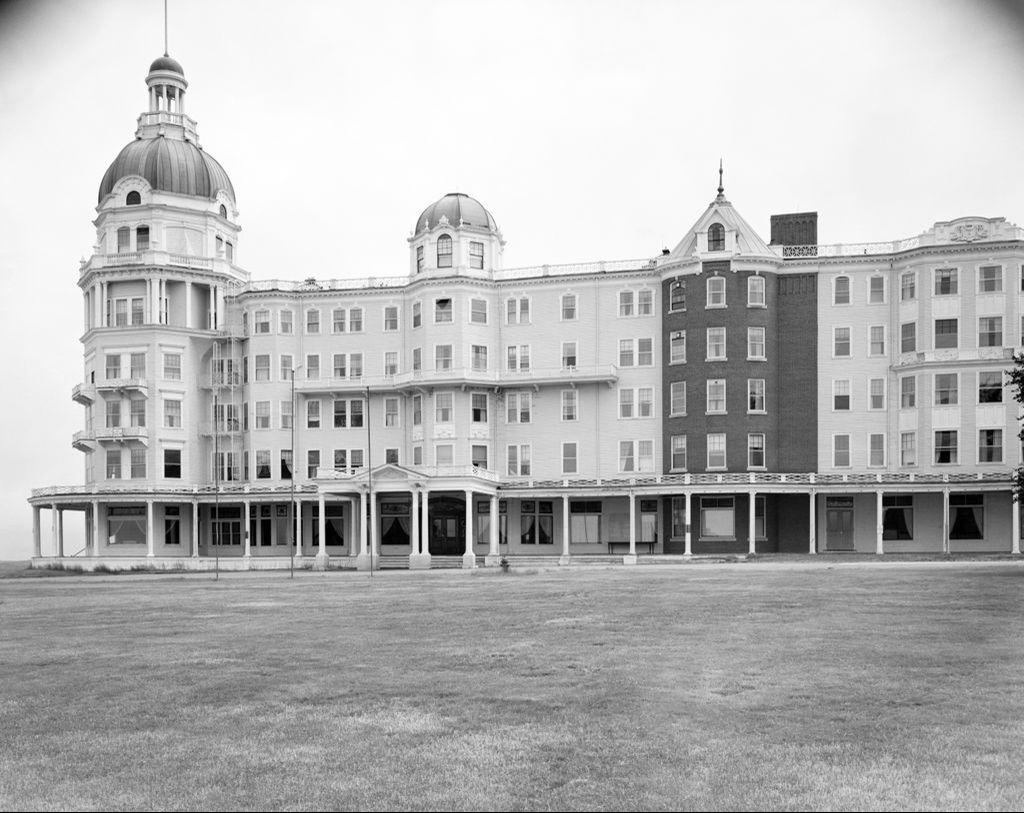
The Turk’s Head Inn was once Rockport’s grandest getaway. For those uninterested in building their own summer cottage to spend the along the coast of Massachusetts, luxury summer resorts provided summer rentals for those escaping the hot and polluted cities in favor of cool ocean breezes. Once situated in the  Land’s End section of Rockport, the Turk’s Head Inn, had sweeping views of the coast and islands in the distance. The initial portion was built from 1889 to 1890 by builder J. M. Wetherill of Rockport based on plans by architect H. M. Stephenson of Boston. It was expanded and became this rambling, E-shaped Colonial Revival structure with a seaboard frontage of two hundred feet and wraparound verandas over three hundred feet in length. Over the years, the Turk’s Head Inn suffered a number of fires, and its central and southeast wings were rebuilt, the latter in 1905 by then owner C.B. Martin. With a peak capacity of 200, the hotel, uncharacteristic of the regional hospitality industry, remained in operation for eighty years before it was closed down, partially destroyed by fire, and the remains removed in 1970.

Allen Fletcher Mansion // 1906

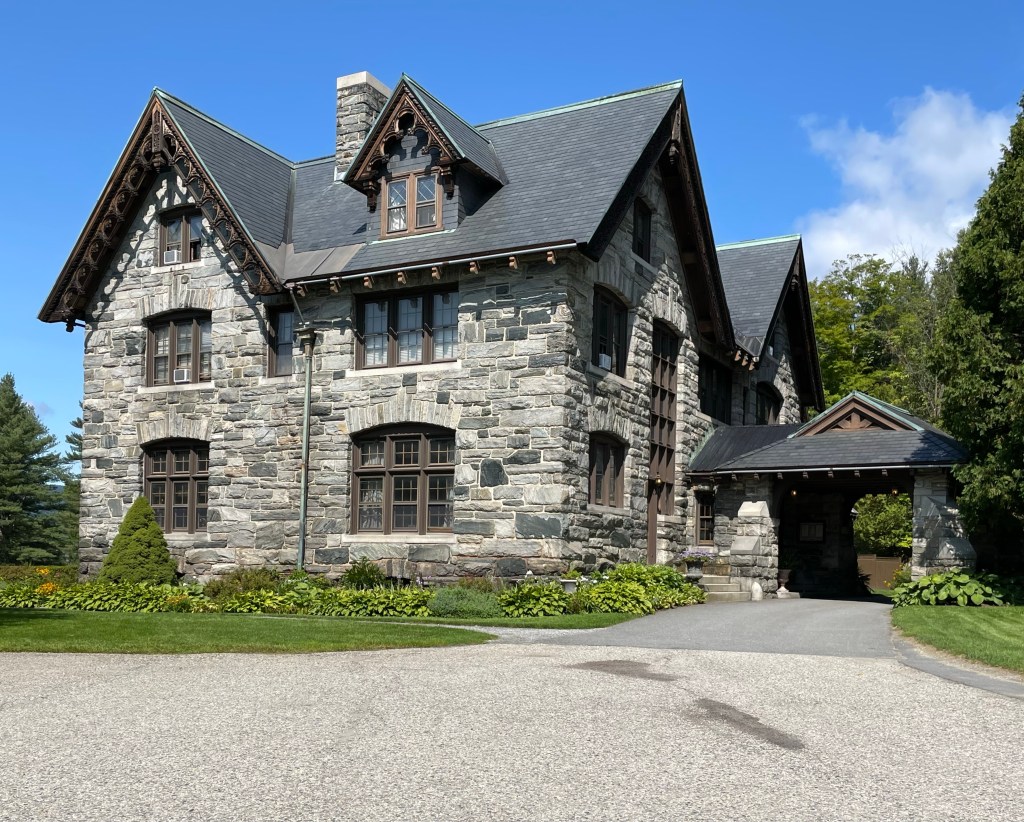
As Cavendish and other rural towns of Vermont became summer destinations for the rich of the urban centers of the northeast, large estates began to sprout up, replacing old family homesteads. Allen Miller Fletcher was born in Indianapolis, Indiana, the grandnephew of Josiah Fletcher, one of the original settlers of Cavendish in September 1853. He was the son of a successful banker and became a banker himself, building homes in Indianapolis and New York City. In 1881, he built a summer home in his ancestral home of Cavendish, taking the train up to relax and breathe in the clean air. While living most of the year in New York, Fletcher became involved in Vermont politics, winning the Republican nomination to serve in both the Vermont House of Representatives and the Vermont Senate in the early 1900s. During his time as a Vermont state senator, Fletcher commissioned architect Samuel Francis Page of the Boston-based firm, Fehmer and Page, to bring his vision to life. Page used English Cotswold-style architecture for his inspiration, and when completed in 1906, the home was the first in Vermont to be fully wired for electricity and equipped with an elevator! Fletcher also hired Frederick Law Olmsted Jr. to design the landscaping on the property. Fletcher would spend the rest of his life at his country mansion, going on to work as the Governor of Vermont from 1912 to 1915. Today, Fletcher’s beautiful mansion now lives as a magnificent holiday retreat known as the Castle Hill Resort & Spa.

Mount Pleasant House // 1875-1939

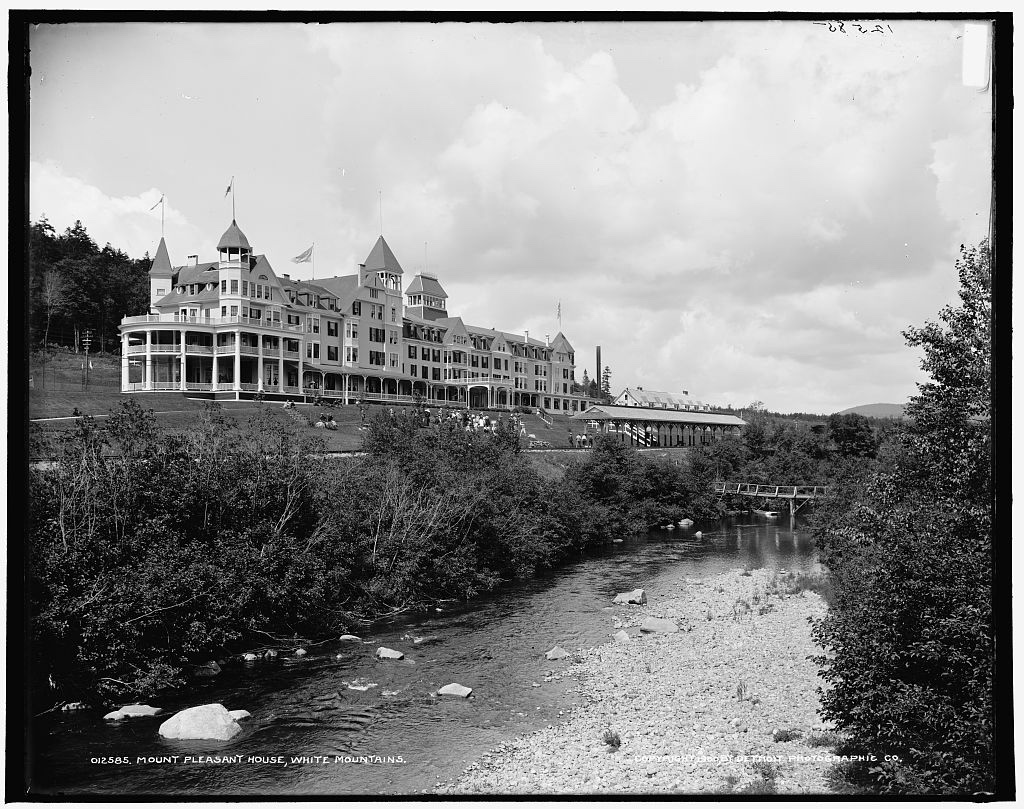
One of the earlier grand hotels in the White Mountains of New Hampshire, was Mount Pleasant House, built in 1875 after the arrival of the railroad through Crawford Notch. The hotel was located on a small hill where the Lodge at Bretton Woods is currently sited, across the street from the iconic Mount Washington Hotel. It was built by lumberman and investor John T.G. Leavitt and opened the following year. It was then a simple, almost box-like structure with only forty rooms, later expanded and “modernized” to accommodate the growing waves of affluent visitors from New York City and Boston every year. In 1881, Leavitt sold the hotel to Oscar Pitman and Joseph Stickney, the latter eventually became sole owner and acquired land across the street to build the Mount Washington Hotel in 1900. Possibly as a practice for his larger endeavor across the street, Stickney hired one of Portland’s leading architects, Francis H. Fasset, to design the additions and alterations. When Stickney died in 1903, just a year after his larger hotel was built, both properties were willed to his wife, Caroline. She ran the company through changing economic conditions and when she died, in 1936, the hotels were left to her nephew, F. Foster Reynolds. Reynolds decided that the Mt. Pleasant was not worth the expense needed to maintain it, and in 1939, ordered the building demolished, replaced decades later with the present building.