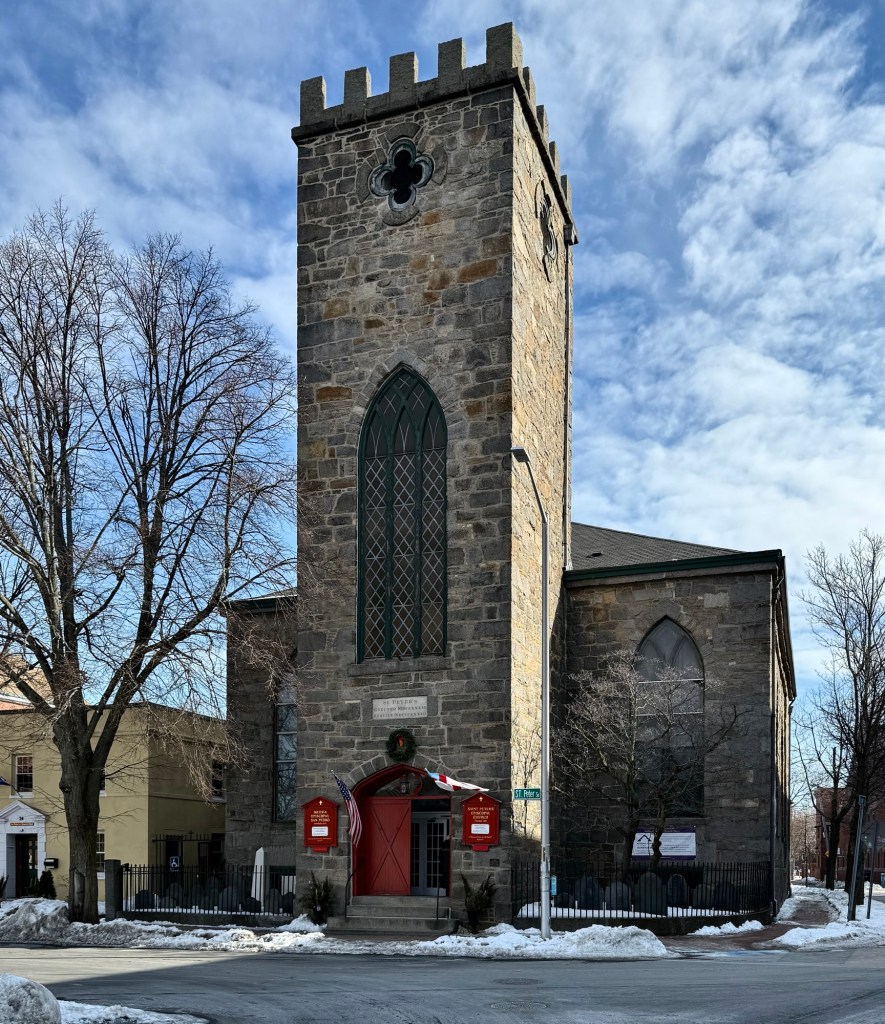
St. Paul’s Episcopal Church, Brookline // 1852

The St. Paul’s Episcopal Church of Brookline, Massachusetts is an architecturally and historically significant landmark to the area. The congregation was established in 1849, and within months, in May 1850, the corporation, which was made up of wealthy Boston-area residents, accepted an offer from Augustus Aspinwall of a building lot to erect a church. Esteemed ecclesiastical architect, Richard Upjohn, the architect of Trinity Church in New York, was hired to design the church in Brookline of the same, Gothic style. The wealth of the congregation was evident by the consistent expansions of the complex, to include a chapel, rectory, parish house, and other expansions to those buildings. St. Paul’s Church is the oldest religious structure in Brookline, and almost was lost when the sanctuary was devastated by fire in 1976, leaving only its exterior walls and two stained glass windows. The congregation rebuilt the interiors and the building remains well-preserved at its exterior, built of Roxbury Puddingstone.

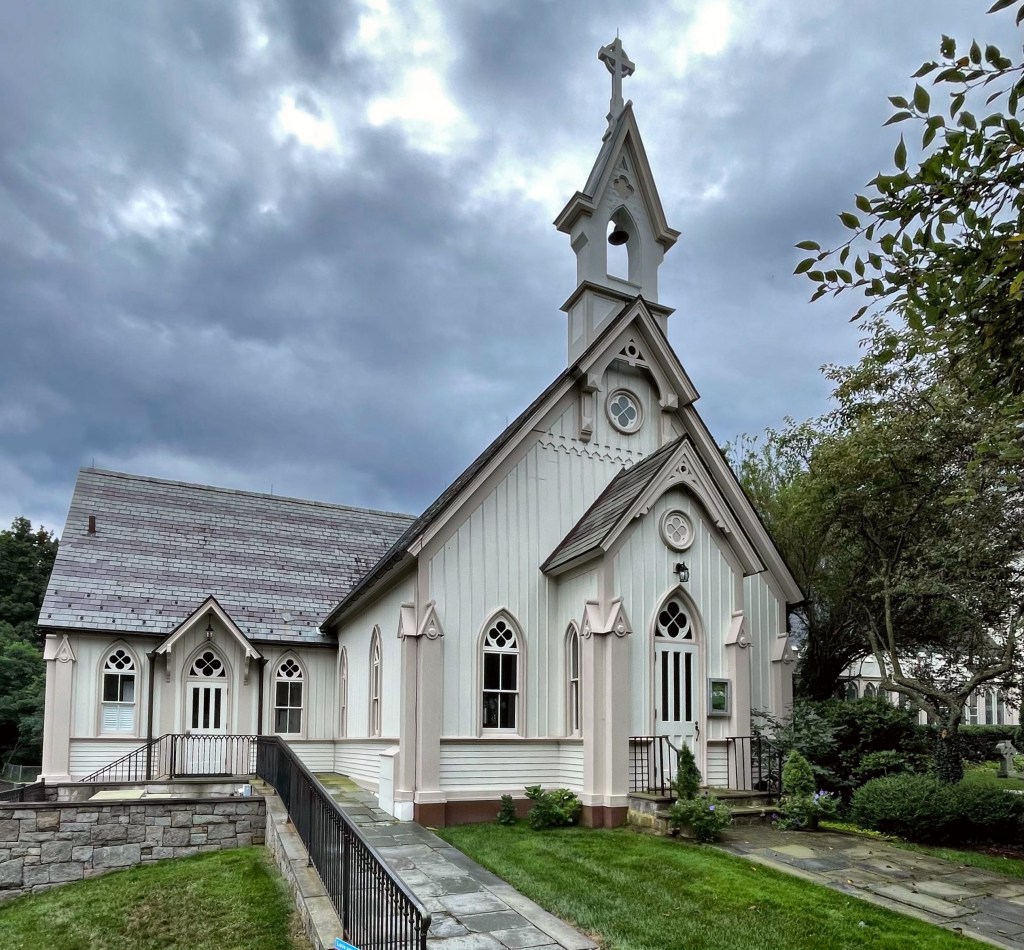
Trinity Parish Chapel, Southport // 1872

The Trinity Episcopal Church in the Southport section of Fairfield, Connecticut was established in 1725. As the parish and town grew, a large and architecturally stunning church was erected in 1862, and housed services for some of the wealthiest and well-connected residents of Connecticut. During Rev. Edward Wells’ rectorship, it was decided that a parish school was needed, and as an ardent believer in religious training, he started planning for a new chapel for use as a school. The Trinity Parish Chapel was designed by Southport architects Disbrow & Taylor and erected 1871-72. This Gothic Revival building is an excellent example of the rural church architecture which enjoyed widespread popularity throughout the country during the mid 19th century. Designed on a simple rectangular and decorative wooden bell cote, the small chapel’s board-and-batten siding and modest though strong Gothic details create a composition which compliments the more grand church just steps away. The chapel was originally built as a free-standing building, but was connected by a large, brick addition in the 20th century.