Second Baptist Church, Suffield // 1840

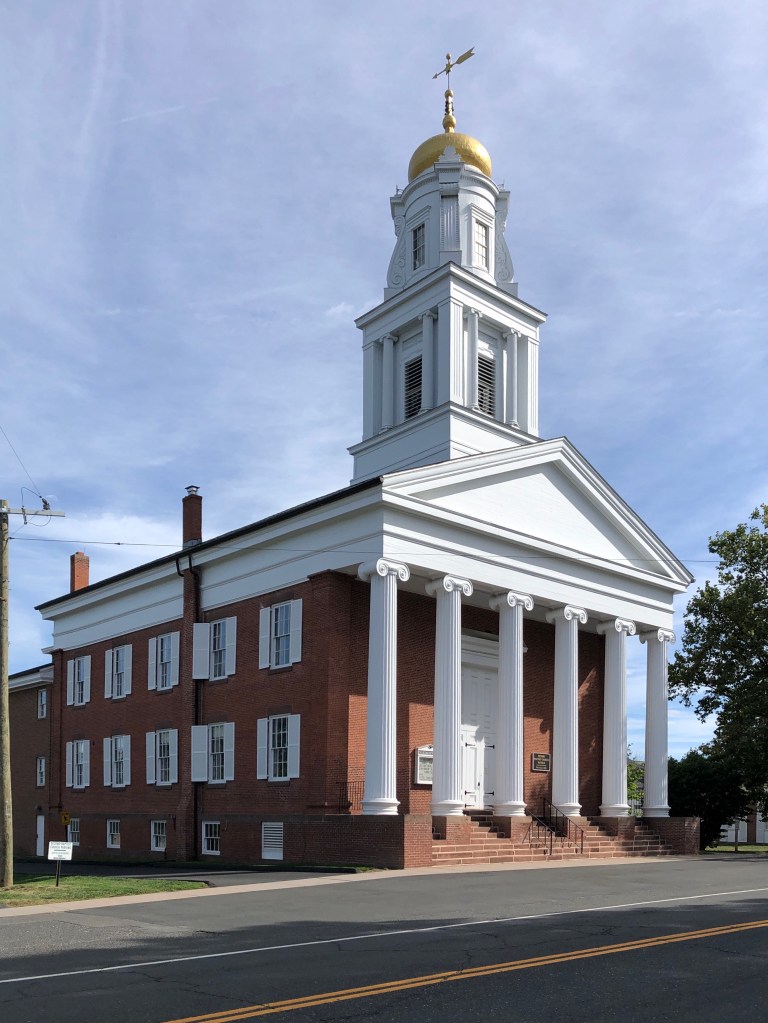
In early New England, the Congregational Church had a near monopoly on churches. Congregational churches had lost much of its hold on its members and on government by 1725. Eventually, some of its ministers decided a religious revival was needed, creating the emergence of new Baptist and Methodist churches all over the region. Baptists erected a church in West Suffield, far from the town center, which began to rapidly develop in the early 19th century. In 1805, they petitioned to create a second Baptist church, and succeeded. By 1840, the members collected funds to erect this stunning Greek Revival church on Main Street. The congregation hired architect Henry Sykes, who had trained under Chauncey Shepherd of Springfield, Mass and Ithiel Town of New Haven, clearly learning a lot on church design.

West Suffield Congregational Church // 1839

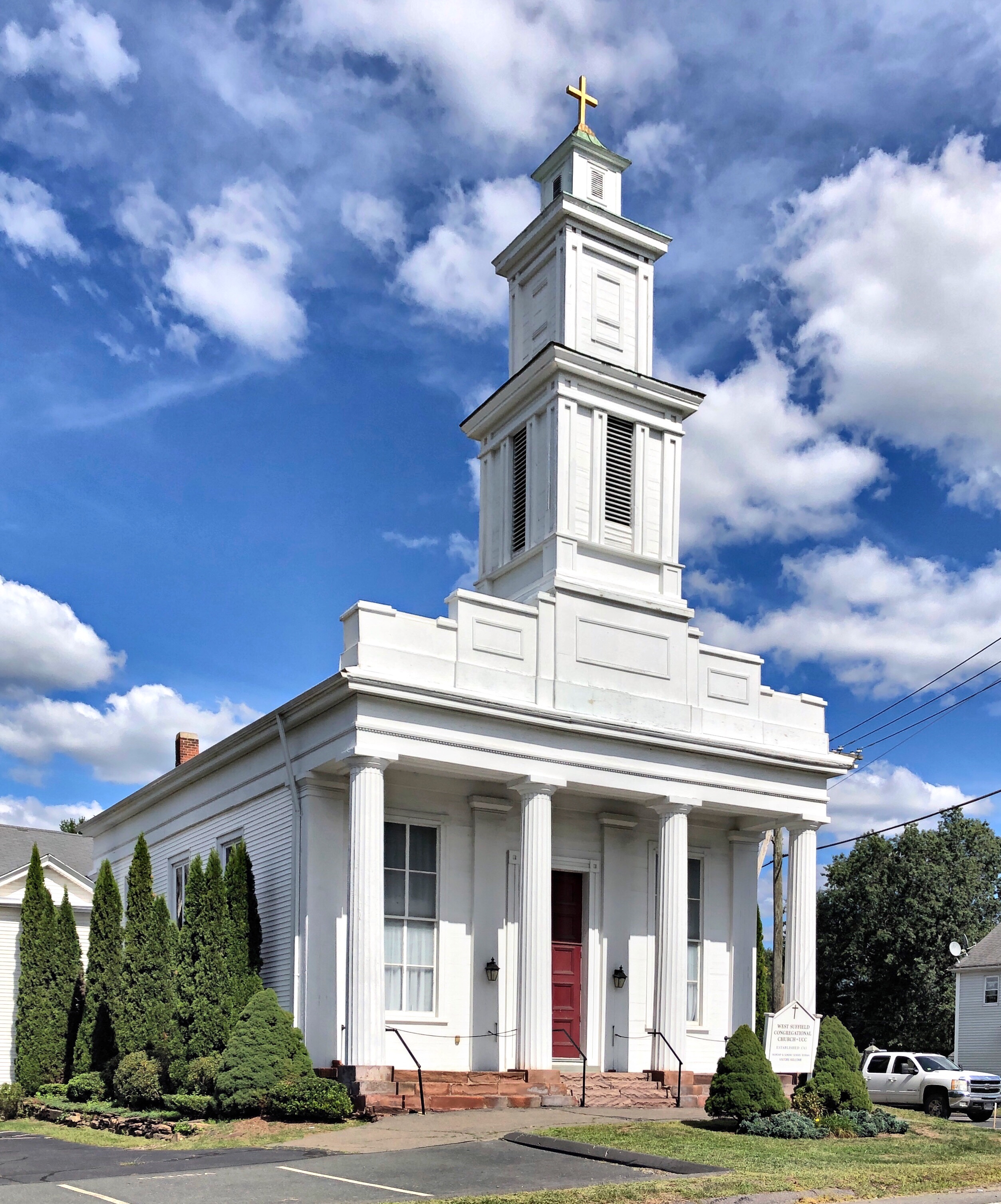
Suffield (originally Southfield) Connecticut, was once a part of Massachusetts, incorporated as a town in 1682. After having to travel to downtown Suffield to worship at the church there, the families in the west part of town established the Second Ecclesiastical Society in 1743. The first meeting house was built in 1744 on what was known as “Ireland Plain”, now the southwestern corner of the West Suffield Cemetery. In 1775, a second meeting house was erected on the site of the present building. It was rebuilt in 1839 using the earlier foundation. The Greek Revival church building is very charming with its columned portico and belfry surmounted above a stepped parapet. The church is very well preserved and a lasting remnant of West Suffield’s early days.

Captain Valentine Pease House // c.1830

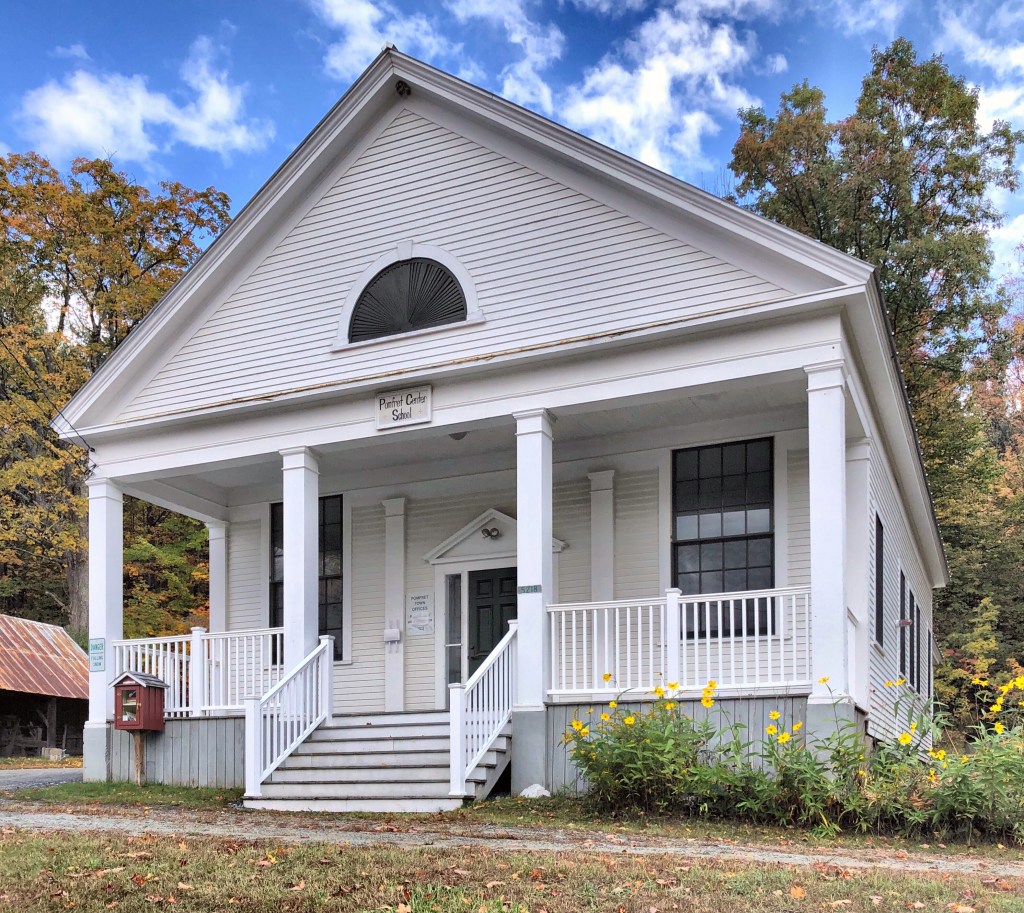
This charming little Greek Revival house has a lot of history, tied to literature and the whaling industry that shaped Edgartown in the 19th century. The home was built in around 1830 for Captain Valentine Pease (1797-1870), a master mariner and captain of the Acushnet, a prominent whaling vessel which often departed from New Bedford. In 1841, Captain Valentine Pease, his crew, and a 21-year-old Herman Melville shipped out of New Bedford 1841 for eighteen months as Melville’s only whaling voyage. Melville took part in the hunting and killing of whales and in harvesting and processing whale oil aboard ship. He endured gales and calm, experienced excitement and boredom, followed ship’s discipline, all the while absorbing the lore of the veteran seamen who made up the Acushnet’s diverse and colorful crew. It is speculated that Valentine Pease was an inspiration for the character of Captain Ahab in Melville’s book “Moby Dick”.

Saint Elizabeth’s Center // 1838

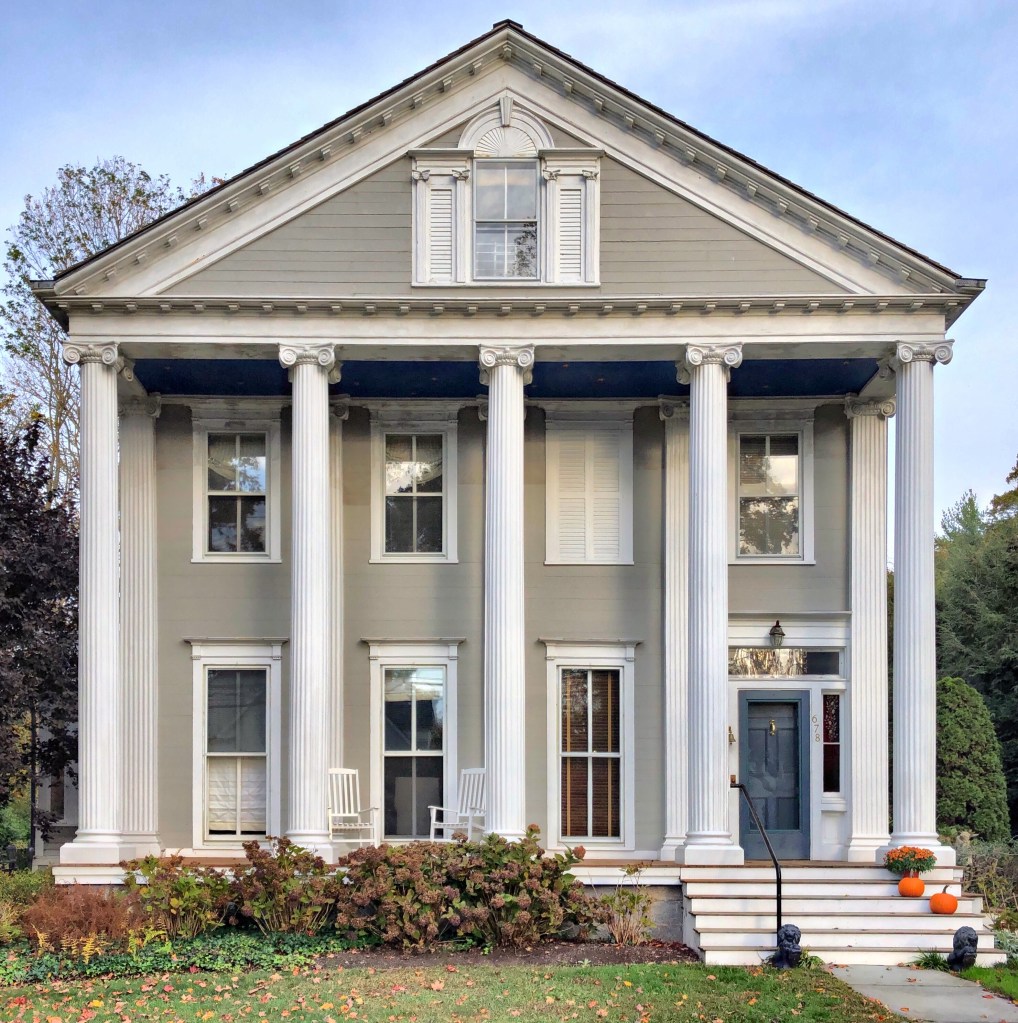
The only two-story temple-front Greek Revival home in the Upper Falls Village of Newton, MA stands on Elliot Street, on the same block as the Mary Immaculate of Lourdes Catholic Church and Rectory. The home was built in 1838 at the present location of the church, but was moved in 1908 to its present location at the opposite end of the block for the erection of the large church. The original owner was Dr. Samuel Whitney, the village doctor who also operated his office out of the large house. By 1844, he moved to Dedham and sold the home and practice to Dr. Abraham D. Dearborn who ran his practice out of the home until the mid 1850s. After successive ownership by mill owners, the property was acquired by the Archdiocese of Boston who moved the home and used it as a rectory until the Colonial Revival rectory was built. The home has since been used as a parish center, but has not been well maintained over the years. Plans were unveiled in 2015 by a long-time resident to purchase the home from the Catholic Church for conversion of a community center with offices for non-profits, but it has not materialized sadly. Its future is unclear.

White Columns // 1853

The majestic Greek Revival house on Maine Street in Kennebunkport was built in 1853 for Eliphalet Perkins III, a member of the Perkins Family, one of the earliest families to settle in the area known today as Kennebunkport. Eliphalet apparently sold the home to his son, Charles, who moved in within the year with his new wife Celia Nott. The couple decorated the ornate home inside and out with furnishings still retained inside after the Kennebunkport Historical Society acquired the building in 1955. The home is now known as White Columns, and houses the First Families Museum. One interesting thing I noticed is the rounded arch windows in the pediment, an awareness to the Italianate style which took over in the 1850s-1870s throughout New England, though this home is quintessentially Greek.