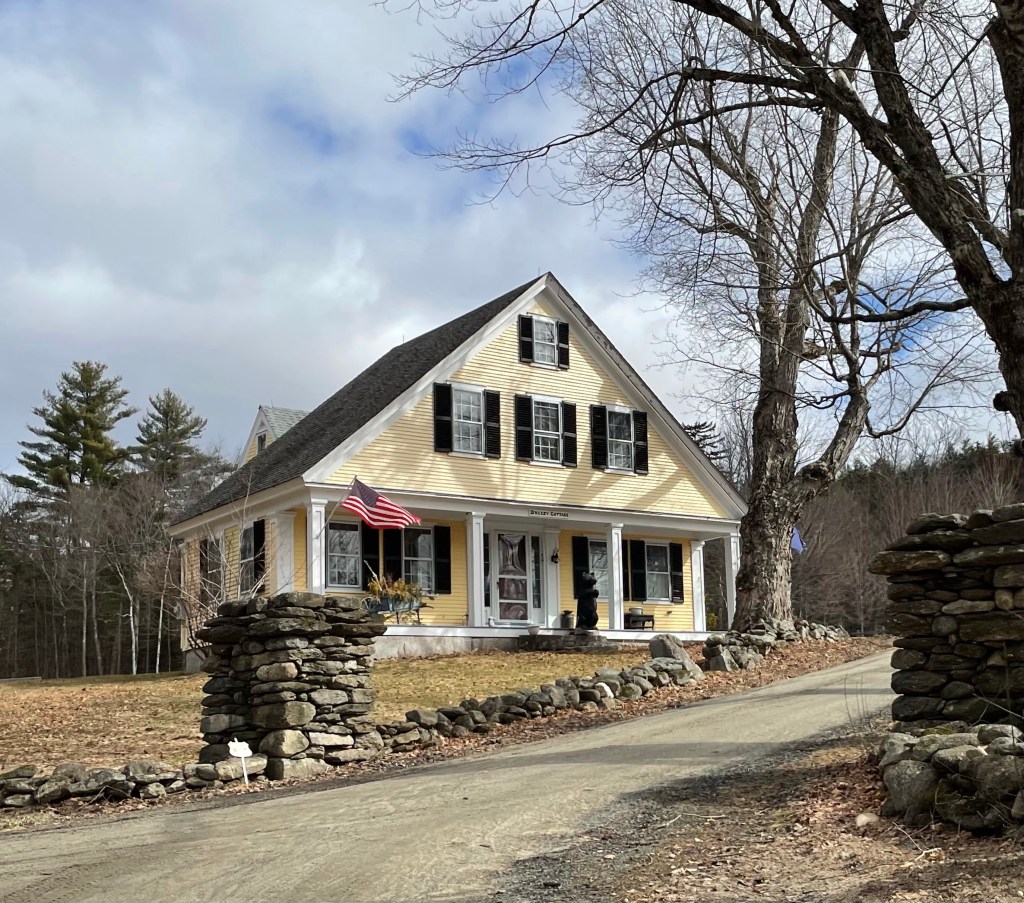
On the backroads of the rural town of Wilmot, NH, I stumbled upon this perfect Greek Revival cottage tucked away on a dirt road. The home was built in 1840 by Col. Samuel Thompson, likely operated as a farm. The property was purchased by the Tewksbury Family decades later, who likely gave the home its name “Breezy Cottage”, after an older colonial home nearby, and subsequently the name of the street in which it is sited. The Greek Revival home is symmetrical with a wide, gabled roof and upper floors overhanging the recessed front porch. The home features bold corner and entry pilasters.
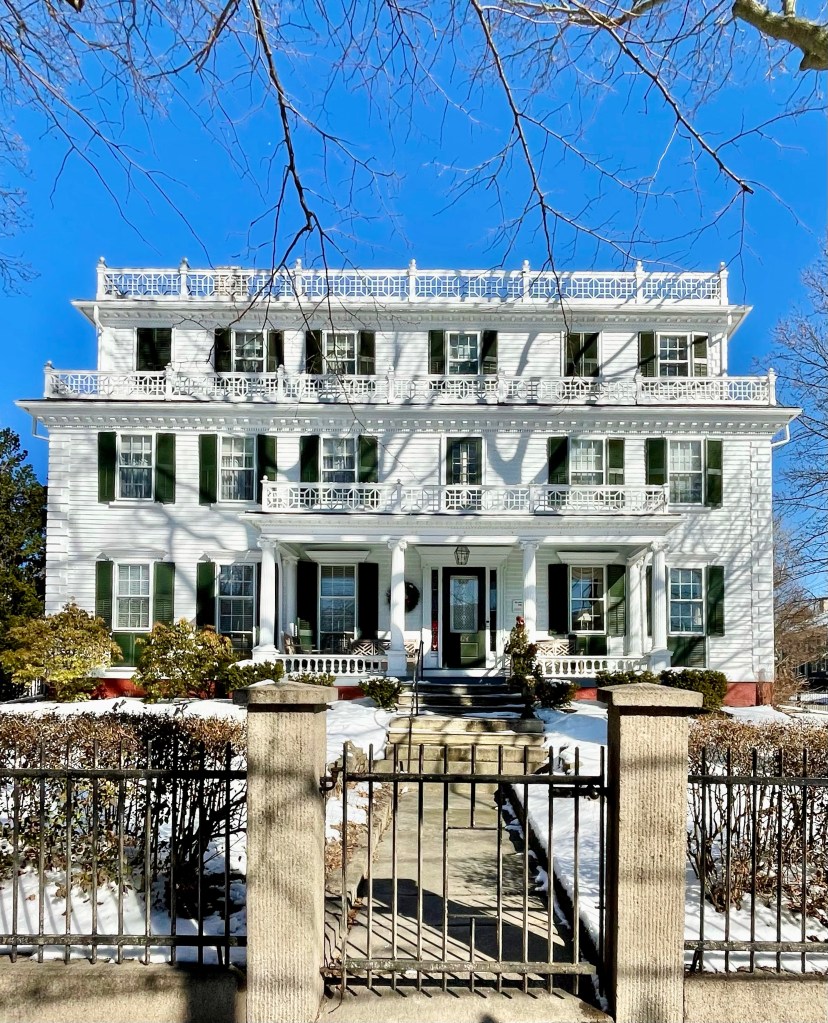
William Bradford (1729-1808), who would become Deputy Governor of Rhode Island from 1775 to 1778, came to Bristol to practice medicine by 1758. When he arrived, he rented Mount Hope Farm (featured before), before building a home in town. When the British Navy bombarded Bristol on October 7, 1775, his home was among the buildings destroyed. He afterward went aboard ship to negotiate a cease fire, saving what was left of the town. In 1792, he built a 2 1/2-story Federal style, boxy house on this lot, close to the street. The home was willed to his son Hersey, who resided there until the 1840s, when he mortgaged the house to Francis Dimond, who resided in a Greek Revival temple front home (also featured on here previously). He gifted the modest Federal home to his daughter, Isabella, possibly as a wedding gift upon her marriage to Samuel Norris, a sugar refiner. Mr. Norris and Isabella hired architect Russell Warren, who designed her father’s home nearby, to renovate the house in the spring of 1845, moving the house away from Hope Street. The house was given its third floor and additional bay, along with the ornate design which characterizes it to this day, including the Ionic porch and Chinese Chippendale balustrade. The house remained in the Norris family until 1942 and is now a B&B.
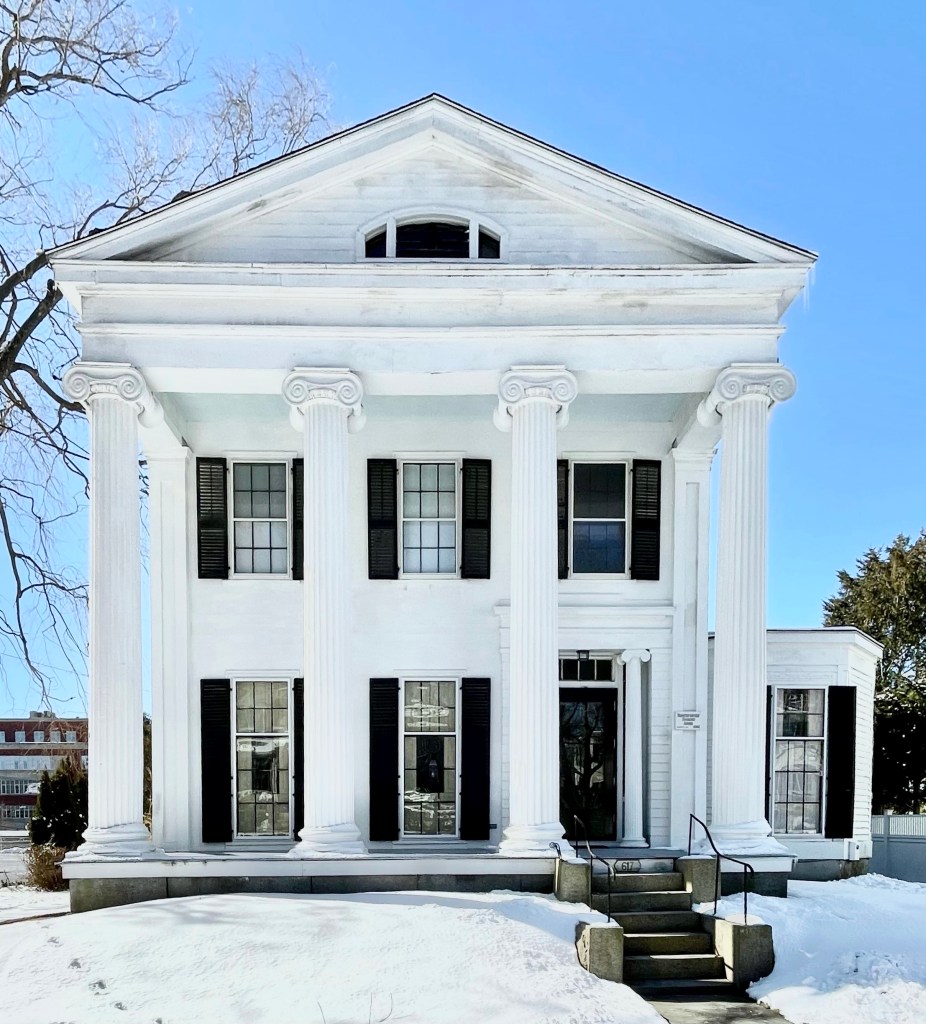
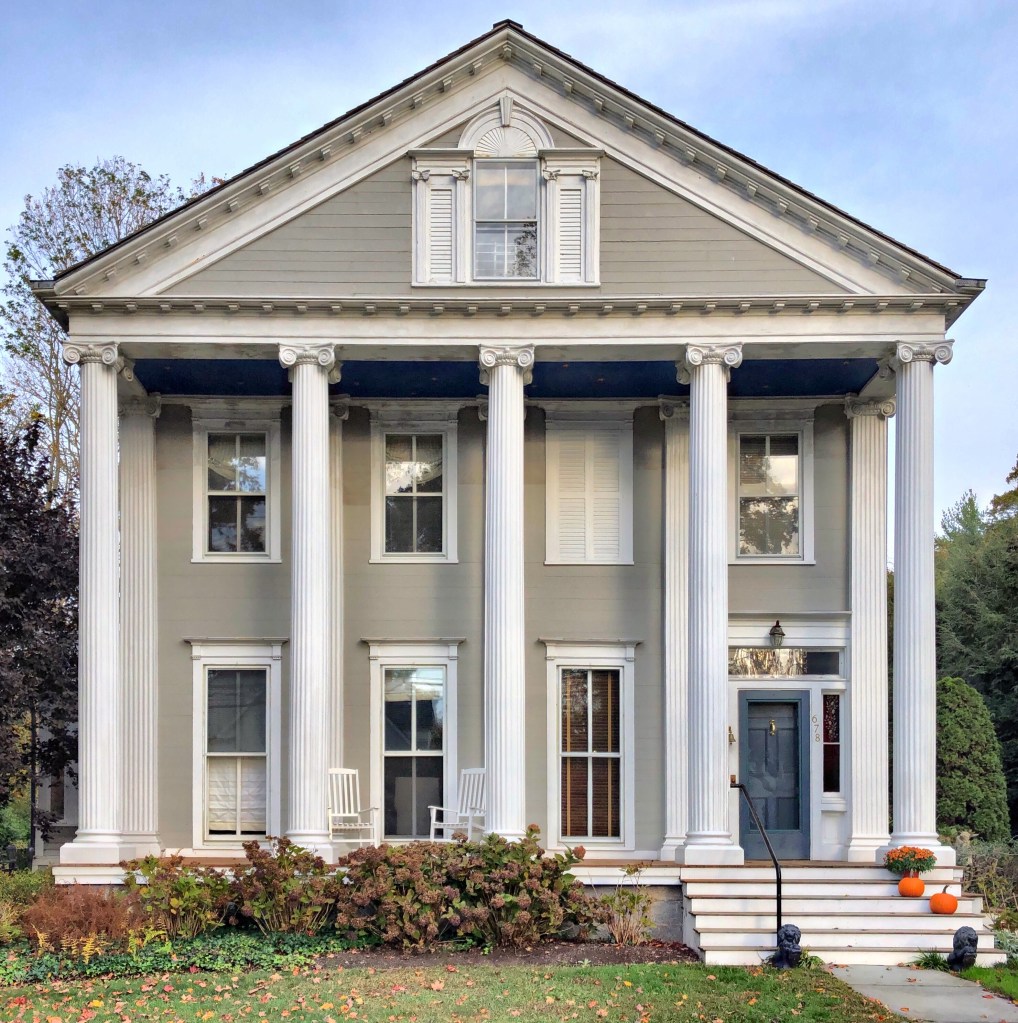
Built in 1838, just three years after the Talbot House in Bristol, Rhode Island, (just two houses away), the Dimond House remains as the other of the two remaining Greek, temple-front homes in town. Like the Talbot House, this home was also designed by Russell Warren, but is unique as it is in the tetrastyle (with four columns) and utilizes the Ionic order with the capitals featuring volutes (scrolls). Additionally, a polygonal bay can be seen on the right side of the home. Images show that the bay features stunning lancet windows! The home was designed for Francis Moore Dimond (1796-1859), who was born in Bristol, and later traveled to the Caribbean and served for several years (1832-1835) as the United States consul at Port-au-Prince. It is entirely possible that Dimond was involved in the slave trade, but I wasn’t able to find more than a couple articles referencing his connections to the infamous DeWolf Family. From 1842 to 1849, Dimond was United States Consul to the Mexican port city of Veracruz. When he returned to Rhode Island, he promoted the Southern Pacific Railway and presided over its construction. He was elected lieutenant governor of Rhode Island in 1853. He became the governor of Rhode Island when Philip Allen, then Governor, resigned to become a Senator. He held the governor’s office just one year. He moved back to Bristol and lived out his final days at his home.
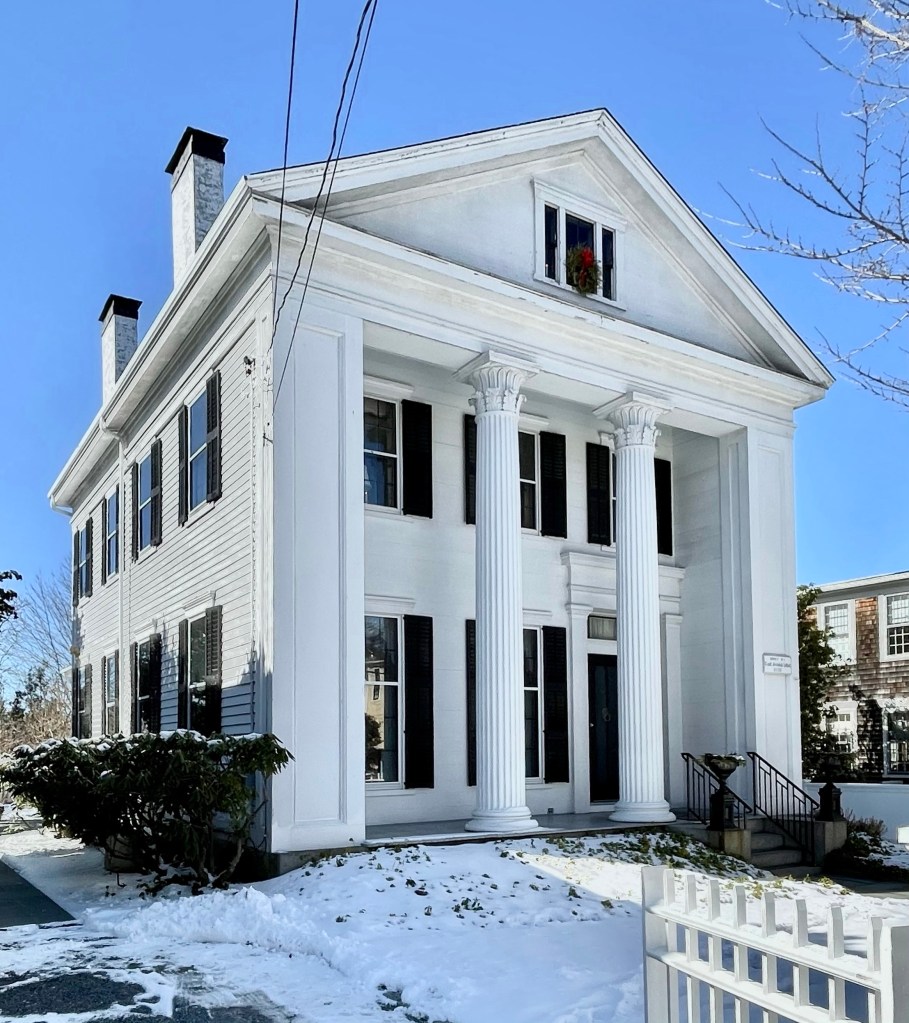
Anyone that has followed this account for a while knows at least one thing, I LOVE Greek temple-front homes. Designed by famed architect, and Bristol-native, Russell Warren, this 2-story, 3-bay, gable-roof Greek Revival house is one of the finest in the state. Its facade has a pair of fluted Corinthian columns, set in antis (where the side walls extend to the front of the porch). A simple side-hall entrance is framed by heavy Doric pilasters, supporting a broad, plain entablature, making this such a head-turning Greek Revival home. The walls are sheathed with horizontal flush boarding at the facade to give a smoother look and clapboards on the side and rear. The home was built for Josiah Talbot, a sea captain. The house is excellently preserved to this day, almost 200 years later.
One of the last remaining grand 19th-century lakeside mansions in the city of Burlington, Vermont, the Follett House stands as an excellent example of Greek Revival architecture and preservation. The Follett House was built in 1841 for Timothy Follett, a prosperous Burlington developer and former Chittenden County judge. Follett hired architect Ammi B. Young to design his estate. Young would go on to become the first Supervising Architect of the U.S. Treasury Department. As a federal architect, he was responsible for creating monumental civic buildings across the United States numerous custom houses, post offices, courthouses and hospitals, many in his favorite Greek Revival style. The house is oriented facing west toward Lake Champlain, with a terraced lawn extending towards the water. The main facade features monumental columns creating a greek temple front, supporting a pediment. The secondary entry is a more modest interpretation of the style with a smaller classical portico. After the home was built, Follett became president of the Rutland & Burlington Railroad, the first Railroad between Boston, MA and Burlington, VT, from 1845-1852. He lost the house, along with his personal fortune, when the railroad went bankrupt in 1852. The house was soon after bought by Henry R. Campbell, superintendent of the rival Central Vermont Railroad.
I have a thing for temple-front Greek Revival homes, and this is no exception. This marvelous home was built in 1832 for Francis Dimon Perry (1809-1884), who inherited some of his father’s wealth and became President of Southport National Bank in town. He was a devoted member of Trinity Church throughout his life. Upon Mrs. Perry‘s death in 1893, couple left their residence to the Trinity Church to be used as the parish rectory.
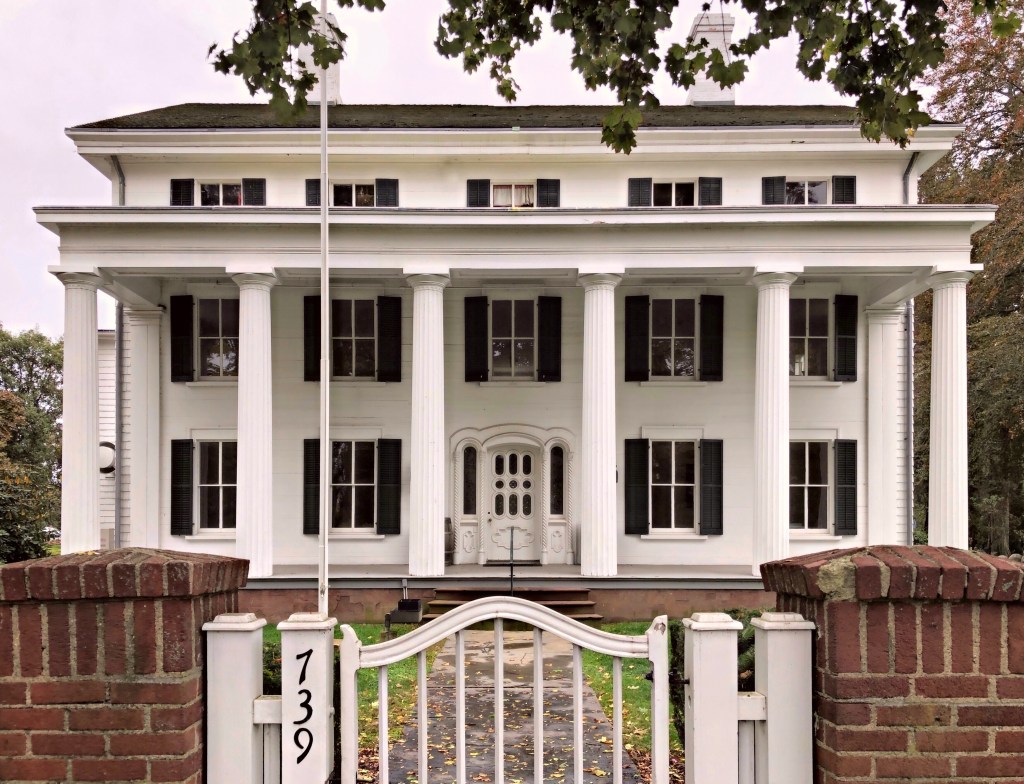
Originally built in 1775, the first iteration of the Burr Homestead, home of Thaddeus and Eunice Burr, which actually saw the marriage of John Hancock, President of the Continental Congress, to Dorothy Quincy. Thaddeus was the cousin of the famous Aaron Burr, Jr., who was the 3rd vice-president of the United States alongside Thomas Jefferson as President. Aaron Burr Jr. is best-known today through his portrayal in the popular play “Hamilton,” where he shoots Alexander Hamilton in a duel. The house was rebuilt in 1794 in its former location in Fairfield, Connecticut after a fire by the British in Fairfield destroyed the first. The home was willed to Thaddeus’ son General Gershom Burr, who eventually sold the mansion to Obadiah Jones. Mr. Jones updated the home by, ““taking out the dormer windows and lifting the roof, taking away the porch and building the broad veranda with its lofty massive fluted columns”. The home was eventually gifted to the Town of Fairfield and is presently maintained by the Fairfield Museum and History Center.
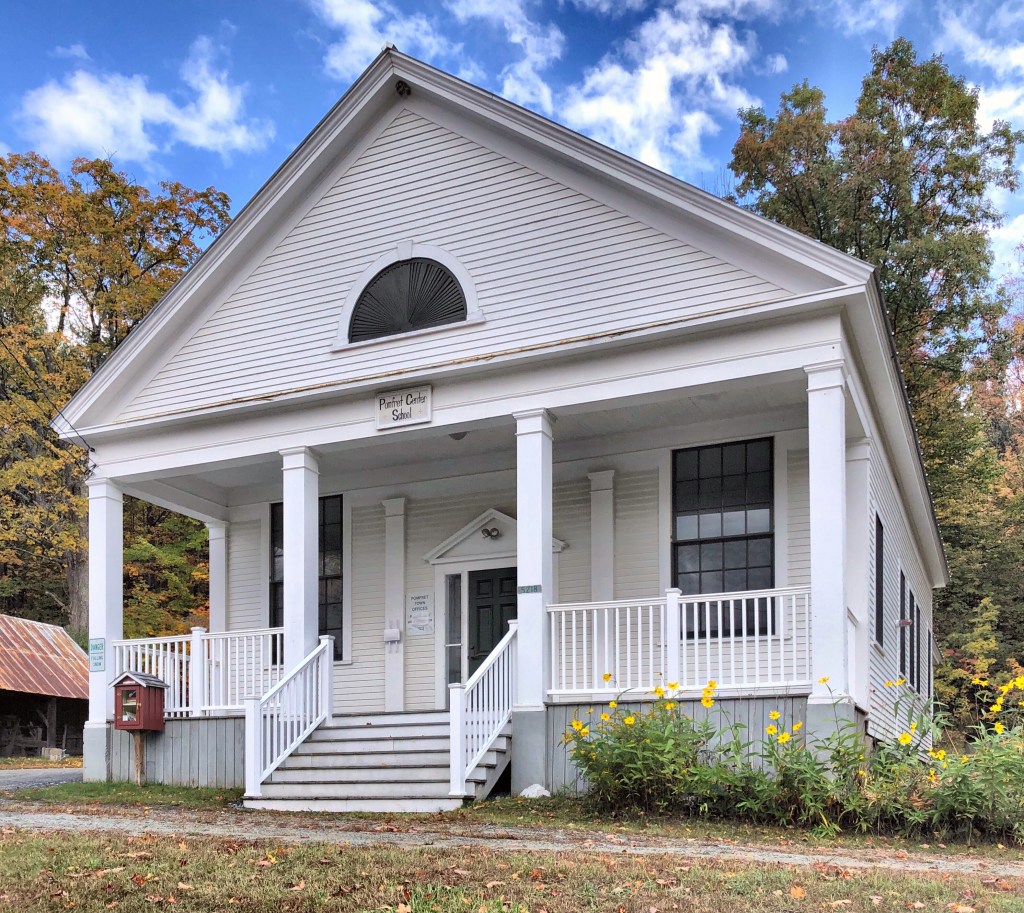
Located across the street from the Congregationalist Church (now Town Hall) in Pomfret Center, the Methodists in Pomfret Vermont built this church building just a couple years after their neighbor was completed. Replicating the Greek Revival style seen across the street, the building showcases a templed form with projecting portico, as an excellent vernacular example of the style. Similar to its neighbor, this church was sold to the Town of Pomfret in the 1880s, modernized in the early 20th century, and converted to a district schoolhouse.
The quaint town of Pomfret, Vermont sees flocks of “leaf-peepers” and Instagrammers every Fall who are in awe of the natural scenery and historic farms seen there. The town was first settled in 1770 when Bartholomew Durkee travelled from Pomfret, Connecticut, along with his family and friends and named the town “New Pomfret” at first to show their roots in Connecticut. The tiny town grew to its peak population in 1830 at just under 1,900 residents, declining steadily over time to roughly 900 today, greatly adding to the rural character of the town.
In Pomfret Center, the local Congregationalists sought a new place of worship and had this structure constructed as their church in 1845. Local builder Eli Buch constructed the Greek Revival edifice with its projecting portico, doric columns, and corner pilasters. As nearby Woodstock Vermont grew, many families moved there and the church sold their building to the Town of Pomfret in 1872 and the building has since been used as Pomfret’s Town Hall.
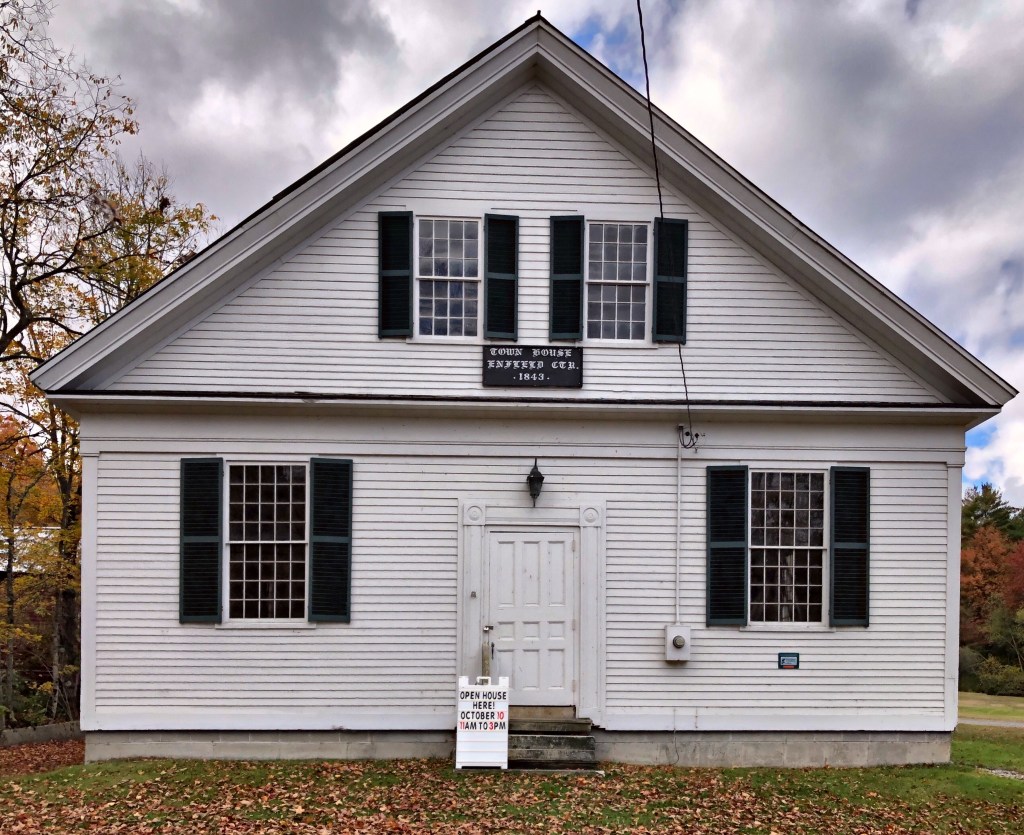
The Enfield Center Meeting House was built in 1843 in the center of town. The meeting house’s location was soon after viewed as “out of the way” as both Enfield Village and Shaker Village began to develop, seeing massive population increases. The meetinghouse in the 20th century began to deteriorate slightly and by the early 21st century, its future was unclear. The town rallied to save the building, which included structural repairs. It was restored and placed on the National Register of Historic Places by 2017.



 Buildings of New England