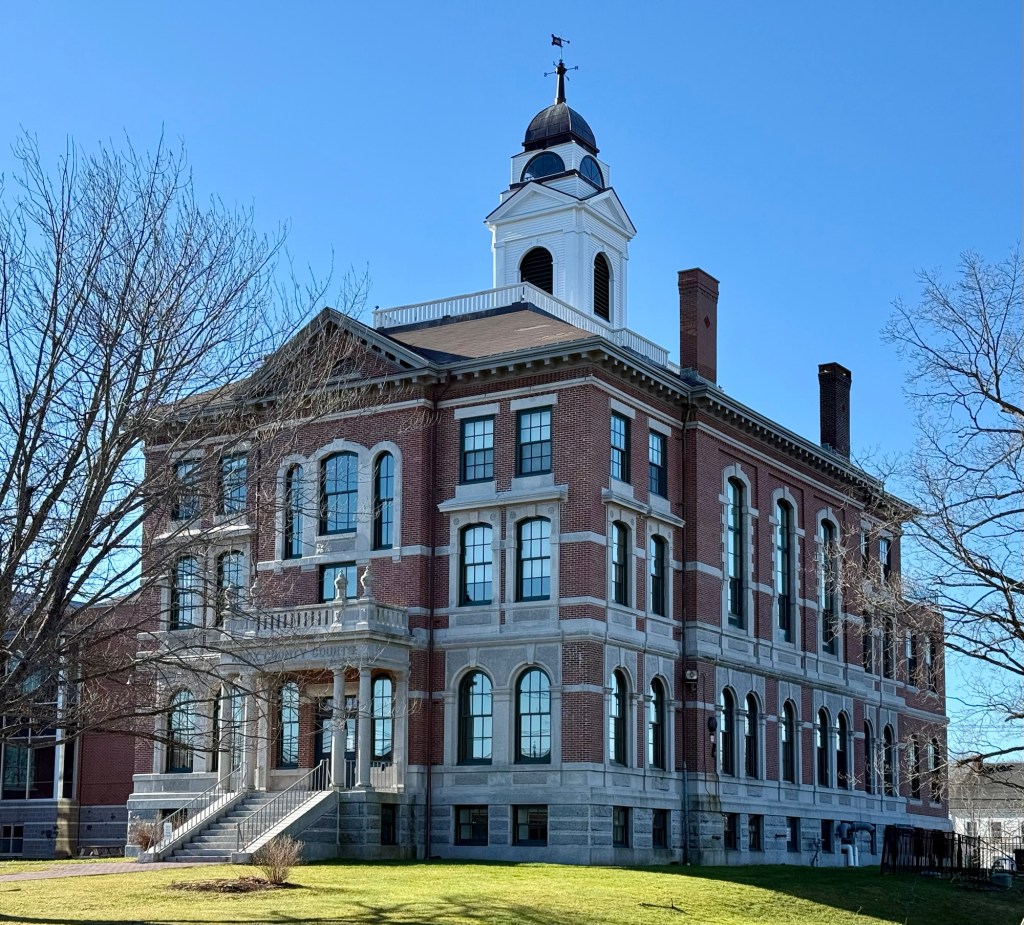
The Knox County Courthouse stands in Downtown Rockland, Maine, and is a landmark example of a Civic building constructed in the Italianate style. Knox County was separated from adjacent Lincoln County in 1860, with the coastal city of Rockland established as its county seat. For its first fifteen years, county offices were dispersed amongst buildings until in 1874 when the county retained Boston architect Gridley James Fox Bryant to design the present building. The building was constructed at a cost of $83,000, well over the anticipated $50,000 cost, and opened in 1875. The first floor accommodated all the county offices, with fireproof storage areas for records. The second floor was be taken up by the courtroom, and at either end were rooms for judges, jury and counsel.
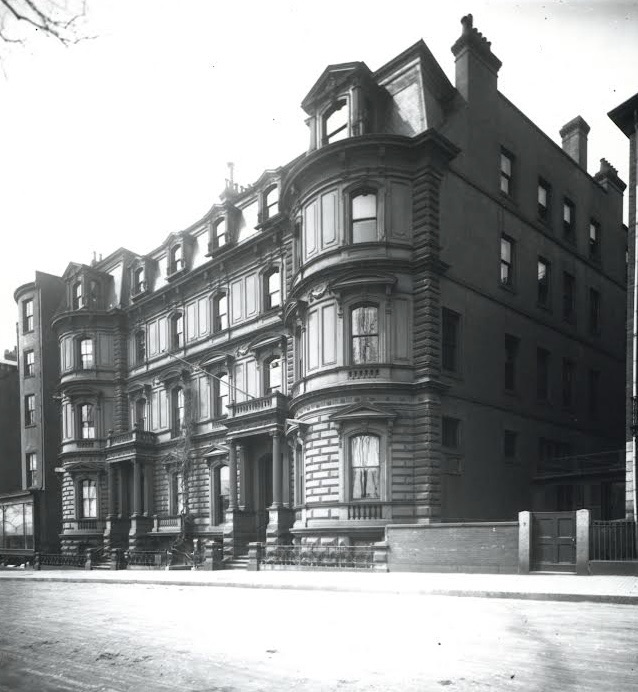
Boston is ever-changing and while change can be good, there have been some major architectural losses. This trend of redevelopment is not new however, as this single site on Beacon Street has seen two major losses, all before 1918! This lot on Beacon Street was originally home to Hancock Manor, a landmark Georgian mansion built between 1734-1737 for the wealthy merchant Thomas Hancock (1703–1764), and later inherited and occupied as the home of United States Founding FatherJohn Hancock, yes, that John Hancock. In 1863, the Hancock Manor was sold at public auction and was purchased for $230. The house was demolished within days. While the building was torn down, souvenirs of it were actively sought as it fell. To replace it, two of the finest homes ever built in Boston were constructed on the site, from plans by elite Boston architect, Gridley James Fox Bryant. The double Second Empire style homes were first occupied by wealthy merchants, James Madison Beebe (the house on the left) and Gardner Brewer (right). In 1916, plans for the extension of the Massachusetts State House necessitated a taking of these (and other nearby) properties. These two houses were razed by 1917.
I wonder if the Hancock Manor would have survived to this time, would preservation prevail to save it?
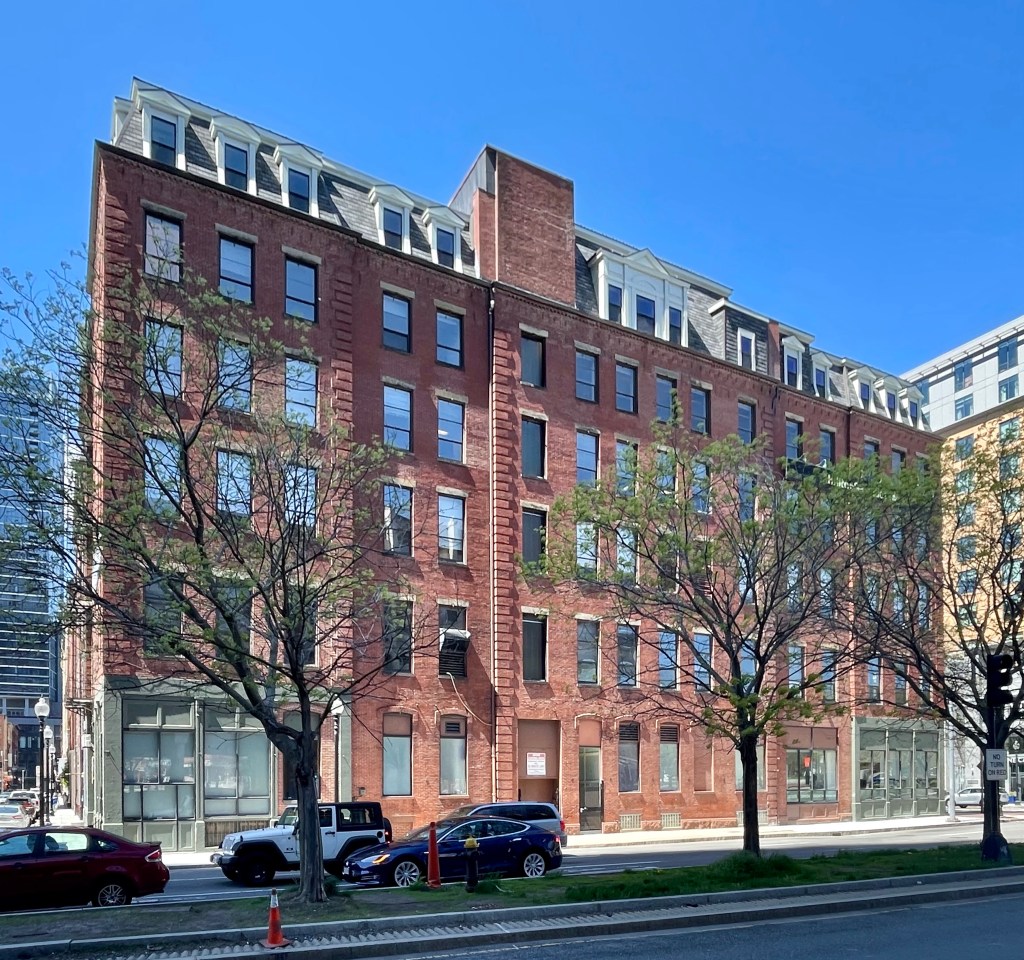
Founded in 1835, Paine’s Furniture Company was at one time the largest furniture manufacturer and dealer in New England and had a nationwide business. The company was founded by Leonard Baker Shearer, who was joined in business in 1845 by John S. Paine, his son-in-law. Upon the death of Shearer in 1864, the name of the firm was changed to Paine’s Furniture Company. The company occupied a couple wooden and metal buildings on this site in the Bulfinch Triangle until a fire destroyed the complex. The growing firm took this opportunity to hire one of the most successful architect Gridley J. F. Bryant who worked with a colleague, Louis P. Rogers, to design the fire-proof building. The Second Empire style building with mansard roof was split into three sections with the rear two rented out to other companies, while Paine’s occupied the south-facing (main) facade. When Paine’s moved to their new building in the Back Bay, they sold this building and later alterations severely diminished the original design of the building. The current hodgepodge of alterations creates a mess of what was once an undeniable architectural landmark.
All Aboard!! The Kneeland Street Station was built at the southern edge of Downtown Boston in 1847 for the newly established Old Colony Railroad Company. By the early 1840s, the city of Boston had six major rail lines connecting it with other places including Lowell, Maine, Fitchburg, and Salem to the north, Worcester to the west and Providence to the southwest. The southeastern part of Massachusetts had yet to be served by a rail link to Boston. On March 16, 1844 the Old Colony Railroad Corporation was formed to provide a rail connection between Boston and Plymouth. Construction of the line began in South Boston in 1844 and the line opened to Plymouth in 1845. The company needed a more accessible station to the residents and businessmen of Downtown Boston, so they acquired a large parcel of land on Kneeland Street to extend the line. The corporation hired architect Gridley James Fox Bryant, who designed this stunning railroad station constructed of brick with strong stone trimmings. As was common, a large clock was affixed to the building to allow waiting passengers to know how long they would be waiting. From 1845 to 1893, the Old Colony railroad network grew extensively through a series of mergers and acquisitions with other established railroads, serving lines to Providence, Newport, Fall River, New Bedford and down the Cape. The railroad was acquired in 1893 by the New York, New Haven and Hartford Railroad, and sought to consolidate the many local stations into a larger building. They soon after began construction on Boston’s South Station, re-routing lines to that new building. They sold off the excess stations, including this one on Kneeland Street, and it was eventually demolished in 1918.

 Buildings of New England
