Copp’s Hill Burying Ground // 1659

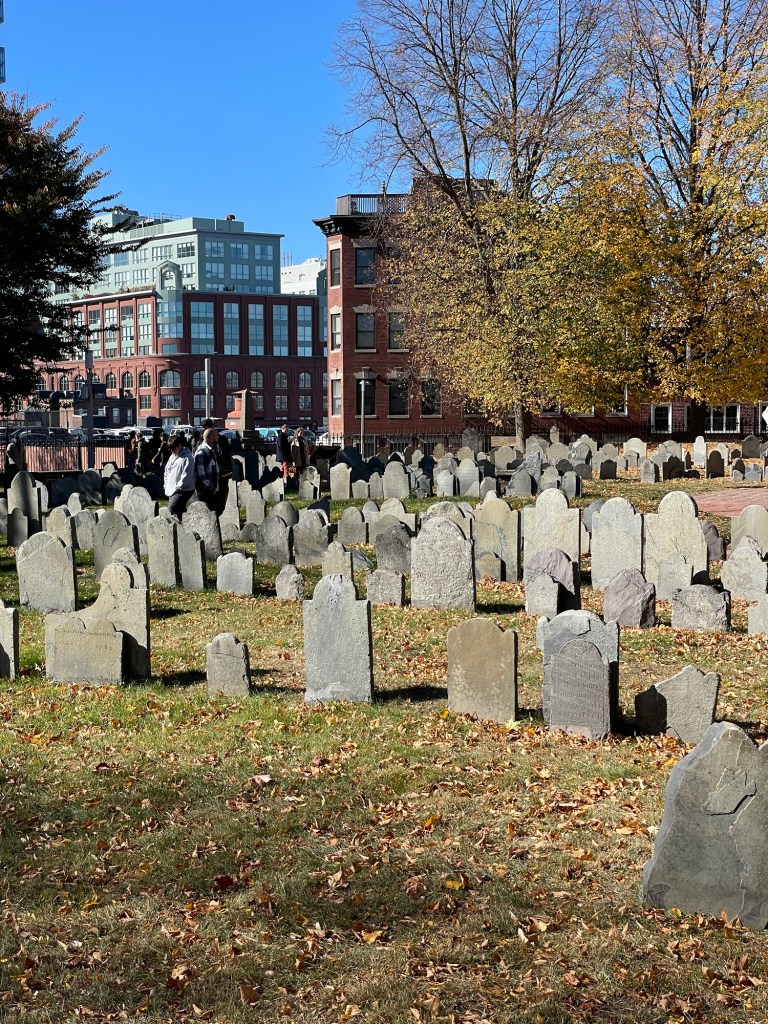
Happy Halloween! Welcome to Copp’s Hill Burying Ground, a historic cemetery nestled in Boston’s historic North End. Established in 1659, it served as a burial site for some of Boston’s earliest settlers and notable figures, including craftsmen, merchants, and members of the influential Mather family. Also burie here is abolitionist and leader in the free black community in Boston, Prince Hall. Originally called North Burying Ground, Copp’s Hill was the second place of interment on the Boston peninsula and was laid out in 1659. The area acquired its present name through its association with William Copp (1589-1670), a shoemaker and early settler who lived near today’s Prince Street; ironically, his stone is no longer standing.
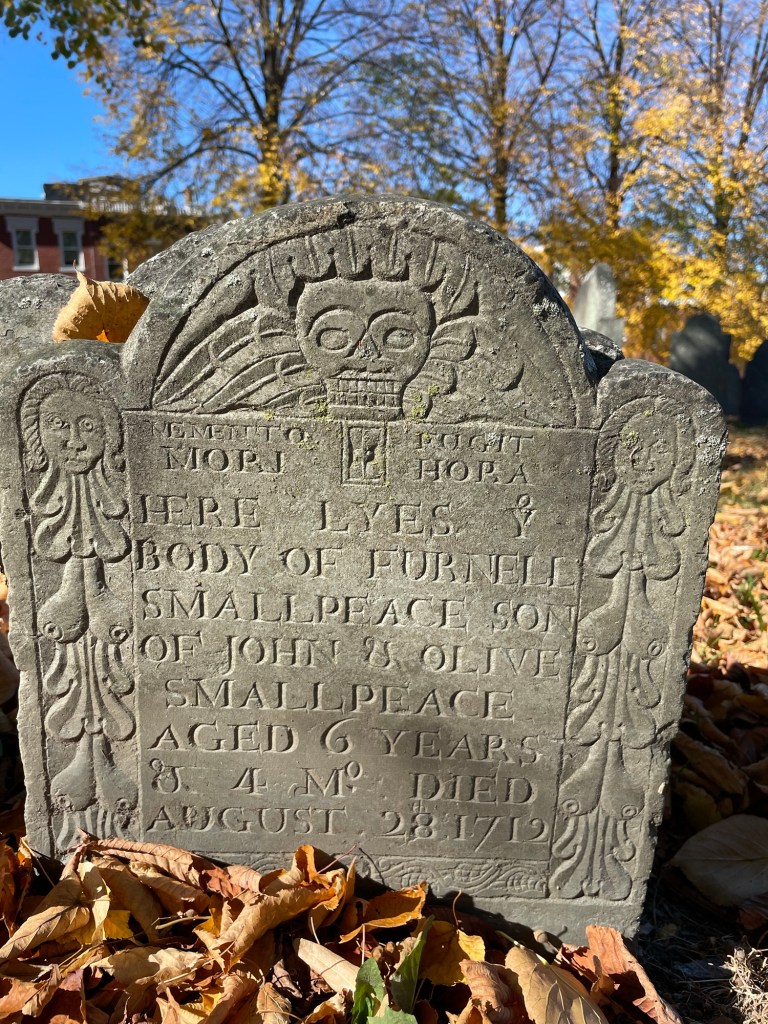
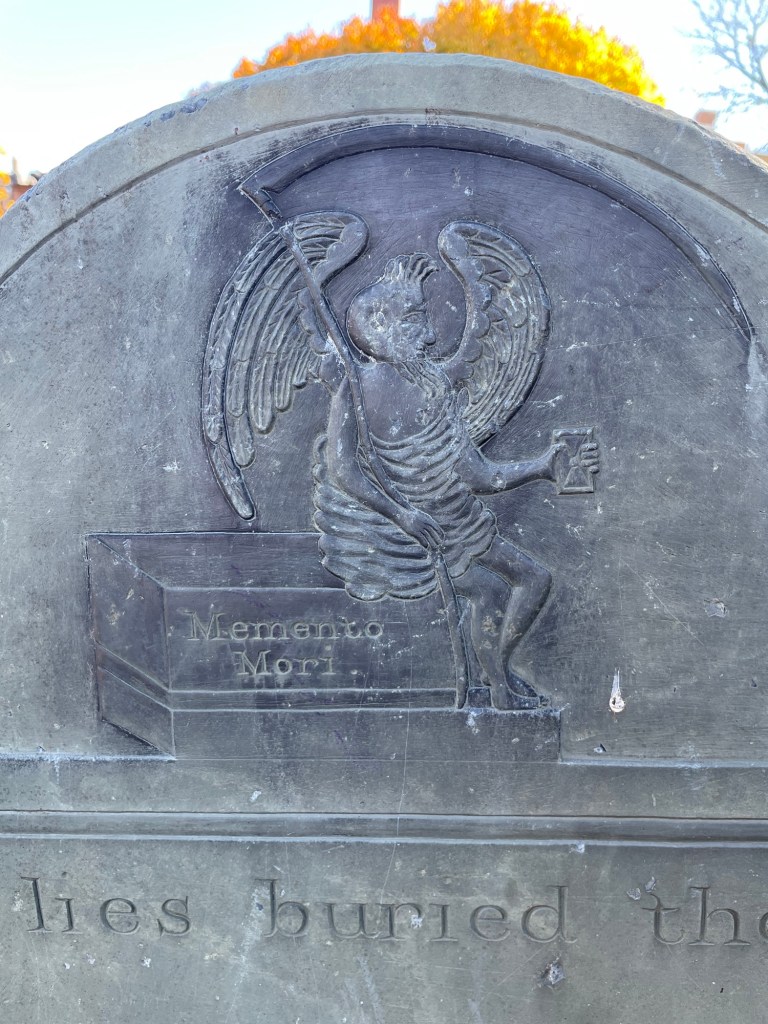
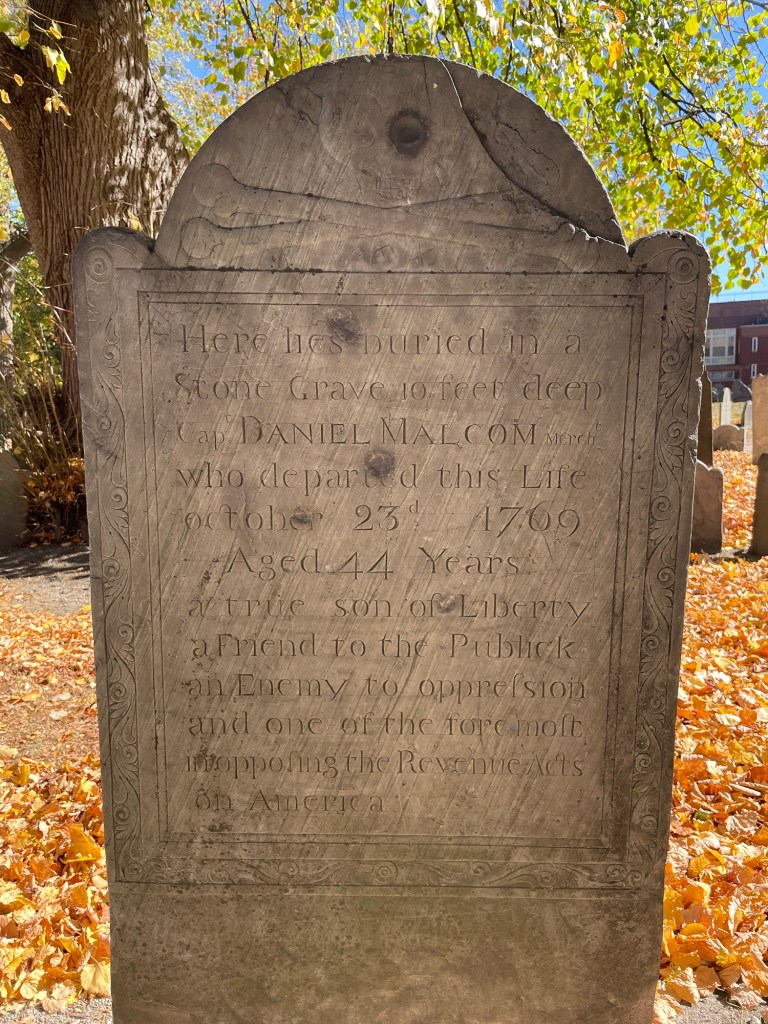
The cemetery is particularly known for its distinct slate gravestones, many adorned with intricate carvings that reflect the artistry of the era. Over the centuries, it has witnessed significant events, including the American Revolution, when it was used as a lookout point for British troops. During the Revolution, the burying ground’s prominent location overlooking the harbor gave it strategic military importance. At its southwest side the British established their North Battery and an earthworks from which they directed the shelling of Bunker Hill and ultimately the torching of Charlestown. Legend has it that British troops used gravestones for target practice. Many have interpreted the round scars on the gravestone of Captain Daniel Malcolm, an ardent son of liberty who spoke against Britain, as the result of musketballs shot at close range. The cemetery was used continually until the 1850s and is today, an evocative reminder of Boston’s early days, drawing visitors who seek to connect with the city’s storied history amidst its tranquil surroundings while the city stretches upwards around it. The cemetery is open and free to visit most of the year and is a great place to stroll and learn about Boston’s early history and see amazing stone carving!
George C. Gardner House // c.1834

On Nantucket, even the little houses can pack an architectural punch! This is the George C. Gardner House. The house on Main Street was built in 1834 for sea captain George Gardner, a descendant of Richard Gardner, an early white settler on the island (who’s house stands nextdoor). The house exhibits a five bay facade with Ionic columned portico and balustrade at the roof and widow’s walk. By the end of the 20th century, the house was sitting, decaying after years of deferred maintenance caused by a bitter divorce dispute between the owners. From this, locals told stories about the house being haunted, including stories of a Chinese servant of the Gardner family who was hanged after becoming infatuated with one of George Gardner’s daughters. The body is rumored to have been buried on the grounds of the house. There is not much to substantiate these stories of local lore, but they are always interesting to hear. A truth is that the home was purchased in the early 2000s for millions and restored faithfully before being sold for shy of $10 Million. Now that is really scary!

Cudworth House // c.1790

This house in Assonet Village in Massachusetts has SOOOO much potential, I just want to save her! The Cudworth House was built at the end of the 18th century, possibly for John Cudworth a mariner who owned a wharf just across the street. By the mid-late 19th century, the home was renovated, given the steep gable, bracketed details, and projecting entry. The house has seen better days, and needs some serious TLC to bring it back to livable conditions.

Update: A fire in August 2022 damaged the property. It is unclear at this time as to the condition and future of the home.

Bird Island Light // 1819

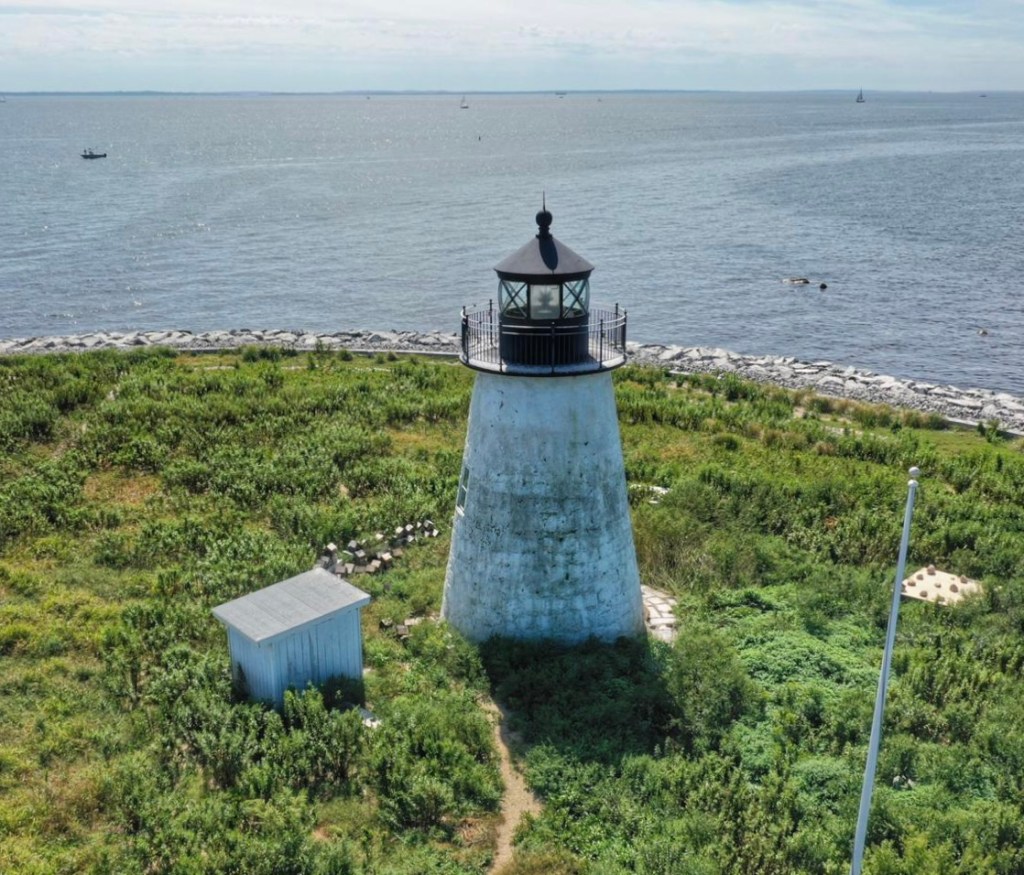
Bird Island sits about seven football fields away from the tip of the Butler Point peninsula, which juts out into Buzzards Bay in Marion. A small sitting area at the Kittansett Club provides a bench and amazing views of the open water and historic lighthouse in the distance. Immediately after the War of 1812, Marion became a hub of whaling and shipping with many sea captains building homes in town. As a result, Congress appropriated $11,500 for the purchase of Bird Island and the erection and stationing of a lighthouse. A 25-foot-tall conical rubblestone tower was constructed, surmounted by a 12-foot tall iron lantern. The accompanying stone dwelling was 20 by 34 feet, and a covered walkway connected the house and tower. William S. Moore, a veteran of the War of 1812, was appointed as the first keeper, which went into operation in 1819. There are legends about murder and hauntings on the island.

Moore’s wife, suffering from tuberculosis, would frequently get into liquor and cigarettes, and would become raucous when she did. When the villagers of Sippican would visit the island, many times they would bring her tobacco to the dismay of Keeper Moore. The legend claims that one morning, after returning from a shed on the island, he found his wife drunk and dancing through the snow. Reports are that he returned to the keeper’s dwelling, retrieved his rifle, and shot her. She is reported to be buried on the island, but there is no sign of a grave. Keeper Moore insisted that she had “succumbed from nicotine” when the townsfolk had asked what had happened. Many years later, when the keeper’s dwelling was being torn down in 1889, a rifle and a bag of tobacco were purportedly found in a secret hiding spot. With those items, was an alleged note that said the following:

“This bag contains tobacco, found among the clothes of my wife after her decease. It was furnished by certain individuals in and about Sippican. May the curses of the High Heaven rest upon the heads of those who destroyed the peace of my family and the health and happiness of a wife whom I Dearly Loved.”

The lighthouse is owned today by the Town of Marion. And the only residents are endangered roseate tern.

Seaside Sanatorium – Nurse’s Residence // 1935

Next to the Maher Building at Seaside Sanatorium, the Nurse’s Residence building (1935) sits in the same sad state but retains a lot of its architectural character and charm. The Nurse’s Residence was built for… you guessed it, housing for the nurses who worked at the Seaside Sanatorium and treated the young children with Tuberculosis. Like the main building, this structure was designed by famed architect Cass Gilbert in the Tudor Revival style. In designing the buildings, Gilbert met the requirements of the sanatorium to have a self-contained hospital for the children and a large separate dormitory for the nursing staff, but adapted an essentially domestic architectural
style to de-institutionalize their appearance through the use of applied, decorative detail and an extraordinary wealth of materials. The Nurse’s Residence is constructed of brick and is capped with a polychrome slate roof which is lined by 15 dormers on each slope, alternating in size. The end gables, which are similar to those of the main building and in surprisingly decent condition given the circumstances, are covered with decorative tile and add a punch of architectural intrigue. Oh too see these buildings restored one day…

Seaside Sanatorium – Maher Building // 1933

One of the most entrancing and clearly haunted places in Connecticut is the Seaside Sanatorium on the coast of Waterford, CT. It’s founding dates back to the early 1900s, when tuberculosis killed 252 of every 100,000 people living in the state, making it the leading killer in the state early in the century. When Connecticut Tuberculosis Commission members, including Chairman Dr. Stephen J. Maher, a New Haven physician, began hearing of success in Europe with exposure not only to ocean air, but to strong sunlight, they began pushing for a new location in Connecticut to treat children with tuberculosis. The first Seaside was established in Niantic in 1918, which was outgrown, and a newer, modern facility on the coast was needed. The State found a site on the coast of Waterford and hired world-renowned architect Cass Gilbert to design the complex in the Tudor Revival style, a departure from the Colonial or Classic Revival styles favored at the time for such projects. When the facility opened, children would spend as much time as possible exposed to the sun’s rays as part of their treatment here. They played sports, took lessons, ate, read, and played music outside year-round, either on the beach, the lawns, or the three levels of south-facing porches. By the early to mid-1950s, tuberculosis became curable with antibiotics that required limited bed rest and could be given in a regular hospital setting. After its use as a TB facility ceased, the state re-opened Seaside as a hospital for people with mental illness, which too closed in the 1990s. The massive campus has sat vacant since, rotting away as a State Park. Apparently the State has been looking for a developer to revitalize the campus as a hotel or other use, but sadly, nothing has materialized.

Detail at one end.