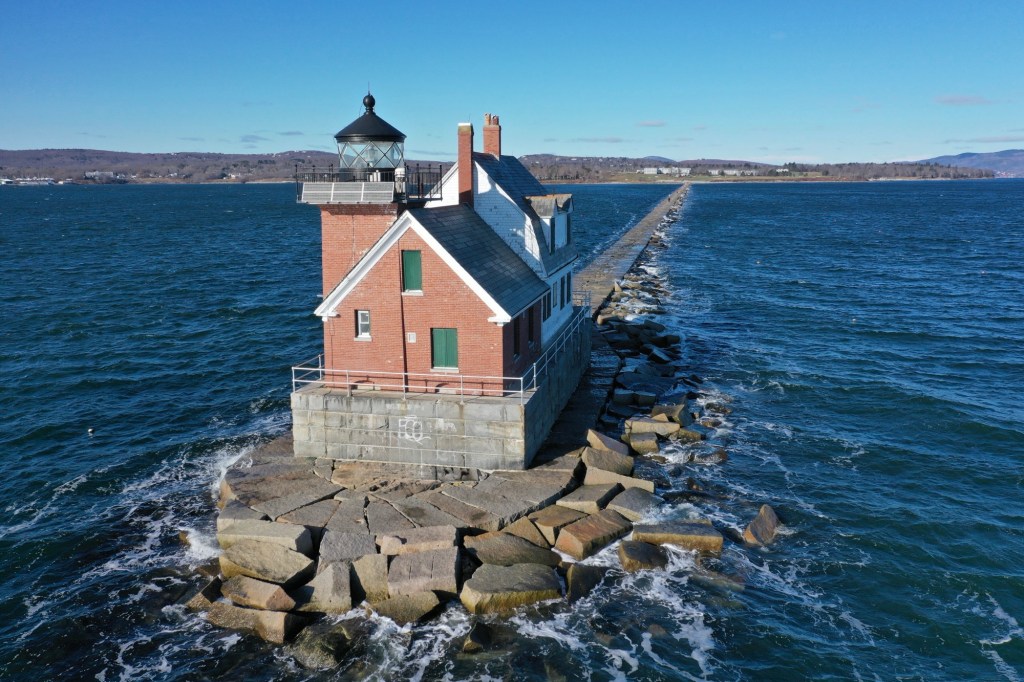
The Rockland Harbor Breakwater and Lighthouse is arguably the most iconic structure in the coastal town of Rockland, Maine. As Rockland was a major port and harbor, relying on the transportation of lime and shipbuilding for its economy, protecting the harbor was of paramount importance. Major storms in the 1850s highlighted the need for improved harbor protection, but federal appropriations for a breakwater were not approved until 1880. Between 1880 and 1900 the United States Army Corps of Engineers, under a series of Congressional appropriations, built the breakwater, a 4,364 foot long wall in the harbor built of locally quarried blocks of granite. It is truly a feat of engineering! The lighthouse standing at its end was added in 1902. The iconic breakwater is accessible by those who brave the crashing waves and distance to the end of the nearly mile-long walk out to the lighthouse. The structure is today maintained by volunteers and the City of Rockland.
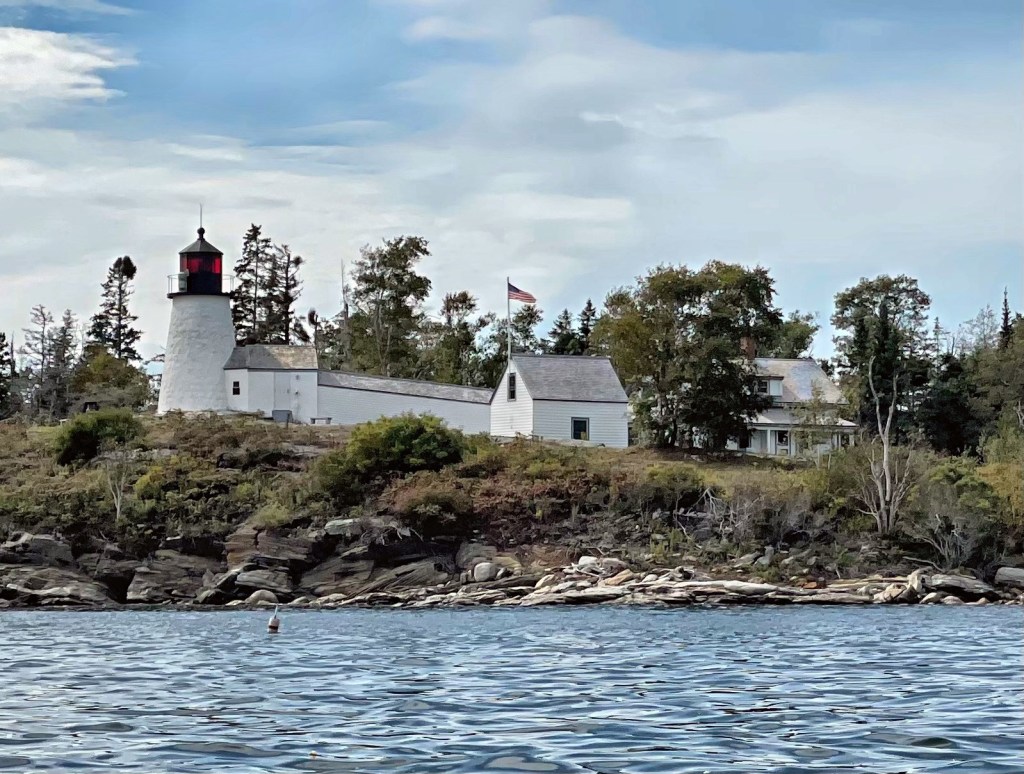
The Burnt Island Light Station was built in 1821 on the west side of the entrance to Boothbay Harbor, opposite the Spruce Point Inn (which I kayaked from to get a better view of this lighthouse). The federal government purchased the island for $150 from local businessmen Jacob Auld and Joseph McCobb. The government’s builders constructed a stone lighthouse and keeper’s dwelling using granite blocks cut from the island. The lighthouse was built on Burnt Island, which took its name from the historic practice of burning the island’s vegetation in order to keep the land clear for sheep grazing. Its purpose was the guidance of ships, the carriers of cargo destined for the development of industry and commerce, into Boothbay Harbor over a mile away. Built just one year before Maine became a state, the Burnt Island Light Station has served mariners for over 200 years. In fact, it’s considered the state’s oldest unaltered lighthouse, and it was manned until 1988 when the light was automated. In 1998, the island and light station were transferred to the State of Maine Department of Marine Resources as part of the Maine Lighthouse Program.
Located nearby the present Brant Point Lighthouse on Nantucket, the old lighthouse remains as a significant piece of island history preserved. In the 1740s, Nantucket’s whaling industry was growing fast, so at a town meeting in 1746, it was determined that a lighthouse at Brant Point was to be built, to mark the point around which all vessels passed as they entered the island’s inner harbor. On or near this site, nine lighthouses stood, guiding ships into and out of the harbor. This brick tower and attached keeper’s house were constructed in 1856. The tower itself was brick, topped by sandstone, which supported the lantern. The cast-iron lantern had twelve windows. A circular iron staircase led to the lantern, situated forty-seven feet above the ground. By the 1850s, Nantucket faced a sudden decline after the invention of kerosene, cut the need for whale oil and a growing sandbar blocked the harbor. The shifting sands would eventually require a new lighthouse built nearby, the present 1901 wooden lighthouse. The 1856 tower was retained ever since and is an important historical artifact for Nantucket’s maritime history.
The Brant Point Lighthouse located on Nantucket Island was first established in 1746 to guide ships to the main harbor. At a town meeting at Nantucket on January 24, 1746, the sea captains of the island spoke out for a lighthouse and the sum of 200 pounds was voted, the wood 1746 lighthouse tower burned in 1758. It was replaced eight more times until 1901, when the present lighthouse was erected. While small, the lighthouse oozes charm and remains active and automated since 1965.
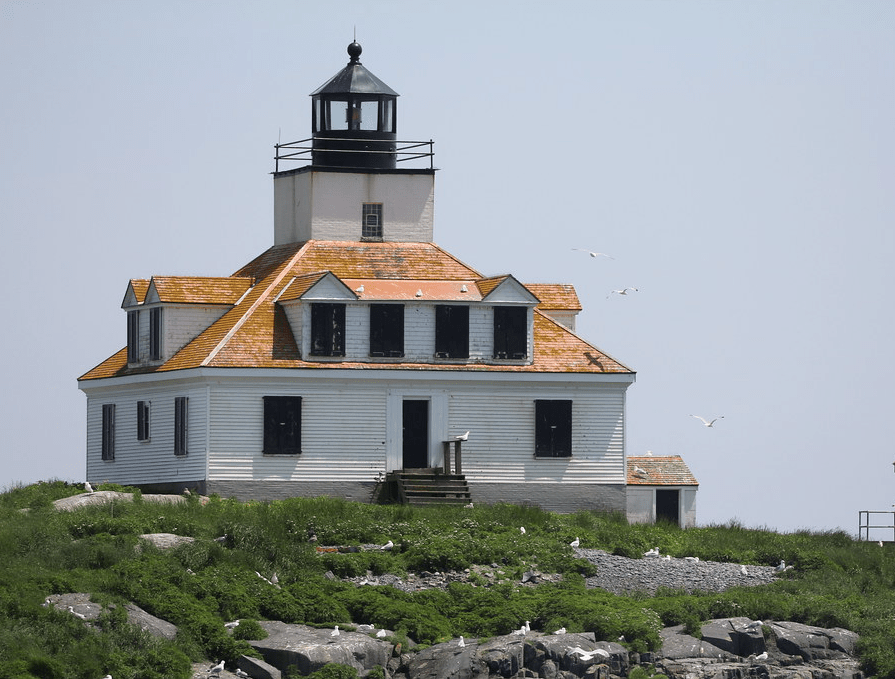
The Egg Rock Lighthouse sits in the middle of the Mt. Desert Narrows of Frenchman Bay between Bar Harbor and Winter Harbor. The lighthouse was constructed in 1875 to assist the already built Winter Harbor Lighthouse a short distance away, to provide guidance for the increased ferry traffic to Bar Harbor, which was quickly becoming a prominent summer colony. The architecturally unique lighthouse is comprised of a square tower projecting through the center of the square lighthouse keeper’s house, its unlike anything I have seen before. The station was automated by the United States Coast Guard in 1976, at which time its ancillary structures except the fog station were torn down. The light continues to be managed by the Coast Guard, and is not open to the public; the island and buildings are owned by the United States Fish and Wildlife Service.
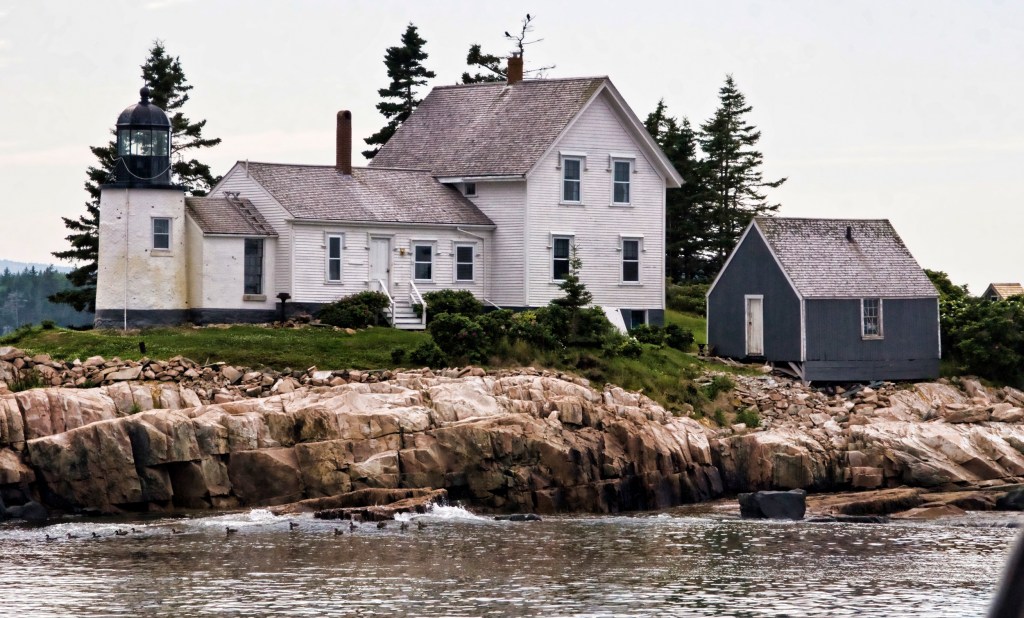
Built in 1857, Winter Harbor Light is one of Maine’s enchanting historic lighthouses dotting the rugged coastline. The lighthouse was built by the United States government to aid navigation for the local fishing fleet, an important piece of the local economy there. The light tower, built in 1856, is a round brick structure topped by an original octagonal lantern house with an iron walkway and railing around it. A brick single-story workroom projects from the tower. The keeper’s house is a two-story wood-frame structure, which was built in 1876 (along with the ell) to replace the original keeper’s house. The light was decommissioned in 1934 and sold into private hands, but in its seventy-six years of service, nine keepers and their families lived on the island. It remains a visual landmark on its small island in Mt. Desert Narrows on the drive along the Schoodic Peninsula in Acadia National Park (Winter Harbor side). What are your favorite lighthouses in Maine?
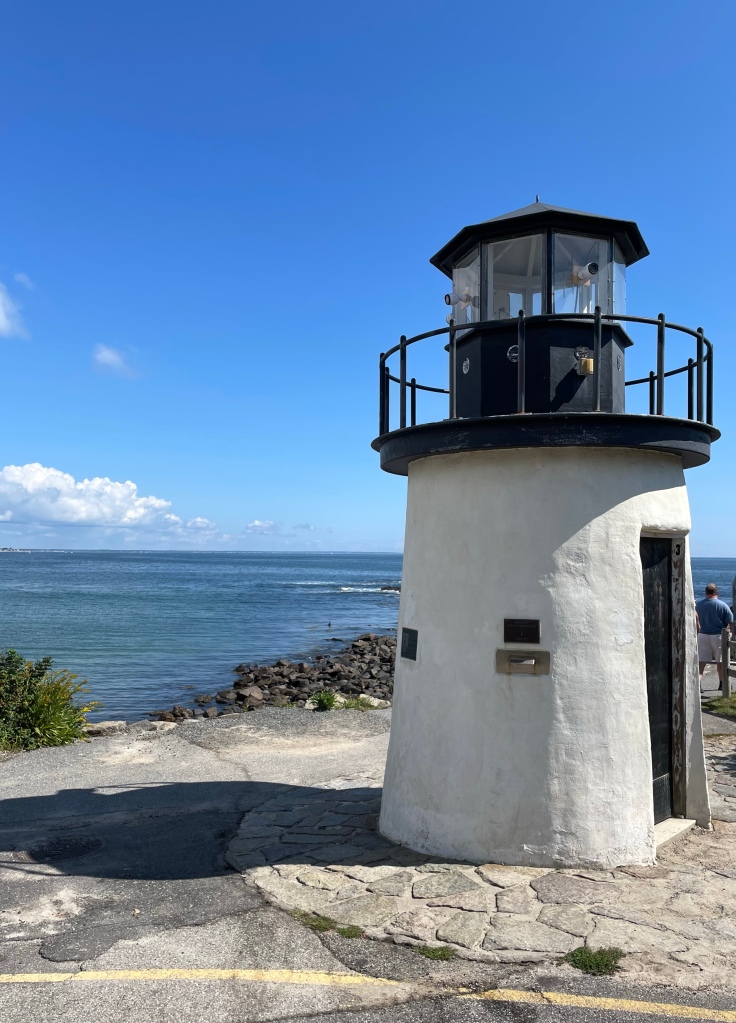
When you walk along Ogunquit’s Marginal Way cliff walk, it is missing one thing, an iconic Maine lighthouse… or is it? This mini lighthouse on the route always has people lining up to snap a picture and its quirky roadside attraction appeal is undeniable. The original Lobster Point Lighthouse was constructed in 1948 by Winfield C. Littlefield of the local family who first settled in the town. The “lighthouse” was designed by Grover S. Perkins. Much like the real lighthouses on the coast, the original structure was badly beaten by the salt air and high winds and parts of the structure were replaced. Notably, in 1993, the top (lantern) was replaced with fiberglass. Additionally, in 2009 the structure was upgraded, all from donations. The iconic roadside lighthouse will continue to ‘light the way’ for the droves of tourists and locals alike who navigate Marginal Way.
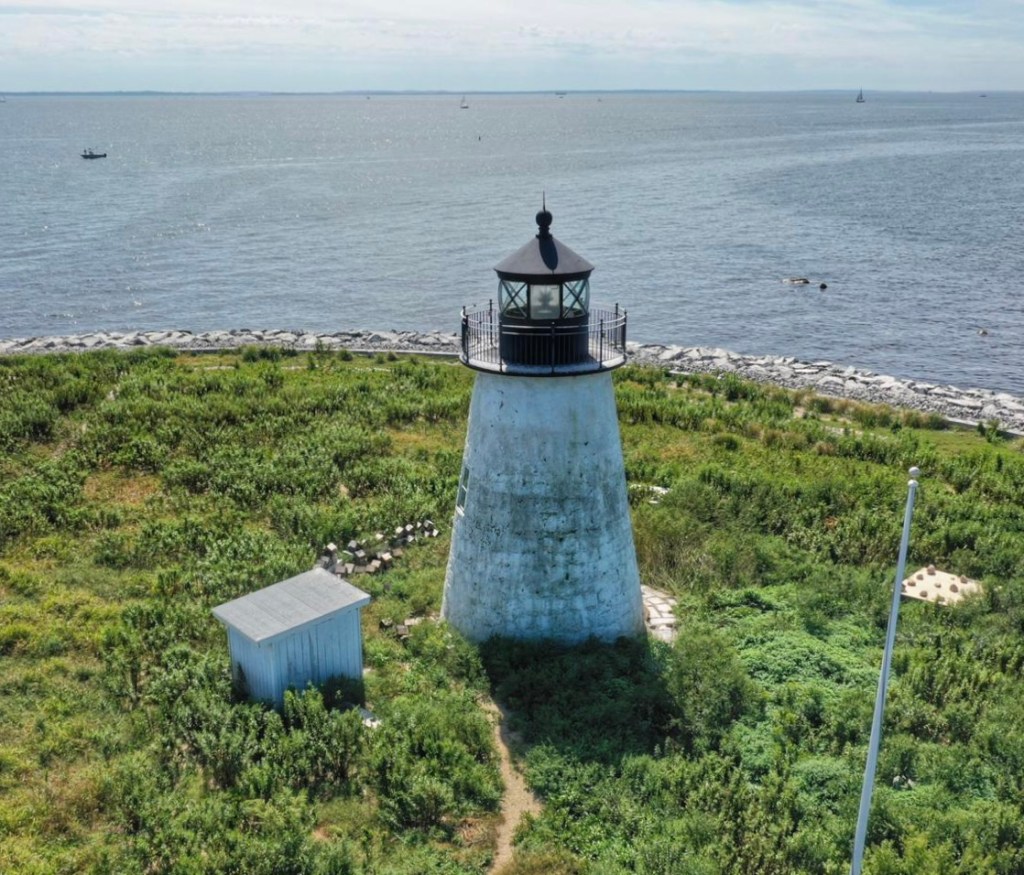
Bird Island sits about seven football fields away from the tip of the Butler Point peninsula, which juts out into Buzzards Bay in Marion. A small sitting area at the Kittansett Club provides a bench and amazing views of the open water and historic lighthouse in the distance. Immediately after the War of 1812, Marion became a hub of whaling and shipping with many sea captains building homes in town. As a result, Congress appropriated $11,500 for the purchase of Bird Island and the erection and stationing of a lighthouse. A 25-foot-tall conical rubblestone tower was constructed, surmounted by a 12-foot tall iron lantern. The accompanying stone dwelling was 20 by 34 feet, and a covered walkway connected the house and tower. William S. Moore, a veteran of the War of 1812, was appointed as the first keeper, which went into operation in 1819. There are legends about murder and hauntings on the island.
Moore’s wife, suffering from tuberculosis, would frequently get into liquor and cigarettes, and would become raucous when she did. When the villagers of Sippican would visit the island, many times they would bring her tobacco to the dismay of Keeper Moore. The legend claims that one morning, after returning from a shed on the island, he found his wife drunk and dancing through the snow. Reports are that he returned to the keeper’s dwelling, retrieved his rifle, and shot her. She is reported to be buried on the island, but there is no sign of a grave. Keeper Moore insisted that she had “succumbed from nicotine” when the townsfolk had asked what had happened. Many years later, when the keeper’s dwelling was being torn down in 1889, a rifle and a bag of tobacco were purportedly found in a secret hiding spot. With those items, was an alleged note that said the following:
“This bag contains tobacco, found among the clothes of my wife after her decease. It was furnished by certain individuals in and about Sippican. May the curses of the High Heaven rest upon the heads of those who destroyed the peace of my family and the health and happiness of a wife whom I Dearly Loved.”
The lighthouse is owned today by the Town of Marion. And the only residents are endangered roseate tern.
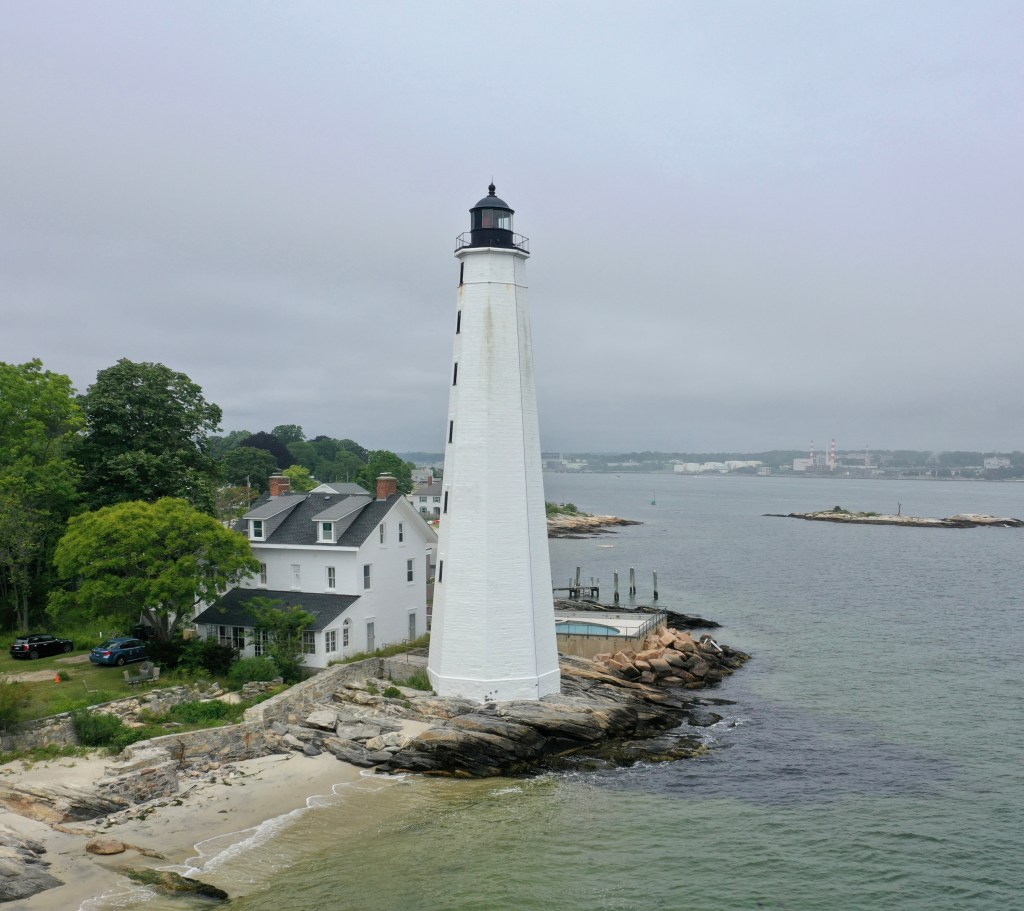
In 1760, the colonial legislature of Connecticut passed an act creating a committee to pursue the funding, construction, and staffing of a new lighthouse for the harbor entrance at New London. The following year, thousands of lottery tickets were sold to raise £500 for the lighthouse (a popular method of raising funds for construction projects in those days). The lighthouse, a sixty-four-foot-tall stone tower with a wooden lantern at the top, was finished that same year at the west side of the harbor entrance. By 1799, issues began to pile-up, including a crack in the structure compromised the integrity of the tower, compounded by the fact the light was so dim as to often be indistinguishable from the lights of the surrounding homes. These challenges led the charge for a new lighthouse. Congress allocated $15,700 for a replacement lighthouse on May 7, 1800, and New Londoner, Abisha Woodward began construction on the current octagonal, tapered, eighty-foot-tall tower. The present light was completed the next year and is constructed of smooth-hammered freestone which are lined with brick inside. The current gable-roofed, two-and-a-half-story keeper’s residence was built in 1863, and in 1900 it was expanded to provide quarters for the assistant keeper and their families. Today, the keeper’s house is privately owned and the light tower is owned by the New London Maritime Society, who offer tours of the light on occasion.
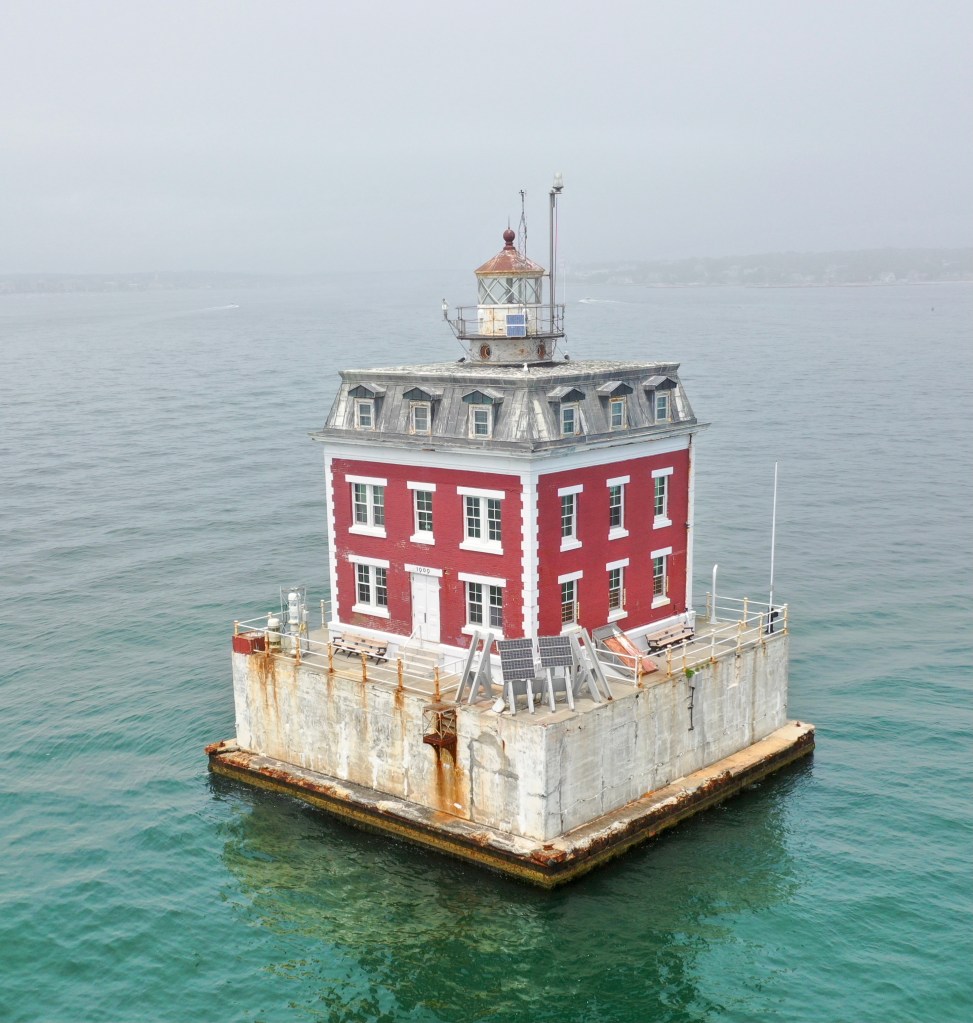
Set way off the coast of Connecticut at the eastern end of Long Island Sound, sits this stunning lighthouse which appears more as a Second Empire style home than a lighthouse! By the early 1900s, New London, with its protected harbor at the mouth of the Thames River, had made the transition from whaling center to industrial city. New London Ledge Light was built because New London Harbor Light wasn’t sufficient to direct vessels around the dangerous ledges at the entrance to the harbor. The New London Ledge Lighthouse was completed in 1909, built by the Hamilton R. Douglas Company of New London and is an architectural antique as its Second Empire style is about 50 years past the time the style was popular in American architecture. The lighthouse reportedly owes its distinctive French Second Empire style to the influence of the wealthy home owners on the local coast, who wanted a structure in keeping with the elegance of their own homes. Sadly, many of the large homes near the shore in the area were destroyed in the Great Hurricane of September 21, 1938. Coast Guard crews lived at the light until it was fully automated in 1987. The lighthouse today is owned and operated as a museum by the New London Maritime Society.


 Buildings of New England