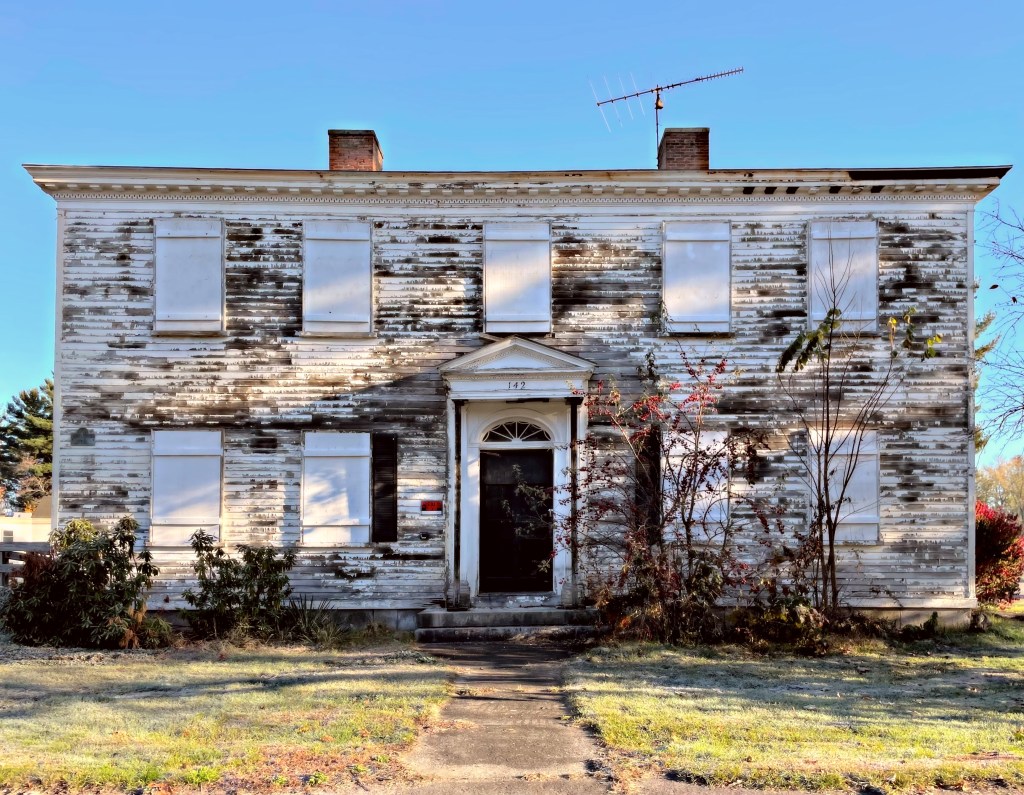
Safford House // 1799

Located in Lancaster, Massachusetts, the Thomas Safford House has stood for over 220 years, but is slowly decaying. Built in 1799 for Thomas Safford, a baker, the house is an excellent example of a Federal-style homestead that appears much like it did when built (besides the neglect). After two subsequent owners, the property was purchased in 1890 by Pauline Revere Thayer, a direct descendant of Founding Father, Paul Revere. Pauline added a large wrap-around porch and balcony to the house, which served as a vacation home for working girls from Boston. She appropriately named the house “Goodrest” where the girls could enjoy their summers, without working in poor conditions. After she died in 1934, the property was acquired by the Commonwealth of Massachusetts as the residence for the head of the Lancaster Industrial School for Girls. The Lancaster Industrial School for Girls was a reform school and the country’s first state reform school for girls, opening in 1856. This school paved the way of social reform, moving away from child imprisonment for “delinquents” towards a correctional paradigm. This was in part achieved because of the observed benefits of environmental change in children, as well as the importance of education. The bucolic, open-air setting was believed to be beneficial for childhood development, compared to a prison setting common before-hand. In 1935, the Safford House was restored to the original appearance, and the porches removed. The State of Massachusetts owns this house and the rest of the severely deteriorating buildings on the campus. It is a shame to see such significant buildings intentionally left to rot.

Lancaster Industrial School for Girls – Rogers Cottage // 1855

The Lancaster Industrial School for Girls in Lancaster, Massachusetts, was was established in 1854 as one of the most progressive correctional institutions of its day, and the first in the U.S. for girls. Throughout the 19th century, state governments struggled with how to best deal with youthful law-breakers and vagrants. Some states began to provide correctional facilities, often known as “Industrial Schools,” while other states continued to incarcerate “delinquents” in prisons alongside adults who often were charged with much more heinous crimes. Institutions like the Lancaster Industrial School led the way in social reform, copying a cottage system created in France that emphasized a wholesome, family-like atmosphere and the opportunity to rise above the “low life” slums from which Victorians assumed delinquent children came from. All girls who were under 17 years old at the time of commitment, were housed in one of eight “cottages” where they would each have their own rooms and chores. The Rogers Cottage seen here was one of a handful of the earliest cottages, all identical in design. Matrons and teachers taught the girls the domestic arts, including how to cook and sew. The Industrial School closed in the 1970s and has been used in an ever-diminishing role by the State of Massachusetts ever since. There have been talks about this complex being sold for redevelopment with some old buildings saved, but I am not holding my breath.

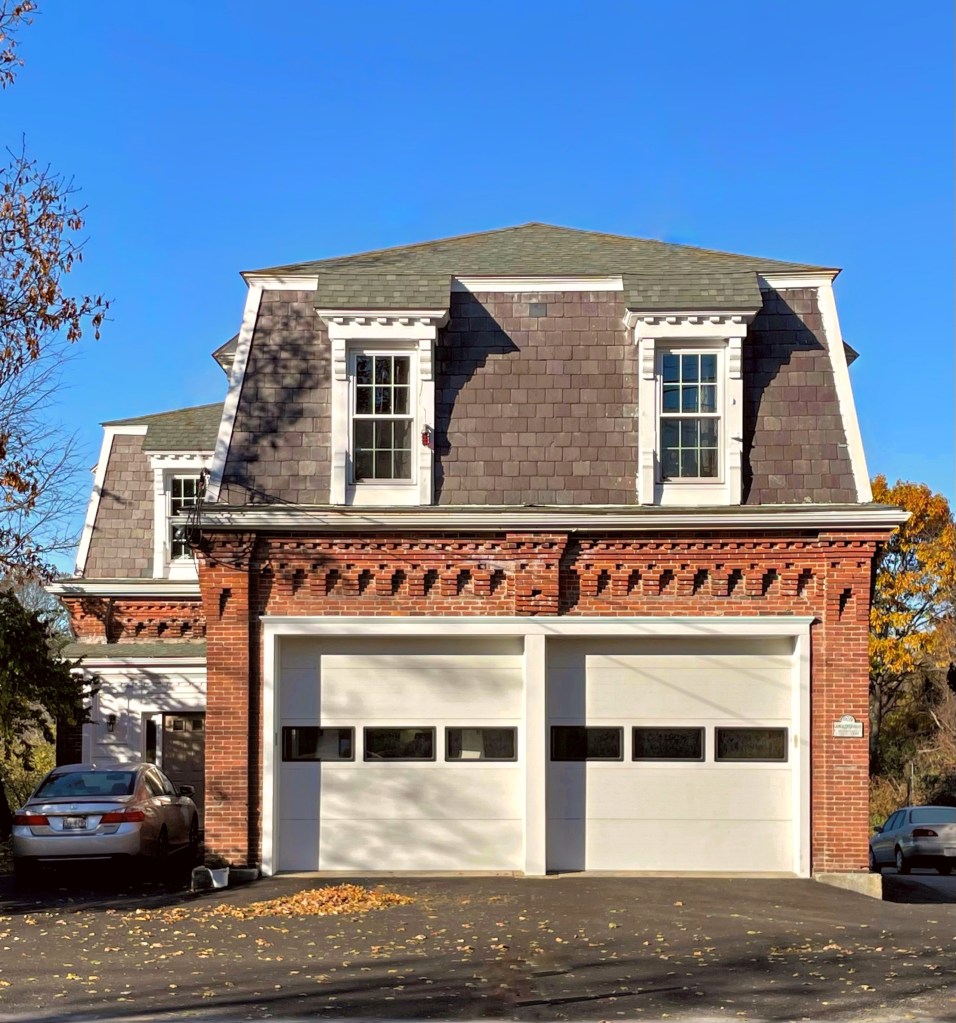
Lancaster National Bank – Central Fire Station // 1836

Located on sleepy Main Street in Lancaster, Massachusetts, this cute mini-mansard building caught my eye immediately, and I had to take a picture! The building was constructed in 1836 for the Lancaster National Bank. The brick building was just one story with storefront windows and a central entrance, and was the only bank in the small town. When the neighboring town of Clinton saw a large increase in population due to industrial growth, the Lancaster National Bank decided to relocate to be closer to a larger clientele. They sold this building to the Town of Lancaster in 1882 and moved out. Within a year, the town added the mansard roof to the building, being careful to preserve the original cornice (now where the brick meets the roof), and converted the building to a fire station with double doors. The Central Fire Station was in operation here until 1967 when a new building was built nearby, with doors large enough to easily house modern engines. The building was then used as storage and offices for the Lancaster Water Department. Sadly, the replacement fire station doors really diminish the appeal of the building.

Judge Corwin House – The Witch House // 1675

The iconic Witch House in Salem was the home of Judge Jonathan Corwin (1640–1718) and is the only structure you can visit in Salem with direct ties to the Salem witch trials of 1692. The Post Medieval English house was constructed by Nathaniel Davenport, commander of the fort on Castle Island in Boston from 1645-1665. After he left that post, he moved to Salem and began construction on his house. Jonathan Corwin, a merchant and judge, purchased the unfinished home from Davenport in 1675, he soon after finished construction of the large home. When reports of witchcraft began circulating in Essex County, Corwin was one of the magistrates called on to make preliminary inquiries into the reports. He and John Hathorne, another local magistrate, held hearings in early March 1692 in which testimony was gathered from Tituba, Sarah Good, and Sarah Osborne, the first three women accused of being witches. Corwin presided over all the other cases, which ended after thirty individuals were found guilty, nineteen of whom were executed by hanging (fourteen women and five men). One other man, Giles Corey, was pressed to death for refusing to plead, and at least five people died in jail. The lasting legacy of the Salem Witch Trials still draws thousands every year to Salem to learn more as to how such a terrible set of circumstances could happen. Jonathan Corwin’s grandson George, lived in the house until his death in 1746. His widow, Sarah Corwin “modernized” the old house by replacing the iconic pitched roof with a gambrel roof, more in line with Georgian design, popular at the time. The building underwent more changes when George P. Farrington, a druggist, owned altered the home and added an apothecary shop to the east side front in 1856. The Corwin House was moved back 35 feet in 1945 to allow for the widening of North Street, and at that time, a new pitched roof (a recreation of the original) was put on, restoring the building to its former glory. It has since been owned by the City of Salem, who maintain the property and open the doors as a museum.


James Braden House // 1867

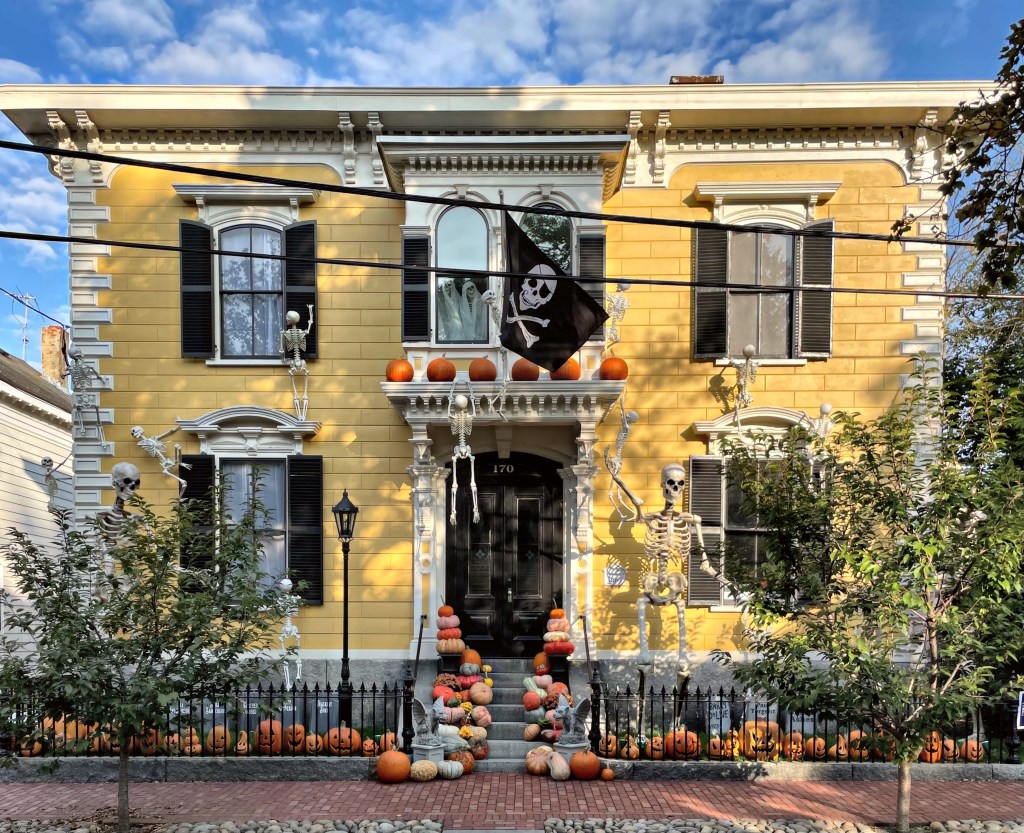
One of the most stunning homes in Salem (and obviously has the best Halloween decorations every year) is the James Braden House on Federal Street. This Italianate style home was built in 1867 for James Braden, a tanner who made his fortune in manufacturing leather which coincided with Salem’s shifting from maritime trade hub to industrial center. The home he built packs a lot of architectural detail and intrigue into a typical box form. The faux ashlar wood facade and corner quoins make the house appear like stone giving it weight and a strong presence on the street, while the recessed entry with a large, highly-ornamented door hood on scroll bracket give the home the traditional Victorian flair. James Braden died in 1895, and his mansion was willed to his widow Margaret, who rented the home until her death in 1907.

Orne-Derby House // 1808

It’s rare to find a house with so much potential in Salem, a town where seemingly every old house has been purchased and lovingly maintained or restored. This home on Federal Street could use some TLC to restore her to her former glory. In 1808, William Orne Jr., a housewright and his wife Polly acquired a mortgage for the lot here and he built a large, Federal style home with gambrel roof, showcasing his building skills. The property was a little more than the couple could handle financially, which was compounded by the War of 1812, and the Royal British Navy blockading maritime trade, which especially hurt Salem’s port. The Orne House was sold in 1817 to Captain John Derby III, who died just a year later, leaving his widow Sarah (Felton)
Derby all his estate. Sarah rented the home to family, but was allowed to live there until her own death in 1857. The stunning home with fanlight at the front door, historic wood windows, and pair of large brick end chimneys all could be saved with a good restoration of the home. Fingers crossed!

Daniel Bray House // 1766

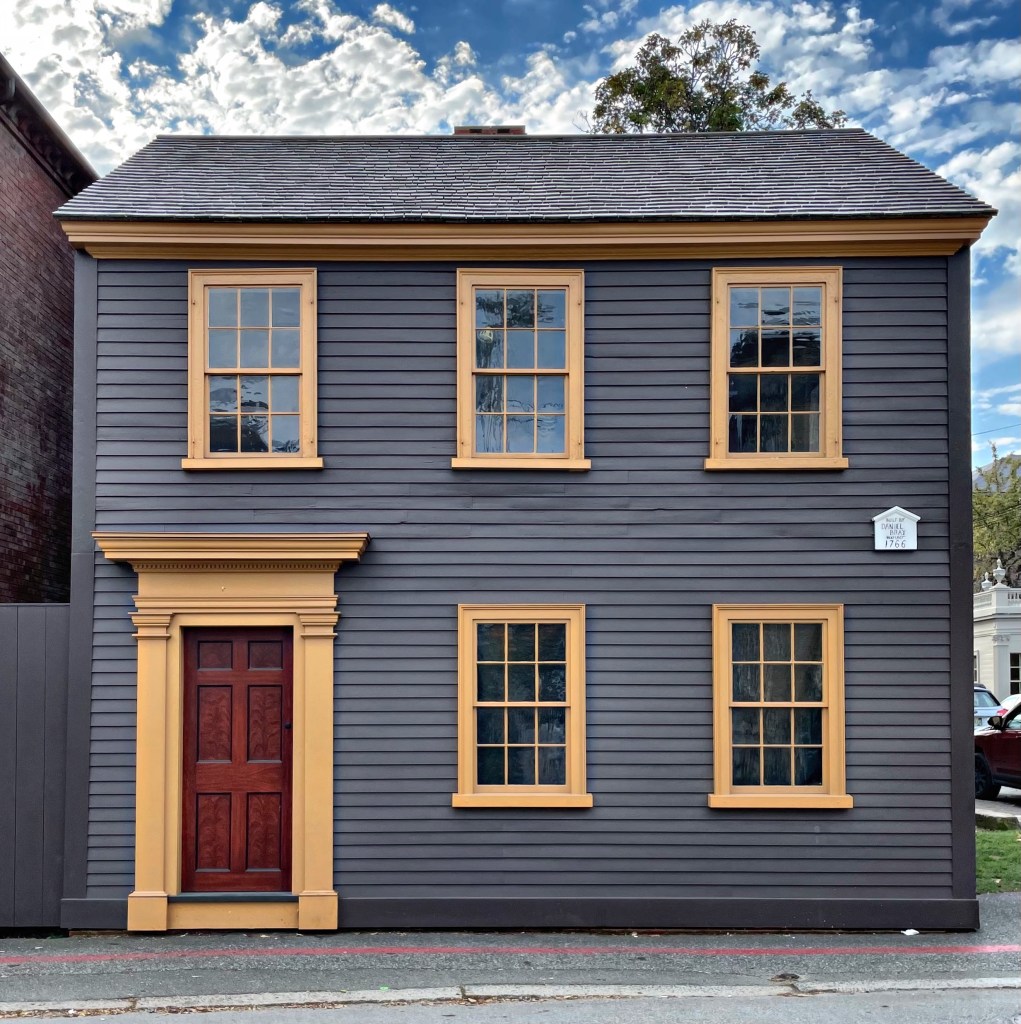
Here is a preservation success story for you all! The Daniel Bray House in Salem, MA was built around 1766 as a two-and-a-half story wood-frame vernacular house with side-gable roof. Captain Daniel Bray, a master mariner, was born in 1735 in Salem, eventually marrying Mary Ingalls in 1760, and six years later the couple built this house for their growing family, on his family’s land, which he later purchased in 1770. Bray’s work as a master mariner gained him connections in town, especially since he sailed as captain on several vessels owned by merchant John Derby. After retiring from the sea, Bray managed Derby Wharf in Salem until his death in 1798. The home was willed to Daniel’s son, Daniel Jr., who was also a master mariner. By the early 1900s, the home was converted to commercial use, as a grocery and later as a candy store. The home was given storefront windows to showcase the goods inside. The home was eventually purchased by the Peabody Essex Museum in the 1980s. They undertook a massive restoration of the home using forensic study and research and skilled restoration carpenters and masons.

Henry Russell Jr. House // 1844

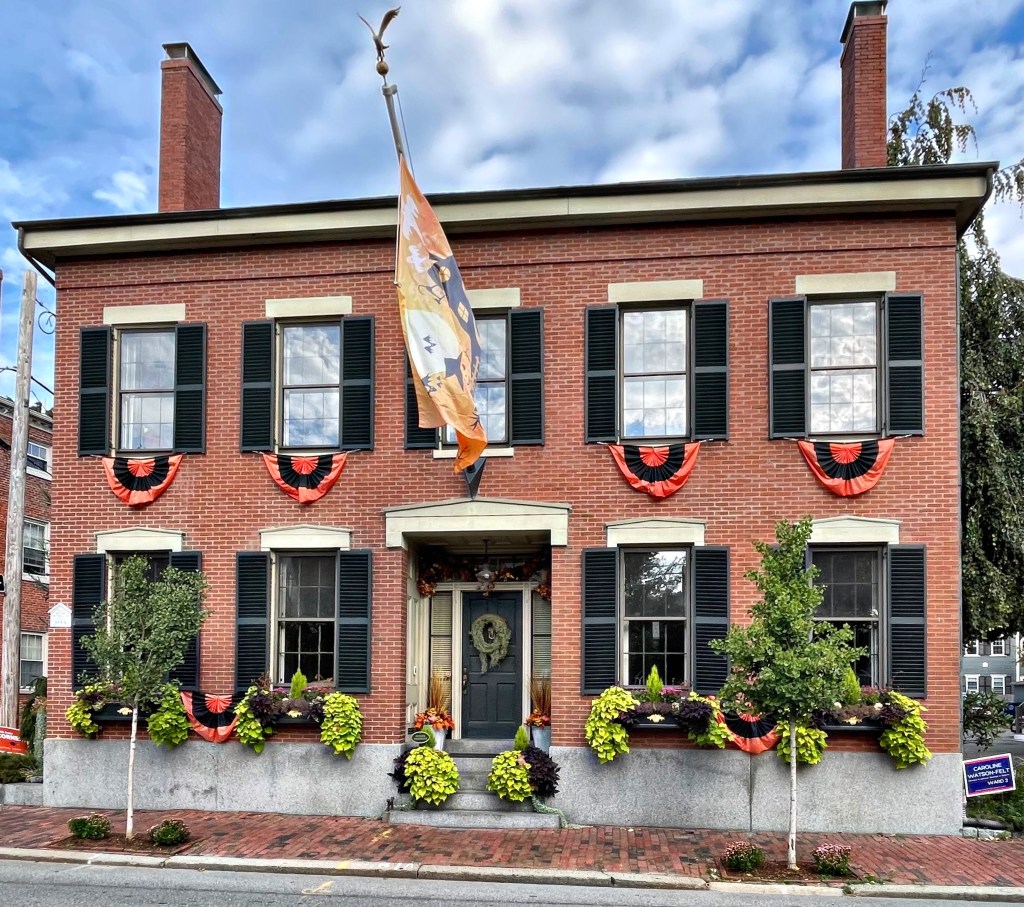
Henry Russell Jr. (1811-1857) was a prominent mason in Salem and after receiving the commission to complete the masonry on the East Church (last post), purchased a site nearby for the erection of his own stately mansion. Henry and his wife Maria lived here together until he died unexpectedly at just 46 years old from an internal abscess and infection, his widow died just two years later. The home was constructed in the Greek Revival style and of course, features amazing brick and stone construction. The interior’s wood paneling and fireplaces are in a great state of preservation as well, visible from a real estate listing. Swoon!

Canterbury Shaker Horse Barn // 1819

This large, shingled horse barn at Canterbury Shaker Village in New Hampshire, was built in 1819 and measures 60 x 40 feet. The massive barn structure showcases the significance of horses and agriculture for the rural community, which lived off the land.

Delano-Clapp House // 1735

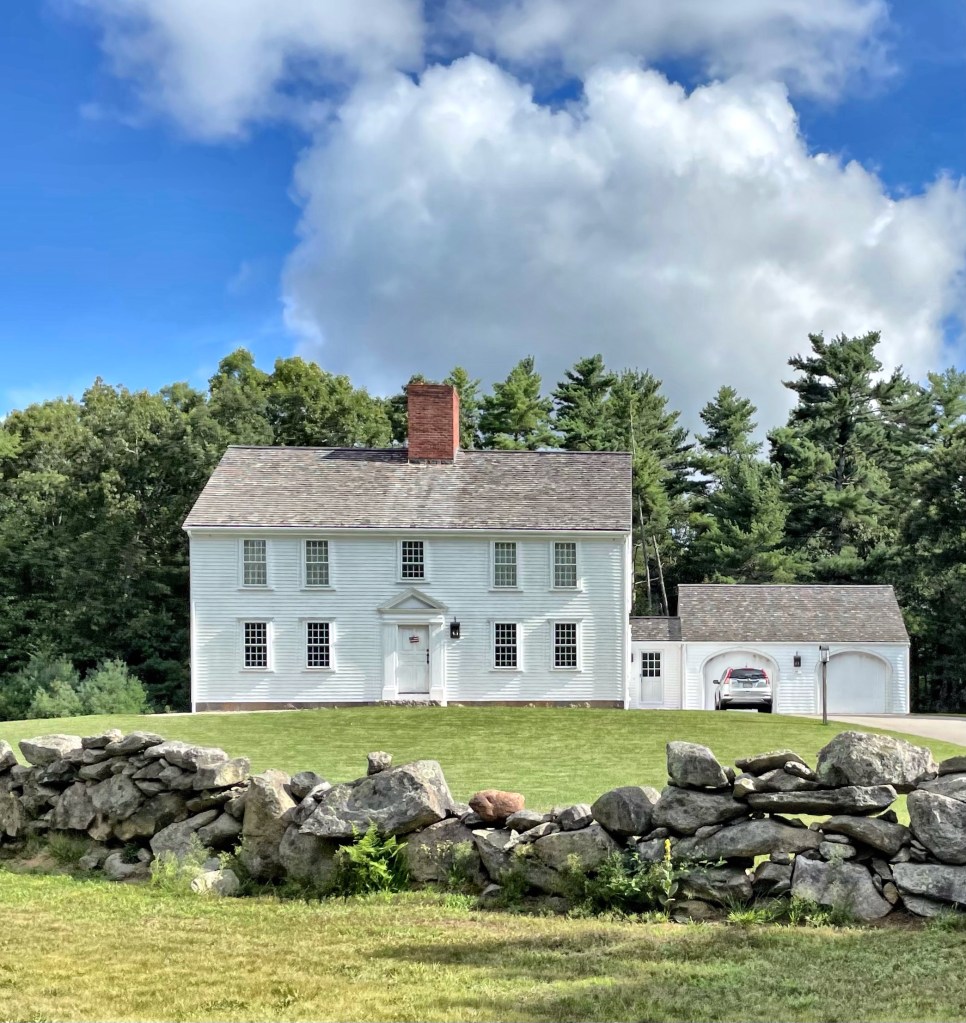
My favorite Georgian style house in Rochester, MA is the Delano-Clapp House set far off the street, behind a stone wall. The house was built in 1735 for Jonathan Delano, a weaver. Jonathan’s son, Jonathan, Jr., sold the house and land to Ebenezer Clapp, in 1755. The property remained in the Clapp Family for nearly 250 years, when it sold out of the family in 1990. This house is testament to the fact that you can find great architecture in every corner of New England!