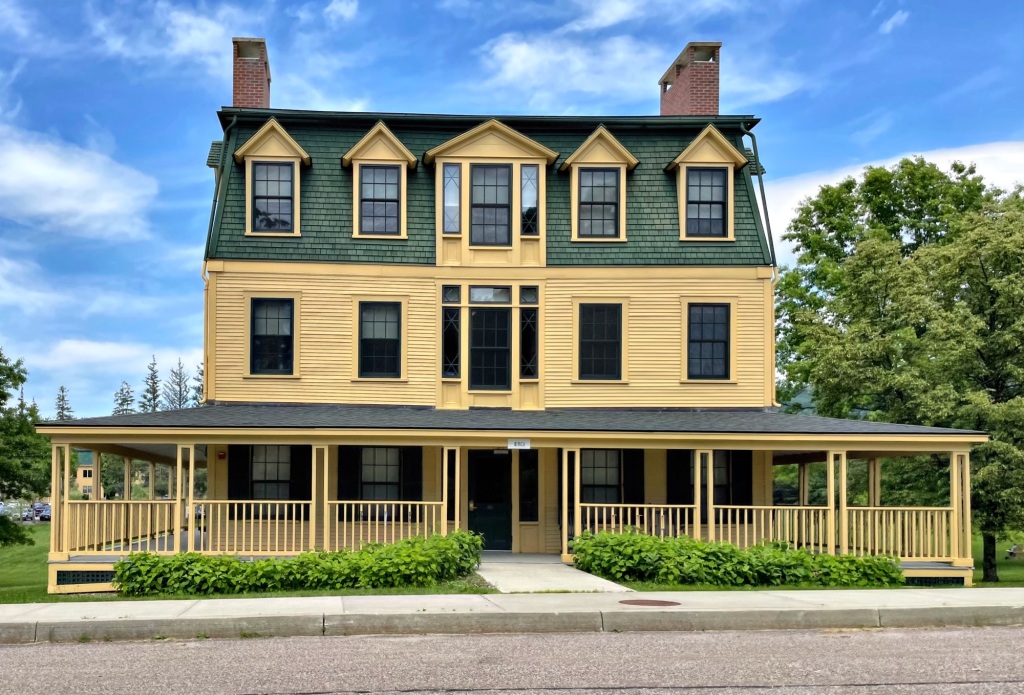
Welcome back to the Bread Loaf Campus! For more early history and context of the complex, check out the post on the Bread Loaf Inn. By 1900, owner Joseph Battell’s enterprise exceeded the capacity of the original inn, and cottages were added to accommodate more guests visiting his new permanent home in the mountains of Ripton, Vermont. An early cottage built by Battell is this late-Mansard structure, named Birch Cottage. The structure clearly took cues from the Bread Loaf Inn, built over a decade earlier, and originally had two floors of porches wrapping around the entire structure.
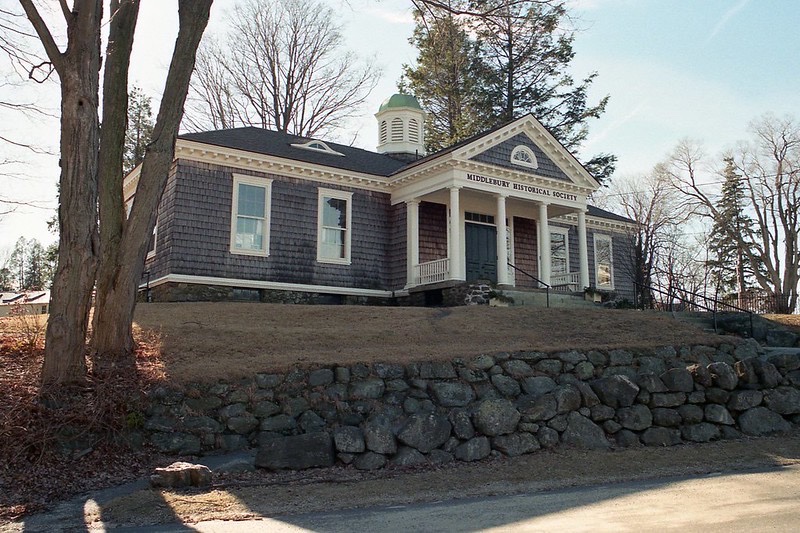
Having the tall order of being a neighbor to the later Westover School, the town of Middlebury’s Central School still packs an architectural punch. The school was built in 1898, replacing the former Union Academy building also near the town green. The school building is Neo-Classical in style with a projecting pedimented portico supported by four columns. A cupola extends through the roofline and shingle siding add some charm to the small two-room school building. The former school later housed the Middlebury Public Library and is now occupied by the Middlebury Historical Society.
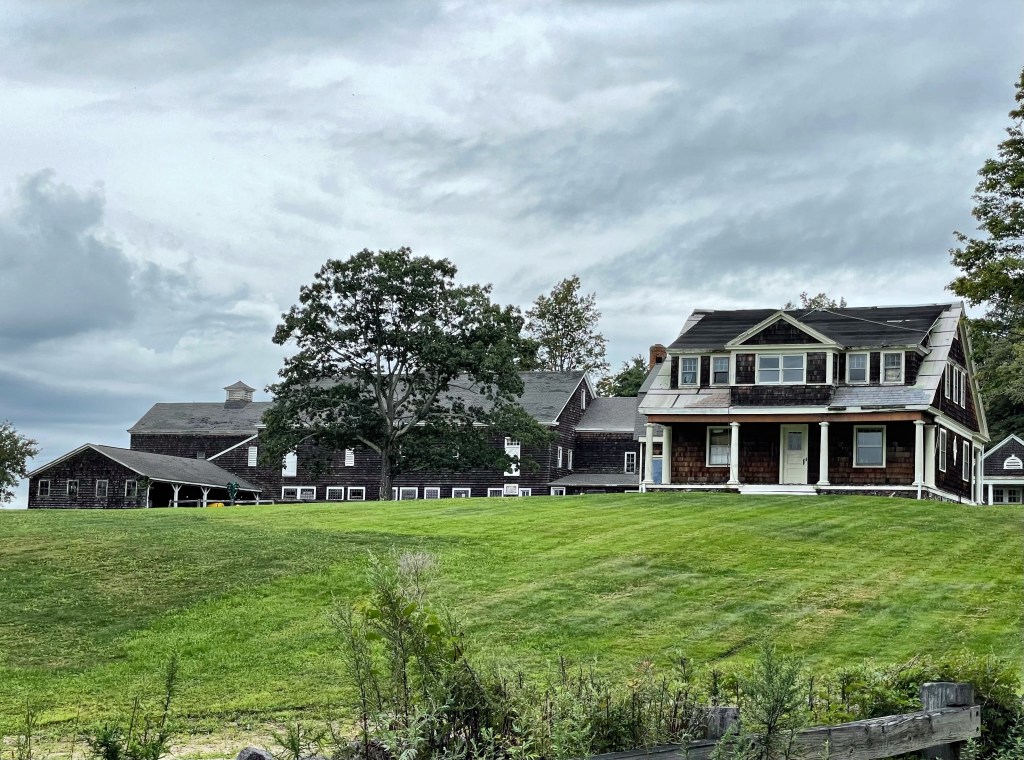
Any good gentleman’s farm needs a superintendent to actually oversee all the labor being done to harvest crops and take care of the livestock (because a millionaire owner cannot be burdened to deal with such mundane matters…) When John Howard Whittemore, a successful industrial-era businessman purchased an old farm in Middlebury, Connecticut to spend summers and time out of industrial malaise, he knew that along with a summer home for his family, he would need to build other structures on the 300-acres of rolling hills. The famed architectural firm of McKim, Mead & White was hired by Whittemore to design many of the buildings on the grounds, from the main house, to the superintendent’s cottage to a boathouse. The firm designed this superintendent’s cottage (which currently looks to be getting a new roof) and the creamery in the rear. Both are great examples of the Shingle style in modest, agricultural structures.
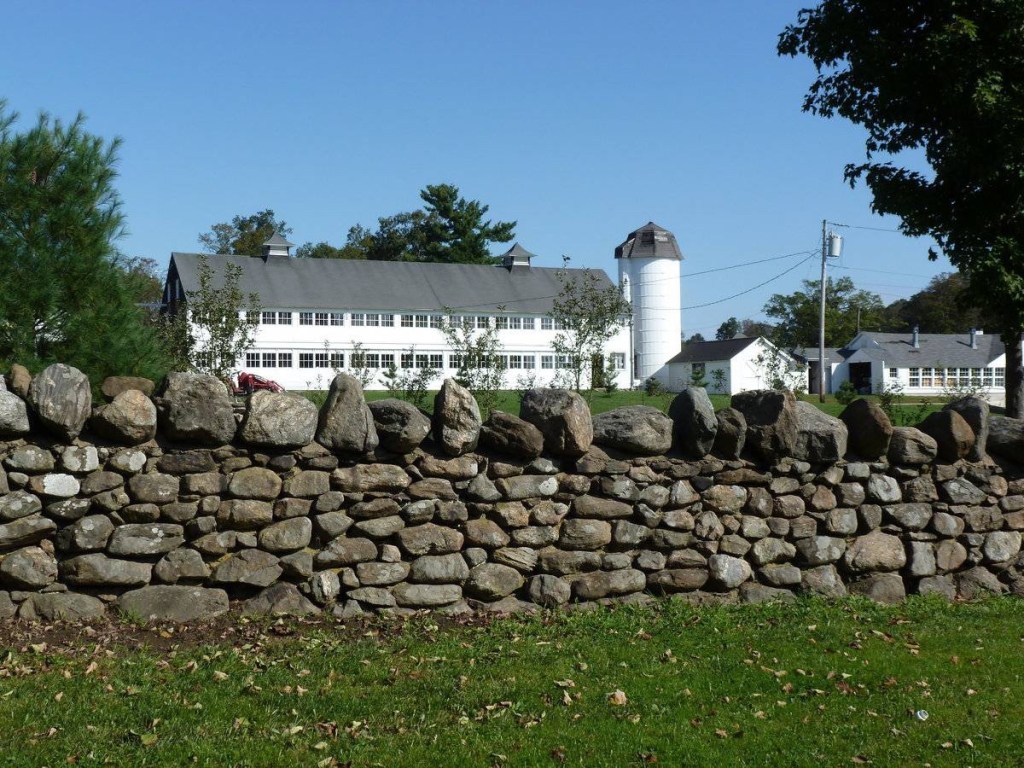
Tranquillity Farm, spanning the rolling hills around Lake Quassapaug in Middlebury Connecticut, was originally a 303-acre model/gentleman’s farm developed by John Howard Whittemore, a successful industrial-era businessman in Naugatuck, and his wife Julia Spencer Whittemore. Whittemore was a major figure in Naugatuck, sponsoring a series of commissions of McKim, Mead & White for buildings in the city center. For his country farm estate, he again commissioned McKim, Mead & White to design a new country house, a farm superintendent’s house, boat house on the lake, and other outbuildings for a working farm. An older farm was purchased, which included a modest Greek Revival style farmhouse dating to the early-mid 19th century (seen here) and a large wooden barn. Both of these were kept and incorporated into the estate near the southern entrance to the property, possibly to harken visitors back to the charm of rural living. The sweeping landscape, featuring miles of distinctive stone walls lining the roads and crisscrossing the fields, was designed by Charles Eliot and completed by Warren H. Manning – both protégée of Olmsted.
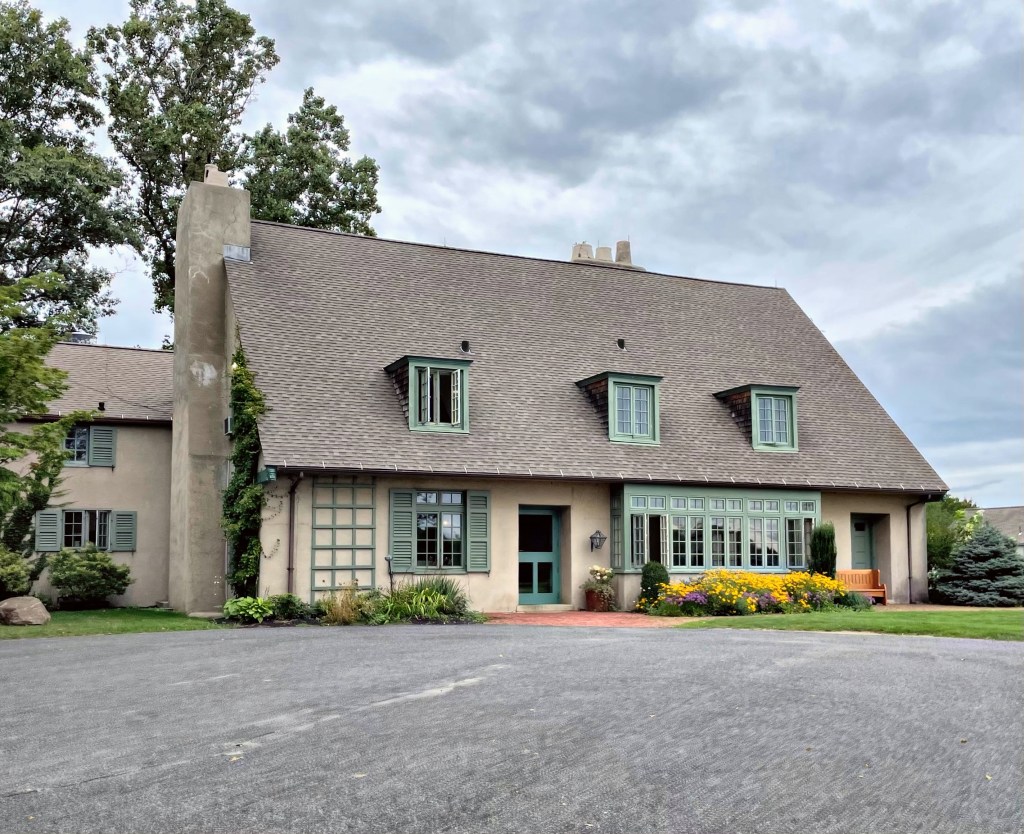
The Highfield house is a historic building located in Middlebury, Connecticut. The House, surrounded by over 600 acres of land, was the former summer estate of Columbia University law professor Joseph and his wife, Elizabeth Chamberlain. They commissioned Theodate Pope Riddle, one of the first licensed female architects in America to build this comfortable English Arts and Crafts style cottage on a hill above a lake. It is likely that after the Westover School was completed in town, the Chamberlains were excited to see how Theodate could design them a summer house in the similar Arts and Crafts style. The estate was completed in 1914 and stands two-stories with the second floor concealed within the steeply pitched gable roof. Like Westover, the building was stuccoed. In the 1950s, the estate was purchased by a group of individuals who dedicated the complex as a family and country club with golf, tennis courts, and pool. It is known as the Highfield Club today.
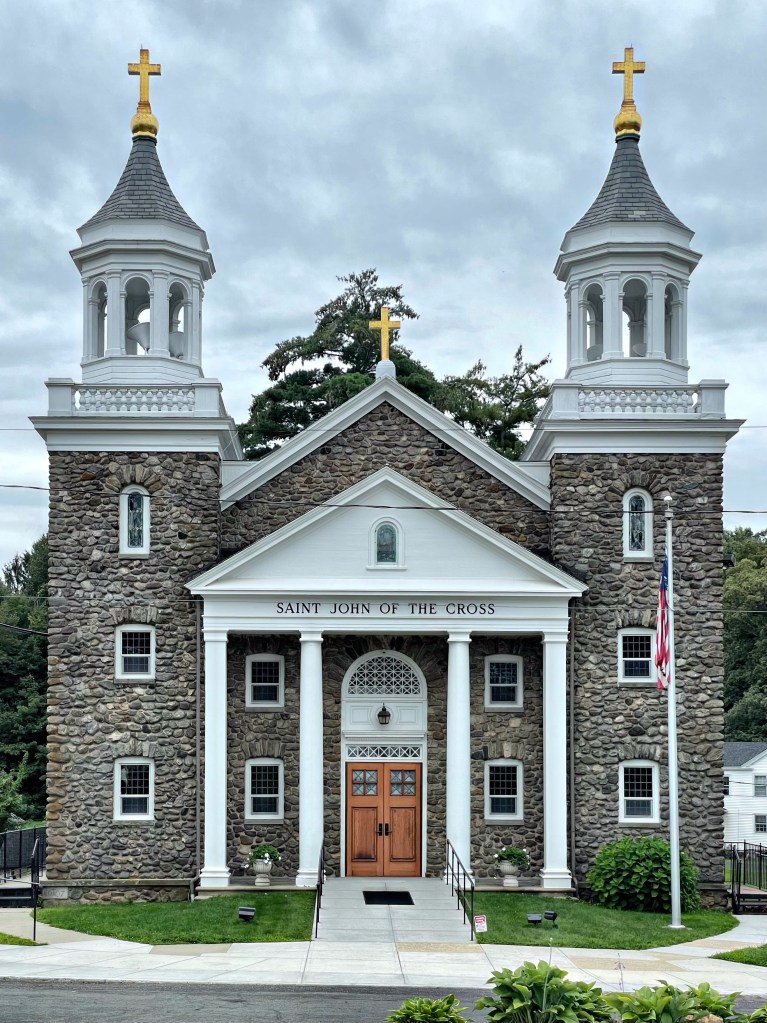
One of the more substantial buildings in the small town of Middlebury, Connecticut is this large church which faces the town green. In 1904 St. John of the Cross Parish was granted ecclesiastical status however, a decade would pass before the newly constructed stone church on the Middlebury Green was dedicated on November 22, 1914. The building was constructed in rubblestone with a Classical Revival temple-front pavillion and two Renaissance Revival square towers with open belfries. Reports stated that the building took over five years to construct, which was almost entirely built with volunteer labor and built with stones taken from parishioners fields. The architect of the church is unknown.
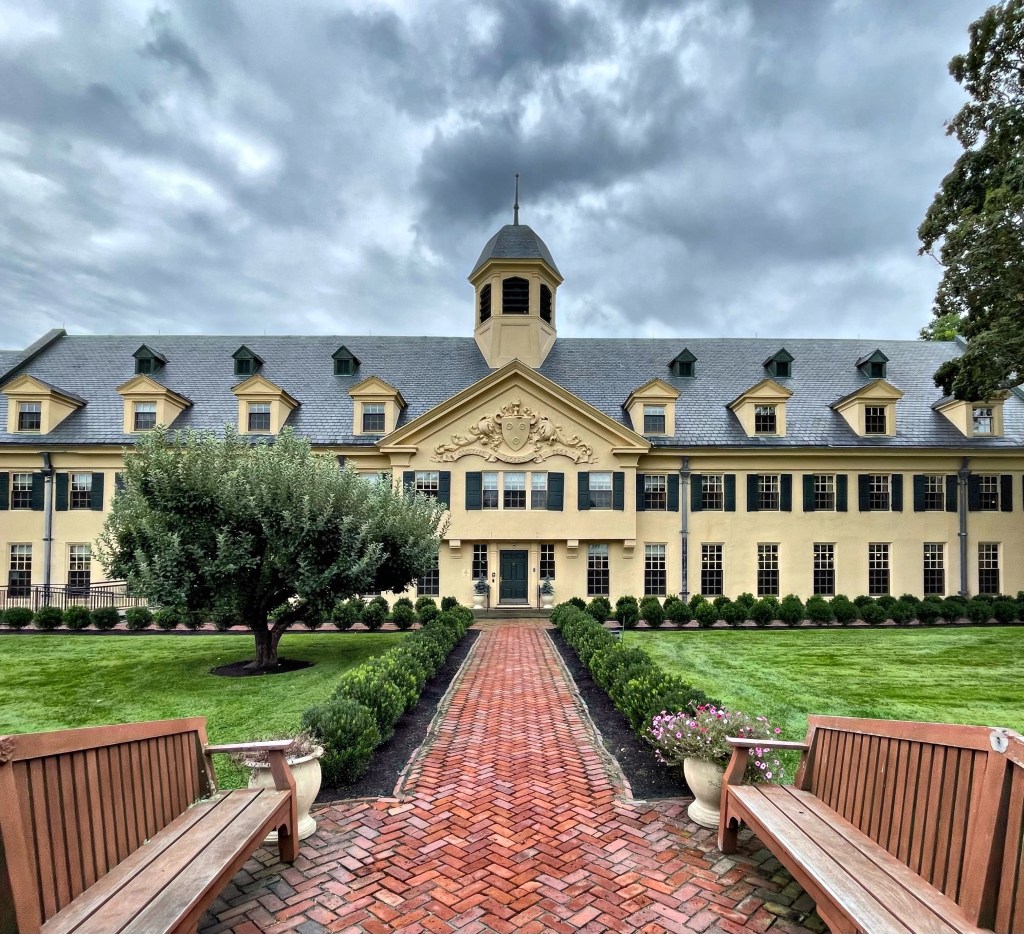
At the heart of the rural community of Middlebury, comprised largely of Connecticut farmers, far from the hustle and bustle of the world, Mary Robbins Hillard (1862-1932) sought to create a girls school to “provide young women with a liberal education in a community which would contribute to the development of their character, independence and sense of responsibility.” To accomplish this, they needed a school, and Mary hired her good friend (and architect) Theodate Pope Riddle to design the private girl’s school campus and main buildings on a site fronting the town green. The school opened in 1909 with125 pupils, slightly over capacity. For the design Theodate Pope Riddle – who was one of the first American women architects and a survivor of the sinking of the RMS Lusitania – took inspiration from English Arts and Crafts and historical precedence in English schools with large open courtyard plans. Originally finished in a gray stucco, the building enclosed a quadrangle at the rear. Inside, administration offices, reception rooms, living rooms, a library, gymnasium, chapel, dining rooms, infirmary, and (of course) classrooms lined the interiors on a closed loop to allow students and teachers access to all parts of the building without ever stepping outside in the cold New England winters. The Westover School remains active and one of the highest ranked private schools in the area today, and with a more cheery yellow coat!


 Buildings of New England