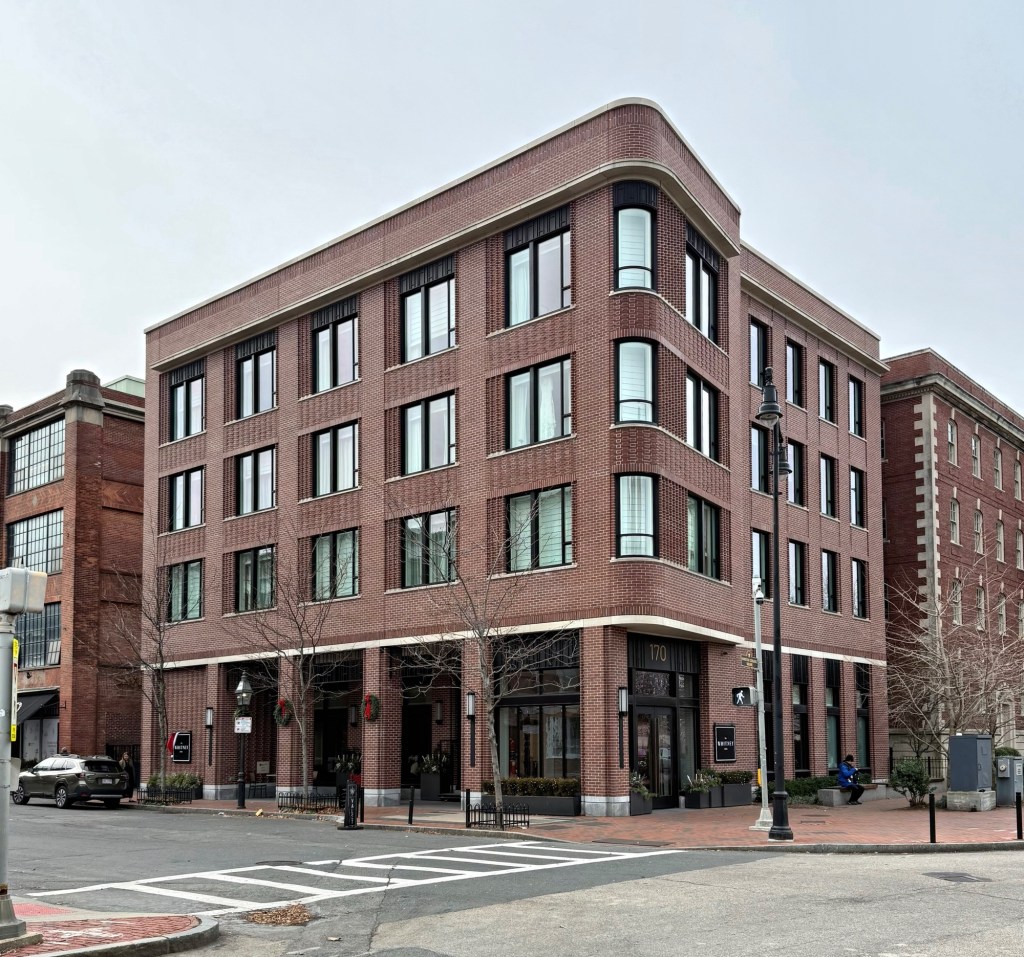
The Whitney Hotel // 2019

The Whitney Hotel on the iconic Charles Street in Beacon Hill, represents the best of contextual infill construction and good design. Completed in 2019, the hotel was built on an open lot adjacent to the 1909 Eye and Ear Infirmary Nurse’s Residence that sold in 2016. Developers hired Boston architectural design firm of Hacin to construct the new structure as an addition to the 1909 building. As the building is located within the Historic Beacon Hill District, a local commission closely reviewed plans to ensure the new building would blend old and new on the site, while being its own landmark on the prominent corner lot. The scale, massing, materials and rhythm of windows ties the 2019 contemporary wing with the 1909 building, while the brick layering styles, window types and unique rounded corner read clearly contemporary. The hotel is named after Henry Melville Whitney (1839-1923) a Boston politician and businessman who founded the West End Street Railway Company, which preceded the Metropolitan Transit Authority and today’s MBTA. The Whitney Hotel serves as an important visual anchor and entrance into Beacon Hill, enlivening the street and neighborhood through high-quality design.
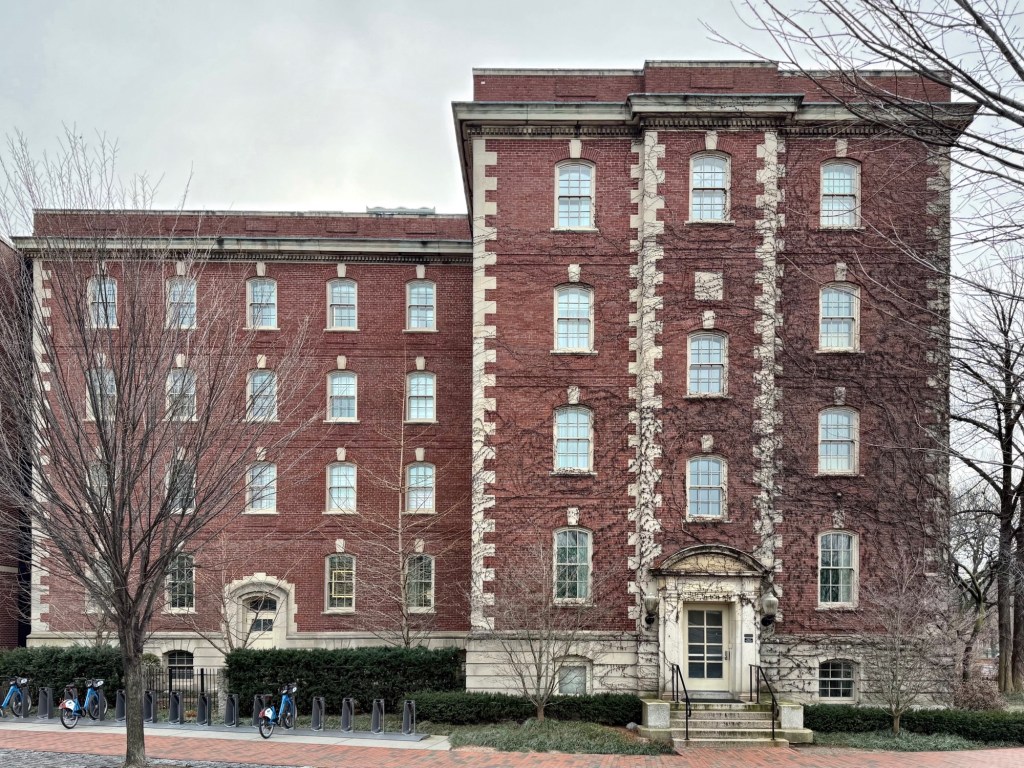
Eye and Ear Infirmary Nurse’s Residence // 1909

The Massachusetts Charitable Eye and Ear Infirmary (now Massachusetts Eye and Ear) began in 1824 by doctors, Edward Reynolds and John Jeffries II as a free weekly clinic they operated out of a rented room in Boston’s Scollay Square. At the time, Boston was an immigration destination for laborers arriving from Europe, among whom occupational injuries were common, but affordable medical care was scarce. With an increasing population and increasing medical needs, the clinic expanded rapidly. In 1849, a new clinic was built on Charles Street, just south of the West Boston Bridge (now Longfellow Bridge) from plans by Edward C. Cabot. As demand grew in the late 19th and early 20th centuries, the hospital sought expansion and built a new facility farther north on Charles Street, closer to Massachusetts General Hospital. The 1849 building was deemed excess and demolished, soon to be replaced by the current building on the site, the Nurse’s Dormitory. Built in 1909, this handsome, four-story brick and stone structure was designed by the office of Page and Frothingham in the Colonial Revival style, which contributes to the architectural character of Beacon Hill. The building provided much-needed residential space for nurses and other staff people who worked at the new Eye and Ear Infirmary a few blocks away. The building was later converted into an inn, the John Jeffries House (after one of the founders of the infirmary) until 2016, when the site closed and was converted into a wing of the new Whitney Hotel by Hacin Architects!

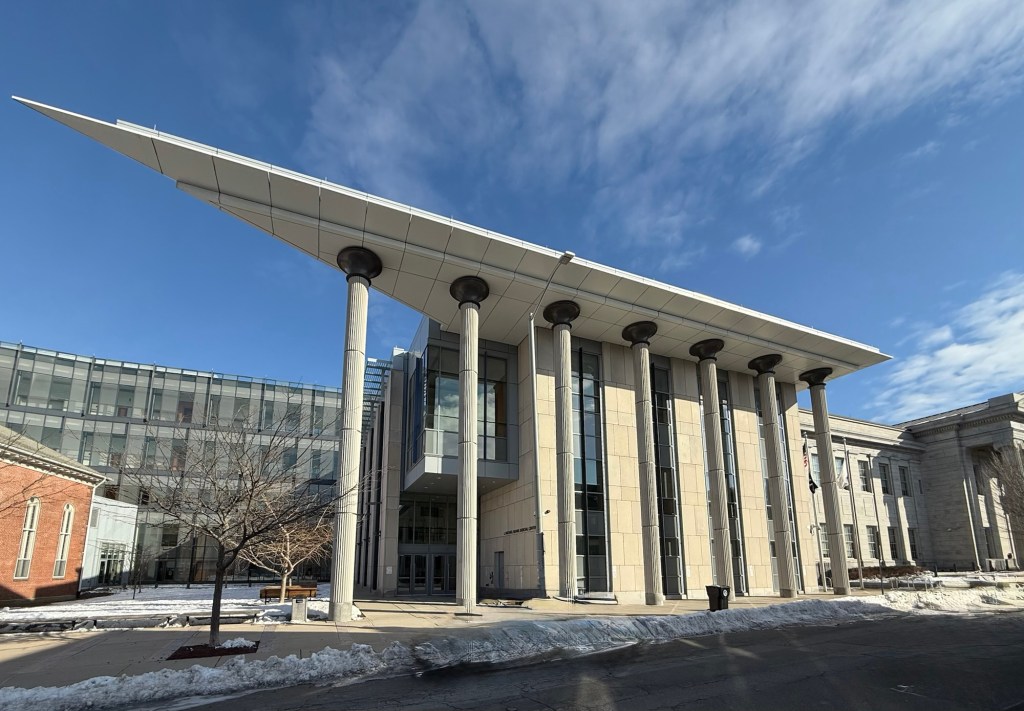
J. Michael Ruane Judicial Center // 2011

In 2005, the Commonwealth of Massachusetts announced plans to build a new court complex on Federal Street in Salem to replace the aging 19th century courthouses. A site adjacent to the 1909 Registry of Deeds and Probate Court was selected, but with one issue, a Federal-period historic Baptist Church was already on the site. The church was purchased from the congregation and moved down Federal street, and construction began on the new contemporary judicial center. Designed by Goody/Clancy Architects, the building takes design cues from the historic courthouses on the street, with a modern interpretation of the Classical architecture and Corinthian columns found nearby. Opened in 2011, the complex was named after late state representative, J. Michael Ruane, and incorporated the former 1805 Baptist Church as the new Essex Law Library.

424 Massachusetts Avenue // 2002

Modern architecture can often compliment and blend into the context of historic neighborhoods, and this example in Boston’s South End neighborhood is one of the best examples locally. In 2002, developers eyed a long-vacant lot on the busy Mass. Ave corridor through the South End and began designs of a contextual addition to the streetscape. Dolezal Architecture was tasked with designing a modern residential building that would comply with local historic district regulations, a balance that can be difficult to accomplish. Employing traditional masonry, solid-to-void ratios, massing, and bays, but in a modern context, the building blends in with its surroundings yet is architecturally interesting. The building contains ten condos in a single building which reads more like two distinct structures.