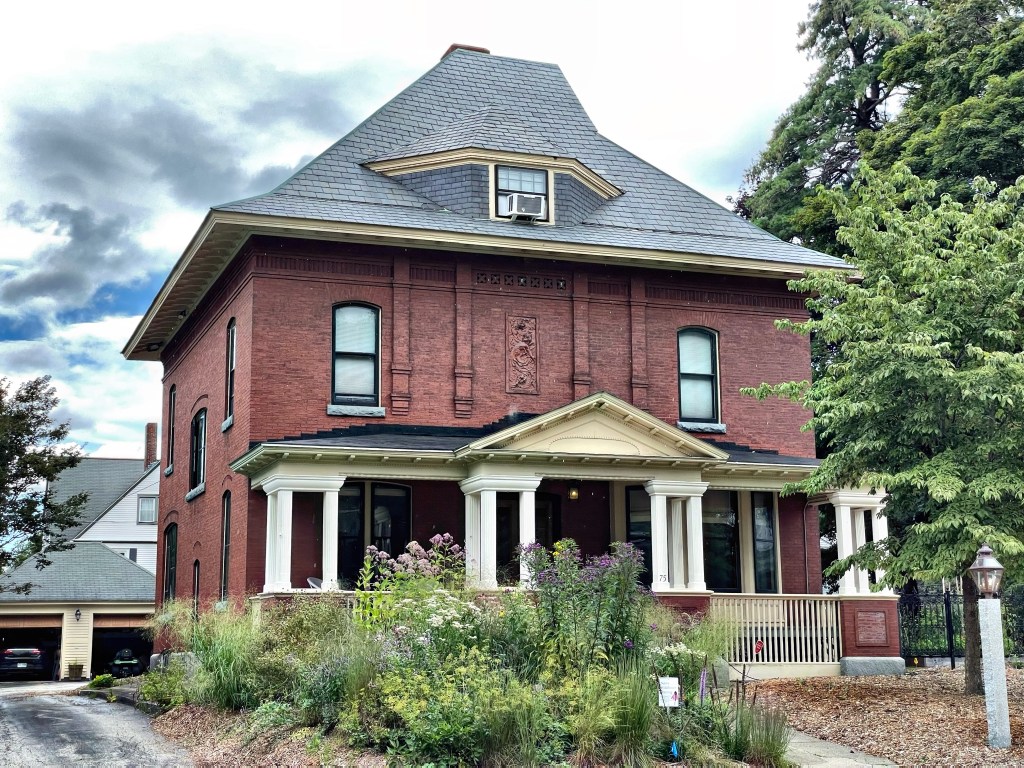
Yet another of Nashua’s fine estates on Concord Street is the George French House, a more academic example of the Queen Anne style of architecture. The French House was built in 1890 for George Barstow French (1846-1933), an attorney in town. I really wish I could find more on the architect, as this seems to be a more academic example of the style with bold material choice of brick construction with brownstone and terracotta trim and detailing. The hipped roof with flared eaves and brick pilaster detailing on the second floor add a lot to the design and are not common! Does anyone know more?
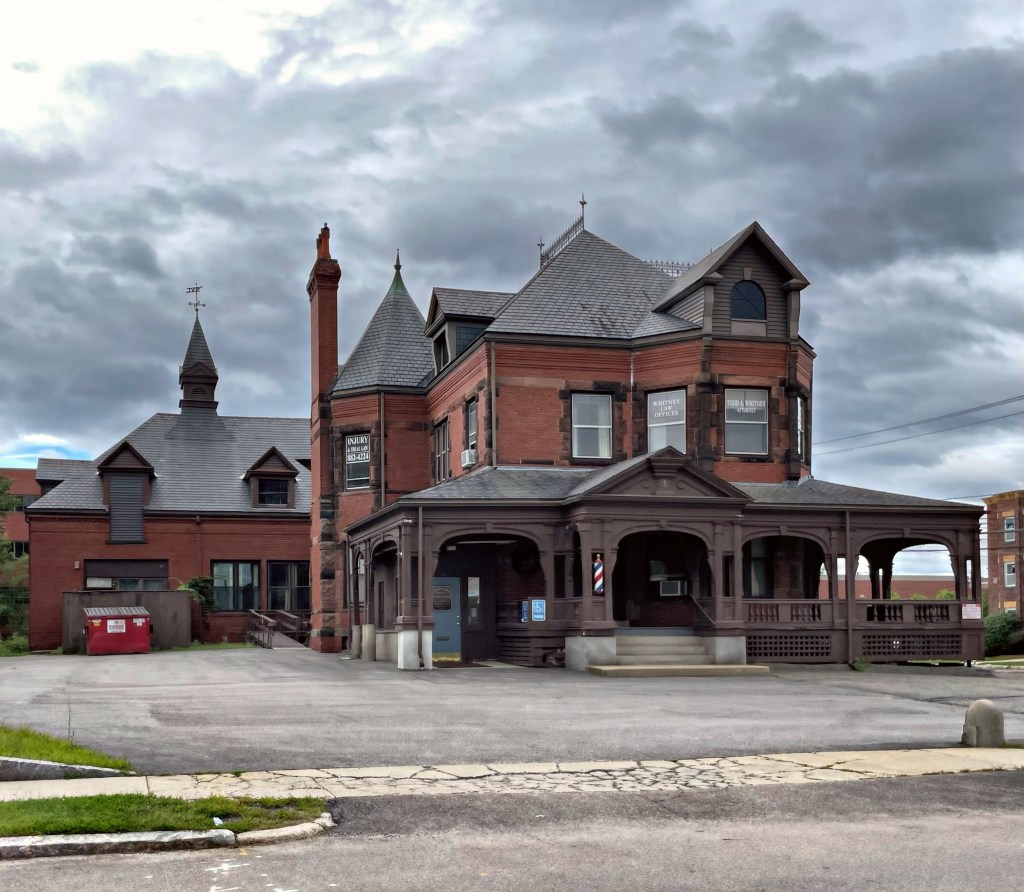
One of the finest homes in Nashua, New Hampshire is this stately brick and brownstone mansion at the corner of Main and Prospect streets. It was built for Charles Horace Burke (1850-1912) and his wife, Asenath Burke (1856-1943) in 1889 as one of the most up-to-date residences in the city. As a young man, Charles was known as “the busiest businessmen” in Nashua. He would become the president of the Nashua Iron and Brass foundry as well as the director of the Second National Bank. In 1878, he was the city’s tax collector and he served as Mayor from 1889 to 1890, soon after he had this estate built. As mayor, Mr. Burke was responsible for the building of the Soldiers and Sailors Monument in Abbot Square and the Court Street Police Station. As Mayor, Burke also improved the sewage system, streets, sidewalks, and highways of Nashua. He hired architect Charles J. Bateman to furnish the plans for the house, which would take over a year-and-a-half to build. Bateman would later be named City Architect for the City of Boston, designing schools, firehouses, and more during his time there in 1893-4 and 1898. The house is a high-style Queen Anne Victorian home of brick with brownstone trim. There is an intact former carriage house at the rear. The house was inherited by Charles and Asenath‘s only child, a daughter, Tena, in 1914. She sold it two years later to Dr. Augustus W. Shea and his wife, Lucy. When Lucy passed away in 1948, her daughter sold the property to the Nashua Medical Center. It has seemingly been used as offices ever since. The large corner lot and adjacency to a large medical center across the street have me worried that this property may be threatened in the future for redevelopment, here’s to hoping Nashua can preserve this significant and architecturally grand estate! Thank you to the Nashua Historical Society for assistance researching this post!
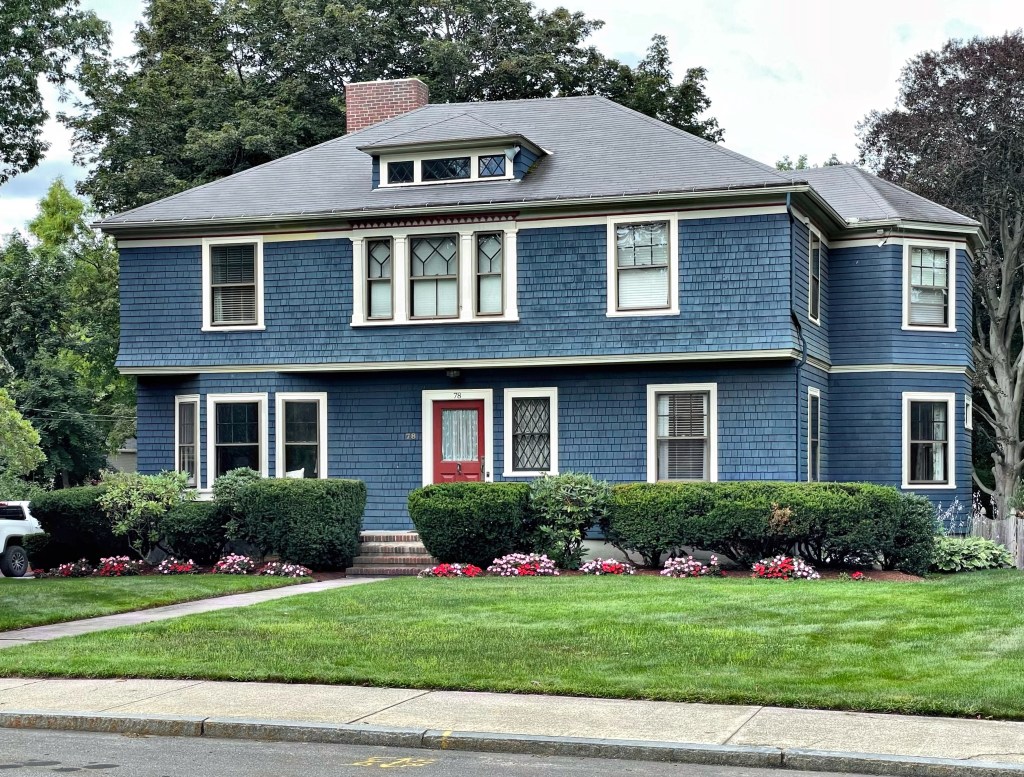
Charles William Hoitt (1847-1925) was born in Newmarket, New Hampshire, the son of William K. A. and Sarah C. (Swain) Hoitt. His father was a descendant of John Hoyt, one of the original settlers of Salisbury, Massachusetts. On the maternal side he is a descendant of Phineas Swain who served at Bunker Hill on the American side. Charles enrolled at Dartmouth College in 1867, and was graduated in the class of 1871. He moved to Nashua to work as Master of the Mt. Pleasant School and later worked as an usher at the Lincoln Grammar School in Boston. He eventually gave up teaching as a profession and returned to Nashua and worked at a local law office. He was admitted to the Hillsboro bar in 1877, and worked as a City Solicitor and later as Justice to the Nashua Police Court. With his standing, he erected this fine house on Concord Avenue, with a deep lot where he raised rare exotic birds. Judge Hoitt served in the New Hampshire House of Representatives in 1901 and in 1907, was appointed by Theodore Roosevelt to be the United States Attorney for the District of New Hampshire. His residence in Nashua blends Queen Anne, Shingle, and Colonial Revival styles elegantly. The property was purchased in the 1920s by the Unitarian Universalist Church of Nashua as a parsonage, a use it held until it was sold in 1977 to a private homeowner. The shingled porch was removed during the time it was a parsonage, but the house remains in excellent condition today!
 Buildings of New England