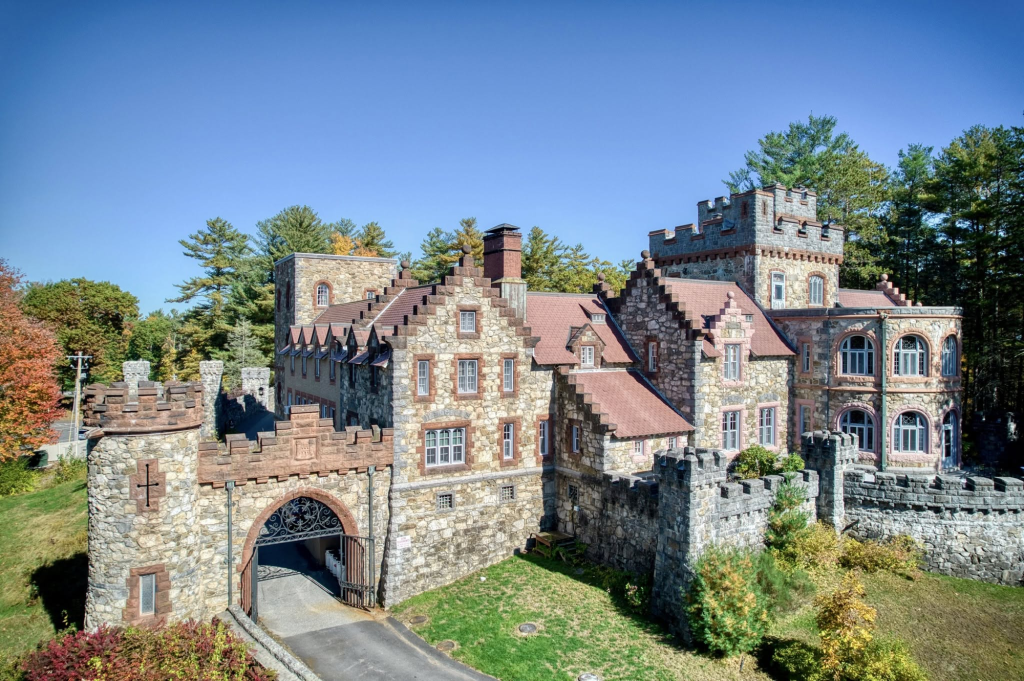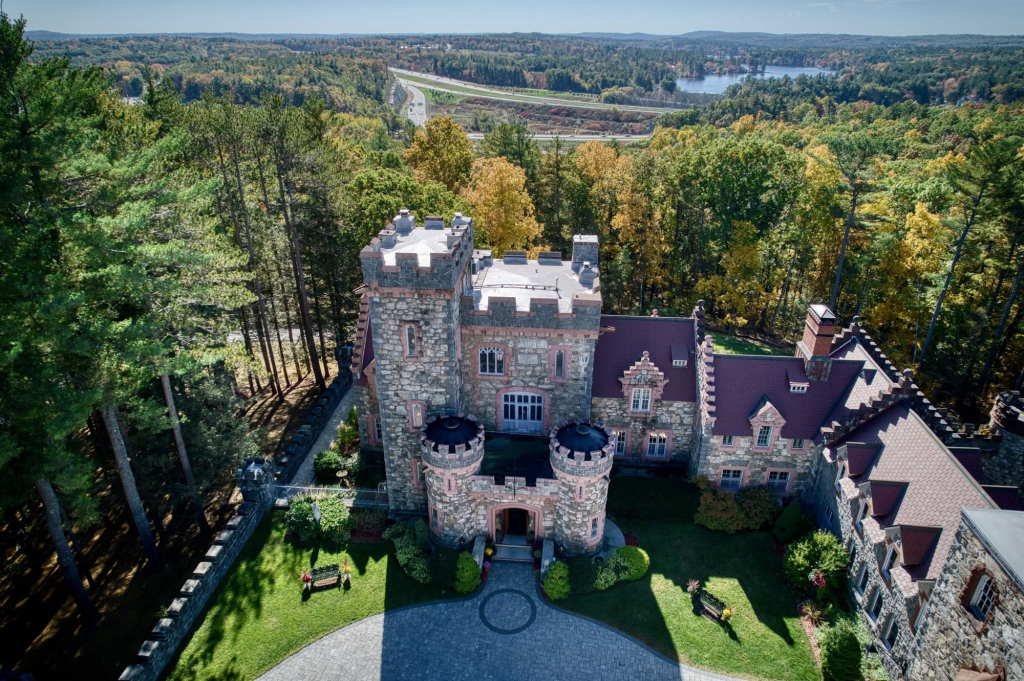
One of the most enchanting and unique buildings in the state of New Hampshire, can be found tucked away in the woods in the town of Windham. This is Searles Castle. Built between 1907-1915, the massive castle was built for Edward Francis Searles (1841-1920), who was born in Methuen, Massachusetts, to middle-class parents who worked in a local cotton mill and operated a small farm. As a young child, Edward’s father died and he would leave school to work in a nearby cotton mill at just 12 years old. As a young man, he eventually moved to Boston, where for the next twelve years, Edward sold furniture and used his savings to pay off the mortgage on the family farm. Edward travelled to Europe and upon returning, he secured a job with Herter Brothers, a New York interior decorating firm. In 1881, Searles decided to go to California where he would take some time to call on some of the very wealthy clients of Herter Brothers. One of those clients was Ms. Mary Sherwood Hopkins of San Francisco, a wealthy widow of Mark Hopkins, a railroad tycoon who died in 1878 and left his wife with a massive fortune. Mary had no children of her own and would eventually marry her designer, Edward Searles, who was 22 years her junior. Mary changed her will to leave all her wealth to her new husband. It was at that time that Edward Searles started building several large mansions all over New England, including the massive castle in Windham. Mary died in 1891. For his castle in New Hampshire, Searles hired English-born architect Henry Vaughan, to furnish designs for a building to replicate a Tudor mansion in Stanton Harcourt, England. It is built of cut granite, fieldstone, and dark red sandstone, most of which came from Searles’ own quarries in nearby Pelham, New Hampshire. Edward spent most of his time at his estate in Methuen, and after his death in 1920, the property was inherited by his secretary and later deeded to The Sisters of Mercy in 1952. Due to the incredible costs maintaining this architecturally significant castle and expansive grounds, the Sisters of Mercy relocated to another building on the grounds and have rented the Castle for weddings and other events.