Bugbee Memorial Library // 1901

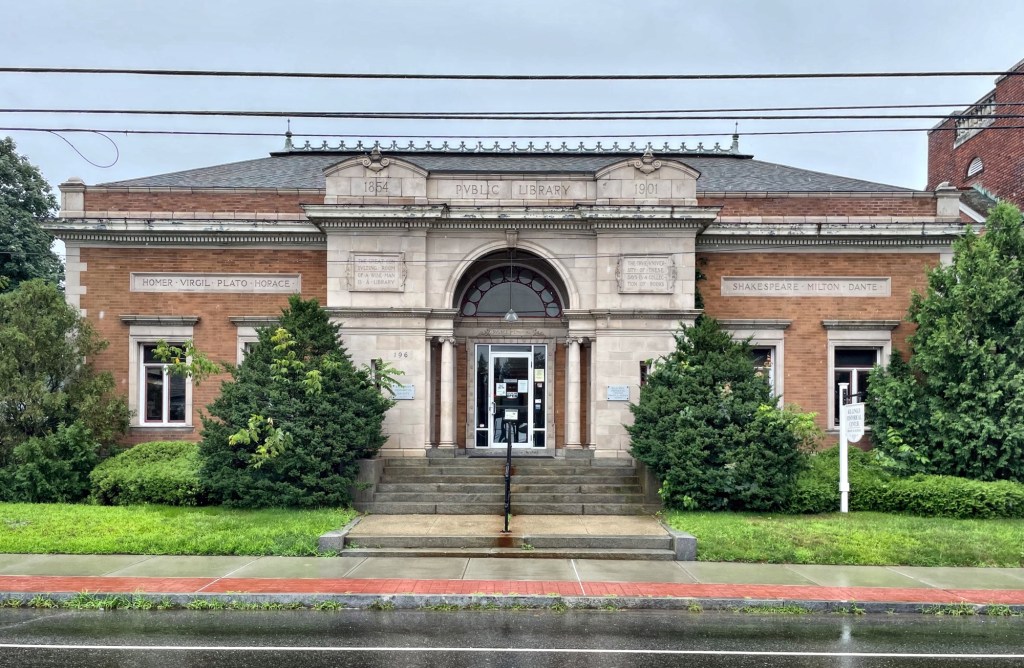
The Bugbee Memorial Library sits on Main Street in Danielson, the main village in the town of Killingly, Connecticut. The library was built in 1901 and financed by a bequest from Edwin Holmes Bugbee, who made his fortune at local mills. When Bugbee died in 1900, his estate left his entire collection of books along with funds for a new library for Danielson. Boston architect Walter Jefferson Paine designed the library building in the Classical Revival style with buff brick and stone construction. The names of Homer, Virgil, Plato and Horace, along with Shakespeare, Milton and Dante, are boldly emblazoned across the facade denoting the building as a house of learning. The library was outgrown, and a new library was built nearby in 1994. The old Bugbee Memorial Library has since been occupied by the Killingly Historical Society.

Point Allerton Artillery Fire Control Tower // 1942

Those who have visited the tip of the coastal Boston suburb of Hull, Massachusetts, will recognize this tall tower, but may not have known its intended purpose. This is the Point Allerton Artillery Fire Control Tower, built atop the highest point in the town, to serve as part of the Coastal Defenses built around the World Wars. Several fire-control stations were built at Point Allerton going back to 1907, but this seven-story concrete tower is the last to remain here. This tower was built around 1942, as the US Government grew increasingly serious about the potential for war, with new batteries and surveillance bases built all along the coast, many of which remain to this day. Fort Revere, a remnant of the coastal defenses, remains in Hull, nearby. This 7-story fire control tower is the center of Point Allerton, and by virtue of its base elevation (124 feet), had its top observation level at 179 feet above sea level, making this the tallest observation point in the Boston harbor defenses. The tower was later deaccessioned by the government and is owned and maintained lovingly by a private homeowner on their land. The tower is luckily preserved for future generations to learn about this lesser-known part of Boston-area history.

Gott House // 1702

Halibut Point State Park in Rockport is one of the most enchanting places in Massachusetts and it has so many layers of history! Before white settlement, Halibut Point was used seasonally by the Pawtucket people who came to harvest its wild fruits, fish and game on the land. In 1702, Samuel Gott (1677-1748) purchased eight of the 6-acre lots on Halibut Point. At the time, there were no roads to Halibut Point, but Samuel built this house on the land, and he began to farm here. The property passed down the family line and was later owned by Joshua (1754-1846), who came of age just as the War for Independence began. Joshua enlisted with the Revolutionary Army as it was being formed in Boston, and in 1776, he joined General Washington’s forces in the unsuccessful defense of New York. He returned home to lead a long and useful life as farmer and fisherman and was known as Captain Gott. As of the 2010s, the property remained in the same family, handed down through the generations from Samuel Gott over 320 years to today. How cool!

Dow-Starr House // c.1858

A big departure from the plain, yet classically proportioned Federal period homes in Warren, this Gothic Revival on Main Street turns heads when people pass by. A quintessential Gothic “cottage,” the facade of the Dow-Starr House in Warren has also been graced by a three-sectioned Gothic Revival porch as illustrated in Alexander Jackson Downing’s plan books from the 1840s. As completed, this house followed almost exactly Andrew Jackson Downing’s Design II as illustrated in Cottage Residences 1842 ; it differed only in its use of speckled fieldstone over coursed ashlar. The house was later acquired by and used as a convent for the St. Jean Baptiste Church in Warren, who also built a school building behind. The house has seen some alterations, but remains an important architectural landmark of the town.

Rufus Barton House // 1782

Warren, Rhode Island is an often overlooked town for tourists, making it my favorite hidden gem in the Ocean State. The town is home to a bunch of Colonial-era homes, stunning institutional buildings, and industrial sites, oh and a lot of local businesses and restaurants. This charming house was built in 1782 for Rufus Barton and his wife, Prudence Cole. Rufus Barton sold the property to Nathan Burr for $775 in 1797 and the family moved to New York. Nathan Miller Burr sold the home to William Eastabrook two years later. Captain Eastabrook/Easterbrook had just returned from an illegal* slave voyage on the “Betsey” to Africa that resulted in the enslavement of 79 Africans who were sold into slavery in Havana, and purchased this home soon after with money he earned on that voyage. The new owners have done an amazing job restoring the house and telling the full story of the ownership, a task not many want to undertake with such complex and troubling past, but it is important!

Weir Farmhouse // c.1780

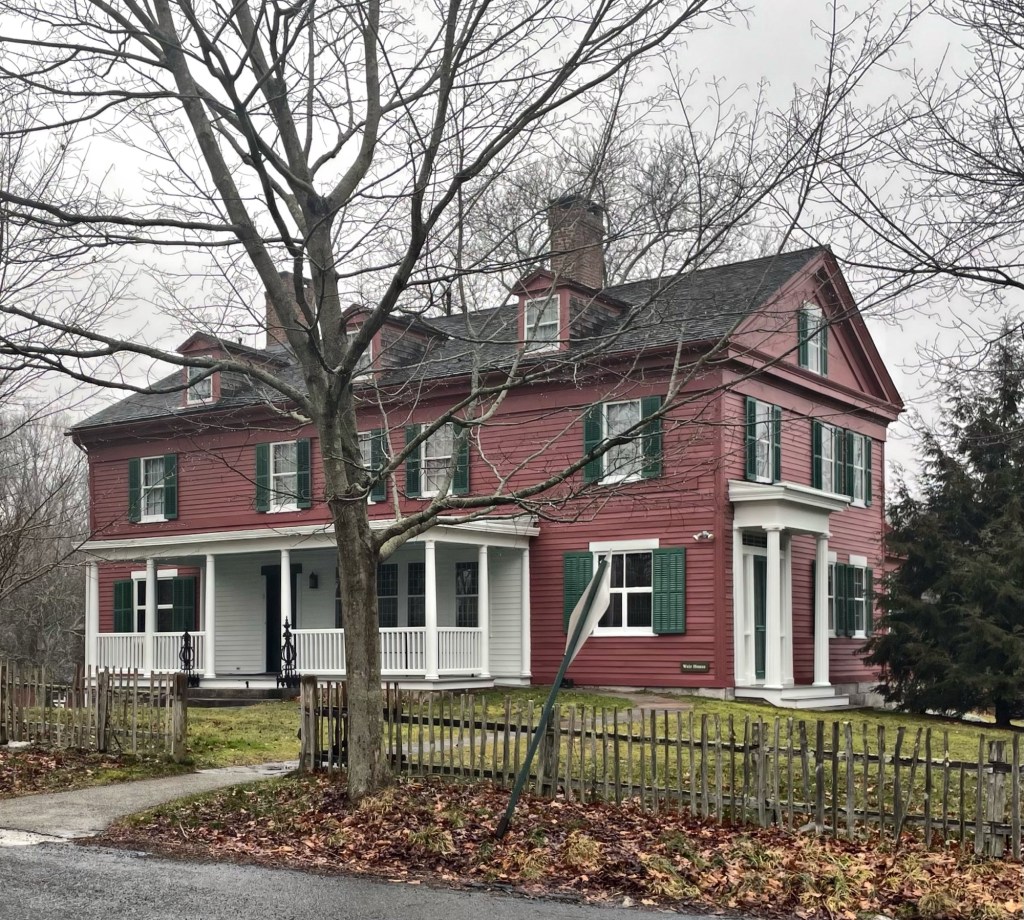
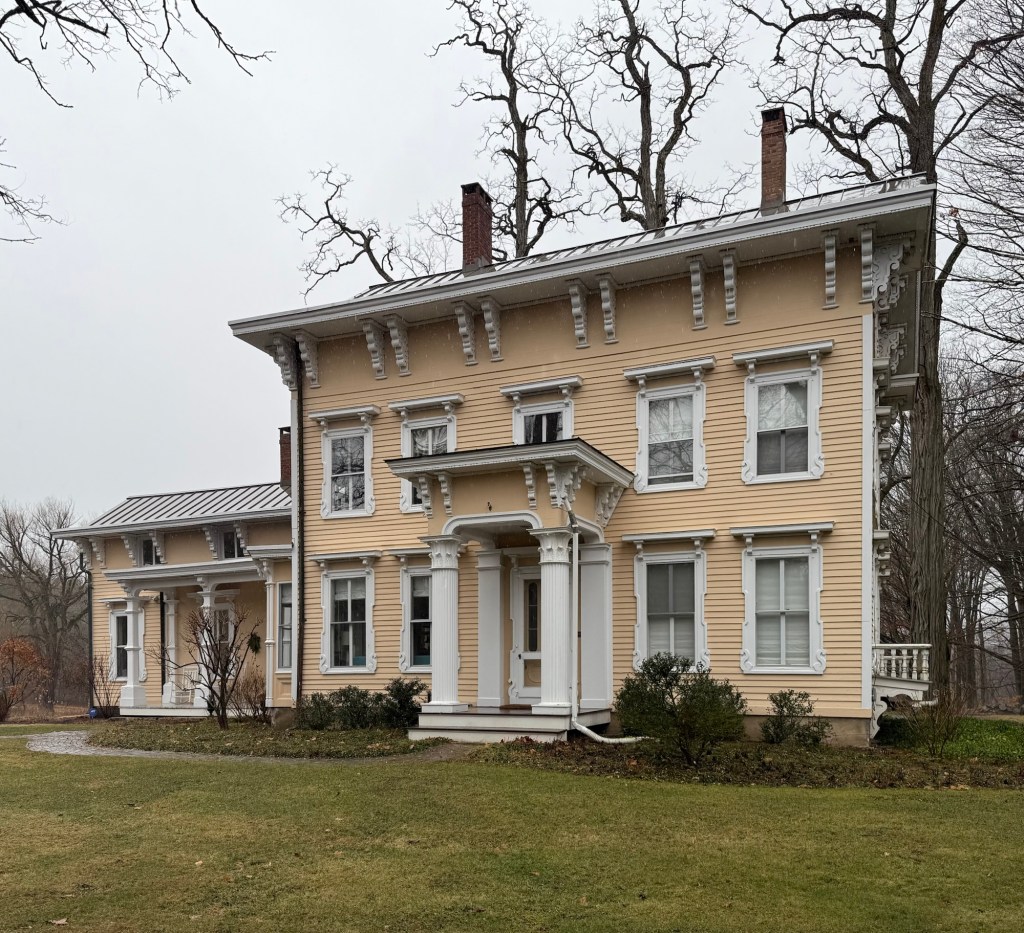
Impressionist painter, Julian Alden Weir was looking to build a home in New York’s Adirondack Mountains when Erwin Davis, an art dealer, offered him a farm in Ridgefield, Connecticut, for a painting he owned plus ten dollars. After a visit in 1882, Weir agreed and acquired the 153-acre farm. The old farmhouse, which dates to the 1780s, and was modified in the Greek Revival style before Weir’s ownership and expanded and renovated again during its time as an artist’s retreat. The house was often filled with family and friends as a popular artistic retreat for Weir’s closest friends, including: Childe Hassam, Albert Pinkham Ryder, John Singer Sargent, and John Twachtman. Weir’s daughter Dorothy Weir, a noted artist in her own right, took over management of the property following her father’s death in 1919. Sculptor Mahonri Young would build a second studio at Weir Farm after the couple married in 1931. The Weir Farm site was designated as a National Historic Site in 1990, but prior to its permanent protection, Weir Farm had been subdivided for housing development in the late 1980s. The Trust for Public Land worked to reacquire the divided land through close to 2 dozen transactions, preserving the site for generations to come.