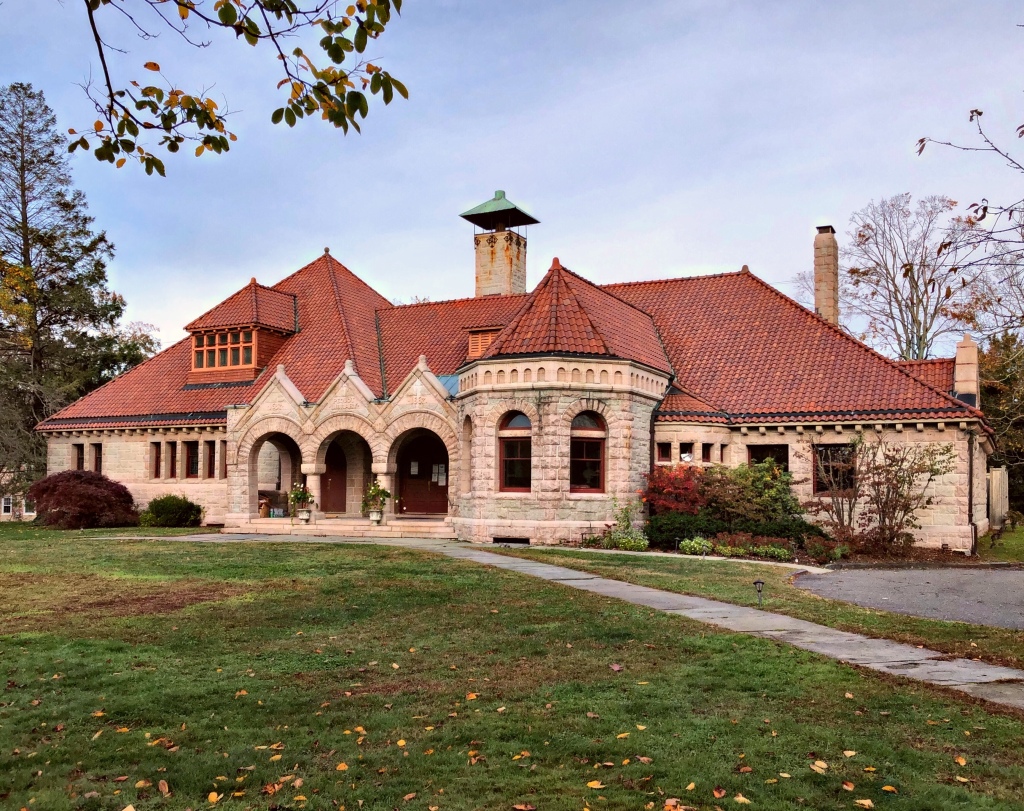
Pequot Library // 1894

The Pequot Library in Southport, Connecticut was founded in 1889 by Virginia Marquand Monroe and her husband Elbert B. Monroe. The library, designed by noted New York City architect Robert H. Robertson, opened to the public in March 1894. The building is Romanesque Revival in style in a granite sandstone construction. There is an expansive roof area topped with red tile and hipped dormers; an arcaded entrance porch with three arched openings serves as the focal point of the front facade. It was Mrs. Monroe’s intention that Pequot be as “free as air to all”, which it remains as to this day.

Ms. Hetty Gookin House // 1874

Warren Demman Gookin (1810-1874) was born in Haverhill, New Hampshire. He was educated at Haverhill Academy and Dartmouth College, graduating from the latter institution in 1830. In 1835 he went to Cuba where he remained for ten years as a sugar planter. Later, he was engaged in a mercantile business in Oregon, finally settling in Brooklyn, NY and working as a shipping merchant in New York City until his death in 1874. After his death, his widow Hetty moved back to her hometown of Southport, CT and built this large home. Later this was the home of Mrs Gookin’s stepdaughter, Mrs Edwin Waterman.

Samuel Allen Nichols House // 1848

Samuel Allen Nichols (1790-1864) was born in Fairfield, Connecticut to a large family. He began his adult career as a farmer, but shifted towards the merchant trade after seeing how the village of Southport began to see massive wealth accumulating. He ran a store in the town and later became involved in local politics serving as the clerk from 1847-1863. A year after he accepted this position, he had this home built on Harbor Road. The 1848 home was Gothic Revival in style with gabled dormers, lancet windows, and decorative bargeboard. Nichols died in 1864 and the home was likely willed to one of his five living children. The home was renovated around 1871 with a Second Empire style Mansard roof and square belvedere to overlook the Southport Harbor. Since then, much of the detailing has been removed, but the home remains as a gorgeous home, changed over time to keep up with the changing architectural tastes of the 19th century.

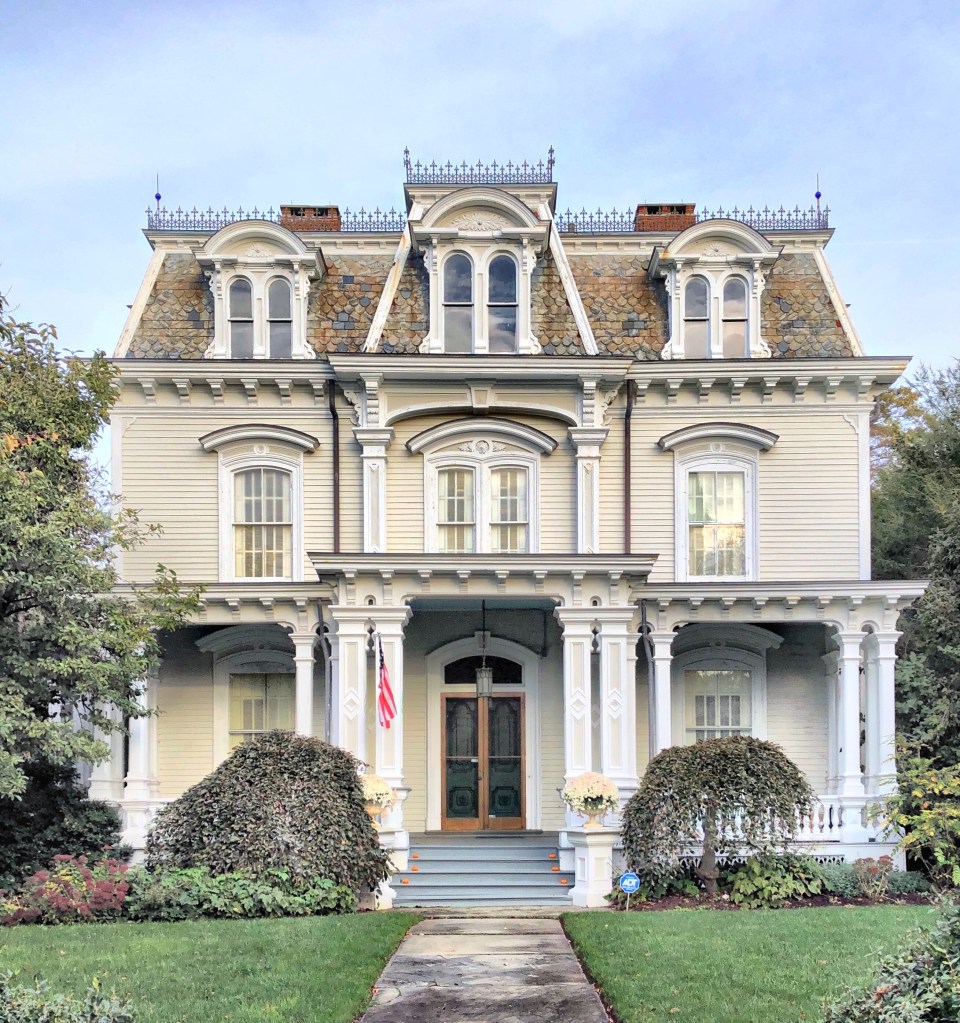
Mary Pomeroy House // 1868

Mrs. Mary Pomeroy, the widow of one of Southport’s industrious and wealthy shipping merchants, Benjamin Pomeroy, built this large residence for herself and her daughters, soon after her husband’s death. Mr. Pomeroy was a merchant who also served as a Senator. In 1866 with ailing health, he took a doctor on a private ship to try various remedies in the West Indies, to no avail, he died at 48 years old. Ms. Pomeroy appears to have taken the money her and her husband had saved and built a large mansion to cement her position in town as the most eligible bachelorette in town. While she never remarried, she sure showed the town what good taste looks like! The facade of the Pomeroy house is symmetrical with a projecting three-story central pavilion, all surmounted by a mansard roof with cresting. Rounded dormers with twin round-headed windows pierce the roof’s multicolored slate surface, making this Second Empire house one of the nicest in a town full of historic homes!

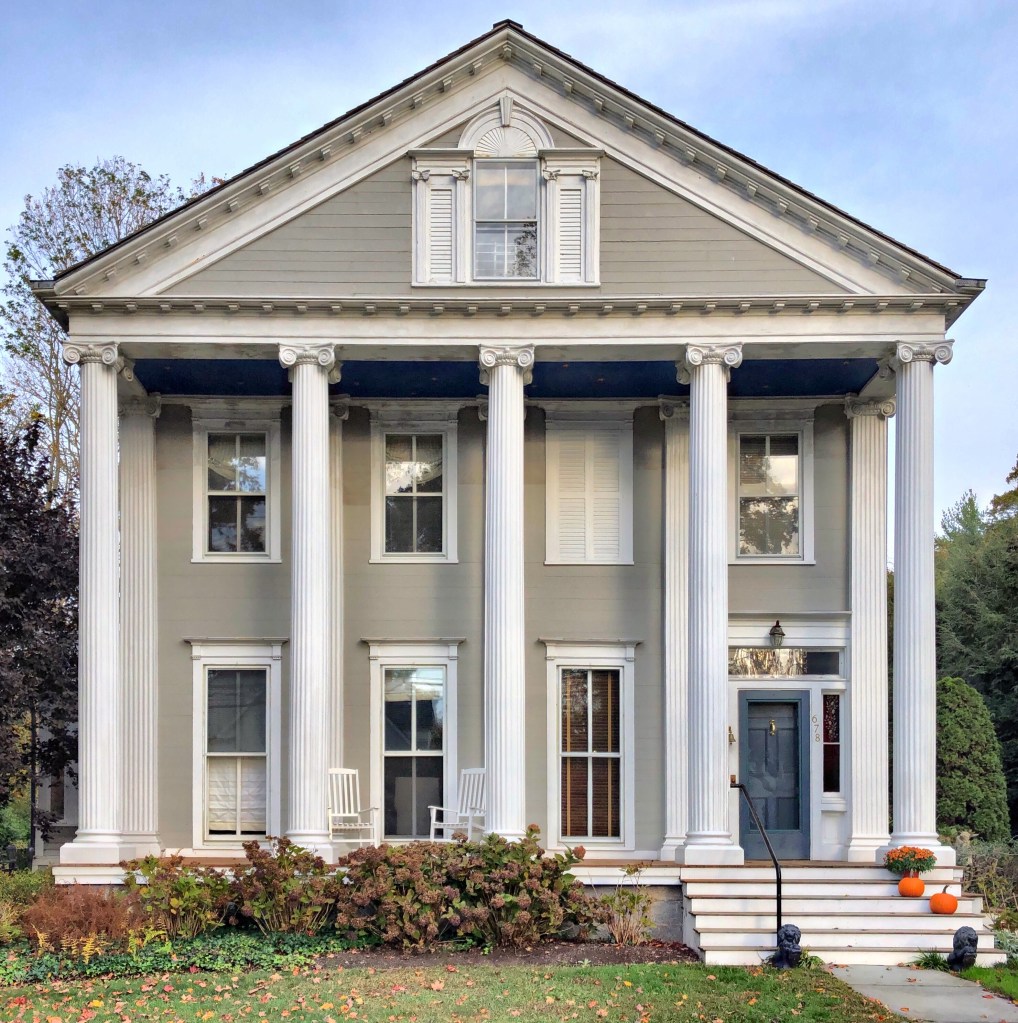
Perry House-Trinity Church Rectory // 1832

I have a thing for temple-front Greek Revival homes, and this is no exception. This marvelous home was built in 1832 for Francis Dimon Perry (1809-1884), who inherited some of his father’s wealth and became President of Southport National Bank in town. He was a devoted member of Trinity Church throughout his life. Upon Mrs. Perry‘s death in 1893, couple left their residence to the Trinity Church to be used as the parish rectory.

Trinity Church, Southport // 1862

The Trinity Episcopal Church in the Southport section of Fairfield, Connecticut was established in 1725. Twenty families met for worship at its first meeting house in the center of town on Thanksgiving Day, 1725. Since then, the church has constructed five different places of worship in locations around town. Architect Albert C. Nash designed the church which was constructed during the years 1854-56. Sadly, the building’s near total destruction by wind during a tornado on January 1, 1862, required the church to be completely rebuilt as originally planned, with a few structural alterations. Trinity Church is an excellent work of early Gothic Revival church architecture in wood, one of the best I have seen in my trips around the region.

Augustus Jennings House // c.1830

Walking around Southport Village in the town of Fairfield, Connecticut, transports you to an early-mid 19th century town with large Federal and Greek Revival homes overlooking Southport Harbor and the Long Island Sound. This home on Westway Road was built around 1830 for Augustus Jennings (1814-1886), the son of Captain Abraham Gould Jennings. Augustus became a carriage maker in Southport before founding Jennings Brothers, a paper manufacturing company; which in 1867, began to produce Japanese paper products. The Jennings House was originally located near the Pequot Library, but was relocated in 1899, which was likely when the central shingled gable at the roof with Palladian window was added.

Sturges Cottage // 1840

In the 1840s in New England, one architectural style commanded a large majority of all new house styles, Greek Revival. A divergence from the Classical designs of the Georgian, Federal and Greek Revival styles which dominated at the time, the Romantic movement began its first true breaths across New England. The Gothic Revival and Italianate styles are often thought to be the first couple styles which brought the frills and detailing personified by Victorian-era architecture.

This home in Fairfield, Connecticut was built in 1840 to a design by Joseph Collins Wells, it is one of the oldest-known and best-documented examples of architect-designed Gothic Revival architecture. The home was built for for Jonathan Sturges (1802–1874), a businessman and patron of the arts. It is one of the earliest known examples of architect-designed Gothic Revival architecture, a style more often taken by local builders from pattern books published by the style’s proponents. The home was likely a pre-cursor to architect Joseph Wells later commission, the famous Roseland Cottage.

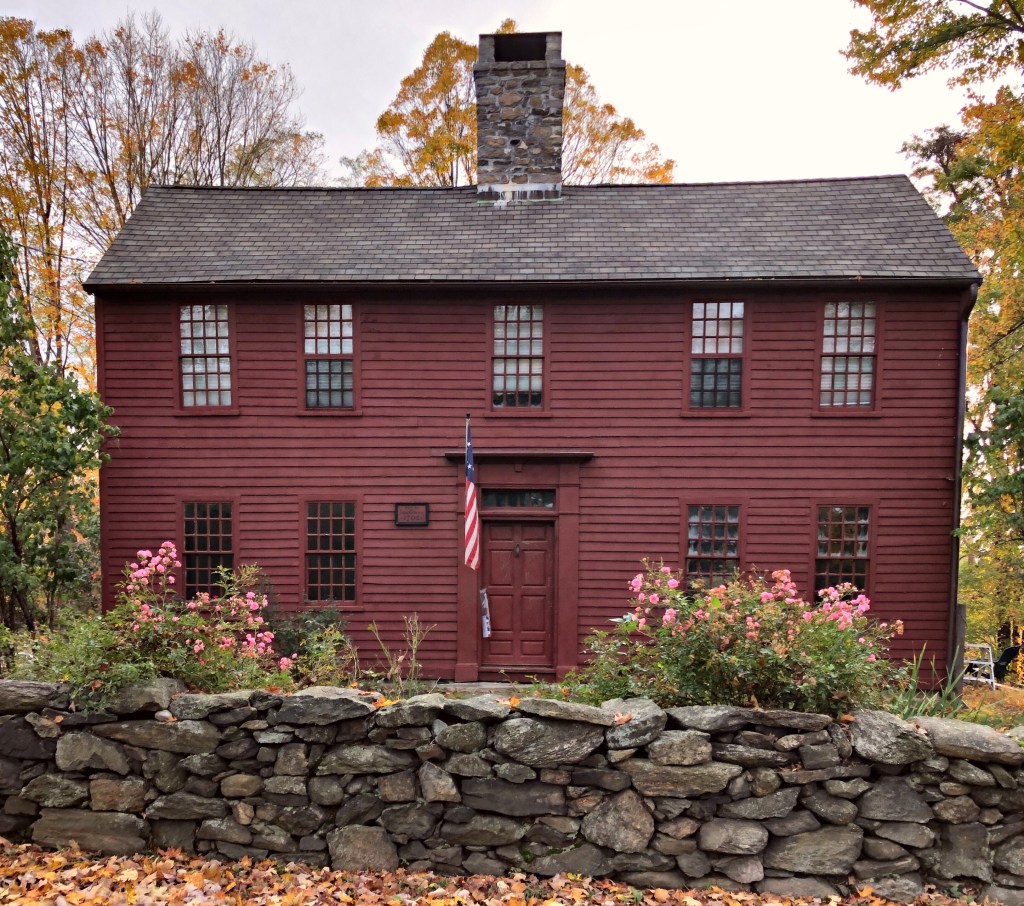
Osborn House // 1772

This homestead in Fairfield, Connecticut is situated on the edge of what was formerly called Pequot Swamp, and was originally built by Stephen Osborn in 1772. It is said to be the third Colonial dwelling erected in this part of the town and was left undisturbed by the British when they burned Fairfield in 1779 and raided various sections of the country along the shore. The home was originally located a few blocks away, but was moved in the 1950s when the highway (I-95) was routed through this part of Fairfield. The saltbox Georgian home was documented prior to the move by the Historic American Buildings Survey (HABS).

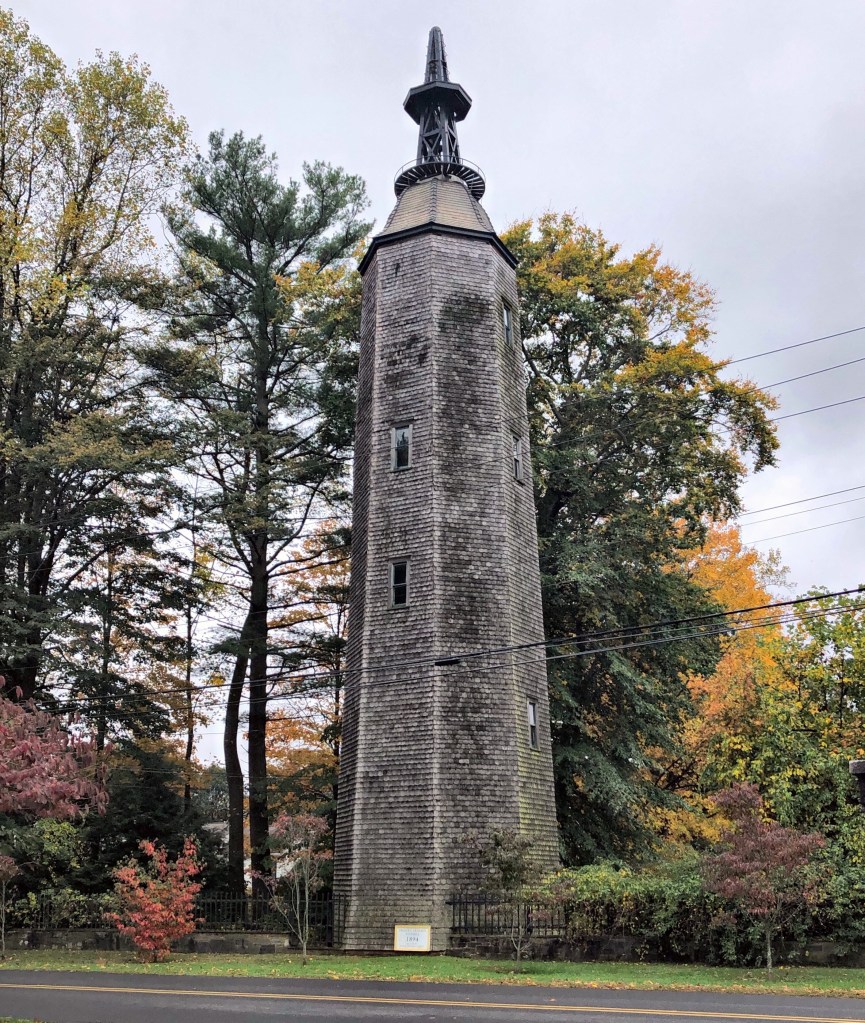
Bronson Windmill // 1894

Located in a more rural part of Fairfield, Connecticut, I drove past this massive tower just off the road. Intrigued, I doubled back to find out what it was, and learned it was once a windmill! The over eighty-foot tall shingled tower was constructed in 1894 as part of a large country estate. Frederic Bronson (1851-1900) was a prominent, gilded age lawyer in New York City. He accumulated massive wealth representing many elite families, eventually becoming a member of the “Four Hundred”, a list of the 400 most powerful (rich and connected) people of New York society. In the early 1890s, Bronson constructed a summer estate in Fairfield, CT, known as Verna Farm. A part of this estate the windmill which pumped water from a well 75 feet below ground into a 7,500-gallon wooden storage tank inside the tower. The estate eventually became the Fairfield Country Day School, and the windmill (no longer in use) was gifted to the town. Eventually, it was leased by Sprint, and the telecommunications firm restored the windmill and installed a cellphone tower in its interior.