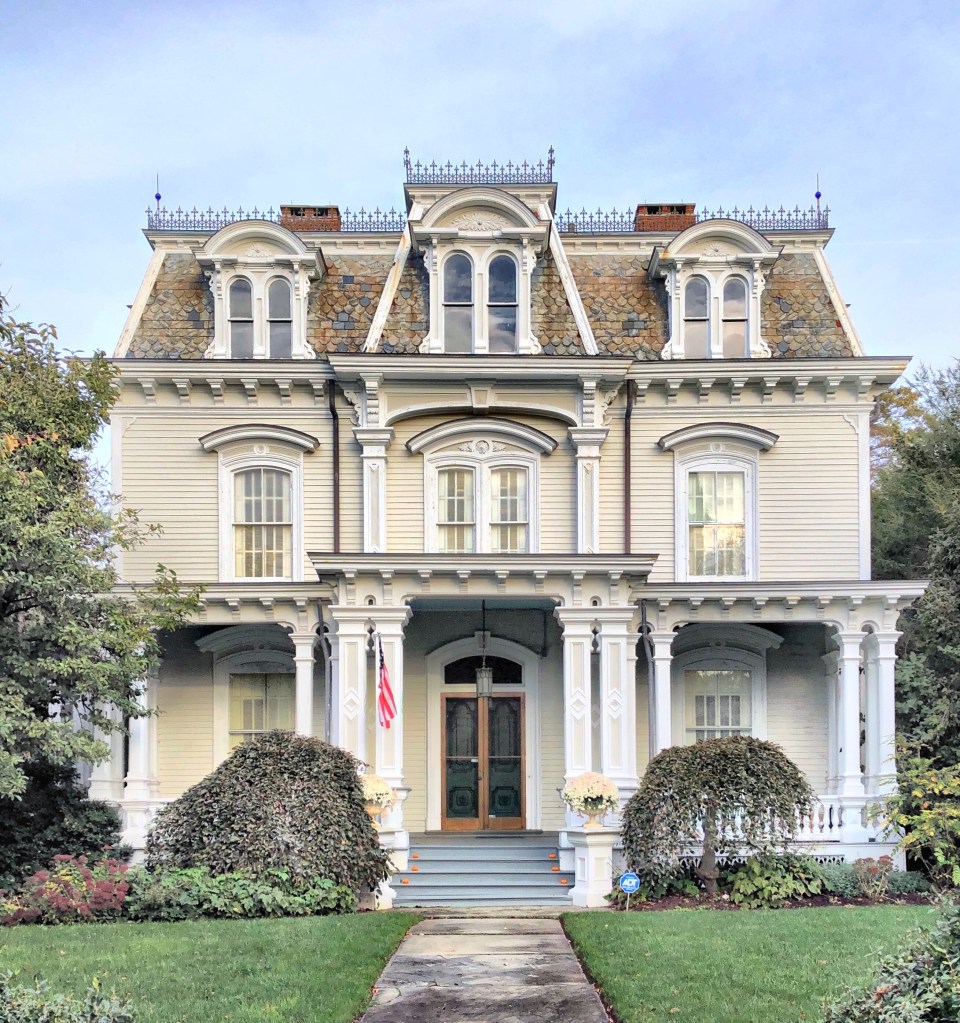
Ms. Hetty Gookin House // 1874

Warren Demman Gookin (1810-1874) was born in Haverhill, New Hampshire. He was educated at Haverhill Academy and Dartmouth College, graduating from the latter institution in 1830. In 1835 he went to Cuba where he remained for ten years as a sugar planter. Later, he was engaged in a mercantile business in Oregon, finally settling in Brooklyn, NY and working as a shipping merchant in New York City until his death in 1874. After his death, his widow Hetty moved back to her hometown of Southport, CT and built this large home. Later this was the home of Mrs Gookin’s stepdaughter, Mrs Edwin Waterman.

Mary Pomeroy House // 1868

Mrs. Mary Pomeroy, the widow of one of Southport’s industrious and wealthy shipping merchants, Benjamin Pomeroy, built this large residence for herself and her daughters, soon after her husband’s death. Mr. Pomeroy was a merchant who also served as a Senator. In 1866 with ailing health, he took a doctor on a private ship to try various remedies in the West Indies, to no avail, he died at 48 years old. Ms. Pomeroy appears to have taken the money her and her husband had saved and built a large mansion to cement her position in town as the most eligible bachelorette in town. While she never remarried, she sure showed the town what good taste looks like! The facade of the Pomeroy house is symmetrical with a projecting three-story central pavilion, all surmounted by a mansard roof with cresting. Rounded dormers with twin round-headed windows pierce the roof’s multicolored slate surface, making this Second Empire house one of the nicest in a town full of historic homes!
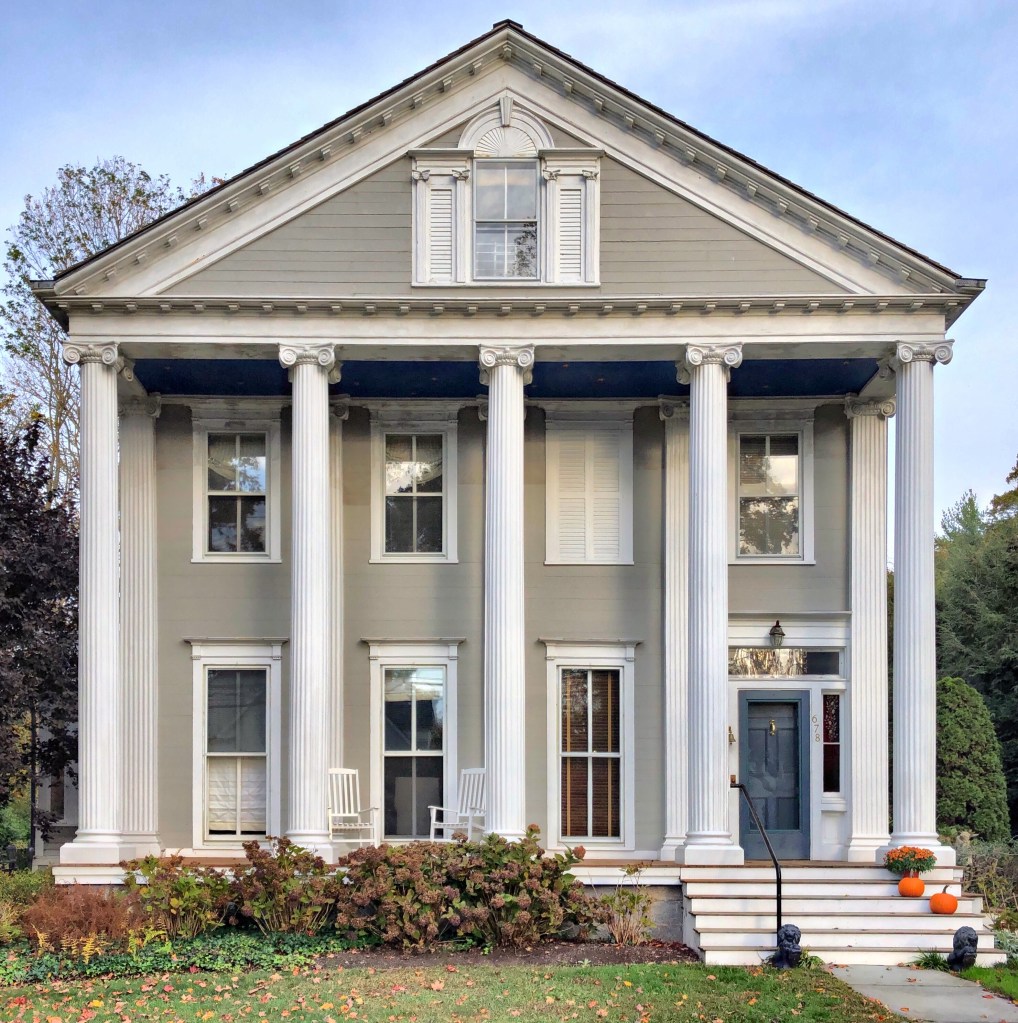
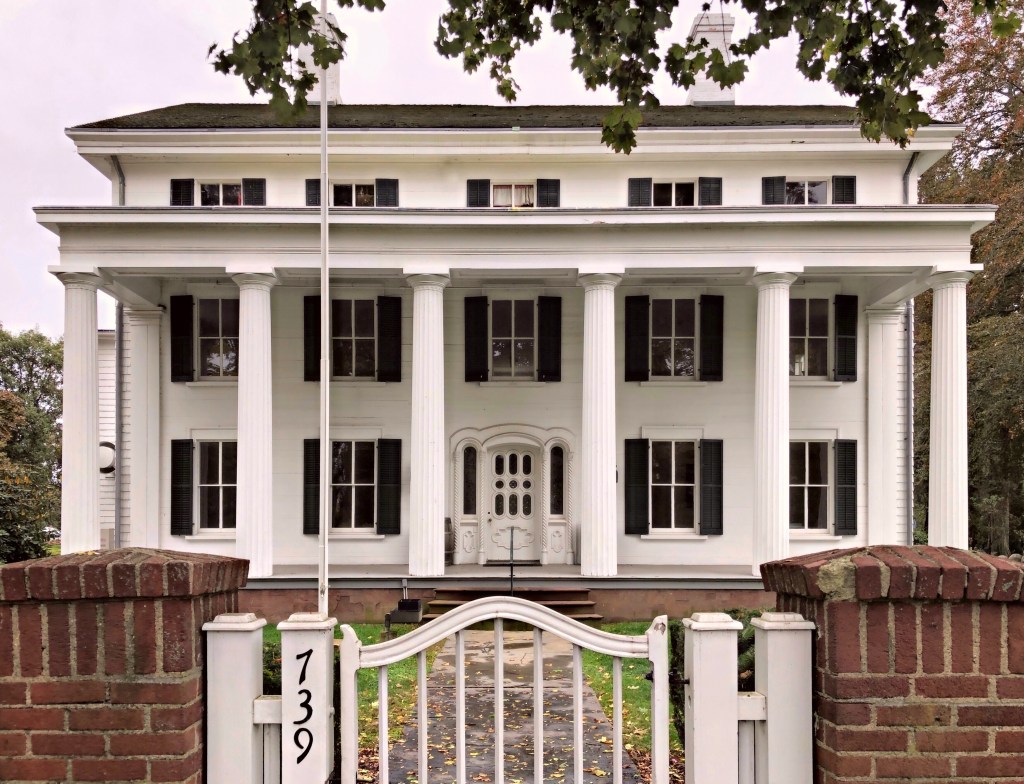
Perry House-Trinity Church Rectory // 1832

I have a thing for temple-front Greek Revival homes, and this is no exception. This marvelous home was built in 1832 for Francis Dimon Perry (1809-1884), who inherited some of his father’s wealth and became President of Southport National Bank in town. He was a devoted member of Trinity Church throughout his life. Upon Mrs. Perry‘s death in 1893, couple left their residence to the Trinity Church to be used as the parish rectory.

Burr Mansion // 1794

Originally built in 1775, the first iteration of the Burr Homestead, home of Thaddeus and Eunice Burr, which actually saw the marriage of John Hancock, President of the Continental Congress, to Dorothy Quincy. Thaddeus was the cousin of the famous Aaron Burr, Jr., who was the 3rd vice-president of the United States alongside Thomas Jefferson as President. Aaron Burr Jr. is best-known today through his portrayal in the popular play “Hamilton,” where he shoots Alexander Hamilton in a duel. The house was rebuilt in 1794 in its former location in Fairfield, Connecticut after a fire by the British in Fairfield destroyed the first. The home was willed to Thaddeus’ son General Gershom Burr, who eventually sold the mansion to Obadiah Jones. Mr. Jones updated the home by, ““taking out the dormer windows and lifting the roof, taking away the porch and building the broad veranda with its lofty massive fluted columns”. The home was eventually gifted to the Town of Fairfield and is presently maintained by the Fairfield Museum and History Center.

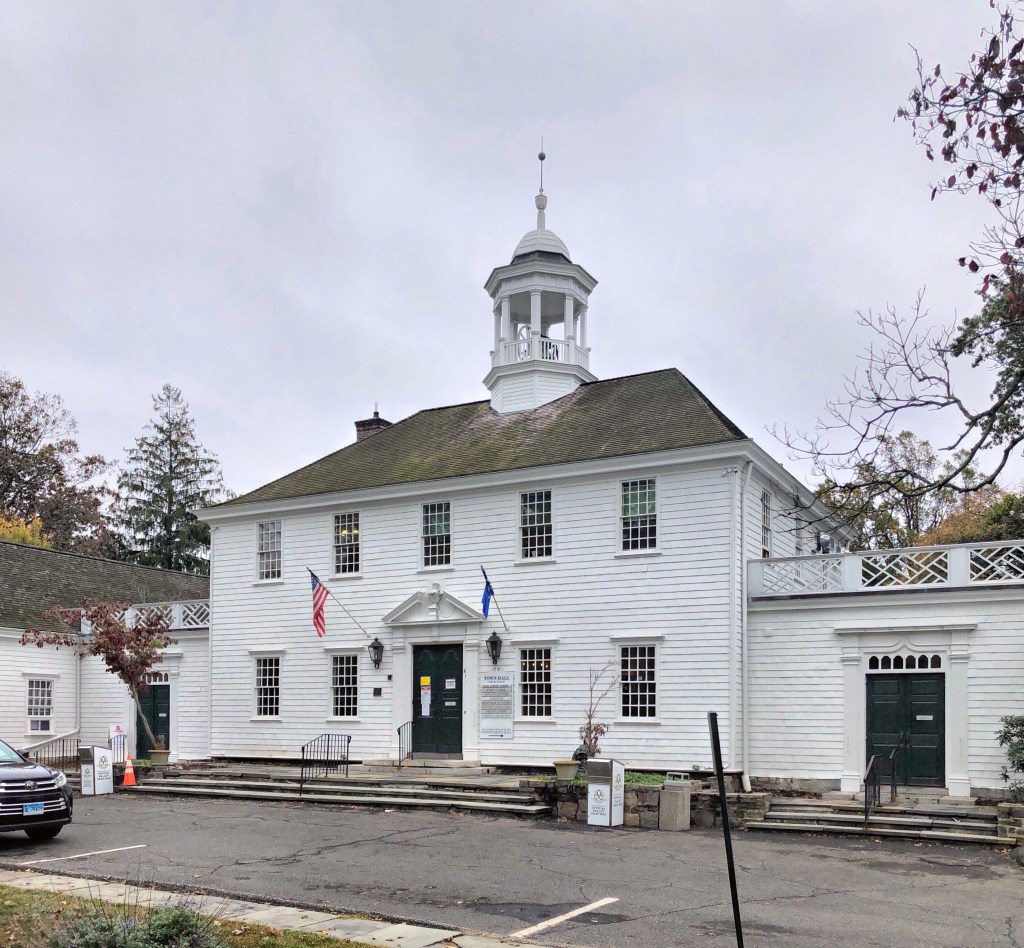
Old Fairfield County Courthouse // 1794

Located at the Fairfield Town Green, the Georgian-style Fairfield County Courthouse stands as a reminder on the town of Fairfield’s Colonial-era history. The first courthouse at the site was built in 1720. After a fire destroyed the first (which housed the jail as well), a second structure was built in 1767. That second courthouse was the center of a thriving, wealthy village with a port just blocks away. In July 1779, the British landed in Fairfield and destroyed much of the town, harming its prosperity for decades to come (though it has clearly recovered since). In 1794, a new courthouse was built, also housing town offices. In 1870, it became solely a town hall (the County Court moved to Bridgeport years before) modified and altered in the Second Empire style to ‘modernize’ the building. As Colonial Revival resurged in popularity in the late 19th and early 20th- centuries, the town sought to bring back the Georgian style Town Hall building, in 1936 hiring architect Cameron Clark, to restore the building.

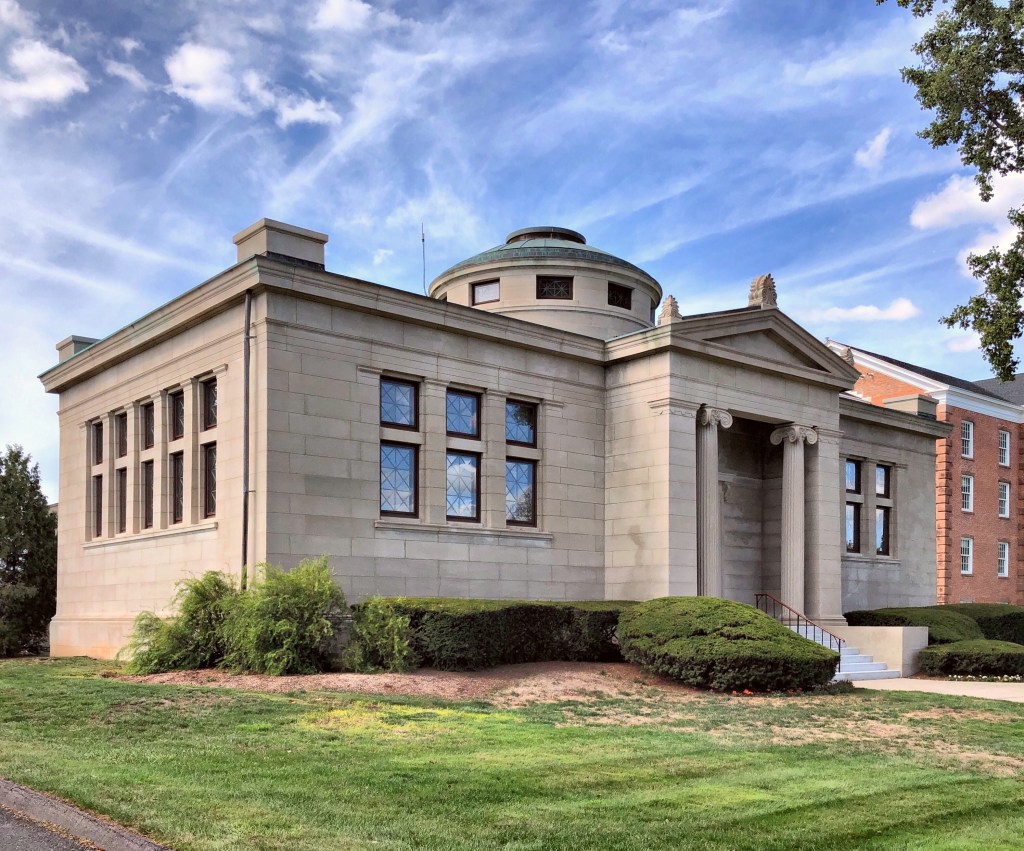
Old Kent Memorial Library // 1899

In 1897, Sidney A. Kent, a Suffield native, graduate of Suffield Academy and successful Chicago businessman sought to build a $35,000 library as a memorial to his parents in his home town. Land was purchased from the academy, demolishing a significant academic building, and the new Kent Memorial Library erected. Kent hired architectural giant Daniel Burnham (architect of the famous Flatiron Building in Manhattan) who also designed Kent’s home in Chicago. It sat on the site of land purchased by the first Kent ancestor in Suffield. Sidney Kent furnished nearly 7000 books and periodicals and left an endowment of $25,000. The building was dedicated on November l, 1899. It was eventually outgrown and a new building was constructed across the street.