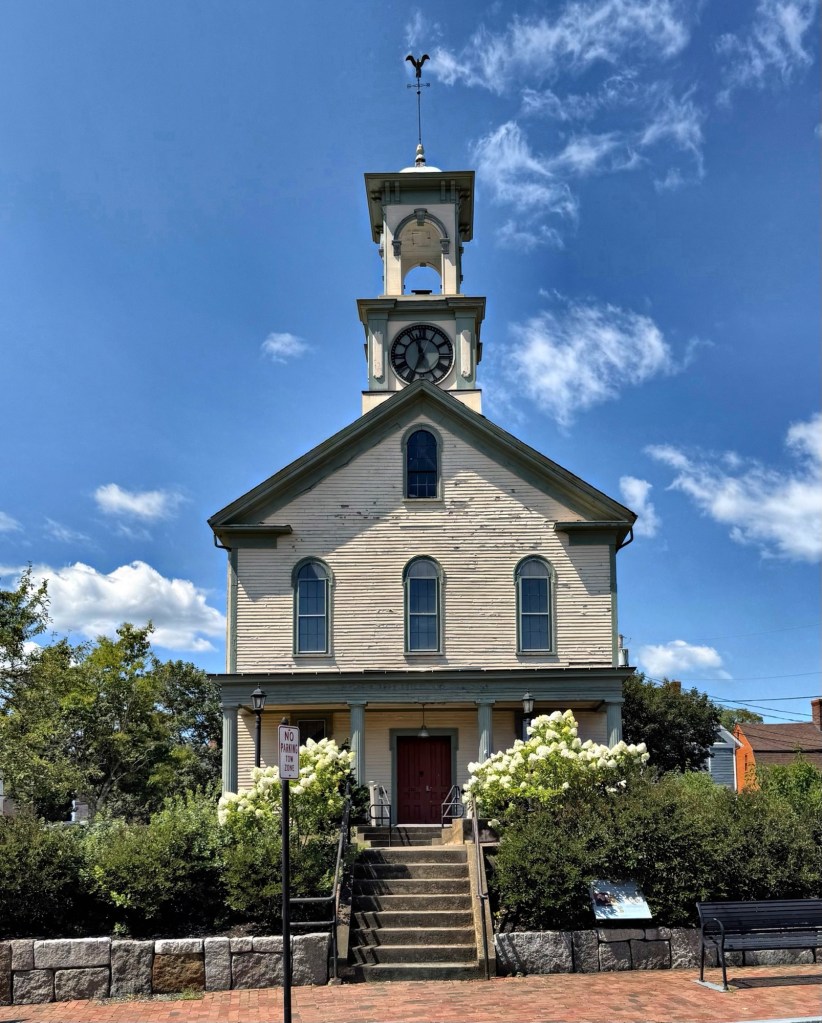
South Meeting House, Portsmouth // 1866

The South Meeting House was built in Portsmouth in 1866 and it is significant as a high-style Italianate building in the coastal town, and as the meeting place for the first African American church congregation in New Hampshire. The present building is the second building on this site. The initial structure was the Old South Meeting House, which was built for the South Church in 1731. The City demolished it in 1863 for the construction of the present building in 1866 as a Ward Hall for the Southern area of the community. The building’s upper level serves as a large public meeting space, and has seen use for political meetings, ward elections, and religious services The structure was the home of the People’s Baptist Church, the first African American church in New Hampshire, which organized in 1873, when the Freewill Baptists congregated on the second floor of this building. The church relocated in 1915 to 45 Pearl Street when the congregation raised money and bought their own building. In the late 19th century and early 20th century, the building continued to serve as a church, school, and community center until at least 1915. After World War II, it was boarded up due to economic circumstances and endured a period of neglect. In 1966, Strawbery Banke leased the building from the city for about fifteen years, during which it returned as a community resource and was renamed the South Meeting House. The city invested around $67,000 for repair work that also exposed further damage issues. In 1982, the city approved a proposal for the building to become a Children’s Museum. The community contributed to the required materials and labor that allowed the Museum to welcome the public from 1983-2008. Today, the city is still permitting restoration projects to preserve the historic building.
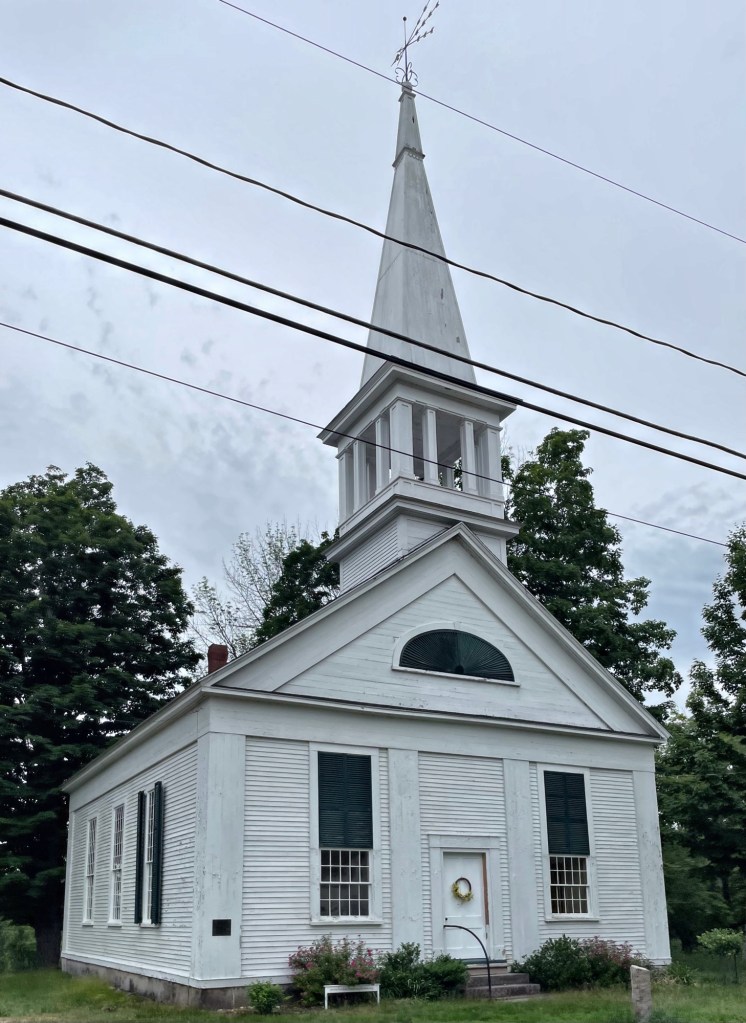
Old Effingham Meetinghouse // c.1800

The location of the Effingham meetinghouse in New Hampshire was a controversial question in the 1790’s, with the villages of Lord’s Hill and Drake’s Corner both vying for the town’s most important public building. After several votes and repeals of votes, the Town’s voters in 1798, chose a committee of hopefully disinterested men from other towns and instructed them to settle on the location. The committee recommended Lord’s Hill, and in June, the Town voted to accept that location. The contract for the meetinghouse was awarded to Isaac Lord, a local landowner and operator of a tavern and store, who promptly erected the building the same year. In its original form, the building had the traditional meetinghouse plan, with its main entry in the long southeast side and a belfry at the northeast end. In 1845, the meetinghouse, by then the property of the Congregational Church, was thoroughly remodeled in the Greek Revival style, what we see preserved today.

Weare Town House // 1837

Weare, New Hampshire has a pretty cool history. Located at the northern edge of Hillsborough County, the land presently known as Weare was granted to veterans of the Canadian wars in 1735 by Governor Jonathan Belcher, who named it “Beverly-Canada” after many of the veteran’s hometown, Beverly, Massachusetts. After various disputes over the settlement and naming of the town, it became known as “Weare’s Town” before being incorporated by Governor Benning Wentworth in 1764 as Weare, after Meshech Weare, who served as the town’s first clerk and later went on to become New Hampshire’s first Governor. The town grew slowly during the 18th and 19th centuries around five major villages, with farmland and forests connecting them. Near the geographic center of town, this Town House was built in 1837 to be a government and religious center of the town. Originally, town meetings were held on the first floor and the Universalist Church met on the second floor and the local high school was installed on the second floor in 1919. The building remains the town offices with event space for rent inside today. The building is a great example of a vernacular Greek/Gothic Revival town house of the period with a two-stage tower with pinnacles at the corners of each stage and a louvered belfry at the bell.