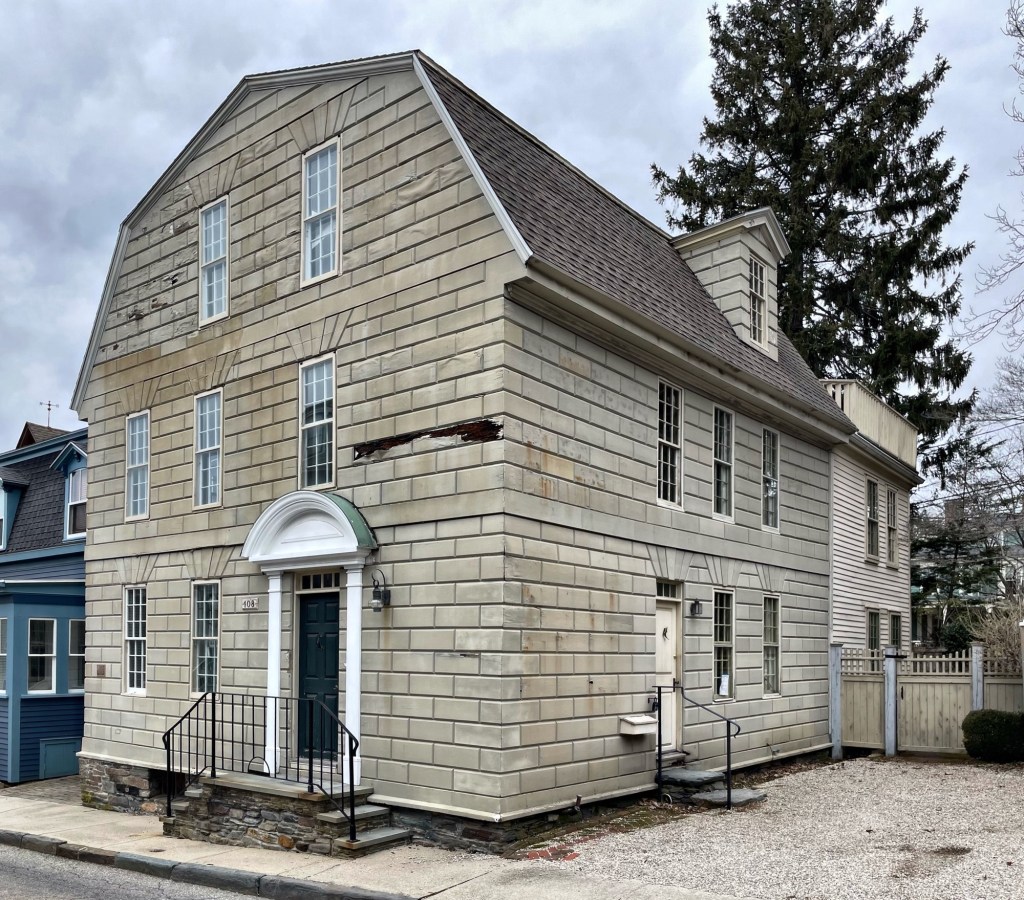
Brattle-Thurston House // c.1749

This early Colonial house with unique, rusticated wood coursing carved, treated, and painted to resemble ashlar stone, can be found on Prospect Hill Street in Newport, Rhode Island. This is the Brattle-Thurston House, a circa 1749 Georgian residence of an appropriate gray color, yet when I stopped by in early 2024, had peeling paint. The house was originally part of the Latham Thurston estate, and was later rented or purchased by Robert Brattle (Brattell), who lived here with his wife, children, and an enslaved person according to the 1790 census. The home would later be owned by William Thurston, a hatter and dyer, who likely inherited the residence from his ancestor. Beyond the unique rusticated wood siding, the design features splayed lintels, the main entrance on the side elevation and a later entrance facing the street with segmental pediment above.

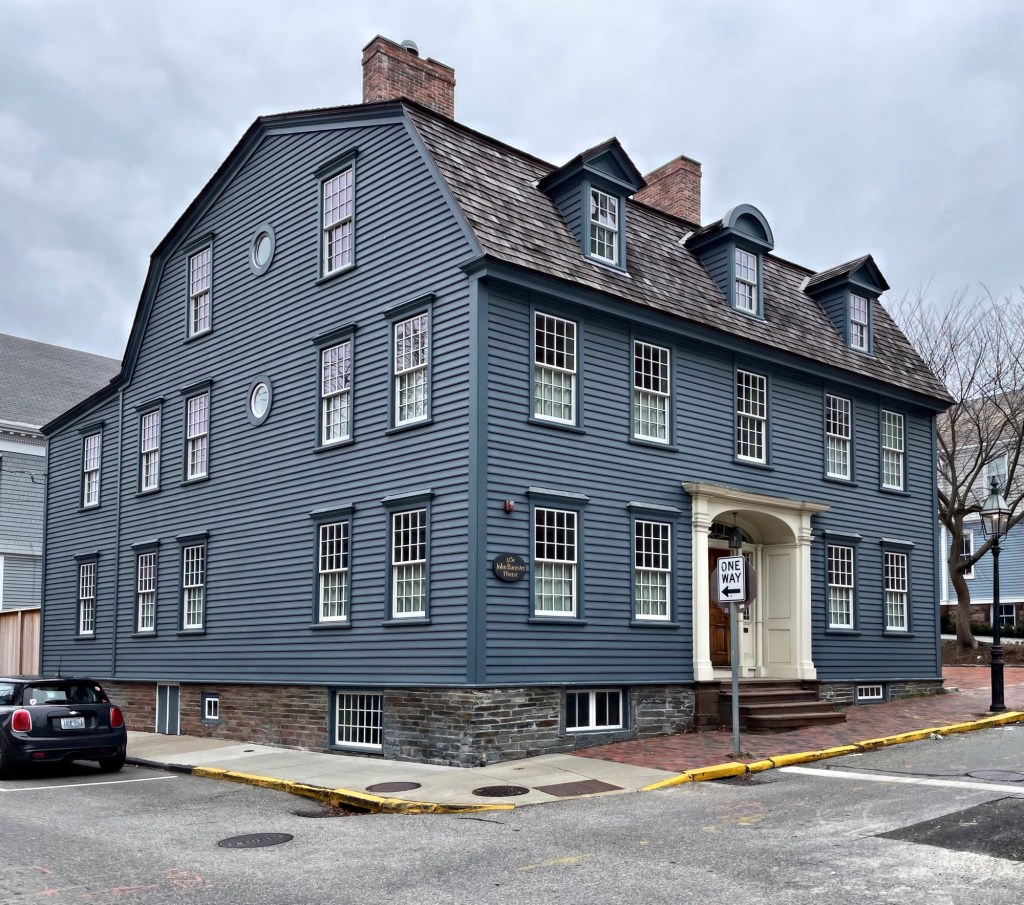
John Banister House // 1751

This deep, gambrel-roofed house is among my favorites in Newport. The house was built in 1751 for John Banister (1707-1767), a Boston-born merchant who moved to Newport in 1736, marrying Hermoine Pelham (1718-1765), a granddaughter of Gov. Benedict Arnold, that next year. Banister quickly established himself as a leading Newport merchant, trading with England, the West Indies, engaging in privateering and the slave trade. In 1752, he held one of the last public slave auctions in Rhode Island at his store, describing them in advertisements as “the finest cargo of slaves ever brought into New England”. The couple also built a country estate in Middletown, Rhode Island. John and Hermione had two sons, John and Thomas, who grew up in this home. John inherited the house after his father’s death in 1767, but the two brothers would soon find themselves on opposite sides of the battle for independence. Thomas was a loyalist, and even enlisted in the British army during the occupation of Newport, while John supported American independence. In retaliation for his patriot views, the occupying British forces seized this house, along with John’s farm in nearby Middletown. The house became the headquarters of General Richard Prescott during the occupation, although John later reclaimed his property following the British evacuation of Newport in 1779. The house has a later Federal entry, but otherwise is one of the best-preserved Colonial homes in Newport. It is a single-family home.

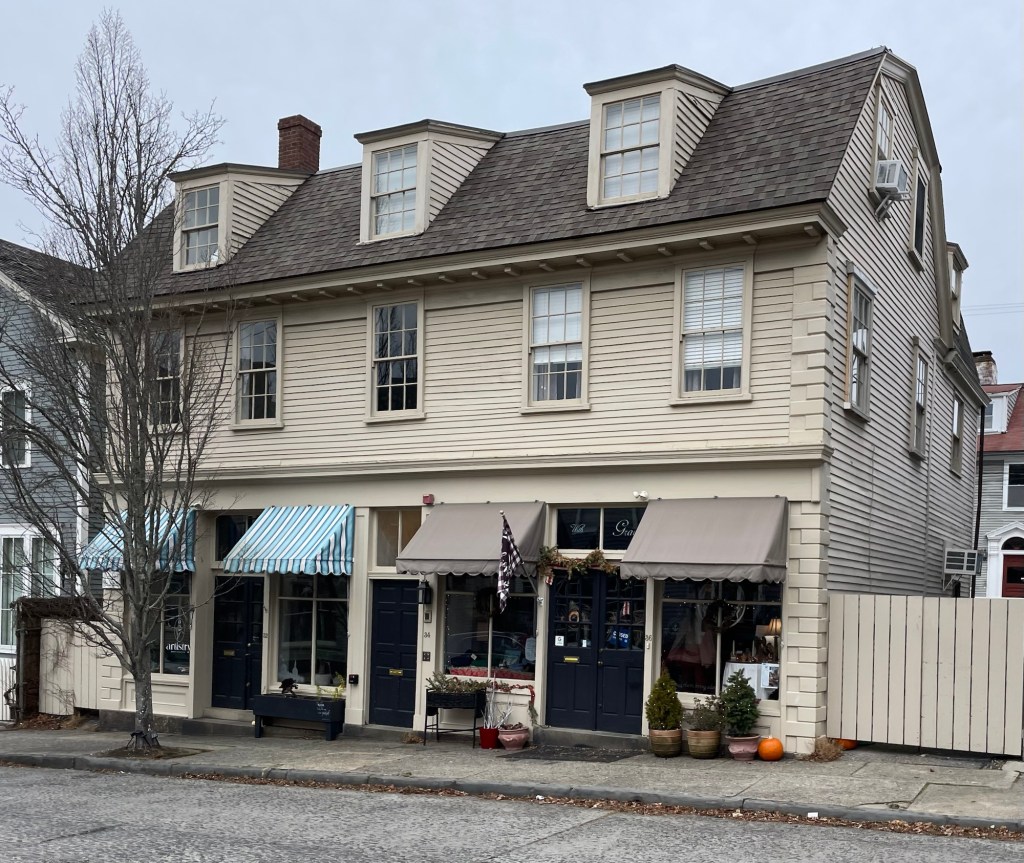
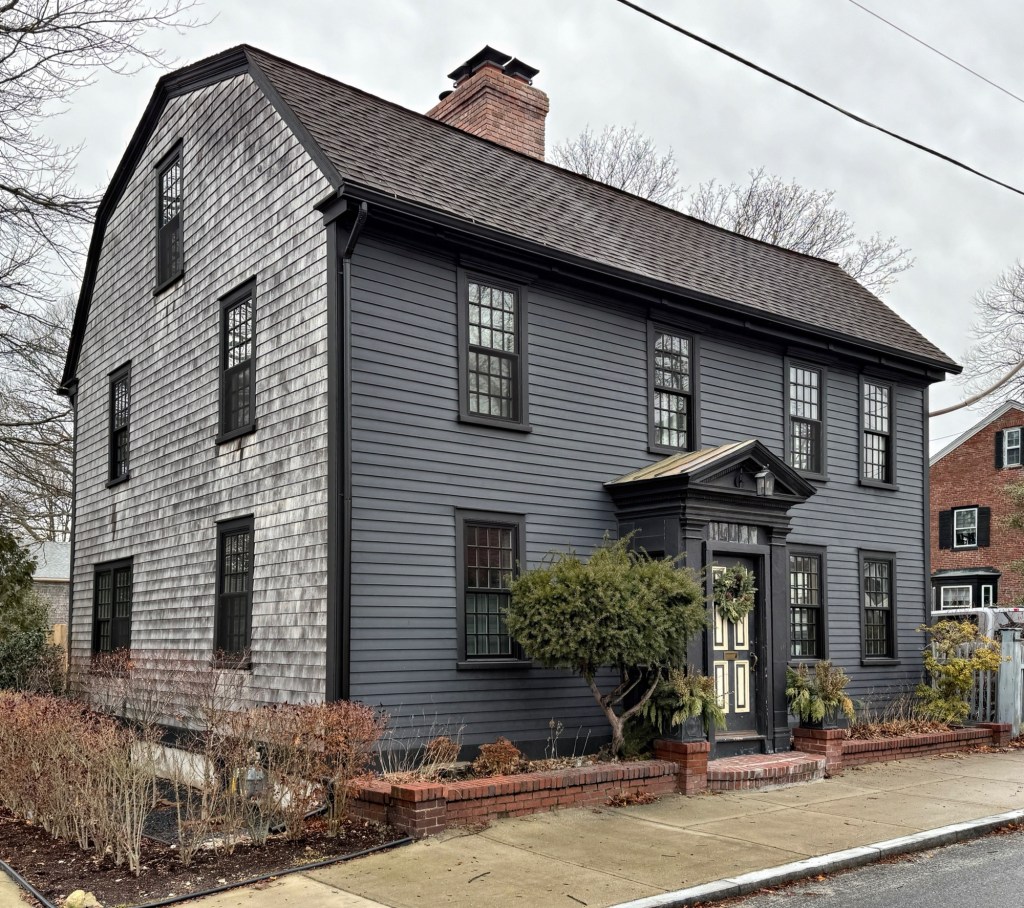
Captain Caleb Godfrey House // c.1740

In Newport, Rhode Island, you can find that even the more regular-looking historic buildings often hold an interesting (and sometimes troubling) past. Little information was available on this Georgian-era house, but I did some digging and turned up a lot. Rhode Island and Newport specifically had been a hub of trade going back to its founding by white settlers. Even though it was the smallest of the colonies, the great majority of slave ships leaving British North America came from Rhode Island ports. Historian Christy Clark-Pujara, in her book Dark Work, The Business of Slavery in Rhode Island, indicates that during “the colonial period in total, Rhode Island sent 514 slave ships to the coast of West Africa, while the rest of the colonies sent just 189.” Captain Caleb Godfrey, who owned this home on Franklin Street in Newport, was a sea captain and hired by wealthy merchants to pick up slaves in West Africa and bring them back to the British colonies. In 1754, Samuel and William Vernon of Newport hired Caleb to take their ship, “Hare“, taking captives from Sierra Leone and embarking them from South Carolina. Godfrey left Sierra Leone with 84 slaves aboard, but 16 died on the 10-week voyage or soon after the ship arrived in Charleston, their bodies were dumped at night into the sea. In South Carolina, a prominent slave dealer named Henry Laurens handled the sale of African captives from the Hare, placing an advertisement to attract the attention of local rice planters. Godfrey’s Newport home is a visual reminder on New England’s direct ties to the enslavement of African people and how the colonies benefited financially from this terrible trade.