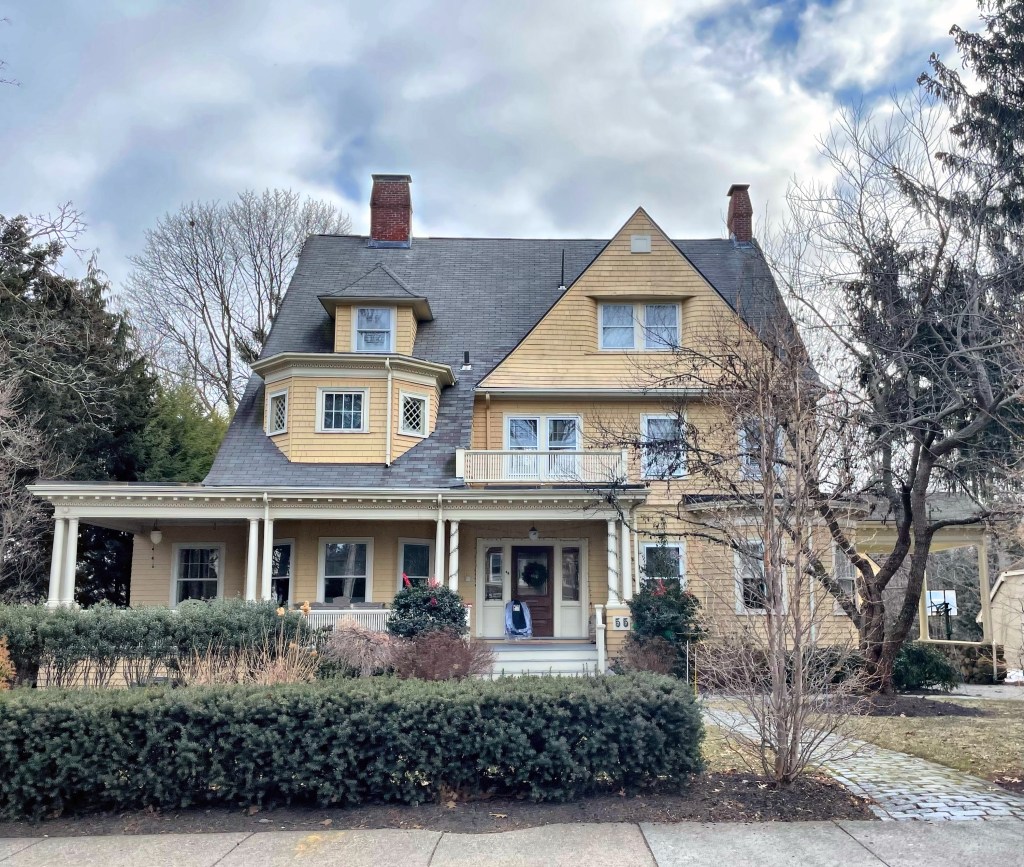
Dr. Sarah Marcy Crawford was a graduate of the Woman’s Medical College of the New York Infirmary for Women and Children and long devoted herself to her patients. She eventually settled in the Boston area, working in Roxbury as a physician until she took up a residence in Waban Village of Newton. She worked locally at the New England Hospital for Women and Children and served as a deputy superintendent of the State’s minor wards for the old Massachusetts Board of Charity and was an active member of the Massachusetts Medical Society. She had this eclectic home built for her and her family, but they later relocated to another home in town. The house is a great example of the convergence of architectural styles, common at the end of the 19th century, this one being a blending of Shingle, Queen Anne, and Colonial Revival styles.
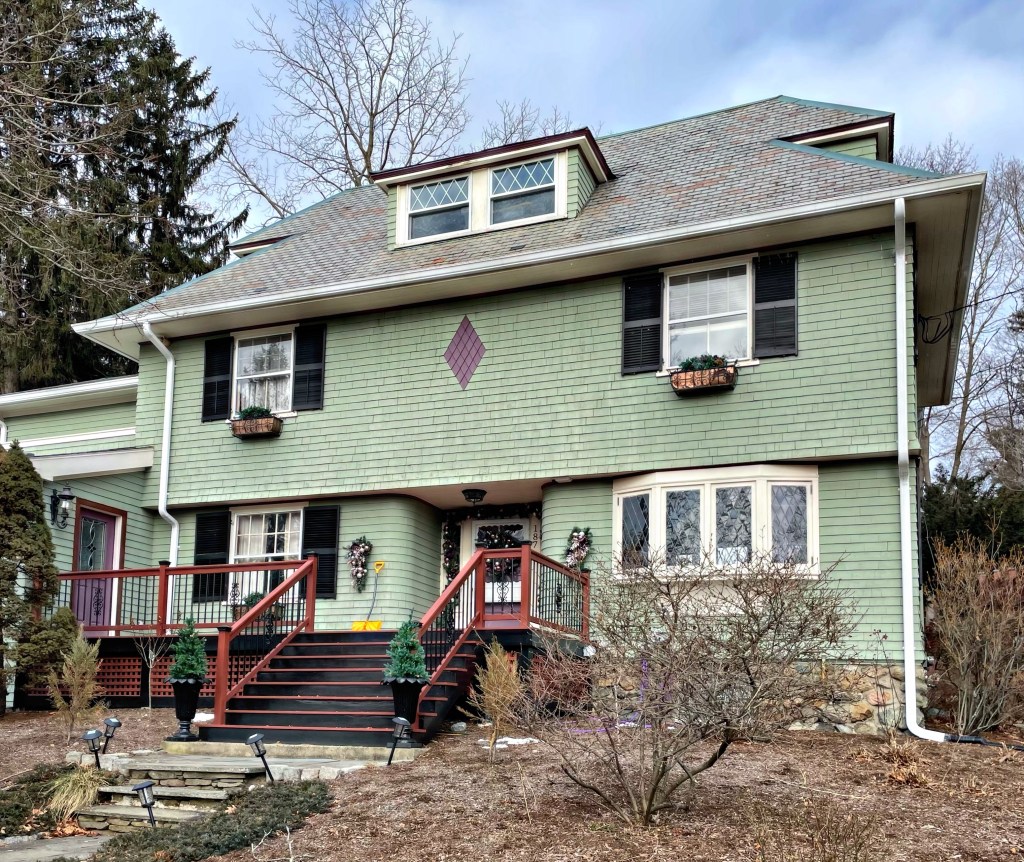
When William C. Strong began developing land on the farm he purchased in Waban, he built a few homes to market the new neighborhood, and rented some of them for additional income. This really unique home was one of them. It was built around 1895 and exhibits elements of the Shingle and Colonial Revival styles. The home was eventually purchased by Frederic W. Webster, who was an alderman in Newton. The blocky proportions of this house and the prominent overhang of its hip roof are prevalent motifs in late 19th century adaptations of the Shingle Style. The style is even more evident at the recessed center entrance with curved reveals, and the diamond shingle motif at the second floor. Nods to Colonial Revival are the garrison (second floor overhanging the first, and the central dormer.
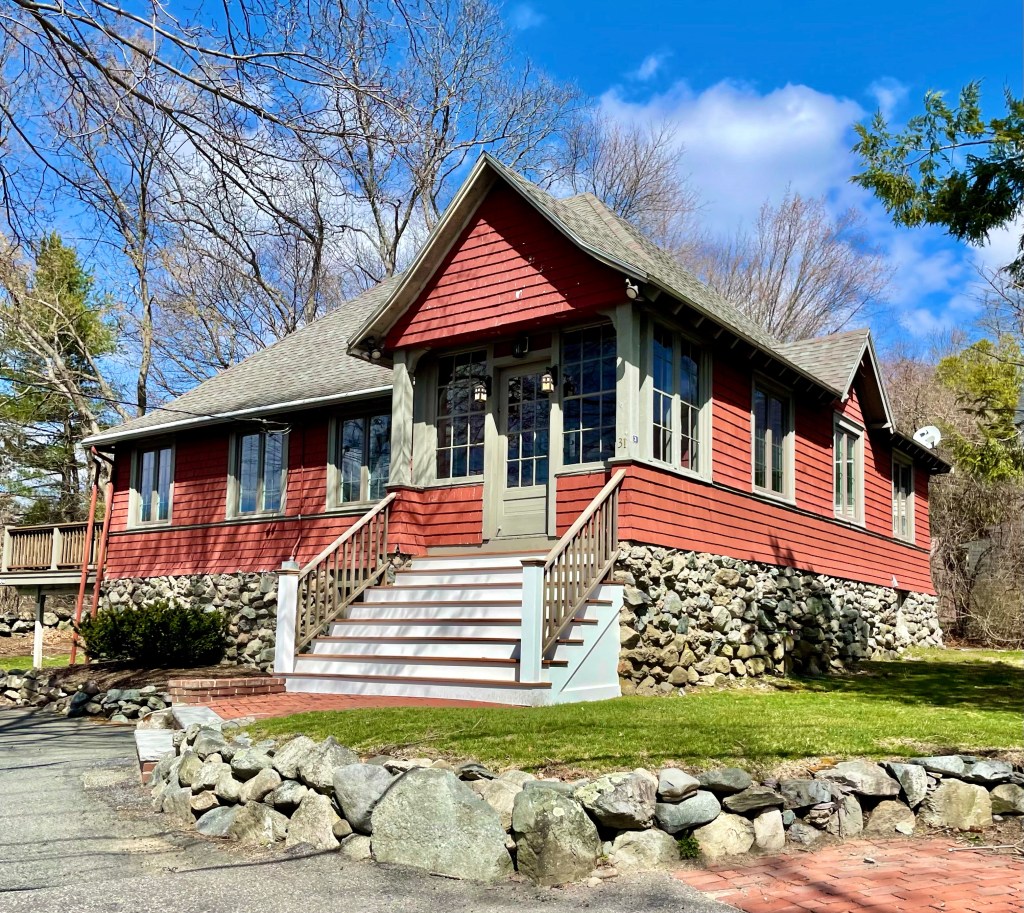
In 1875, William C. Strong, a nurseryman from Brighton, MA, purchased the 93-acre Staples-Craft farm in Newton. He established a large nursery on the grounds and promoted construction of the Circuit Railroad, which connected the rural section of Newton to the Boston and Albany rail line in 1886, thus establishing the village of Waban. Due in great measure to the efforts of Strong and other developers, Newton’s youngest village grew rapidly as the once isolated farm area gave way to a vibrant suburban community. He built commercial structures and people began to flock to the village, for the new housing and easy-access into Boston by rail. Strong had a house built by architect Herbert Langford Warren in 1896 and lived there for years before having this house built in 1907, when William was 83 years old. The house was occupied by Strong for just a couple years until he moved away to Manhattan. The Arts and Crafts style home was purchased by Esther Saville Davis.
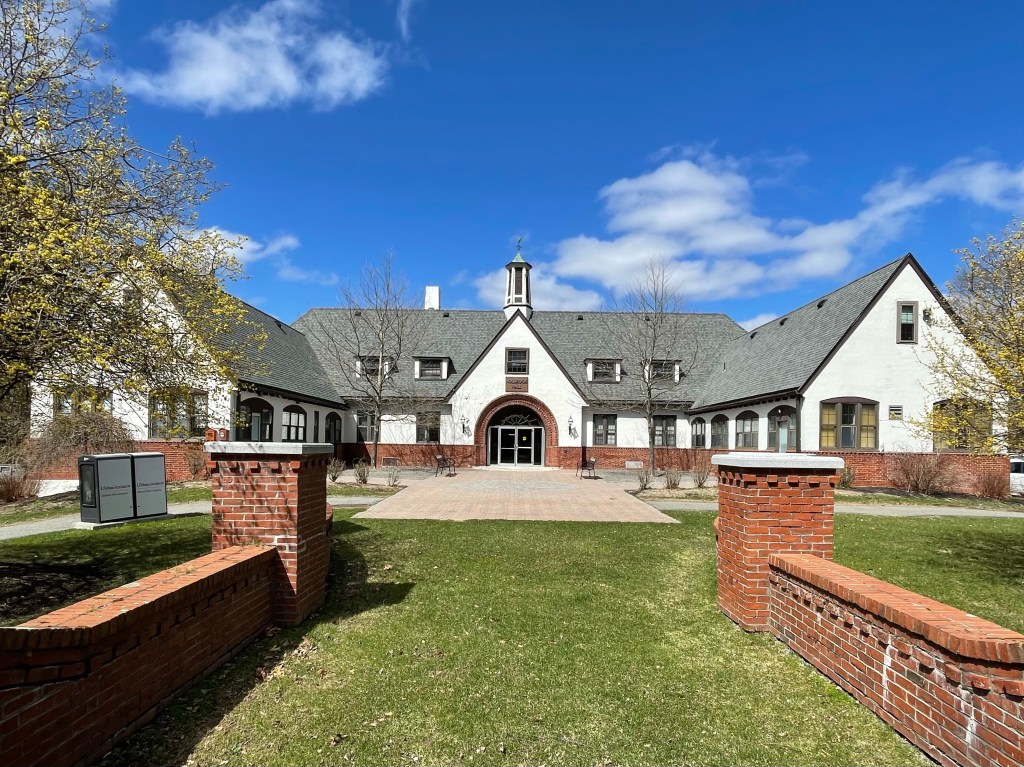
In the 1930s, America was in the throes of the Great Depression, and towns and cities struggled to provide services for the ever-growing populations, all the while suffering from lower tax revenues. The New Deal was enacted as a result, which provided a series of programs, public work projects, financial reforms, and regulations enacted by President Franklin D. Roosevelt between 1933 and 1939. One of these programs was the Public Works Administration (PWA), which funded and built large-scale public works projects such as dams, bridges, hospitals, and schools, to provide jobs and bolster local economies. In Newton, the developing Oak Hill Village required a new public school, and the town received funding for the Oak Hill Middle School in 1935. Architects Densmore, LeClear, and Robbins were hired to provide designs for a new school, and builders completed the building the next year. The Georgian Revival building is constructed with red brick with cast stone trim. The 16-over-16 windows and cupola also work to showcase the beauty of the design.
On a busy road in Oak Hill Village in Newton, Massachusetts, I saw this house which appeared as if it was built for a different use. After searching historic maps, I found it was originally home to the Oak Hill Evangelical Society, as a rural chapel. The chapel served as a local religious gathering place for the handful of families who lived around this section of Oak Hill and did not desire to travel to nearby villages to worship. The practitioners had money, and hired the Boston architectural firm of Cooper and Bailey, who designed many stunning civic and institutional buildings in New England. With the proliferation of the personal automobile, locals would later be able to travel to nearby churches easier, and this building was sold to a member, who converted it to residential use, which it has been used as to this day. The building is an excellent example of the Arts and Crafts architectural style with the raised rubblestone foundation, flared eaves with exposed rafters, and shingle siding which flares where it meets the foundation.
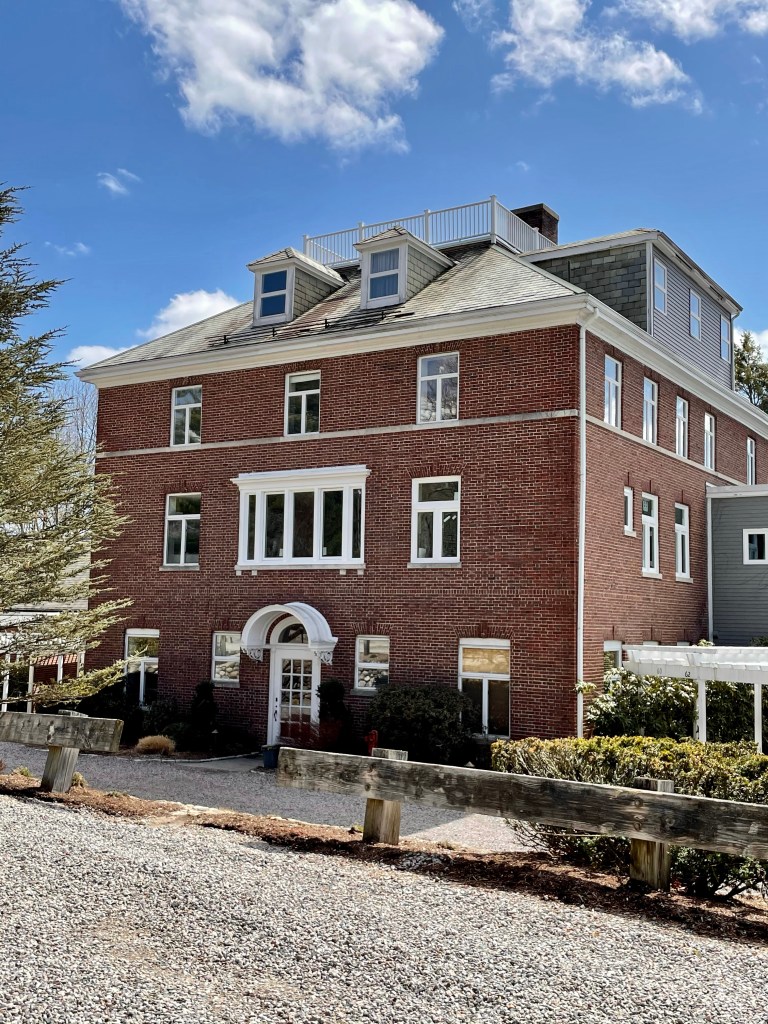
In 1907, the 86-acre Bigelow Estate (featured yesterday), was purchased by Horace K. Turner, owner of an art publishing company founded in Boston about 1904. Turner moved his workshops to the estate so the artists could work in healthy country surroundings. The firm required the long wings contoured into the hillside to provide ample natural light and views to the distance for the workers. In 1920, the entire property, including the Bigelow House and the bungalow workshops, were acquired by the New England Peabody Home, which had been located in Hyde Park for 25 years. It was set up as a school and hospital for “crippled children” and this brick building was added to the center section. Architects for this addition were Coolidge and Shattuck, successors to the firm of Shepley, Rutan, and Coolidge. The Peabody Home was among the first to use sun treatment as a cure for physical ills and the extensive porches were well suited to this purpose. The Peabody Home became obsolete and the property was sold off in the mid-20th century. In 1979, the Peabody Home was sold to Edward Leventhal, who converted the buildings into 22 condominiums. Architects for the project were Jung/Brannen.
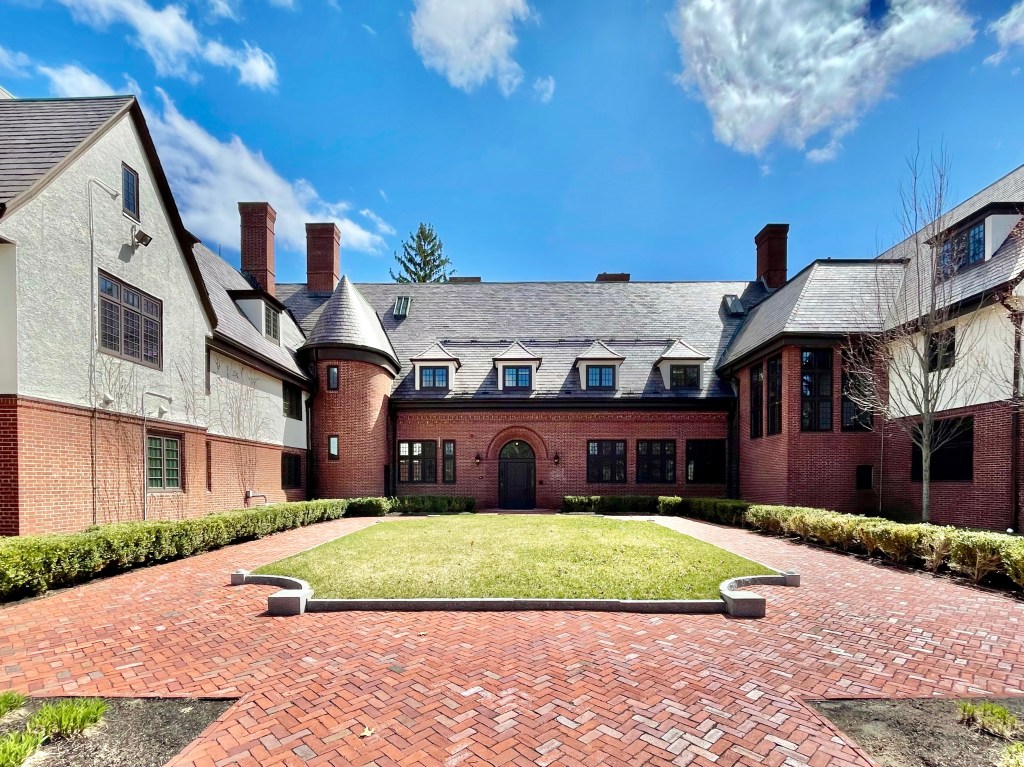
Born into the heart of Boston Brahmin society (Boston’s elite class), Robert Gould Shaw II (1872-1930) had a life of great opportunity, but full of tragedy. Robert was born in Boston and was a first cousin of Robert Gould Shaw, the famed military officer who accepted command of the first all-Black regiment (the 54th Massachusetts) in the Northeast. Robert II had a life of leisure, and enjoyed his position in society by drinking and enjoying elite sporting events. He became a wealthy landowner around Boston, and international polo player of the Myopia Hunt Club in the North Shore. He gained a reputation for alcohol abuse and promiscuity and divorced his first wife after just four years, she would later move to England and marry Waldorf Astor, and become the first woman seated as a Member of Parliament. The couple’s only son Robert Gould Shaw III followed his mother to England, but was eventually imprisoned there for six months for “homosexual offenses”. His alcoholism and his mother’s death, may have led to his suicide in 1970. Robert Gould II in Boston, remarried and purchased land in Oak Hill, Newton to build a country estate. He hired James Lovell Little Jr. to design the Tudor style property with a mansion, and various outbuildings including a carriage house and stable. As the Gilded Age gave way to the Progressive Era and eventually the Great Depression, the Shaw fortune collapsed. Shaw died in New York in 1930. The estate was later purchased as the new home to Mt. Ida College, now a regional campus of UMass.
As another piece of this interesting family’s history… Louis Agassiz Shaw II, one of Robert’s four children in his second marriage, had all the opportunities of his father, as he attended Harvard, had a sizable bank account, but was a recluse and had some mental issues and paranoia. Like his elder half-brother Robert Gould Shaw III, and father, Louis struggled with depression and alcoholism and in 1964, he strangled his 64-year-old maid, who he said was plotting to murder him in his sleep. He confessed but plead not guilty; he was committed to Danvers State Hospital and later McLean, where he lived for 23 years until his death. After which, much of his art collection, which he intended to donate to the Fogg Museum at Harvard, was discovered to be fakes.
Another of Oak Hill Village’s pre-Revolution homes is this stunner! This home was built some years before 1718 and was eventually occupied by Robert Murdock (1663-1754) and wife Hannah Stedman. Murdock emigrated from Scotland to Plymouth, MA in 1688 with his brother, later settling in Roxbury. In 1703, Robert bought a house and 120-acres of land here, and worked as a housewright. Like the King House (last post), the house was likely rebuilt or modified substantially at this time. Robert also served as a selectman, Constable, Surveyor of Highways, and Assessor in town until his death; and his son, Robert Murdock Jr., took over the property. By the mid-18th century, the estate was purchased by Jeremiah Wiswall (1725-1807). Wiswall served as Captain of the militia at the battle at Concord and Dorchester Heights during the Revolution and held a number of positions in the community including Overseer of the Poor, Constable, Selectman and as a hogreeve (person charted with the prevention or appraising of damages by stray swine). He was very involved in the events leading up to the Revolution including the committee on the tea embargo and drilled with the militia. He also lent money to the town to hire soldiers and owned a house designated as a place to receive smallpox inoculations in 1777, though it is unclear if it was this house he used. The house was eventually slated for demolition in the 1960s, but was saved by Dr. Roy Carlson, President of nearby Mount Ida College (now owned by UMass. For $1, he purchased the home from a developer and paid for it to be moved from its original location at the corner of Brookline and Dedham streets a ¼ mile southwest to its current location, on Carlson Ave, and it served as the President’s House.
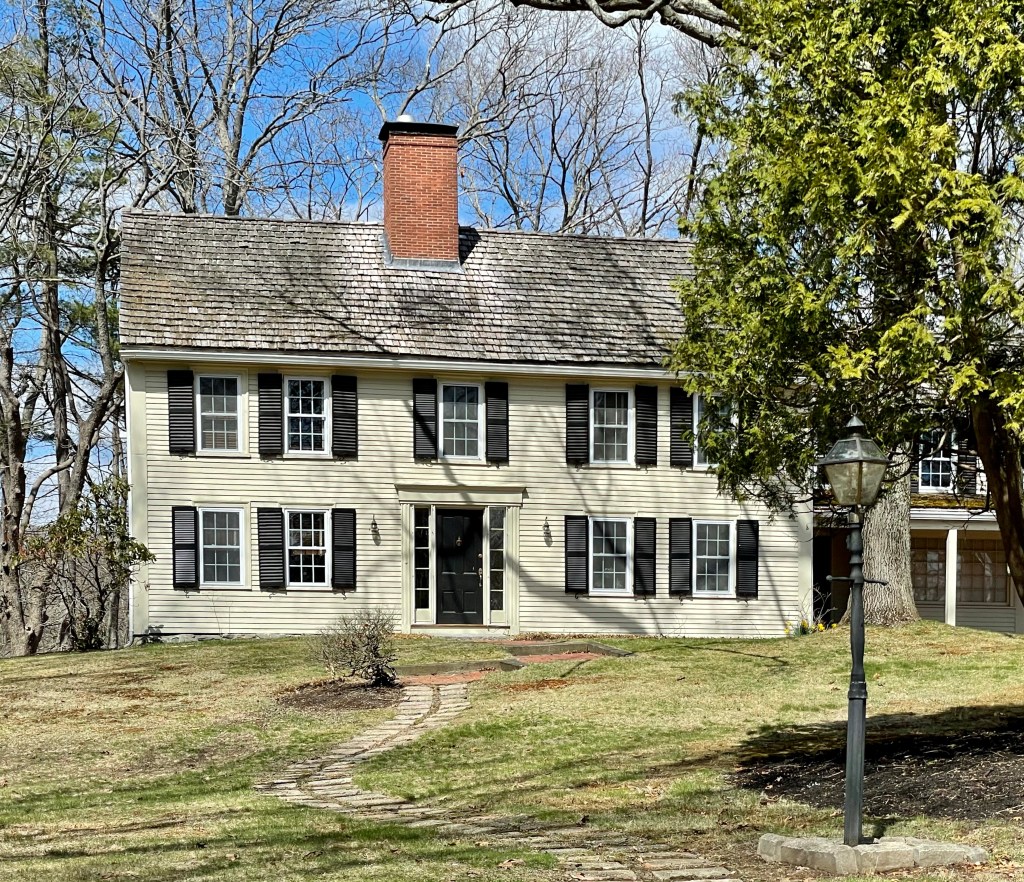
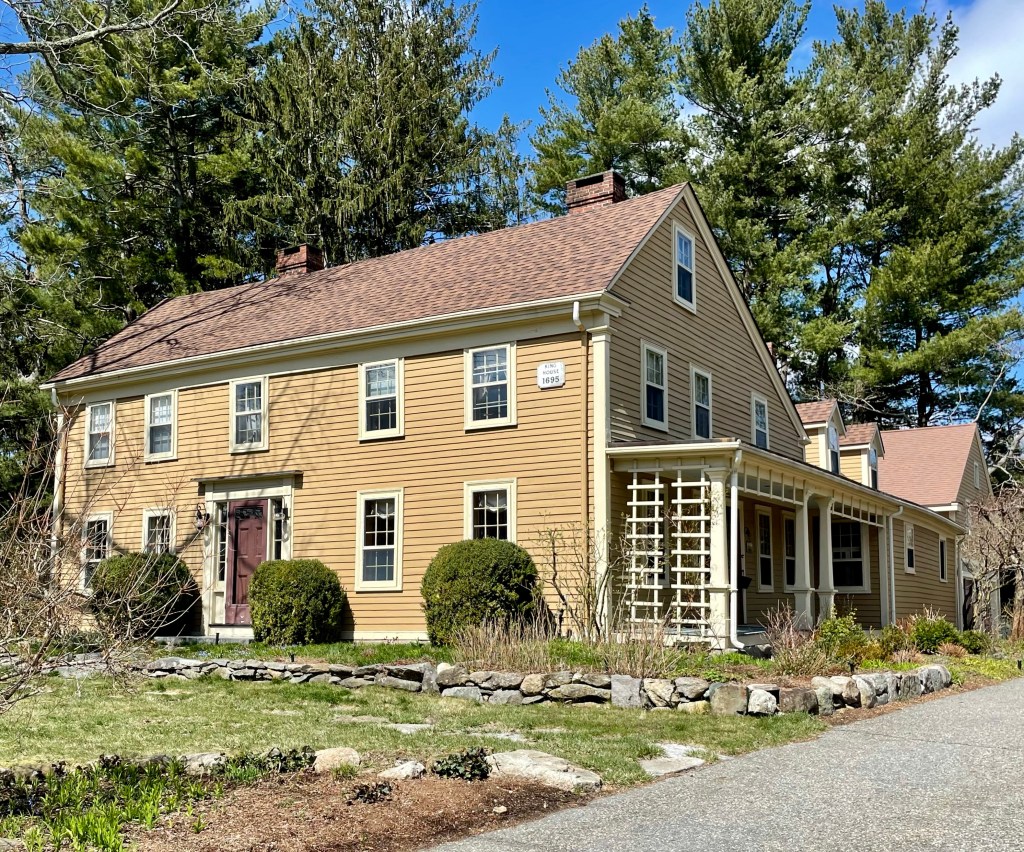
Located in the Oak Hill Village of Newton, the Dike-King House remains as one of a few pre-Revolution houses, but the history is a little murky from what I found. Oak Hill was the most remote village of Newton historically and has maintained much of its open space to this day, as it did not see the suburban development following the streetcar in other villages in town connecting to nearby Boston. This house was apparently built by Jonathan Dike (1673-1751), a cooper, who lived here with his second wife Experience French (yes that was her name). The home he built was likely a much smaller dwelling and was added onto as the family grew. Jonathan died in 1751 and the home went to his eldest living son and later sold to Noah King in 1796. The house plaque on the house gives a date of 1795 as King purchased a house on the lot, but it was likely much older than one year old. Noah King was a housewright, deacon, and son of Dr. John King a prominent civic leader in the town. With his expertise as a housewright, he likely rebuilt much of the house into what we see today. Starting in 1796 through 1923 the property was run as a farm by members of the King family, but land was sold off around the Great Depression for much needed funds. Due to the asymmetry of the house, it is likely that it started as a half-house with just three bays with the door at the left-most bay, with the saltbox roof added around that time.
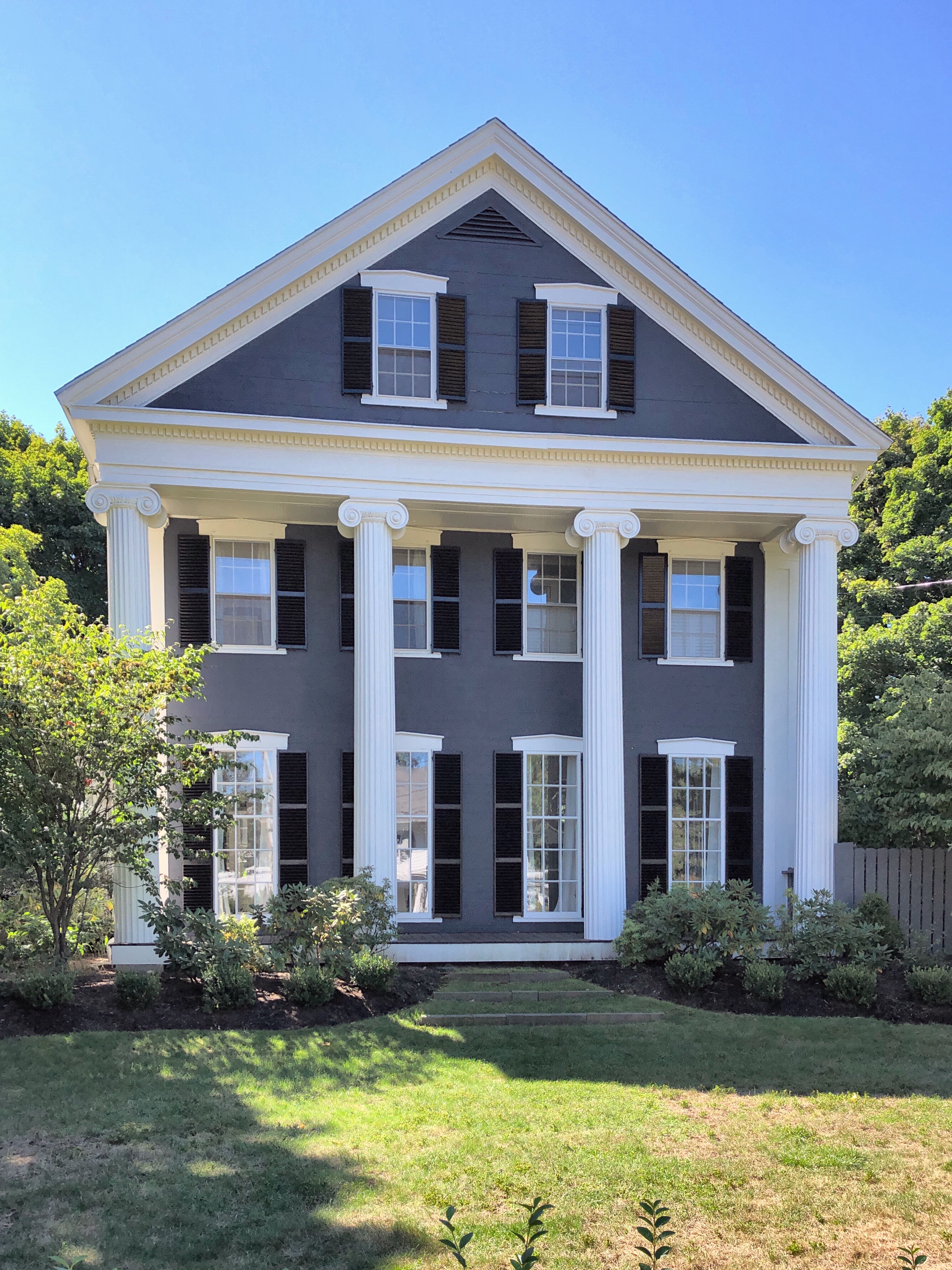
This house was built in 1847 by Frederick A. Collins on land owned by his father, Mathias Collins III. Frederick Collins (1818-1892) had this house built just after his marriage the same year to Amelia M. Revere, purportedly a grandniece of Paul Revere. Prior to his marriage, Frederick A. Collins lived in Newton Upper Falls and started a glue factory with his brother, which by 1855, had grown to three three factories and which folded upon the death of his brother Edward Collins in 1879. Collins was active in local affairs, serving in later life on the City Council. The home remains a significant monumental temple-front Greek Revival house in the Boston area. It was designated as a Newton Landmark, meaning it will be preserved for future generations to appreciate.

 Buildings of New England