Pettee Stone Barn // c.1840

Built adjacent to the stone cottage, this stone barn was also constructed in around 1840 by Otis Pettee (1795-1853) as part of his business venture. Pettee was a major mill owner in the Upper Falls Village of Newton and was a major silk manufacturer in the area. The stone barn was used as a warehouse and later as the location for raising silk worms for the silk mills down the street. As with the adjacent stone cottage/shop, Pettee likely built the barn of mostly stone on the site as a fireproof design to protect his valuable product. It is now home to Danish Country & Modern, an amazing furniture shop which sells Scandinavian furniture and accessories.
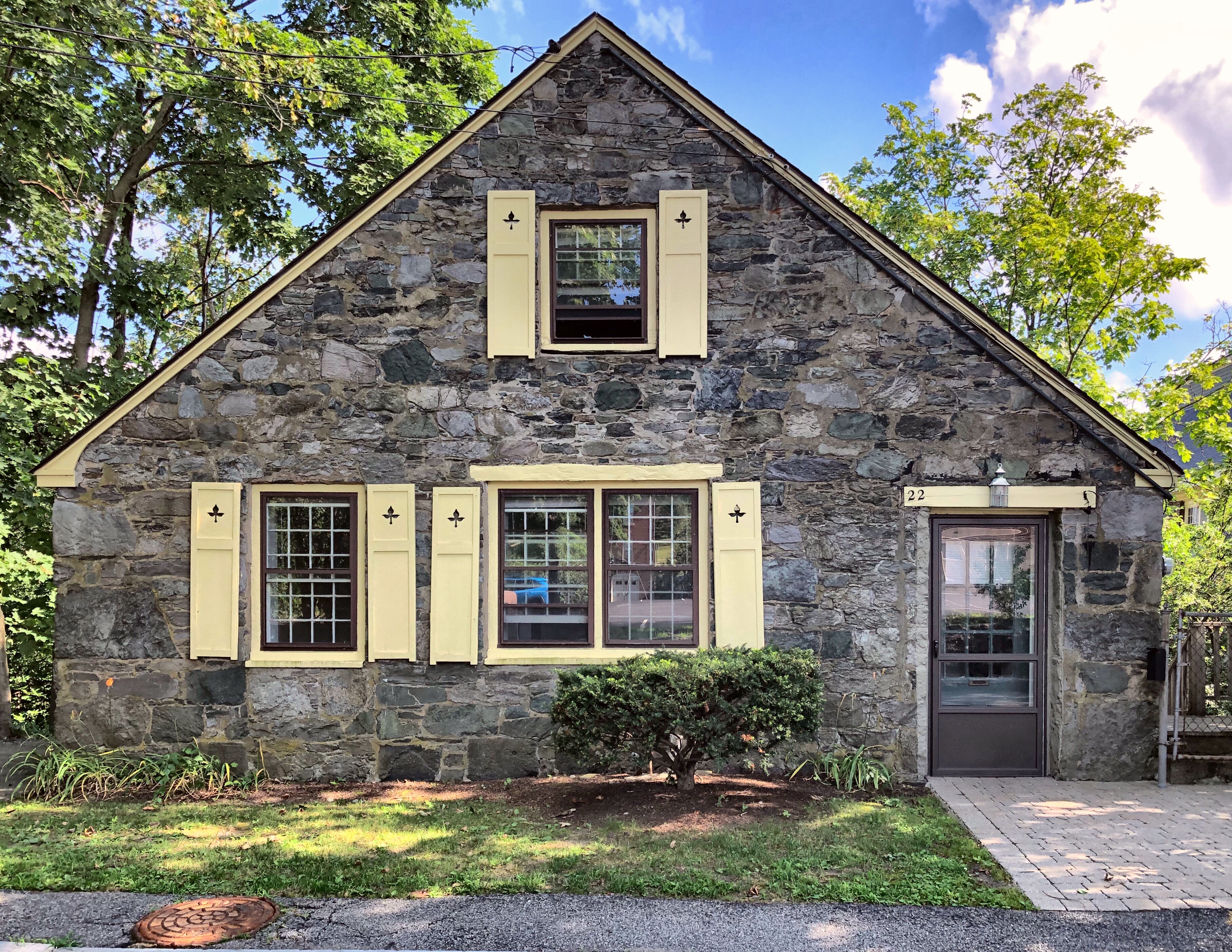
Pettee Caretaker’s Cottage // c.1840

One of the rare early stone cottages in Newton, this charming building in Upper Falls Village has an interesting history! The stone cottage was built around 1840 by Otis Pettee (1795-1853), a major mill owner in town. This cottage specifically served as a shop and later as the residence of the caretaker of the silk mill a couple blocks away. Pettee likely had this building and the adjacent barn constructed with stone to limit the chance of a fire, destroying any valuable silk inside.

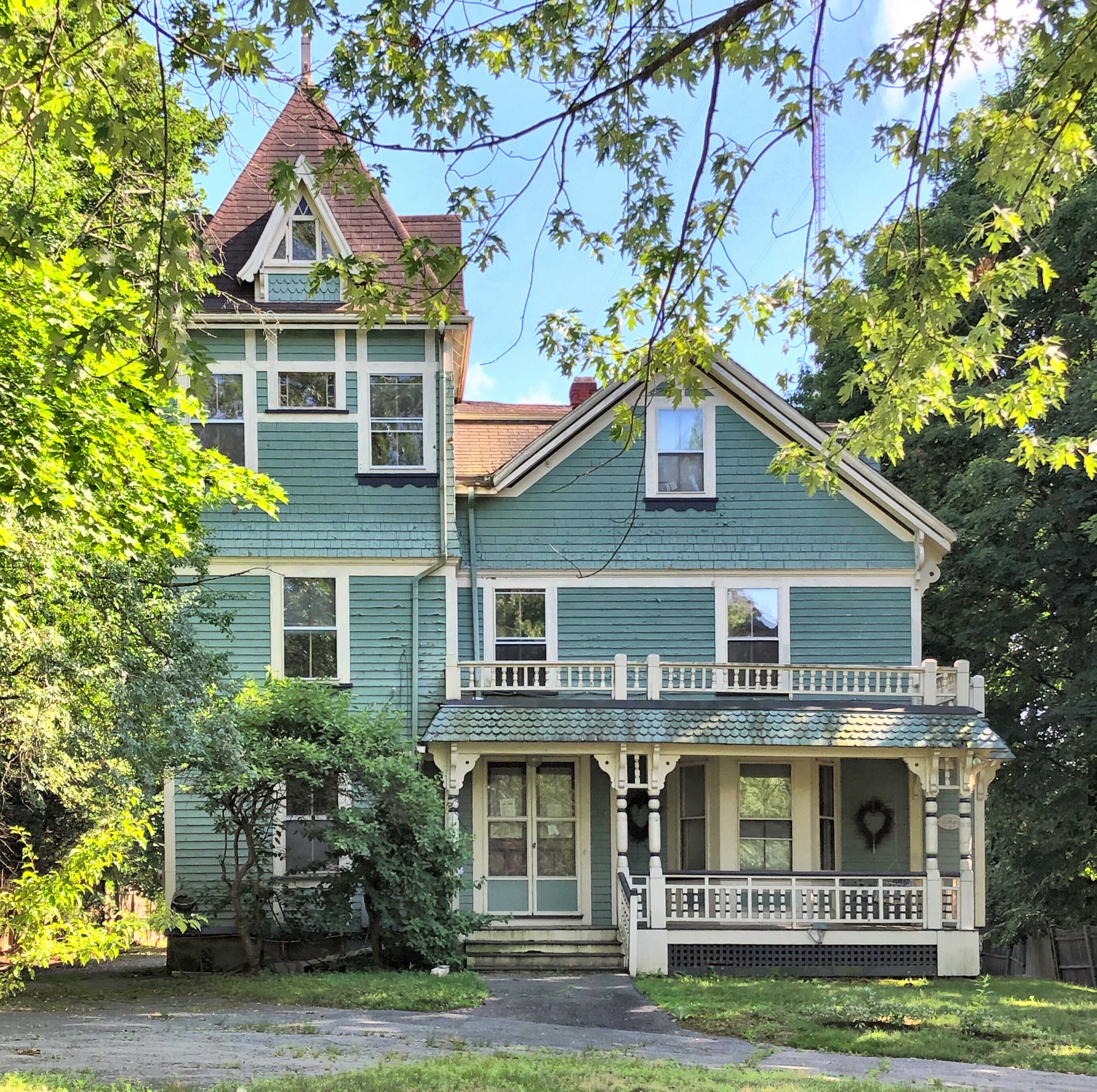
Winslow-Sullivan House // c.1850

This house was built by 1850 for Charles Winslow, a mill-owner in the Upper Falls Village of Newton. The house was likely a gable-end Greek Revival home consisting of the two right bays seen today. By 1882, another mill owner, Richard Sullivan, purchased the home and completely renovated it with a square tower, stick-work, double door entry, and a porch. He owned a cotton mill near the river and built workers housing between his house and the mills for his workers and their families.

Ralph Waldo Emerson School // 1904

One of the few architect designed buildings in Upper Falls Village in Newton is the Ralph Waldo Emerson School built in 1904-1905. The village school in Upper Falls consistently was outgrown by the rapidly growing population in the 19th century, leading to new schools being built every couple decades. The 1846 Village School (featured previously) was outgrown and a major landowner, Otis Pettee willed a valuable piece of land to the town for the erection of a new school and firehouse, both were built that next year. By 1869, a second schoolhouse was built on the site in the fashionable Second Empire style, named the Wade School. As expected, the two adjacent school buildings were deemed obsolete and the town, inflated by the industrial wealth of Upper Falls, hired the architectural firm of Hartwell, Richardson & Driver to design a large brick schoolhouse, with a cost of $92,000. The building was occupied as a school until the 1990s until (you guessed it) the schools in the town consolidated, and the Emerson School was then converted to residential units.

Upper Falls Village School // 1846

The Upper Falls Village in Newton, MA is a small industrial neighborhood which grew after the Revolutionary War due to its location on the Charles River where rapids and falls occur. Mills and factories were built in the village and thus, workers from other towns and even Europe moved here to work in the dozen manufacturing facilities. By 1850, the village had 1,500 residents, a quarter of those living in the town of Newton at the time, in a much denser area. With workers and families moving here, the need for a school was paramount. As the Upper Falls Village continued to grow, schools were built and demolished for newer and larger structures to house the growing population. In 1846, this two-story schoolhouse was constructed in the then popular Greek Revival style. The schoolhouse was quickly deemed inadequate and was sold when a new school closer to the center of the village was built in 1855. This building was then converted to commercial use, serving as a grocery and dry goods store and later a watchmaking shop, with the storefront added at the time.