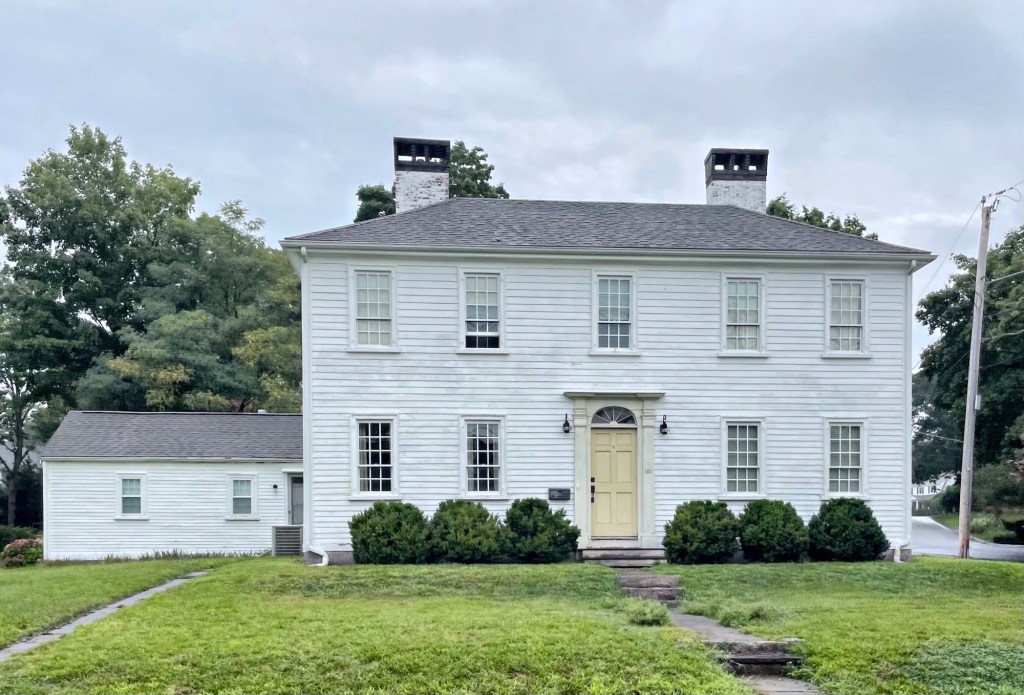
Chickering Farmhouse // c.1807

The Chickering House at 101 Walpole Street is significant as one of the oldest extant houses in Norwood, Massachusetts. Although local lore dates this house to 1781, it likely dates to 1807 (or was adapted from an earlier house) and was owned by Deacon Dean and Sally Guild Chickering, who farmed on the lot. Three generations of Chickerings farmed the land here until the early 20th century, when John D. Chickering, a local historian, sold much of the land for suburban development. The Federal style farmhouse remains as a vestige of the early, pre-suburbanization that Norwood is now known for.

Norwood Odd Fellows Building // 1912

In the early 20th century, Norwood, Massachusetts, shifted from sleepy rural town to a commercial and population center with a population tripling in size between 1900 and 1930. Located on Washington Street, the town’s main commercial street, the Odd Fellows Building stands as a reminder of the historical importance to charitable and social organizations. Designed by Boston architect Clarence Blackall, the three story building is characterized by a boxy rectangular form, yellow and tan masonry with limestone and granite trimmings, and its somewhat minimal detailing. Built in 1912, the building’s first floor was designed to contain two stores, the second floor housed the club rooms and meeting hall, and third-story containing restrooms and a kitchen. The Classical Revival style building is one of the larger and more significant commercial structures in the town center.

Norwood Town Hall // 1928

Norwood Town Hall represents the achievement of landscape architect Arthur A. Shurtleff and local financier, George Willet, to transform the village center of Norwood, Massachusetts from a sleepy rural village to a thriving commercial and cultural center of town. Plans for the municipal building began as early as 1919, with this building serving as both a town hall and memorial to the Norwood men who died in all previous wars. The building would not be completed until 1928. Designed by Norwood architect, William Upham, the building is a landmark example of the Neo-Gothic Revival style and its main feature, the 110-foot bell-tower which houses a 50-bell carillon, towers over the town common.