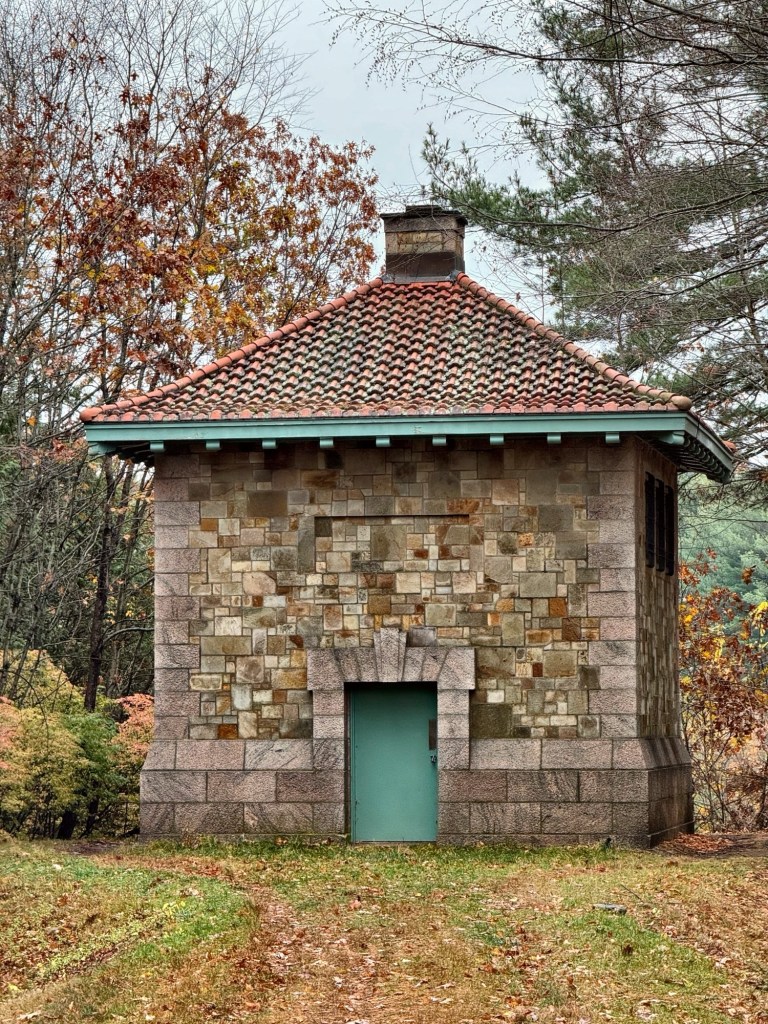
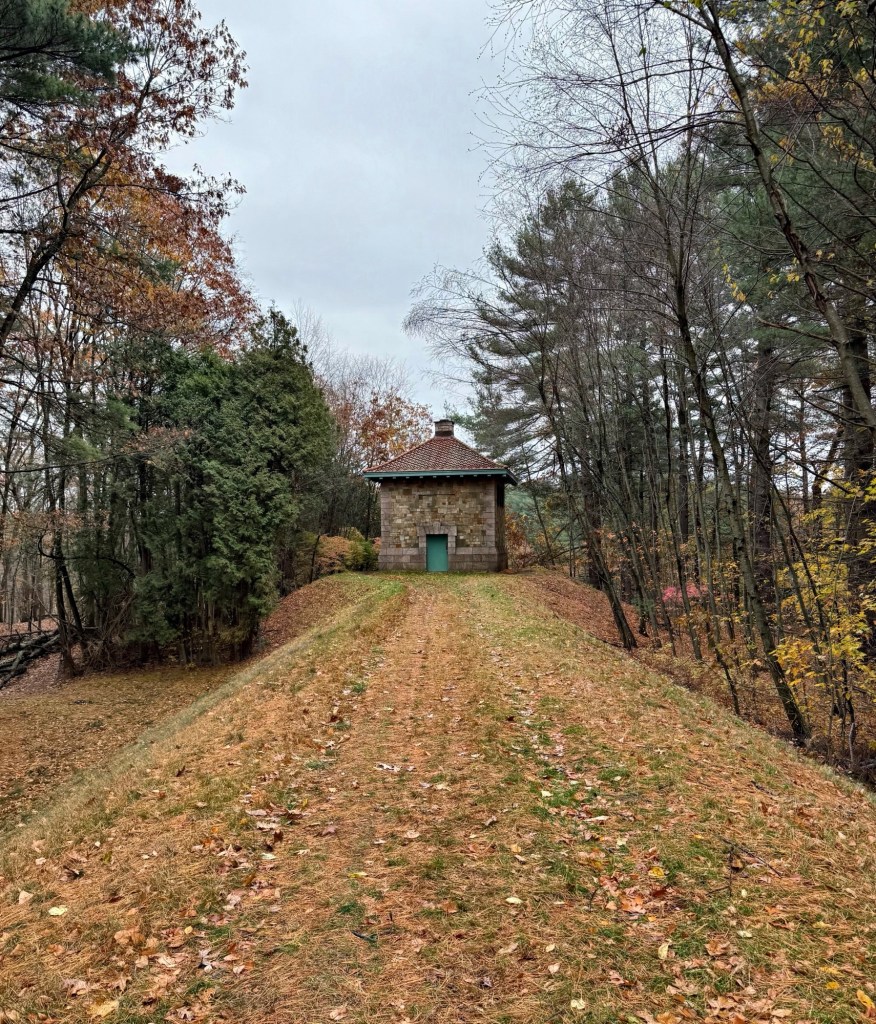
Happy Hollow Siphon House, Weston Aqueduct // 1903

The Weston Aqueduct was designed to deliver water from the Sudbury Reservoir in Framingham to the Weston Reservoir in Weston, Massachusetts. Built between 1901 and 1903, the aqueduct was designed to provide water to the suburbs north of Boston. All of the buildings that shelter the aqueducts above-ground elements, including this structure in Wayland, were designed by the architectural firm of  Shepley, Rutan and Coolidge, with landscaping along the route and at the reservoir designed by the Olmsted Brothers, landscape architects. This siphon house, known as the Happy Hollow Siphon House was built in 1903 and was an important part of the aqueduct system, as it transferred water through varied elevations using gravity and pressure to move the liquid without a pump. The aqueduct route is now a long, linear path and remains owned by the Massachusetts Water Resource Authority.
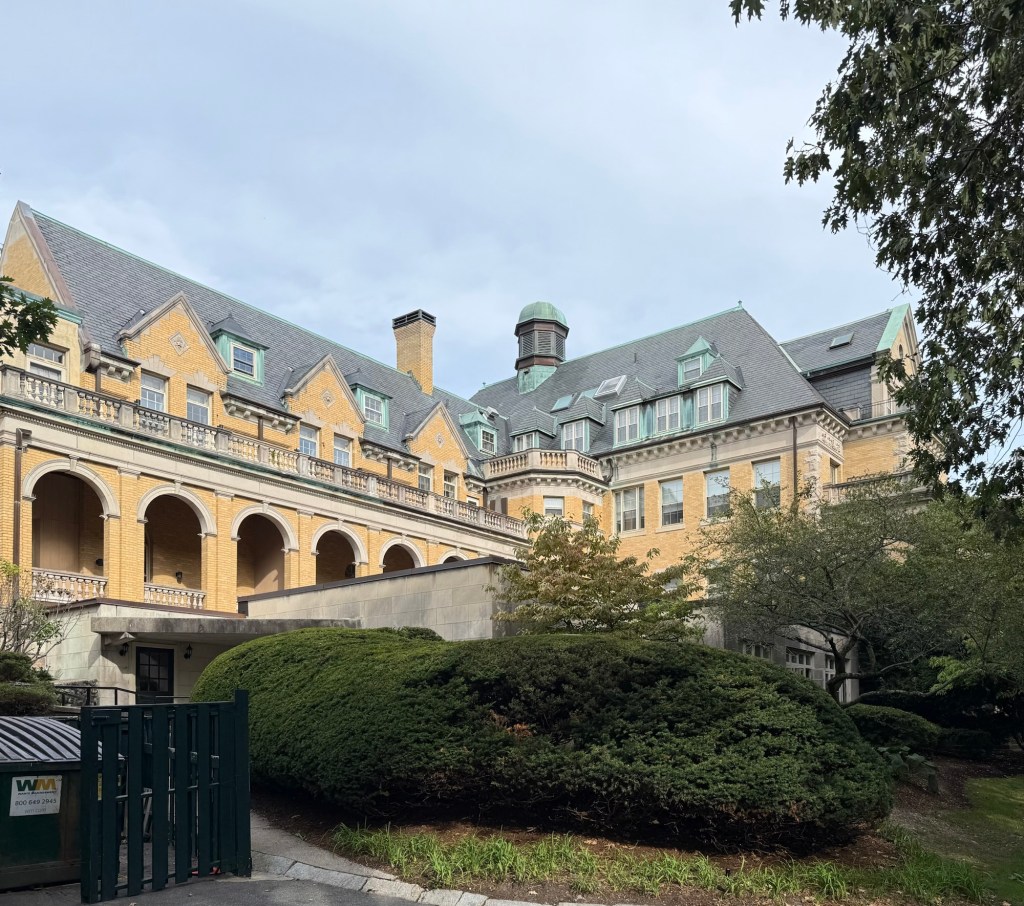
Boston Free Hospital for Women // 1895

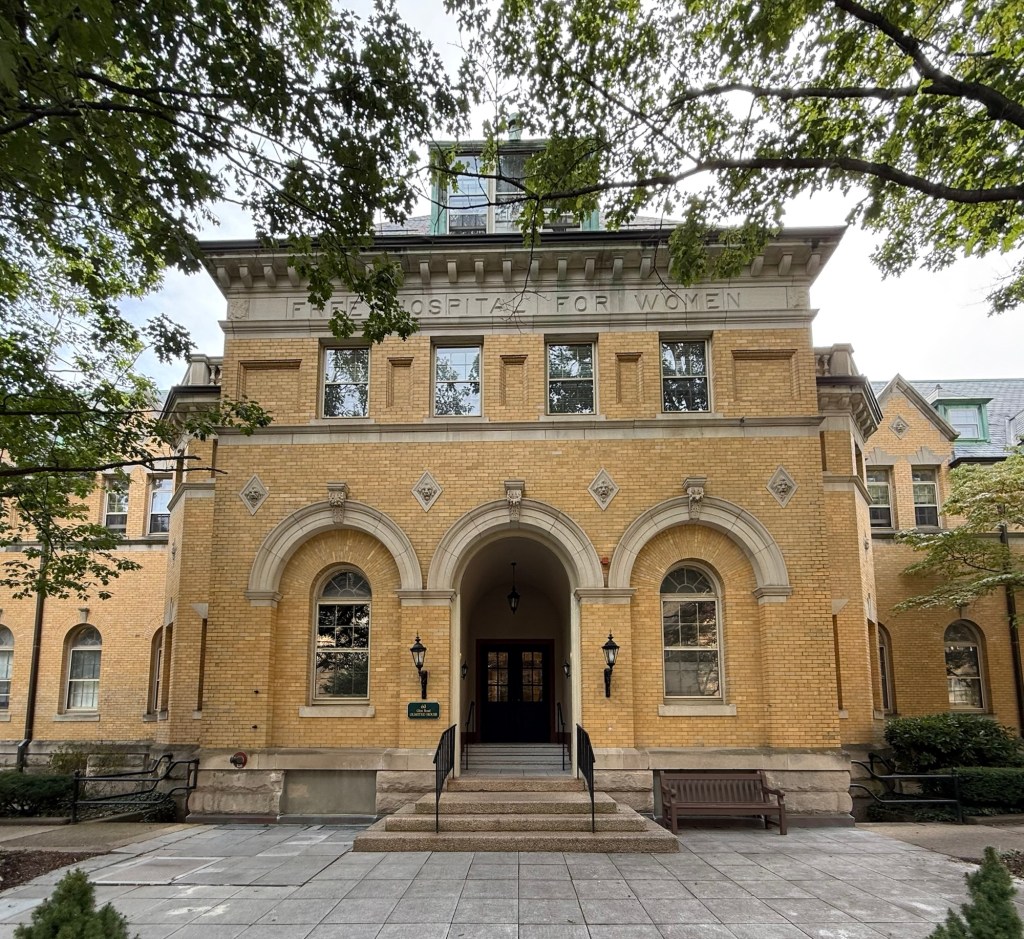
This handsome yellow brick building, designed by architects, Shaw and Hunnewell, was completed in 1895 as the Boston Free Hospital for Women. The hospital was organized in 1875 in a converted rowhouse in Boston’s South End, and after relocating once, it was decided that a purpose-built hospital was needed for the growing demands of the institution. A site in Brookline on the Muddy River, overlooking Frederick Law Olmsted’s Riverway and Olmsted Park, was purchased and the hospital was opened in 1895. The brick and limestone hospital building is somewhat Chateauesque in style and when opened, had no electricity and no telephone. The hospital is historically significant as the first teaching hospital for Harvard and as the first hospital in the country to apply radiation treatment for cancer, along with being a major research facility in fertility, especially the work of Dr. John Rock (who lived nearby) on the development of the birth control pill and research on in-vitro fertilization. The Free Hospital for Women merged with the Boston Lying In
Hospital (now part of Brigham & Women’s), which closed its Brookline Campus in the 1960s. In 1984, the firm of Childs, Bertman and Tseckares oversaw the conversion of the buildings to condominiums, called The Park, with sympathetic new construction.

Island Grove Park Memorial Arch // 1912

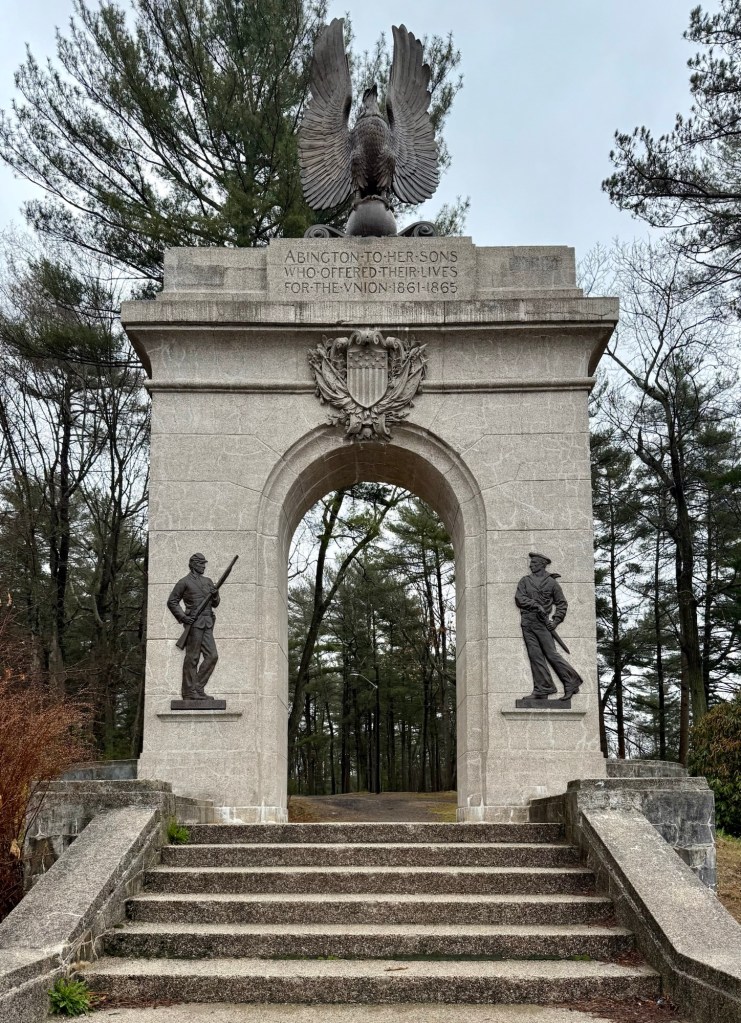
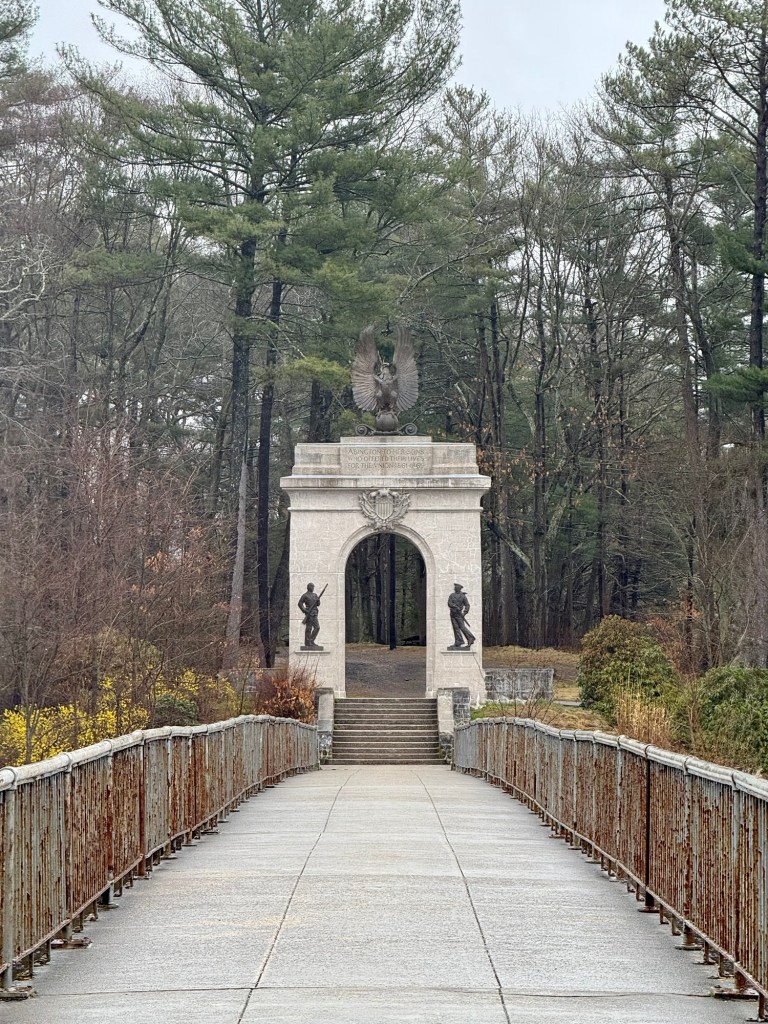
The Abington Memorial Arch and Bridge at Island Grove Park was dedicated on June 10, 1912 as part of the town’s bicentennial observances. The Grove had been a popular meeting place for the Massachusetts Anti-slavery Society, with William Lloyd Garrison, Wendell Phillips, Abby Kelley Foster, and Lucy Stone among the many prominent reformers who spoke there. Abington resident and Civil War veteran, Capt. Moses Arnold, donated a large marker in 1909 to commemorate the abolitionist meetings at Island Grove, this act led the local GAR Post to begin planning a Civil War Memorial Bridge and Arch for the community. The 17-acre park is comprised of a peninsula jutting into Island Grove Pond, a 35-acre body of water which was created by impounding the Shumatuscacant River in c. 1700 for industry. The area has a significant history, first as an industrial site, then as an amusement park, before it became the wooded park it is now. The Memorial Arch and Bridge serves as the main entrance to the park, and was designed collectively by architect, J. Williams Beal, landscape architects, the Olmsted Brothers, and sculptor, Bela Pratt. The municipal park is a beloved local landmark and host to many events.

Nantasket Beach Waiting Room // 1903

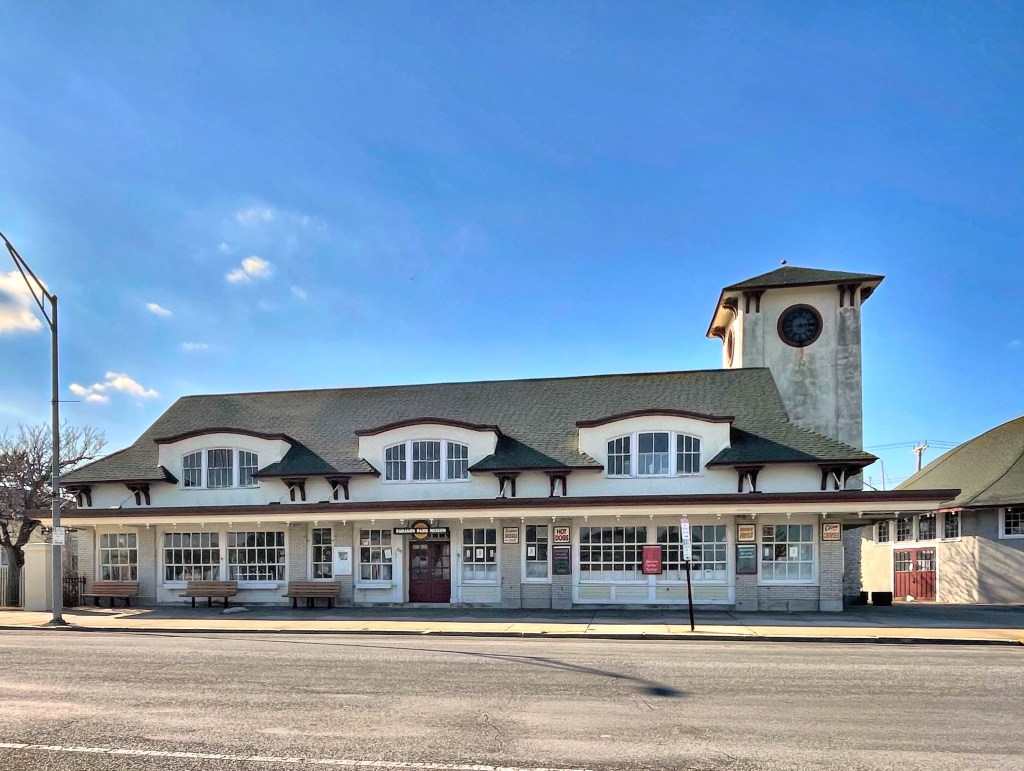
The area of Nantasket Beach in Hull was in the late 19th century, a hotbed of taverns, thievery, and brothels. To counter this, the Metropolitan Park Commission of Greater Boston acquired about 25 acres at Nantasket, which included roughly one mile of shoreline extending north from Atlantic Hill in 1900. The initial appropriations provided for only minimal facilities, such as a bathhouse and a few incidental buildings, one of which was a waiting room for those arriving or departing from the new railroad station (since demolished) at the beach. The MPC hired the Olmsted Brothers landscape architects to design the paths and landscaping for the new park, and they worked with architects Stickney & Austin who designed many of the early buildings. Stickney & Austin designed this stucco-clad building with clock tower to provide shelter from the elements and summer sun for visitors of the reservation. The building is a blending of the Arts and Crafts and Spanish Revival styles, both common at the beginning of the 20th century. The building now houses the Paragon Park Museum, after they relocated the Paragon Park Carousel next door to this building.