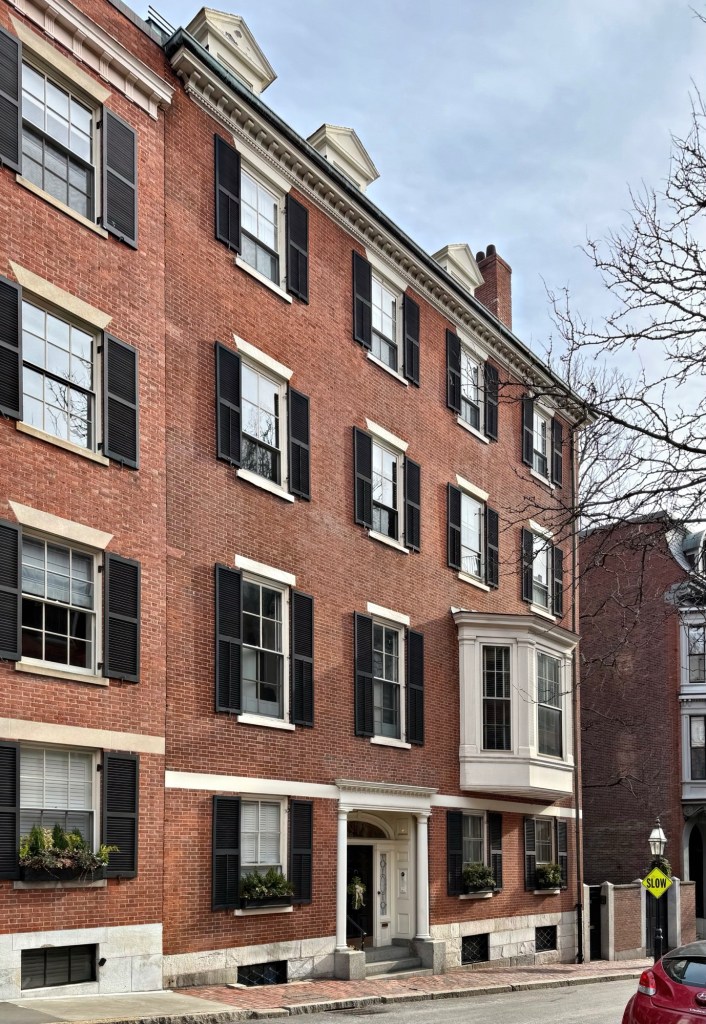
Cotting-Russell Mansion // 1812

Walnut Street in Boston’s Beacon Hill is one of the finest short streets that showcases some of the best examples of 19th century residential architecture in Massachusetts. Built in 1812, the house at 8 Walnut Street, is an excellent example of a Federal style mansion updated after the Civil War with new window sashes and projecting oriel window. The recessed off-center entrance consists of a front door which is flanked by multi-pane sidelights and surmounted by an elliptical fan light. On either side, columns support the cornice-headed entablature which disrupts the painted stone beltcourse between the first and second floors. The mansion was built by Uriah Cotting (1766-1819) a prominent real estate developer. When this house was completed, Cotting the property to Nathaniel Pope Russell, an insurance man who rented the property. Dr. George Parkman rented this house at the time of his tragic death at the hands of a Harvard Medical School professor in 1849. Mrs. Parkman and their son, John E. Parkman resided here until after the trial, when they moved to a larger residence on Beacon Street.
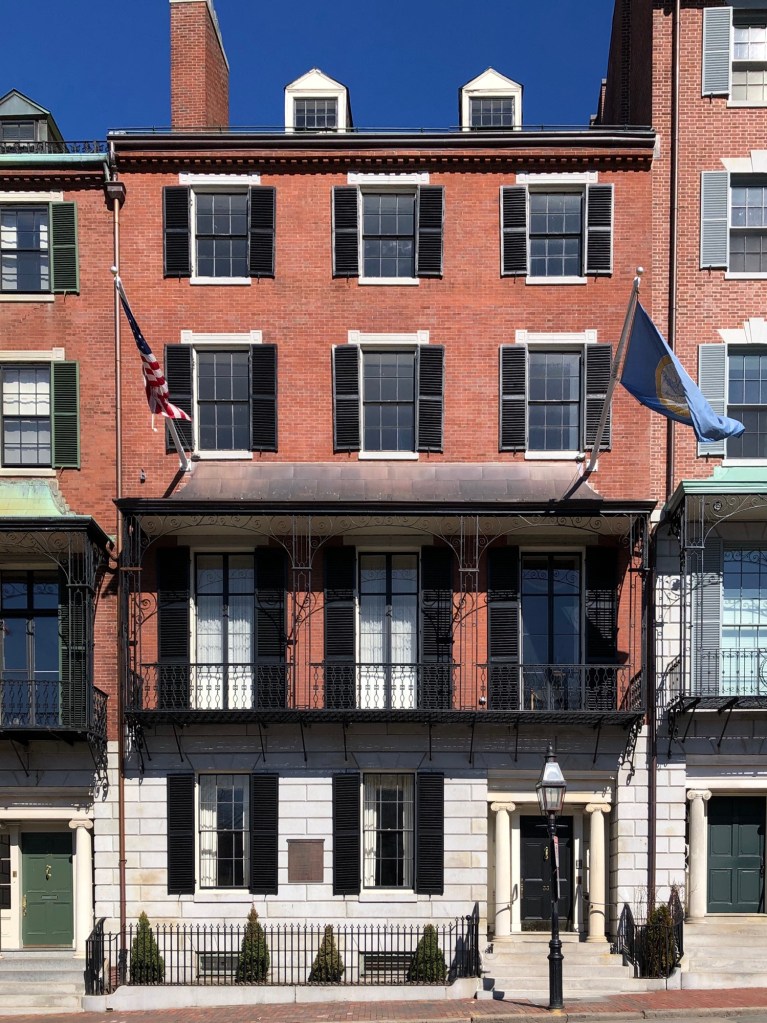
Tuckerman-Parkman Mansion // 1825

The Tuckerman-Parkman Mansion at 33 Beacon Street, like its neighbor, was built in 1825 from plans by architect, Cornelius Coolidge, in the Greek Revival style. The residence was originally purchased by Edward Tuckerman, a wealthy merchant and father of Professor Edward Tuckerman, a prominent lichenologist for whom Tuckerman Ravine on Mount Washington was named. Tuckerman Sr. lived here at 33 Beacon Street until his death. The next owners, Mrs. Eliza Parkman and her son, George Francis Parkman (1823-1908) moved here after the brutal murder and following sensational trial of her husband, Dr. George Parkman (1790-1849). The 1849 trial of Parkman’s murderer, Professor John White Webster of the Harvard Medical School, was called the “case of the century”. Professor Webster owed Dr. Parkman a substantial sum of money. The professor lost patience with Parkman’s constant reminders that his payment was long overdue and killed Parkman in a rage, dismembered his tall, lanky frame and concealed the body parts in a wall of a Harvard Medical School laboratory. With the help of a janitor, Dr. Parkman’s body was discovered. A murder trial ensued, and Professor White was found guilty and subsequently hung. The murder trial has been widely cited as one of the earliest uses of forensic evidence to identify a body. Seeking refuge from the attention and pain from the loss of the family patriarch and trial, Ms. Parkman and her son, George, moved to this home in 1853. Widow, Eliza Parkman died in 1877 and George F. Parkman lived in this home until 1908. In his will, Mr. Parkman bequeathed his mansion and over $5 Million to the City of Boston for the maintenance of the Boston Common. The Tuckerman-Parkman Mansion was restored by the City of Boston in 1972 and used almost exclusively as the Mayor’s residence until 1984. The house is now the official reception hall of the Mayor’s office and appears much as it did when built 200 years ago.