William Fraser House // c.1873

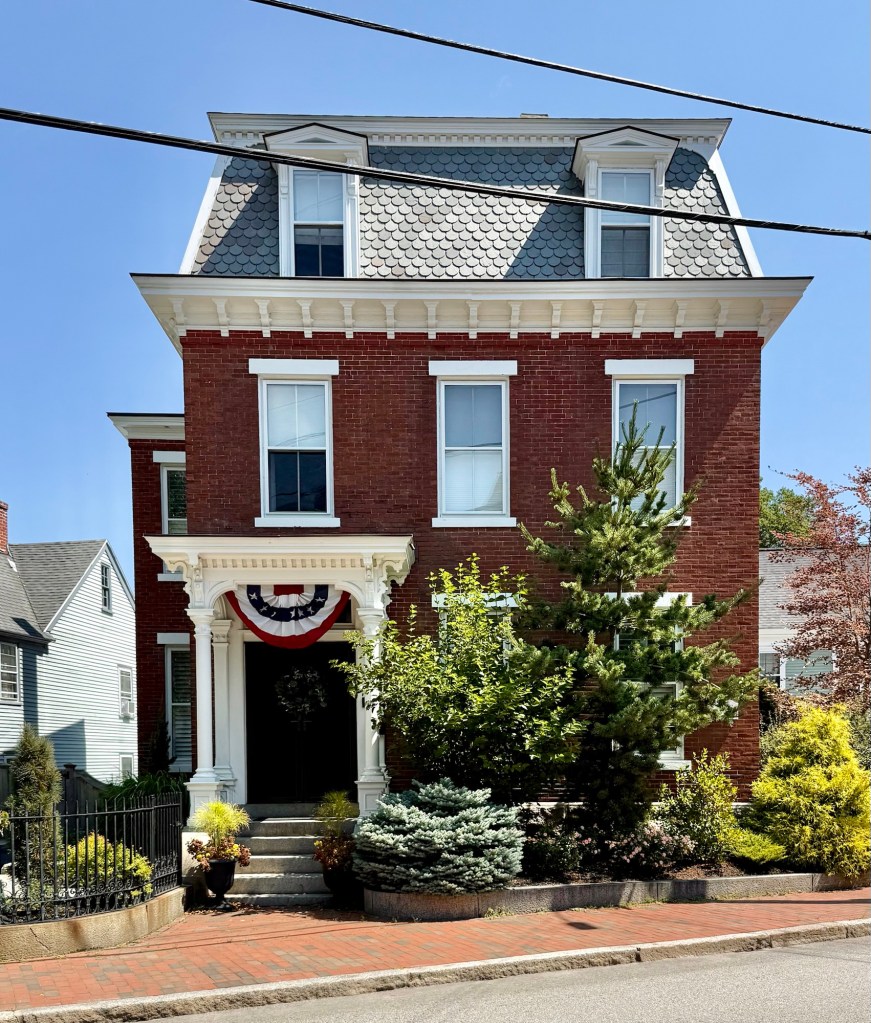
In a town full of clapboards and shingles, brick houses really do stand out! This is the William Fraser House, located at 303 Pleasant Street in the ever-charming town of Portsmouth, New Hampshire, a stately example of the Second Empire style as a single-family residence. The house was built by 1873 for William James Fraser (1836-1930), a Canadian-born mason who immigrated to Portsmouth in 1850 and began a successful career as a mason, building many of the town’s great masonry buildings. The Fraser House has a slate mansard roof with overhanging eaves, bracketed cornice, and paired gable dormers and a double wood-paneled entrance door with transom under a flat roof portico.
John E. Colcord House // c.1870

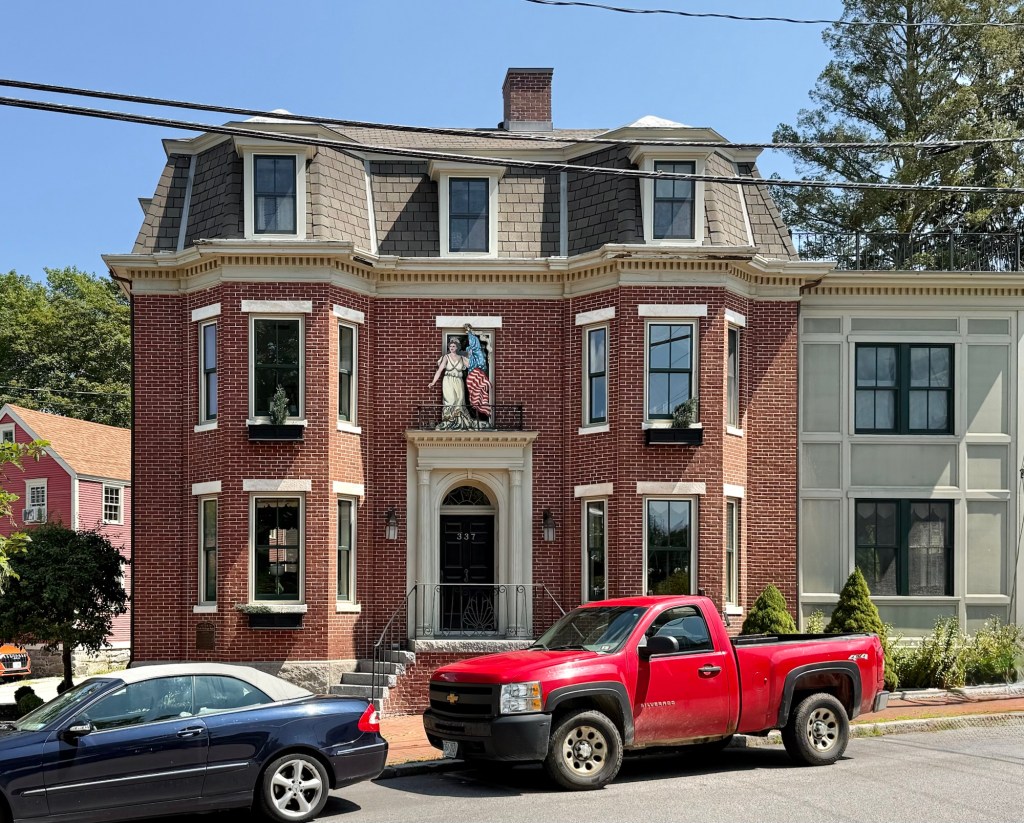
While Portsmouth, New Hampshire, is arguably best-known for Georgian and Federal style houses of the 18th and early 19th centuries, there are some great examples of Victorian style residences built after the Civil War to be discovered. This brick Second Empire style residence on Pleasant Street was built around 1870 and originally owned by Ebenezer Lord (1788-1877), who lived elsewhere in Portsmouth, likely gifting this home to his daughter, Susan (Lord) Colcord, and her husband, Charles Colcord. Both Charles and Susan died one year apart in 1872 and 1873 respectively, and the property was inherited by their son, John. John Edward Colcord worked as the Clerk at the Portsmouth Navy Yard. The building has a Mansard roof with overhanging eaves, denticulated cornice, and three shed-roof dormers at the facade. Walls are brick and rest on a granite foundation, with a later, wood-frame side addition that employs similar design details of the main house. 

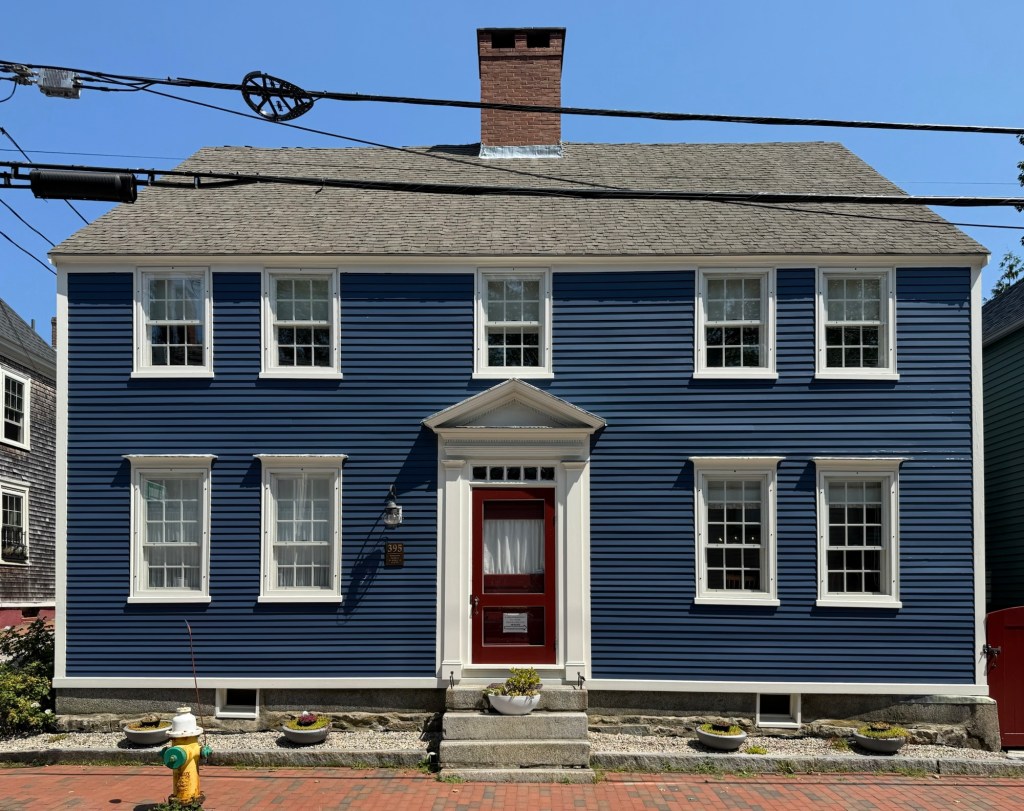
Benjamin Holmes Jr. House // c.1795

The Benjamin Holmes Jr. House at 395 Pleasant Street in Portsmouth, is a two-story, five-bay, residence with symmetrical facade with a central pedimented entry. In 1795, Benjamin Holmes (1768-1837) married Esther Lewis, and the couple moved into this residence. The late-Georgian house follows the typical form and finishes of many other coastal New England residences of the late 18th century and is in a great state of preservation.

Capt. Charles Blunt House // c.1795

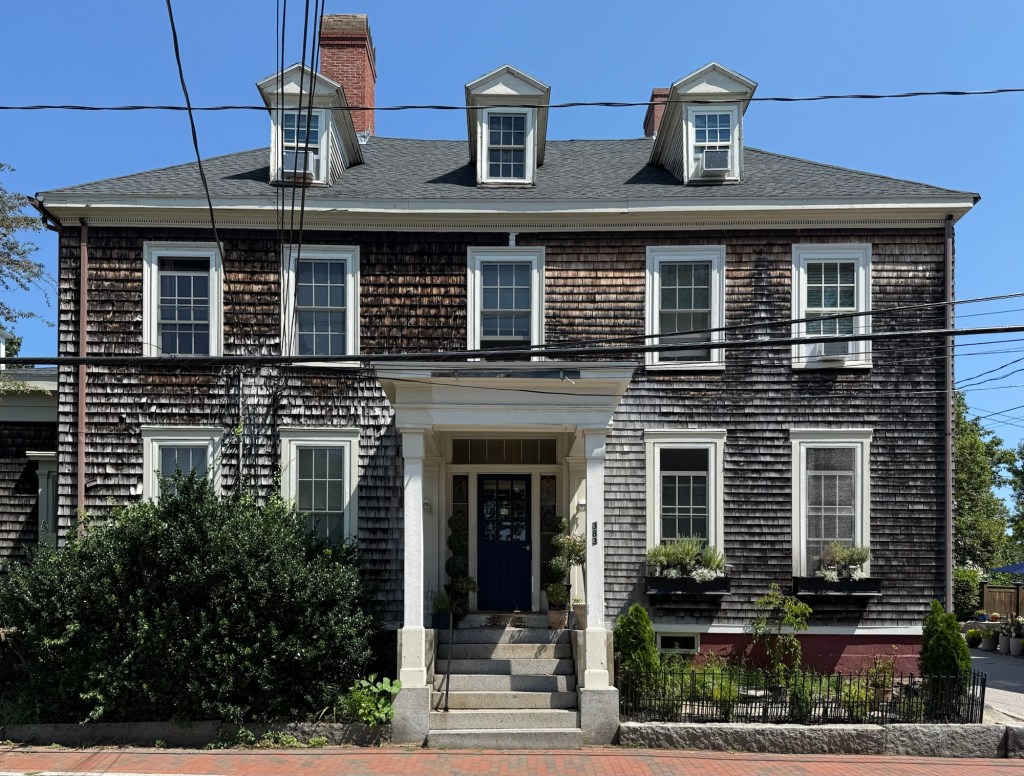
Master mariner Charles E. Blunt Sr. (1768-1823) built this large Federal period home on Pleasant Street in Portsmouth, New Hampshire near the turn of the 19th century for his bride, Abigail Laighton, and their new family. Charles Blunt was a wealthy sea captain who would be out at sea for months at a time, trading in the west indies. On a voyage near Havana Cuba in March, 1823, his vessel was boarded in the night by two piratical boats, with six men each, and Captain Charles Blunt was brutally murdered and thrown overboard. The ship’s cook was stabbed, and fed to the hogs on the brig, with the remainder of the crew maltreated and the goods plundered. The Captain Blunt House follows a symmetrical, five-bay, center entrance form, with cedar shake shingles, three pedimented dormers and large portico over the door.

Haven-White House // 1800

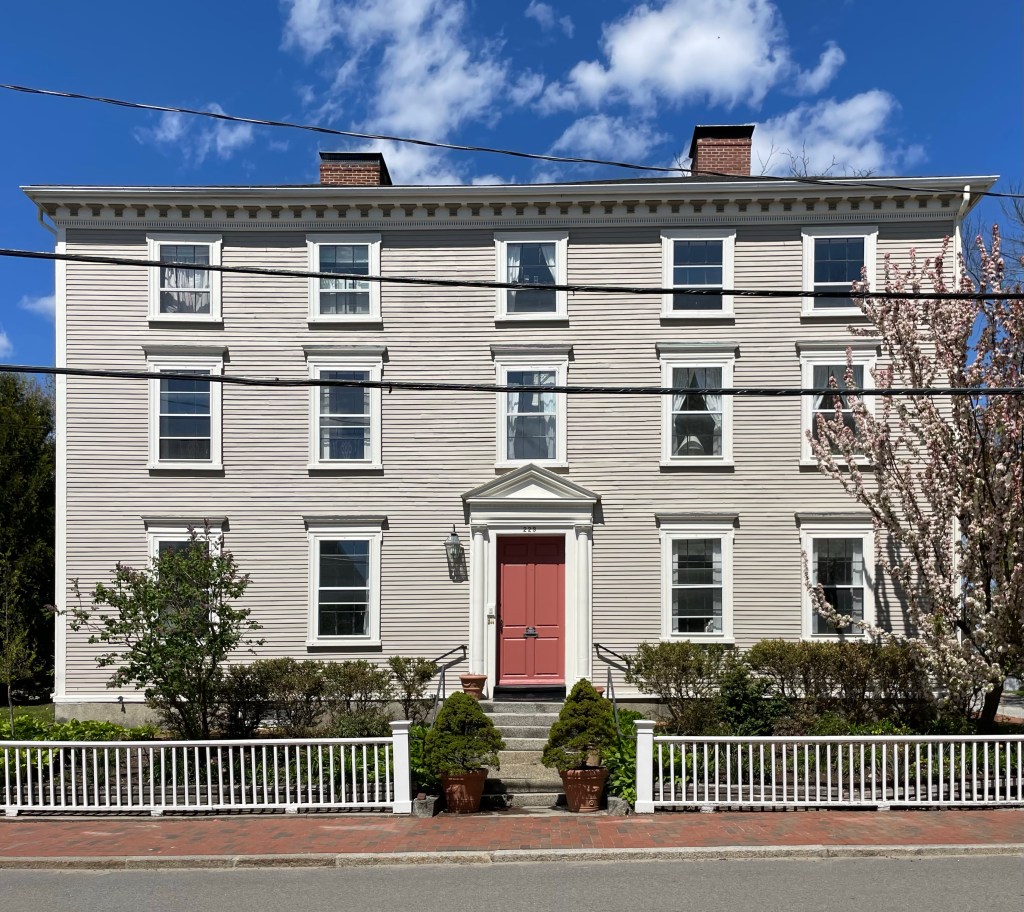
Another three-story Federal period house on Pleasant Street in Portsmouth, NH is this wood-frame example, known as the Haven-White House. The property was developed in 1799-1800 by Joseph Haven, a merchant who built the house across the street from his father’s residence. Joseph Haven occupied this house until his death in 1829. After his wife Sarah’s death in 1838, the house remained in the Haven family, though usually occupied by others, until 1898 when it was sold to Mrs. Ella White. The White family, which included a grocer, a City Councilman in the early 1900s; and a chiropractor, with the family occupying the house until 1981. This history of long ownership by only two families for nearly 200 years perhaps accounts for the survival of this important house with so few changes. As a result, the house was listed on the National Register of Historic Places in 1985, marking it as a nationally significant building.