Beckwith House – Partridge Hall // 1882

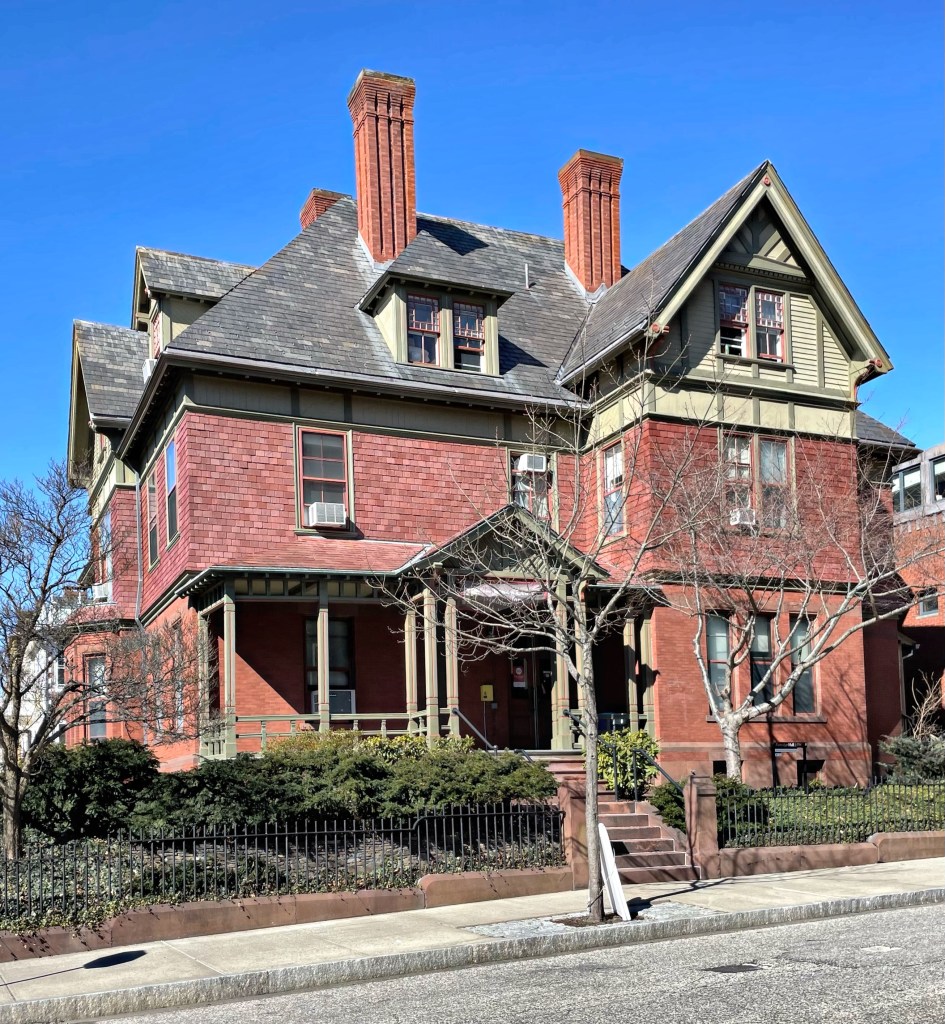
Henry Truman Beckwith (1808-1893) was born in Providence and (of course) enrolled at Brown University. He left school after two years and wished to see the world. He began to work as a cargo clerk aboard ships for a cotton merchant of Macon, Georgia. He traveled between Boston and Calcutta at least twice, bringing aboard novels from American and British authors, spending much of his time reading. Being well-read and without a family of his own (he never married), he devoted much of his time to clubs and organizations including: the Providence Athenaeum, Rhode Island Historical Society, and the Rhode Island Horticultural Society. In the later years of his life, Henry had this Queen Anne style home built in College Hill, on the same block as the Historical Society where he was a member. The Beckwith House was eventually acquired by Brown University and has since been known as Partridge Hall. The building is now home to the Brown Center for Students of Color, an organization that was established after a series of student protests in 1968 and 1975. Amid the civil rights movement of the late 1960s and 1970s, a group of Black students walked out of Brown University in December 1968 in protest of fierce racism on campus. The mission of the Brown Center for Students of Color has evolved over the years, but its current mission statement reads “Visualize. Vocalize. Mobilize”, they remain an integral piece of the campus and provide much-needed space for students of color to build a sense of community on campus.
Louis K. Harlow House // 1888

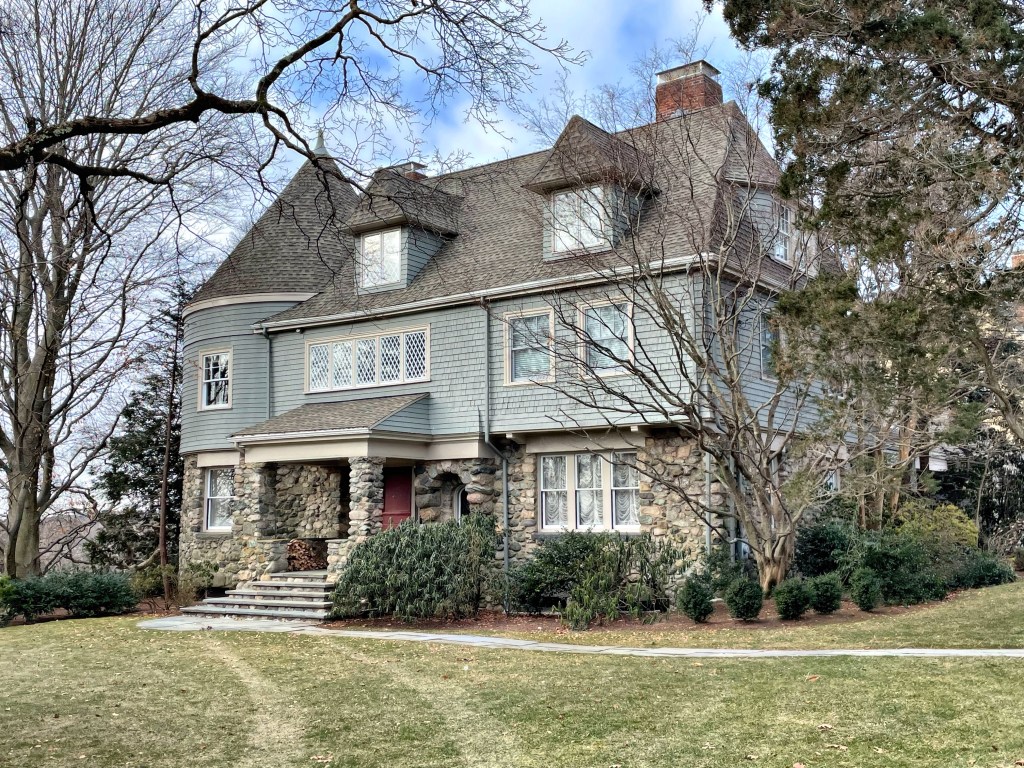
One of the best houses in Waban Village in Newton is this absolutely stunning Shingle style/Queen Anne home perched high on Moffat Hill. This house was built in 1888 for Louis K. Harlow, who began his career as a professional artist in 1880 and traveled Europe to study the work of prominent painters. Back in the Boston area, Harlow painted nature and landscapes and produced etchings that were shown in the Boston Art Club and sold worldwide. He later got into poetry and published multiple works. Harlow hired the firm of Longfellow, Alden, and Harlow, to design this country retreat. I assume there is a relation between Louis K. and the architect Alfred Branch Harlow, but I would love to find out the connection! The design is quintessentially Queen Anne, with the asymmetry, complex roof form, varied siding types, and diamond window sashes. The shingled second floor overhangs the fieldstone first floor which to me, evokes the Shingle style where the house seems to have grown out from the earth. I can only imagine how spectacular the interior is!

Winfield S. Carr House // 1896

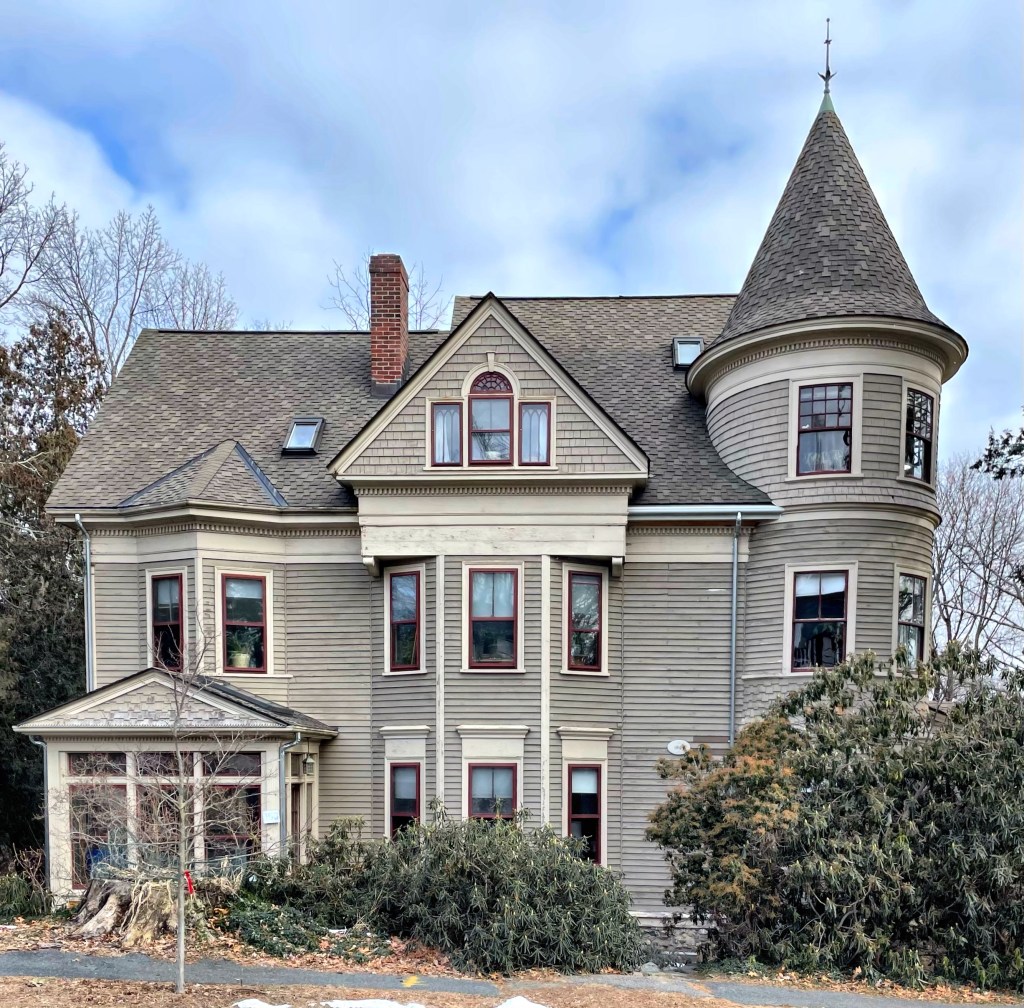
In 1895, Winfield S. Carr (1849-1911) purchased land on Windsor Road for a residence from William S. Strong, a horticulturist and developer of Waban Village. The lot is located at the peak of Moffat Hill, and provided sweeping views of undeveloped farm and marshland and possibly Boston in the distance. As a young man, Carr moved to Fall River from Maine, and was employed in the dry goods business. He eventually moved to Boston and opened up a toy shop, which clearly became a large success. The firm sold fireworks and children’s toys from the downtown location. The Queen Anne style home was occupied by Carr and his wife (they don’t appear to have had children) for less than a decade, when the couple downsized and moved to an apartment on Comm. Ave. in Allston.

Sunnylea // 1881

One of the best Queen Anne style summer cottages in Newport is this gem, named Sunnylea. The house was built in 1881 for Charles F. Chickering, who ran the Chickering & Sons Piano Company in Boston. Chickering hired local architect Dudley Newton, who had previously apprenticed under George Champlin Mason, a builder of many Newport summer houses. Sunnylea was the first independent commission that Newton designed with his own firm. The house was later owned by Luther Kountze, a New York banker and his wife Annie. After WWII, the home was converted away from single-family use, and was occupied as a prep school, before being converted to condos late in the 20th century. It recently sold, and wow, the interior is just as beautiful as the exterior!

Benjamin Case House // 1888

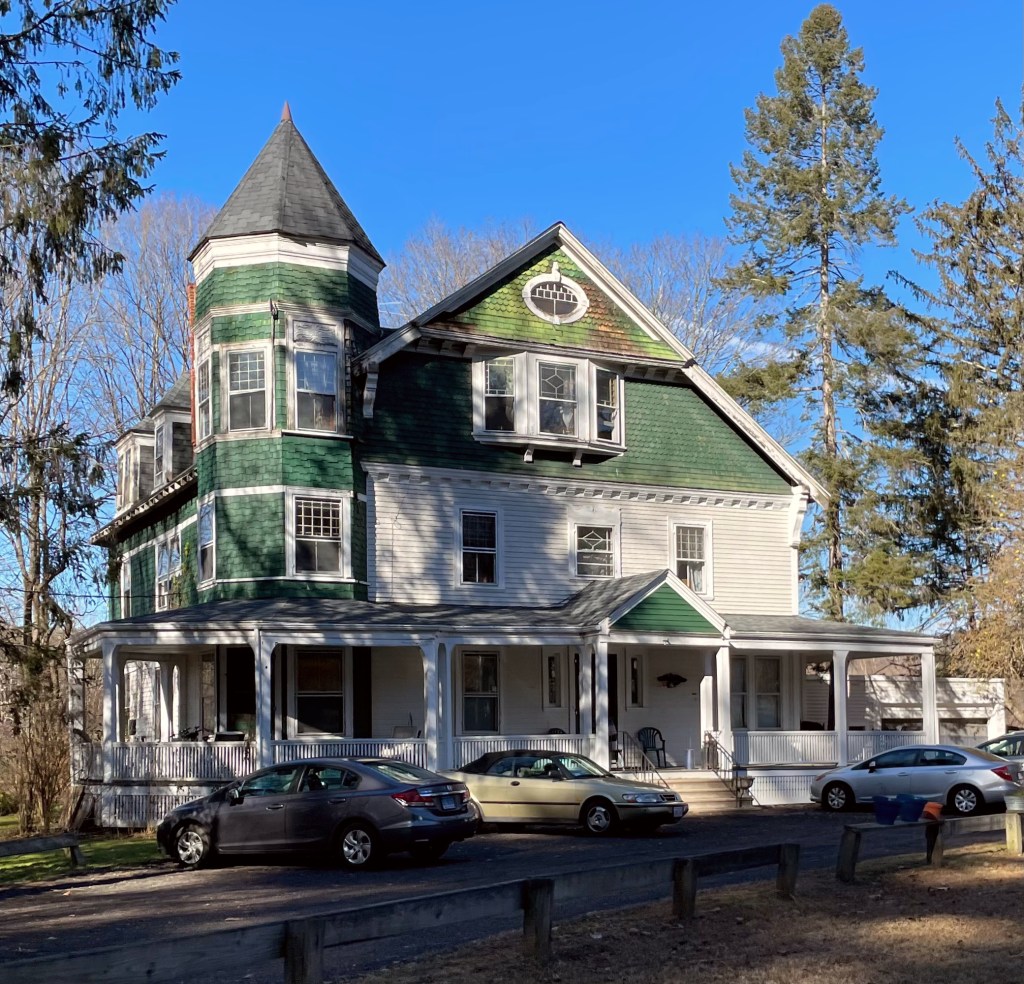
This large Queen Anne Victorian house in Canton Center was built for Benjamin Franklin Case (1861-1931), a banker and businessman who incorporated the town creamery. He made his fortune harnessing the rural character of the village, creating the Canton Creamery, where farmers could package and sell their dairy products to the rapidly growing communities nearby. Case was credited as bringing the telephone to town, with his office in his home serving as a switchboard room. He is also known as the first person in town to own an automobile. After his death, the property was used by his daughter Ruby as a vacation house. After WWII, she realized it was too much house for her to upkeep, and she converted the single family home into apartments.

Smith-Miller House // 1893

Located on stunning West Broadway in Bangor, Maine, the Smith-Miller House stands out as a beautiful blending of the Shingle and Queen Anne styles. Built in 1893 from the designs of Connecticut architectural firm Cook, Hapgood, and Company, the home was featured in The American Architect and Building News journal for its design success. The home is clad with continuous cedar shingle siding, with a prominent corner tower, wrap-around porch, and porte-cochere, all together provide complexity and intrigue on the street of large homes. What do you think of this home?

Rice-Petersen House // c.1890

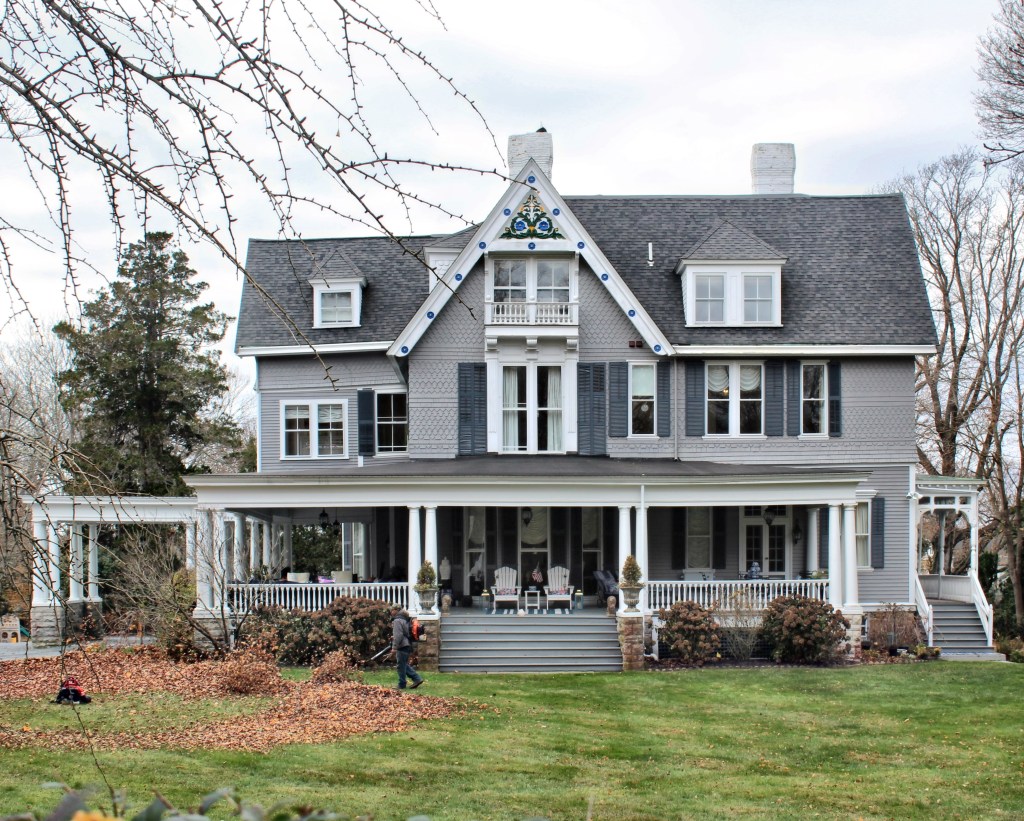
Built in the 1890s by Dr. A.W. Rice, the ground floor of this Queen Anne style house served as the physician’s office, and he lived with his family in the upper floors. The home stands out as a fairly uncommon example of the Queen Anne style in Marion, a town dominated by Shingle style homes in that period. An enterprising Danish immigrant named Viggo V. Petersen, purchased the home and adjacent carriage house in 1921 and opened an ice cream parlor in it. When Viggo V. died in 1941, his son, Viggo C., attempted to carry on, until wartime cream shortages and rationing forced him to close for the duration of the conflict. Thereafter, Petersen’s ice cream resumed production and remained a Marion fixture until its final closing in the 1970s. The home is now occupied by two offices, and the former carriage house is home to the Mary Celeste Wine and Whiskey Library, a fun place that educates about wine and whiskey, offering tastings and events.

Hiram P. Dinsmore House // 1894

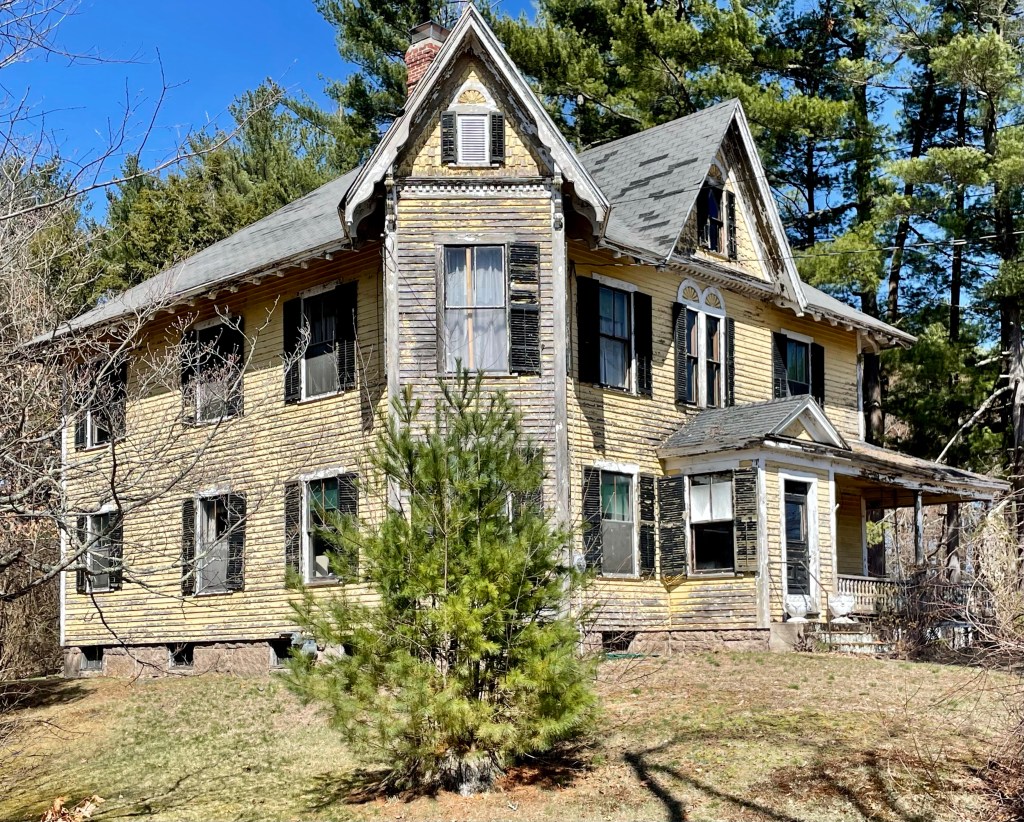
In 1894, Hiram P. Dinsmore, a clerk at the nearby Tewksbury Almshouse, purchased land not too far from his work to build a home for his family. The well-designed late-Victorian home features a wrap-around porch, a corner tower, twin sunburst or flower motifs, and the use of shingle and clapboard siding, all hallmarks of the Queen Anne style. After Hiram’s death, his wife and children lived in the home, and it was later willed to his daughter Beatrice and her husband, both of whom worked at the Tewksbury Almshouse (since renamed Tewksbury Hospital). The home has seen some deterioration with large sections of siding completely open to the elements unobscured by paint and a sagging porch roof. Hope to see this beauty restored.

Hollis Town Hall // 1886

Constructed in 1886, the Hollis Town Hall in New Hampshire is a distinctive example of Queen Anne civic architecture showcasing an asymmetrical design and a variety of forms, textures and materials. The building was designed from plans by Manchester-based architect William Butterfield. As originally constructed the building was painted in dark tints to harmonize with the roof which was covered with shingles and painted dark red. In 1902, the clocks were added atop the tower with a clock designed by George M. Stevens of Boston. Sadly, the buildings’ original polychromatic paint scheme which highlighted the architectural details was updated with a solid white color.

Simon Sherwood House // 1884

The Simon C. Sherwood house, built in 1884, is a fine late nineteenth-century eclectic Victorian home, somewhat unique to the Southport area of Fairfield, CT, which is dominated by early-mid 19th century styles. Simon Couch Sherwood was the son of Edwin Sherwood, a wealthy shipping merchant who made a fortune from trade between New York and Savannah. The Queen Anne-Eastlake style home was added onto with a larger porch, obscuring an original oriel window on the side elevation. Sadly, the home has a safe, yet inappropriate pale yellow body color with white trim, which does not showcase the intricacies of the Victorian era home.