Harriswood Crescent // 1889

Harriswood Crescent was built in 1889-90 at the height of Roxbury’s development as a streetcar suburb which coincided with the electrification of the streetcar lines in Boston. The area of Roxbury in which the Crescent is located, known at the time as Boston Highlands due to its rocky terrain and steep grades, was an extremely desirable residential location. As land values raised, middle and upper-class families looked for varied housing types that fit their demands. Seen as a great investment of the family estate, the heirs of wealthy businessman Horatio Harris (1821-1876) redeveloped lots on one side of a rocky park for fine townhouses, which were named Harriswood Crescent. The name was probably chosen for its historical associations with Boston’s Tontine Crescent and the great Georgian crescents of London and Bath in England. Architect J. Williams Beal designed the row, which was one of his first commissions upon returning to Boston in 1888 after employment as a draftsman at McKim, Mead & White and a long study in England to view architecture. Built at 15 separate units, the row of Tudor style houses is among the only of such developments in Boston, and New England at large.
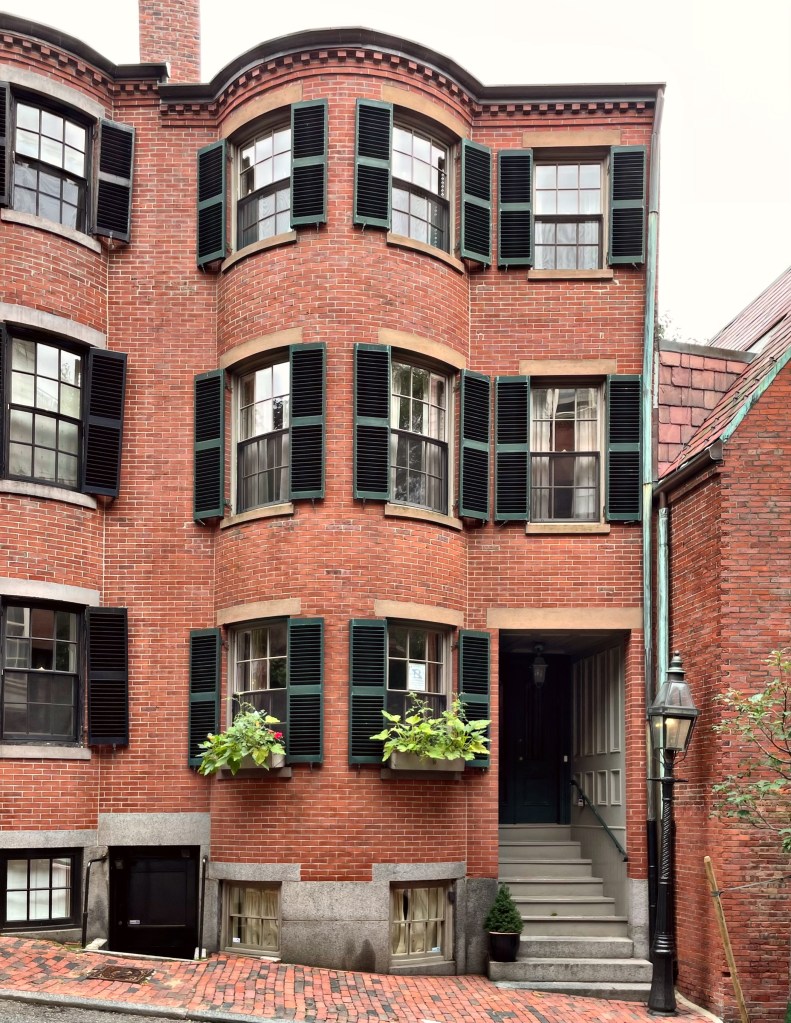
Joshua Bennett Townhouse // 1834

Just steps from the iconic Louisburg Square in Boston’s exclusive Beacon Hill neighborhood, a man named Joshua Bennett in 1834, purchased two recently completed townhouses built by housewrights Samuel H. Mitchell and Loring Dunbar. Joshua Holden Bennett (1792-1865) was born in Billerica, Massachusetts and split his time between his hometown and Boston. Bennett and his family owned the two identical bowfront houses until about 1930, likely renting them out to middle-upper class families. The home on the right (pictured) was later purchased by Benjamin B. Gillette an organist at a local church. After WWII, property values in Beacon Hill began to falter and this property and its neighbor became lodging houses of rented rooms to a more wealthy clientele than those on the North Slope of the hill. The home last sold in 1989 for $753,000 and is estimated at a value today at over $4,000,000!

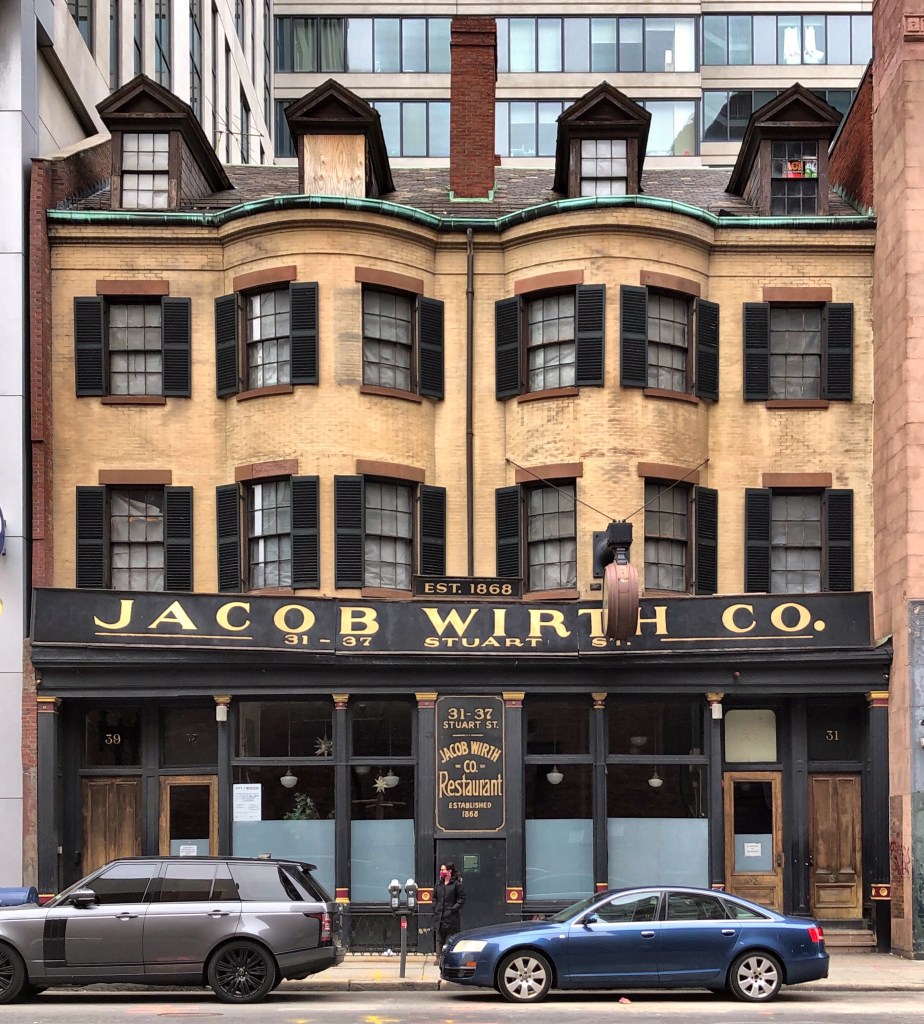
Jacob Wirth Building // 1844

Comprising twin bowfront Greek Revival rowhouses, the Jacob Wirth Restaurant buildings on Stuart Street are scarce survivors of a century of urban change in an area in which the building type once abounded. Built by developer housewrights quite active in the area, the twin houses were soon sold to “gentlemen” for rental purposes. Jacob Wirth, a German emigrated to Boston from Bingen, Germany, and began work as a baker before getting into the restaurant business. Wirth bought the left building seen here in 1878 as his dwelling above and ran his authentic German restaurant below. Due to the success of the restaurant, he purchased the adjacent home in 1889 and constructed the storefront that now unites them. Jacob Wirth ran the restaurant until his death in 1892, which was then managed by his son, Jacob Wirth Jr., who also managed it until his death in 1965! In 2018, Jacob Wirth’s, the second oldest continuously operated restaurant in Boston, closed its doors following a fire. The future is somewhat uncertain for the space, but as it is landmarked, there are protections (even at the interior) of the building.

Did you get a chance to eat at Jacob Wirth’s before it closed?