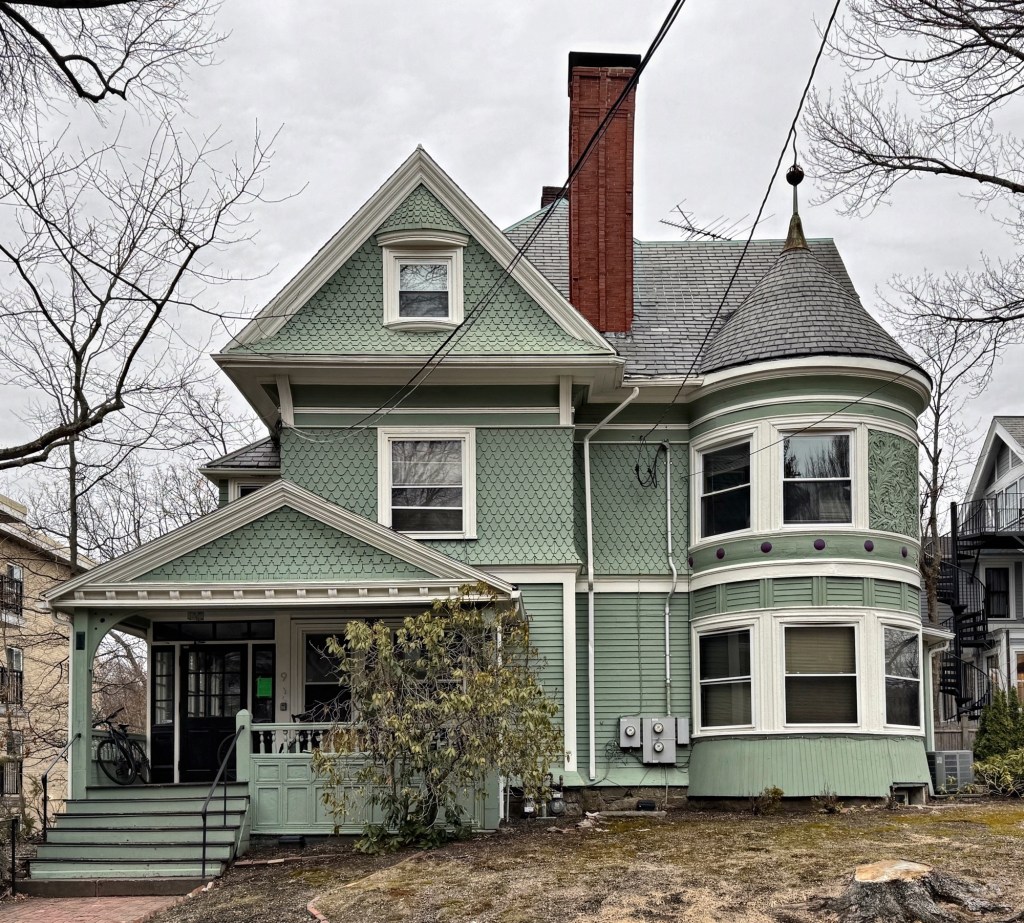
Built in 1883 for George Putnam May and his wife, Alice (Walworth) May, this Queen Anne style residence on Francis Street in Brookline, Massachusetts, contains all of the traits of the architectural style. George P. May was employed at the Walworth Manufacturing Company a plumbing pipes and equipment manufacturer founded by James J. Walworth, who was Alice May’s uncle. The property was subdivided on Alice’s fathers estate which fronts Kent Street nextdoor. I wonder if George wanted to live in the rear yard of his father-in-law! For their Brookline residence, the couple hired architect, S. Edwin Tobey, who paid great attention to detail. The May House features an asymmetrical plan, varied siding types, complex rooflines, and a corner tower with conical roof.
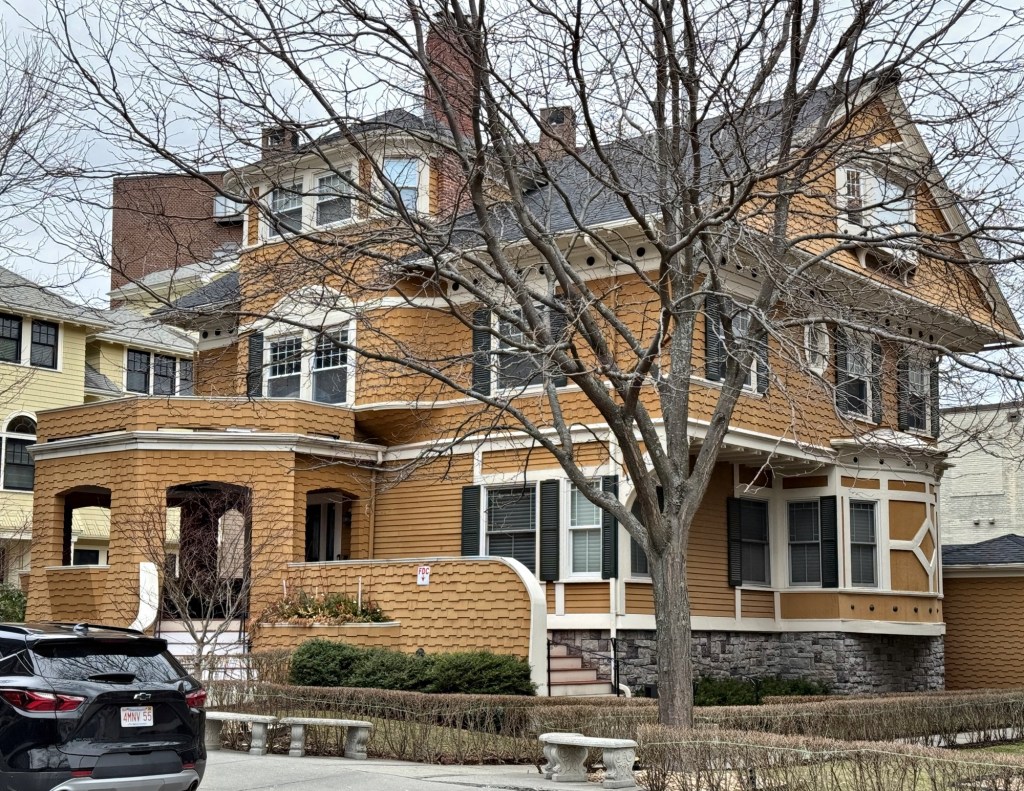
An expression of the Shingle style in all her beauty, the George B. Dexter House on Sewall Avenue in Brookline was built in 1885 both as a residence and a billboard advertising the owner’s business, really. The residence was built for George B. Dexter (1854-1935) a partner in the Dexter Brothers Company a paint and stain manufacturer that was a favorite of architects in the late 19th and early 20th centuries. For his Brookline residence, George Dexter hired architect S. Edwin Tobey to design this Shingled masterpiece with continuous shingle siding with rounded bays and a shingled piazza to showcase the stain products of his company. According to articles, Dexter also stained and painted the interior a variety of colors to showcase the wide range of options his company had. George Dexter would move to Pill Hill neighborhood in a new home just a decade after having this residence built, likely caused by the development of apartments and commercialization in the Coolidge Corner area by the turn of the century. The Dexter House was converted to a two-family in the 1920s and today has three condominium units, with owners clearly taking great pride in this significant residence.
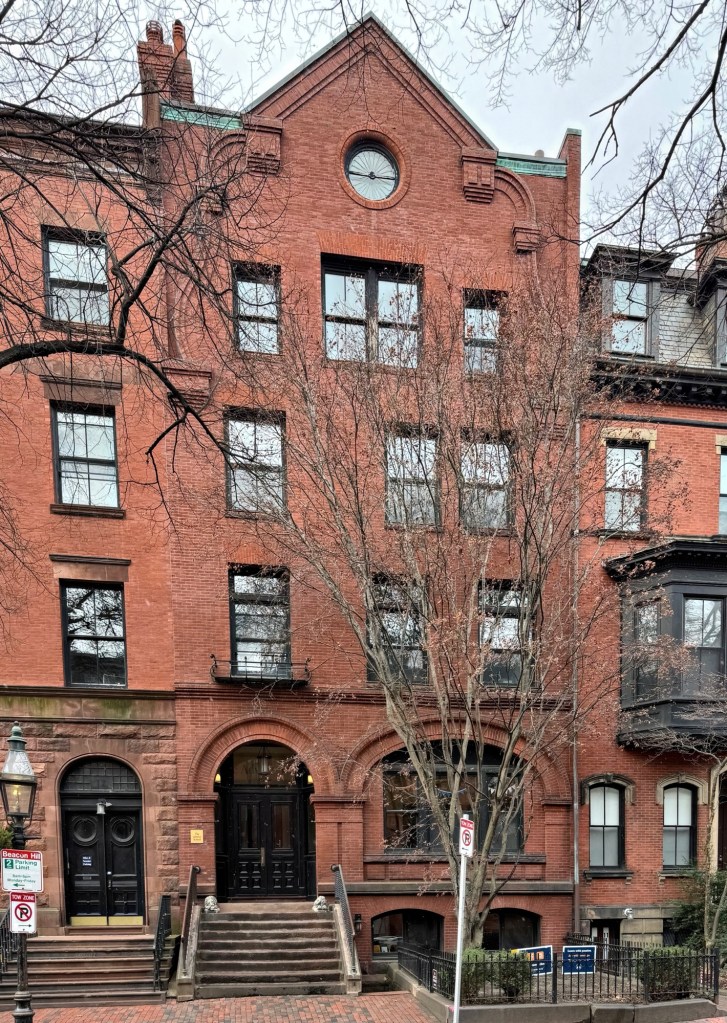
One of the many great townhouses on Brimmer Street in Boston’s Beacon Hill neighborhood is this residence designed as a unique interpretation of Queen Anne and Romanesque Revival styles. Original owner, Eliot Channing Clarke (1845-1921), an MIT-educated civil engineer. His uncle, Thomas Curtis Clarke, was a noted civil engineer, a member of the firm of Clarke, Reeves & Co., Bridge Builders in Pennsylvania, and served later as President of the American Society of Civil Engineers. When Thomas Clarke’s firm was designing and building a new bridge over the Mississippi River in Quincy, Illinois, he had his nephew lead in the design. In 1876, Eliot was appointed engineer in charge of a survey for a main drainage system for Boston. The project was adopted and construction began a year later, taking years to complete. In 1885, Clarke published the work that he oversaw, modernizing a rapidly growing Boston water and plumbing system. He became one of the leading sanitary engineers of the United States. In 1884, Clarke hired architect, S. Edwin Tobey, who designed this townhouse with a unique gable containing a ocular window and panel brick parapet as an interpretation of a Flemish gable. A traditional arched entry in brick is a nod to the Romanesque Revival style, which surged in popularity in Boston following the completion of H. H. Richardson’s Trinity Church. In 1969, the Clarke house’s interior was connected with its neighbor as the Advent School, a private K-6 school associated with the Church of the Advent across the street.
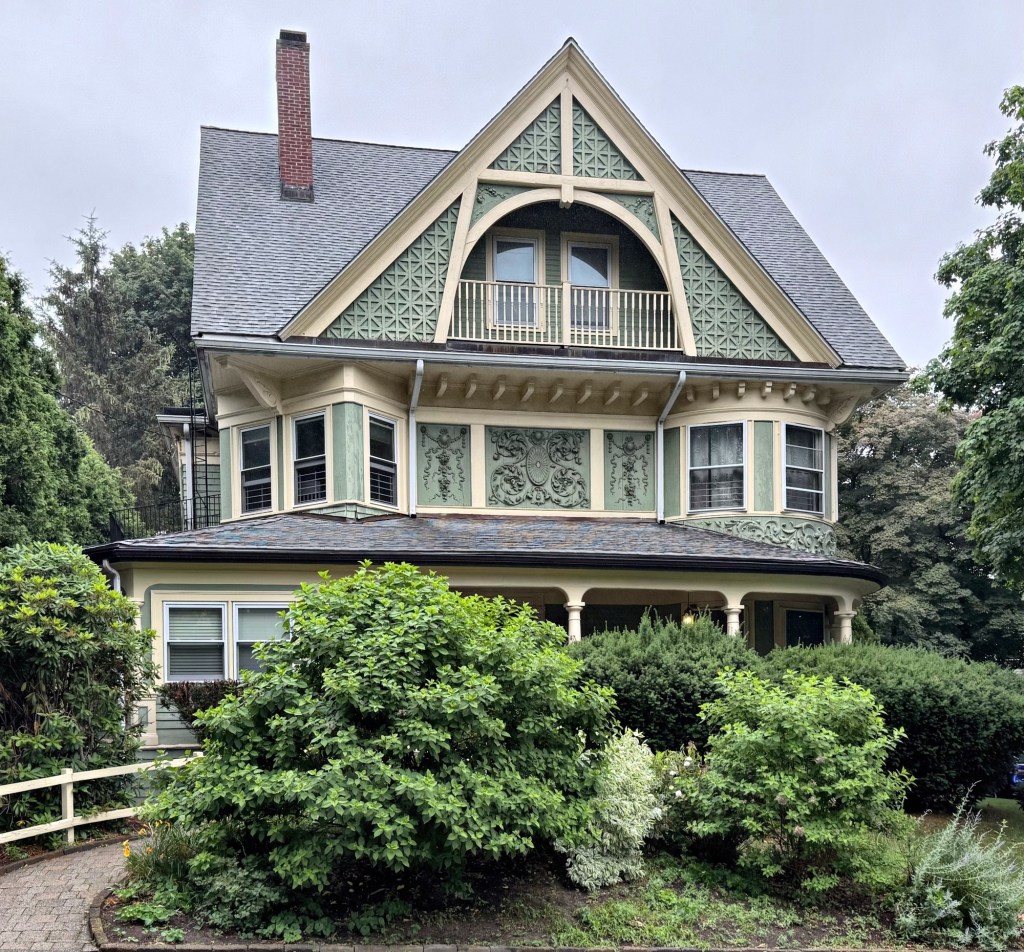
Built in 1894 for George and Emma James, the house at 47 Ocean Street in the Ashmont area of Dorchester, stands as one of the finest high-style examples of a Queen Anne single-family residence in Boston. George James was born in Vermont and worked as a farmer before moving to Boston, where he found work as a shoe manufacturer, opening offices and manufacturing facilities in the Leather District. The house was clearly designed by a skilled architect, and historians note that the residence was the design of architect S. Edwin Tobey, a skilled proponent of the Queen Anne style, seen here with its incredible detailing and unique form. The high-relief carvings in the gable and panels stand out, along with the recessed porch, and historic stable at the rear.
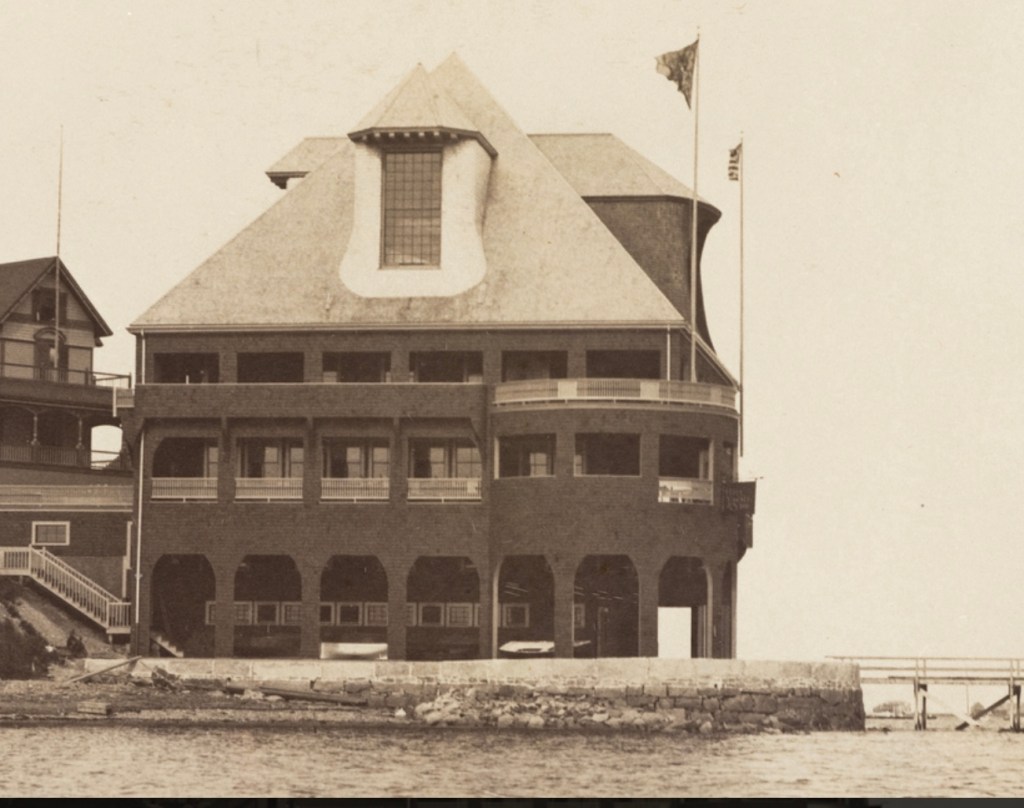
c.1891 image of second Hull Yacht Clubhouse, Stebbins Collection, HNE
In the Spring of 1880, thirteen Hull, Massachusetts, summer residents, who owned and raced small sailboats, met and decided to form a yacht club. The Hull Yacht Club was founded that same year. During the first two seasons there was no club house, sailing events were run from a private pier and dock and meetings were held at members homes. Even though they started with no club house, being close to Boston with plenty of deep, protected water, drew many new members. The first clubhouse here was constructed in 1882 and the club saw membership soar to over 500. The clubhouse was quickly deemed inadequate for the Boston-area elite and their massive sloops. The second Hull Yacht Club was completed in May 1891. The New York Times and Outing Magazine described the new club as one of the grandest yacht clubs in America, and at the time, it had the second highest membership in the country! The main club house was designed by architect S. Edwin Tobey, and stood four stories, with a 12 foot wide piazza on three sides covered by endless expanses of shingles. The third floor had billiard rooms and public and private dinning, committee room, reading room, wine room, The second floor housed three bowling alleys, and the first floor had lockers, showers, laundry, spar storage. The club merged a couple times over the subsequent decades, but suffered heavily due to the Great Depression, when the Gilded Age monies stopped flowing as freely. The club sold the massive shingled building to developers who sought to convert the building into a resort, but it was deemed a fire hazard and razed in the 1930s. The club erected a new, modest clubhouse near Point Allerton later.
 Buildings of New England