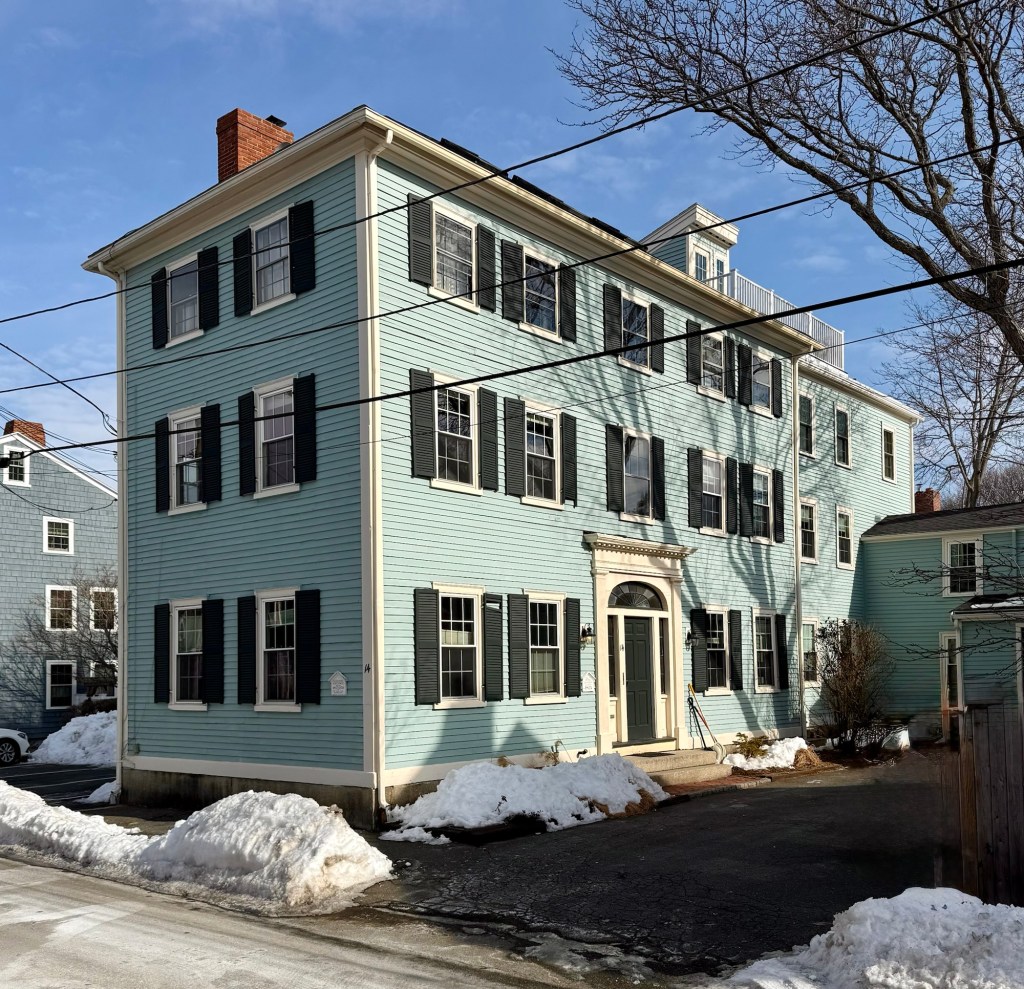
Edgerly-Hawthorne House // 1824

The Edgerly-Hawthorne House on Mall Street, near the Salem Common, is one of the most significant residences in Salem, Massachusetts. The Federal style residence was built in 1824 for Peter Edgerly, who ran a teamster/trucker or distribution company in Downtown Salem. After a decade, Peter became insolvent and the property was sold to Joseph Leavitt, a wealthy property owner in Salem. This house is best-known as the place where Salem-born Nathaniel Hawthorne and his family, lived from 1847 to 1850, and where he wrote The Scarlet Letter. It was in the room closest to the street, on the third floor, that Hawthorne sat at his desk and wrote the American masterpiece of fiction. After publishing The Scarlet Letter, Hawthorne moved to the Berkshires and then back to Concord, Massachusetts, never to live in Salem again. In c.1906, the Edgerly-Hawthorne House was photographed by the Detroit Publishing Company highlighting some landmarks in town. The house looks nearly identical from when it was built over 200 years ago!
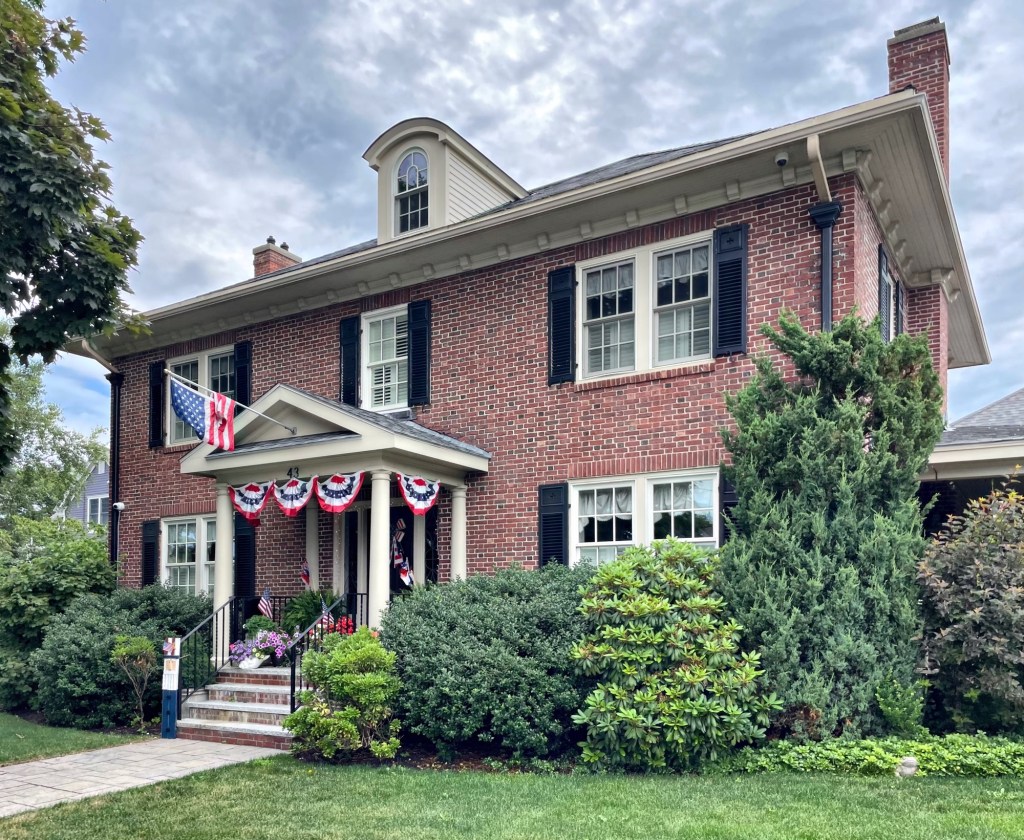
James Roope House // 1916

The only historic brick residence located in the charming Salem Willows neighborhood of Salem, Massachusetts is this stately Colonial Revival house at the corner of Bay View and Juniper avenues. The brick dwelling was constructed in 1916 for James Roope, President and Treasurer of the Salem Lumber Company. Designed by Boston architect, Gordon Robb, it is two stories high, with a shallow hipped roof. The central entry has leaded sidelights and a pedimented porch with trellises at the sides.

Edwards-Machado House // 1807

Tucked away on Carpenter Street, one of my favorite Salem houses, the Edwards-Machado House stands out as the only brick house on the street, for good reason! In 1803, Joseph Edwards, a carpenter, purchased this piece of land and built a three-story wooden house for his family. Just three years later, a large fire destroyed the home, the family’s belongings, and at least two neighboring homes. Undeterred, Edwards built the present house to replace the one lost in the fire in 1807, once he received his insurance, but this time, he constructed the home of fireproof brick! He sold the house not long after, and the property went through many hands in the 19th century, many owners renting the property to families. In 1877, the property was sold to John Bertram, one of Salem’s greatest benefactors who lived at 370 Essex Street which he later gave his mansion to the city for use as a public library. Bertram rented out the former Edwards home to the Machado family.

Immigrants from Cuba, the patriarch, Juan (John) was a cattle rancher in Cuba. He came to the United States in the early 1850s to escape having to take the loyalty oath to Spain, as he believed in Cuban independence. In the U.S. he entered school in Manchester-By-the Sea in order to learn English. In Massachusetts, he met his future wife, Elizabeth, and took her back to Cuba where they remained for over ten years. In 1868, just before the beginning of the Ten Years War in Cuba, Juan, his wife and their children left for the final time after he had freed his slaves and distributed his cattle to various relatives. In Salem, he worked as a spanish teacher and translator. His son, Ernest, became famous as a prominent Cuban-American architect. Ernest attended MIT and studied architecture before entering the office of Shepley, Rutan & Coolidge, the successors of the great architect H. H. Richardson. In the late 1890’s Machado opened his own architectural firm, with offices in Salem and Boston, and designed many large Colonial Revival estates for wealthy New England families. Tragically, Ernest died in New Hampshire, when his canoe capsized, drowning at 39 years old.

Orne-Derby House // 1808

It’s rare to find a house with so much potential in Salem, a town where seemingly every old house has been purchased and lovingly maintained or restored. This home on Federal Street could use some TLC to restore her to her former glory. In 1808, William Orne Jr., a housewright and his wife Polly acquired a mortgage for the lot here and he built a large, Federal style home with gambrel roof, showcasing his building skills. The property was a little more than the couple could handle financially, which was compounded by the War of 1812, and the Royal British Navy blockading maritime trade, which especially hurt Salem’s port. The Orne House was sold in 1817 to Captain John Derby III, who died just a year later, leaving his widow Sarah (Felton)
Derby all his estate. Sarah rented the home to family, but was allowed to live there until her own death in 1857. The stunning home with fanlight at the front door, historic wood windows, and pair of large brick end chimneys all could be saved with a good restoration of the home. Fingers crossed!