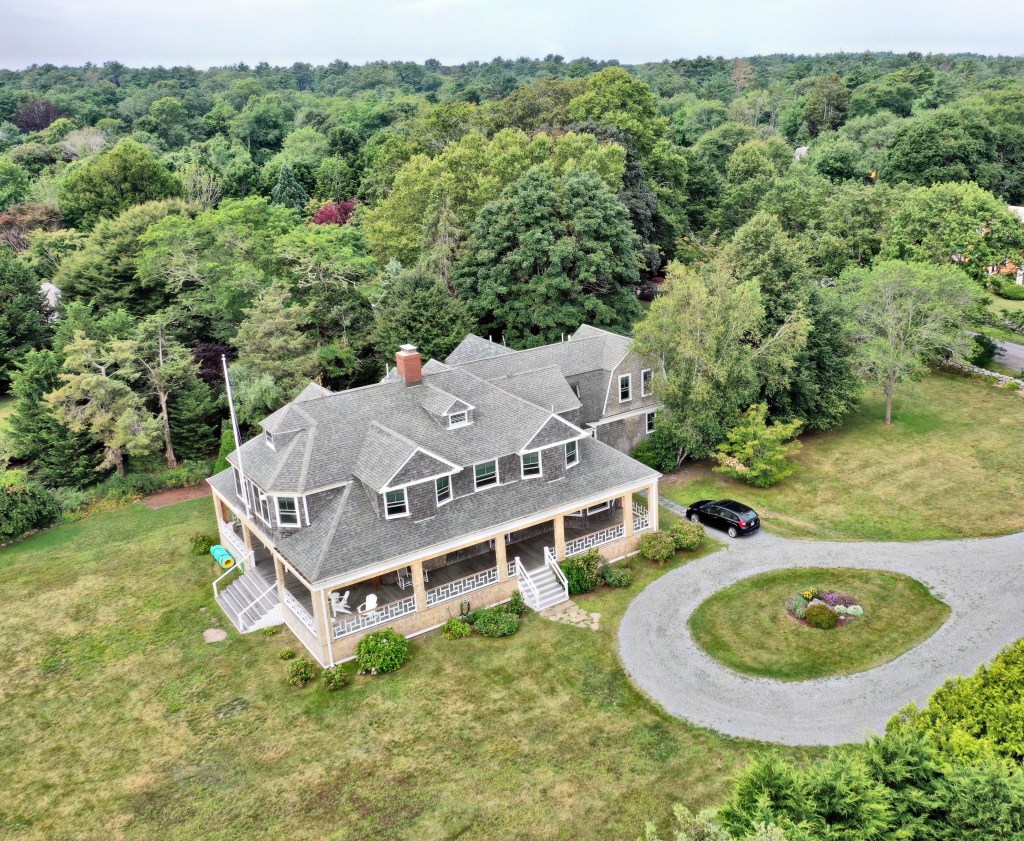
“Point Rock” is one of the smaller summer cottages built during the end of the 19th century for wealthy city-dwellers to escape for summers from the stress and pollution of city life. This home was built around 1890 for David W. Lewis, a concrete and stone dealer in Boston. The home is sited in the middle of a waterfront lot, overlooking Sippican Harbor and Buzzards Bay. The house is a great example of the Shingle style, popular in the late 19th century, and features a strong horizontal emphasis and continuous shingles from the roof to the foundation. The chippendale porch balustrade is a great added touch.
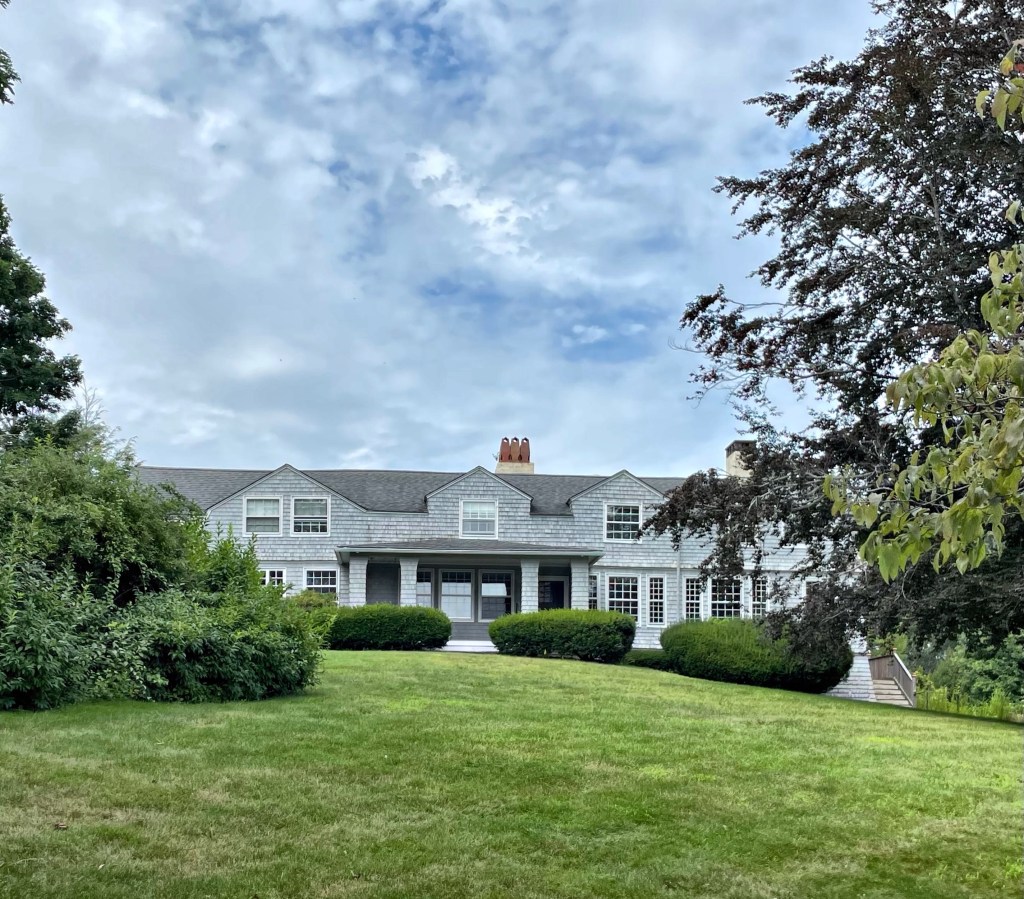
Charles Allerton Coolidge (1858-1936) was born in Boston and grew up in the iconic Beacon Hill neighborhood, known for its stunning architecture. Inspired by his surroundings, he attended Harvard and MIT and studied architecture, graduating in 1883. He entered into Henry Hobson Richardson’s architectural practice as a draftsman until Richardson’s death in 1886. Upon his death, Coolidge continued Richardson’s commissions as a partner, as Shepley, Rutan and Coolidge. Shepley married Richardson’s daughter; and Coolidge later married Shepley’s sister. It is likely that Coolidge became aware of Marion from Richardson’s earlier design of the Percy Browne Cottage in town. He must have liked the town so much, since he built this summer cottage in 1891 in a sparsely developed area across Sippican Harbor from the village. The Shingle style home was later rented to Isaac Henry Lionberger, a lawyer who served as assistant Attorney General of the United States by appointment of President Cleveland (who also summered in Marion). Lionberger, who spent most of his time at his home in St. Louis, married Coolidge’s wife’s sister, so the families often hung out at this home together. The summer cottage in Marion is still owned by Coolidge’s heirs to this day.
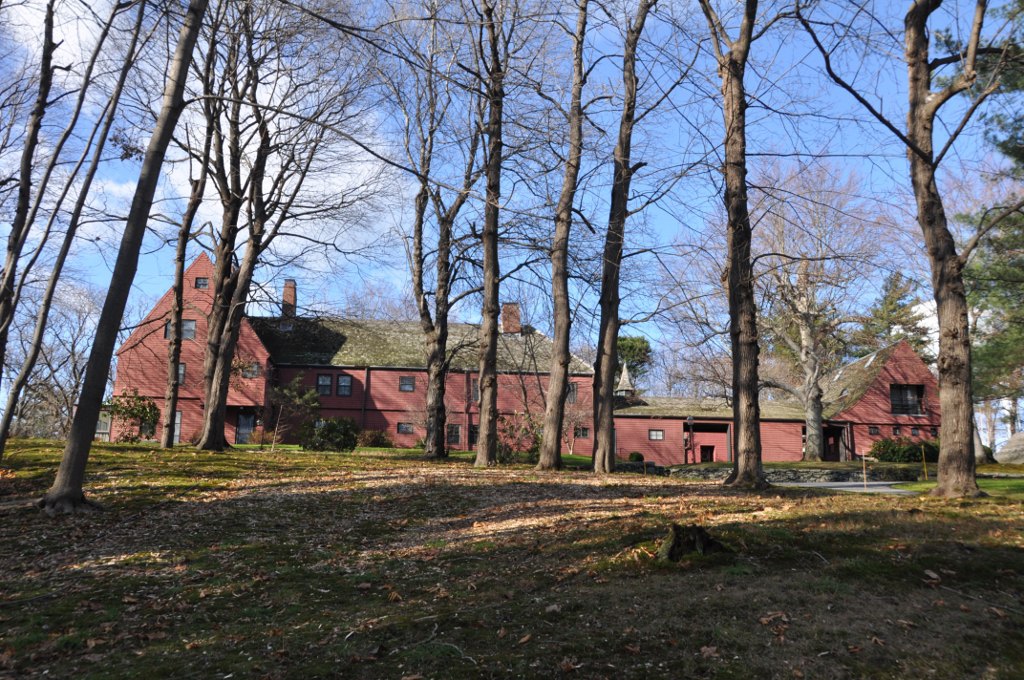
In 1881, Henry Hobson Richardson furnished plans for this modest, shingled cottage in the town of Marion, overlooking Sippican Harbor. At the same time, he was also completing designs for Austin Hall at Harvard and overseeing the construction of Albany City Hall in New York, both in his iconic Richardsonian Romanesque style. This Shingle style home in Marion was designed for Reverend William Percy Browne (1838-1901), who was educated at Kenyon College in Ohio alongside John Cotton Brooks, the youngest brother of Phillips Brooks, who would become the Rector of Boston’s Trinity Church and briefly Bishop of Massachusetts. Brooks would hire H.H. Richardson to design Trinity Church in Boston in the early 1870s. From this connection and being members of the St. Botolph Club of Boston, Reverend William Percy Browne and H.H. Richardson began a working relationship designing Browne’s summer cottage in Marion. The legend is that at the club, Browne bet Richardson that he could not design a small house for $2,500. Browne lost. This modest house was completed in 1882 and represented an early, significant example of a Shingle style home in Massachusetts. Browne died in 1901 and the house was sold to Sidney Hosmer, a Boston electrical engineer. Under his ownership, the home was expanded and altered, somewhat obscuring Richardson’s original design. The cottage was eventually purchased by Tabor Academy, who in 2019, pulled a demolition permit for the house. Architects and historians quickly rallied and advocated for the preservation of the cottage, saving it from the wrecking ball. The academy is undergoing alternative plans, which were stalled due to Covid-19.
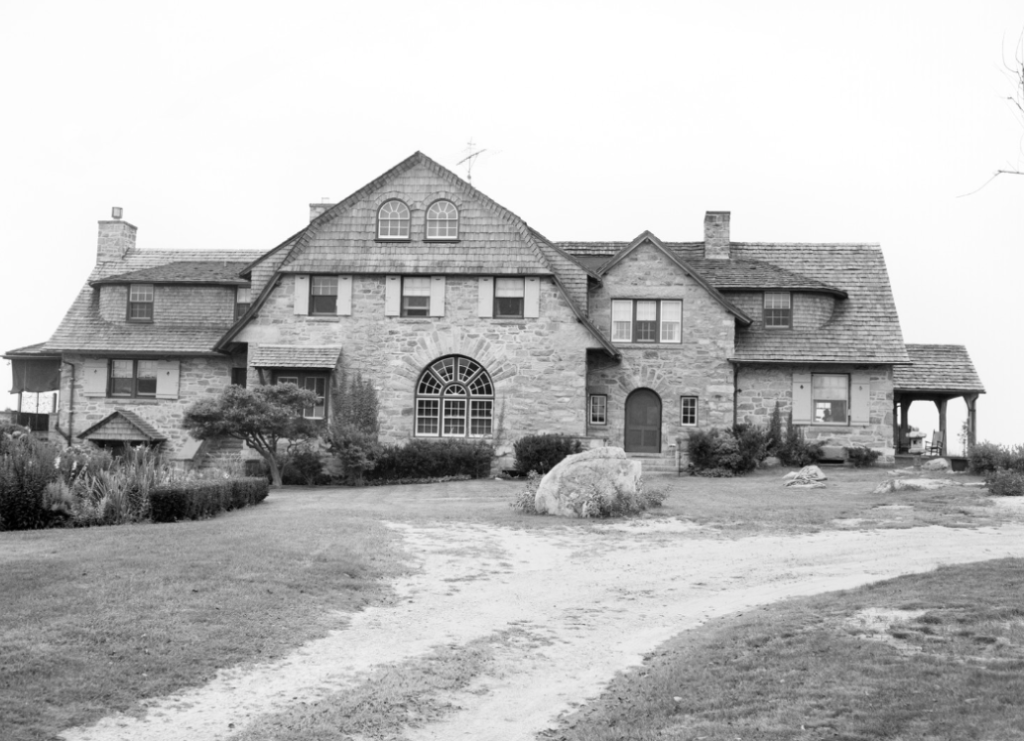
Henry Cooke White (1861-1952), the patriarch of an extremely artistic family, purchased undeveloped land on a coastal part of Waterford, Connecticut in 1891. When passing through the area he found a vantage point overlooking the water, he was overwhelmed by the panoramic view of Long Island Sound, writing in his memoirs, “…I was convinced that this was my Promised land.” Not long after, he built a summer cottage on what became known as White Point the following year. The Whites wintered with his parents in Hartford until they built a year-round home in Waterford in 1913, designed by Wilson Eyre, a Philadelphia architect, after he was inspired by Charles Lang Freer’s home in Detroit. The rustic Shingle style house was constructed of ashlar stone masonry with shingles above, which is sited perfectly on the rocky shoreline. Also on the site is a boat house and garage (which I could photograph from the street) in similar detailing. Henry‘s son and grandson both followed his footsteps: Nelson Cooke White (1900-1989), who was born at White Point, and inherited his father’s love of the sea, became a noted marine and landscape painter; and Nelson Holbrook White (1932-) who was taught by his grandfather and later studied in Italy how to perfect his painting.
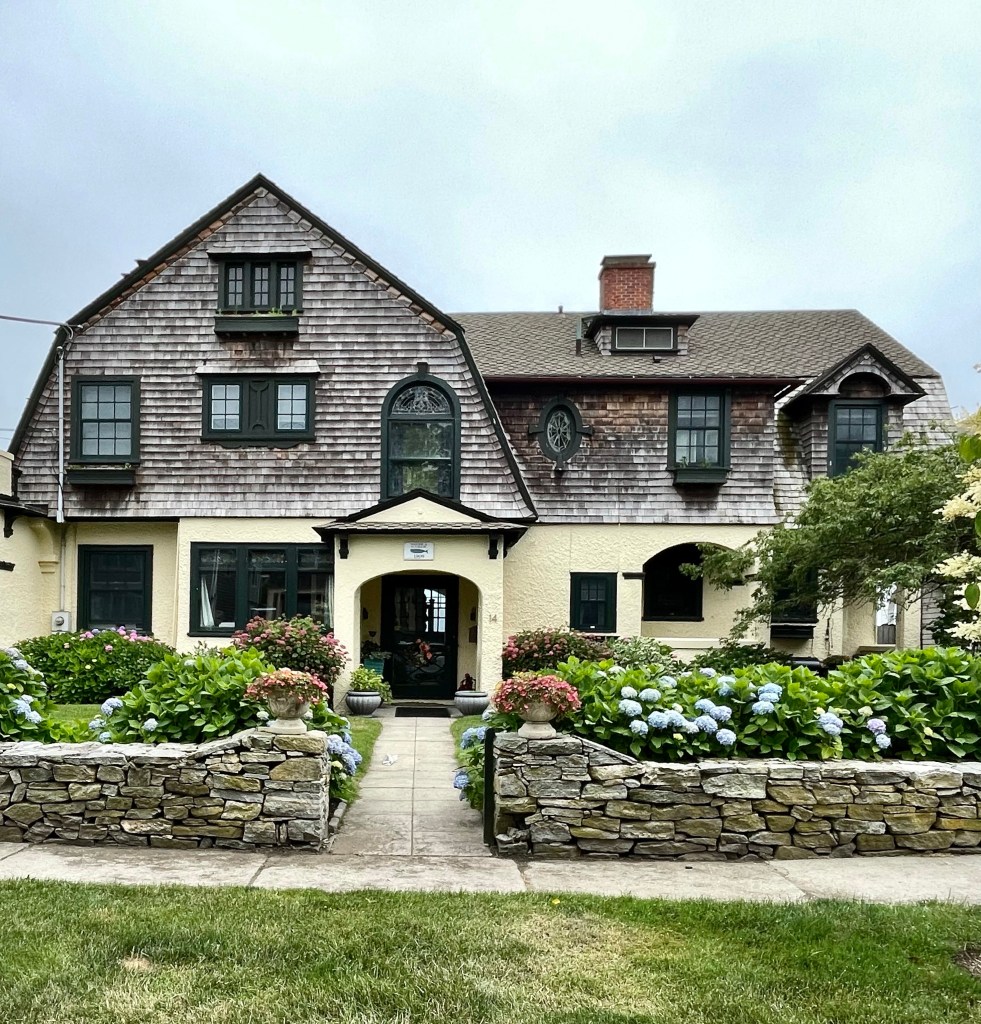
This summer cottage in the Neptune Park development of New London, Connecticut, was built around 1910 for Walter Garde, a resident of Hartford and New London. Walter built this home as a retreat from city-living where he could breathe the fresh sea breeze and not worry about smoke and pollution from the growing industrial cores of Hartford and New London. The home blends styles and forms elegantly with a stuccoed ground floor and shingles above. A cross-gambrel roof adds depth with windows in various shapes and sizes creating a pleasing composition at the street. Walter Garde was a businessman who notably opened the Garde Theatre (now Garde Arts Center) in Downtown New London.
The Dr. Henry Jacob Bigelow House, sitting high on Oak Hill in Newton, is among the last designs (1886) of architectural icon Henry Hobson Richardson. If you already didn’t know, Richardson was one of the foremost architects of his day and is known both for bold Richardsonian Romanesque and Shingle style designs. He was hired by Dr. Henry Jacob Bigelow to provide plans for a sprawling country retreat from the noisy and cramped conditions in Boston. Dr. Bigelow was an eminent surgeon in Boston who earlier, helped facilitate the first public dose of ether as anesthesia on a patient, a breakthrough that led to the stunning Ether Monument in the Boston Public Garden. Bigelow only got to enjoy the country estate for a couple years until he died in the home in 1890. Years later, the estate (and nearby buildings) became home to the Peabody Home of Crippled Children, which worked as a sort of open-air hospital. Eventually, the home was vacated and sat, deteriorating on the hill. It was saved from demolition through the efforts of preservationists in Newton, and was restored as a part of “This Old House” with Bob Vila. It was restored as a set of five condominiums sited in a sunny interior courtyard.
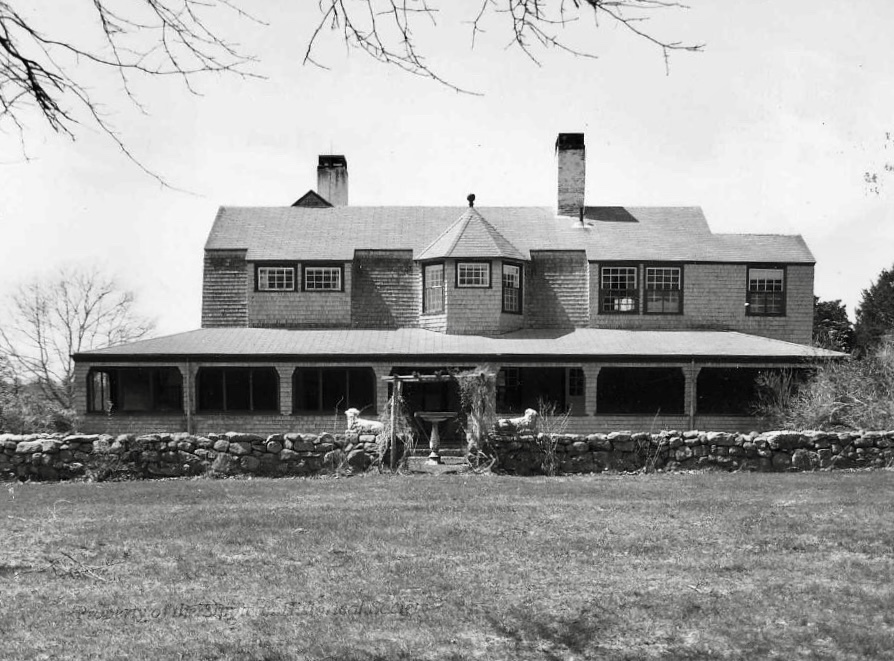
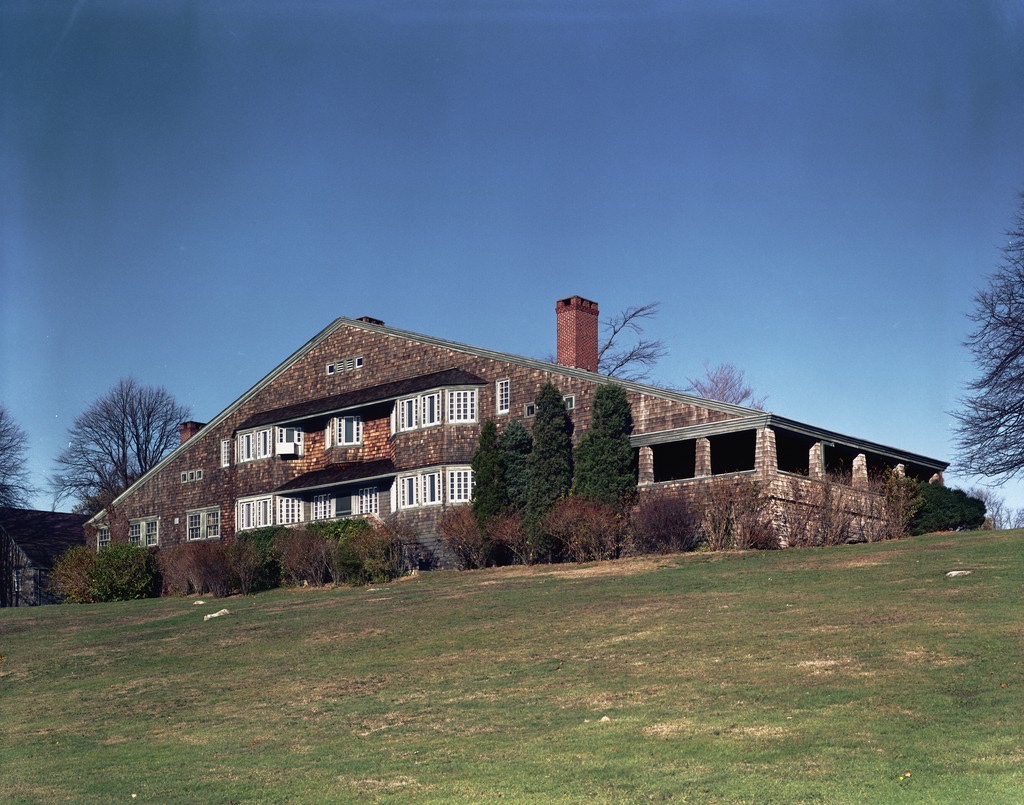
One of the many significant losses to American architecture is the demolition of the Low House, a perfect encapsulation of the Shingle style of architecture by one of the most prolific designers in American history. The William G. Low House was constructed at the southern tip of Bristol, Rhode Island by esteemed architect Charles Follen McKim (my personal favorite) of the firm McKim, Mead & White. The Shingle style, which took off in the Northeast United States, primarily in seaside communities in the late 20th century, the homes of the style often had a strong horizontal emphasis. The style contrasts the other Victorian-era styles, de-emphasizing applied decoration and detailing in favor of complex shapes wrapped in cedar shingles. The Low House, formerly located on Low Lane, stood out for its 140-foot long gable which appeared to protrude right from the hilly outlook. The home was demolished in 1962, but was documented by the Historic American Buildings Survey program, which documented the home inside and out before it was a pile of rubble. Architectural historian Leland Roth later wrote, “Although little known in its own time, the Low House has come to represent the high mark of the Shingle Style”.
Located just south of Portland Head Light, on the rocky ocean shore of Cape Elizabeth, is the settlement called Delano Park, a group of summer cottages, many of which were designed by iconic Maine architect John Calvin Stevens. Arguably the most significant and interesting is this Shingle style cottage, completed in 1886 for Charles A. Brown of Portland as a summer home. The cottage, sits atop a fieldstone foundation that are the very color of the ledges out of which the building grows. The walls above the are of shingle, “untouched by paint, but toned a silvery gray by the weather” as Stevens noted in his writings. Stevens was a master in siting his designs perfectly into the existing landscaping, and by covering all of the home with shingles, Stevens created an unembellished, uniform surface, which celebrates the honesty of its form. The home originally had a wood shingle roof, finished with a green stain. The home remains extremely well preserved by the owners and showcases the Shingle style of architecture brilliantly.
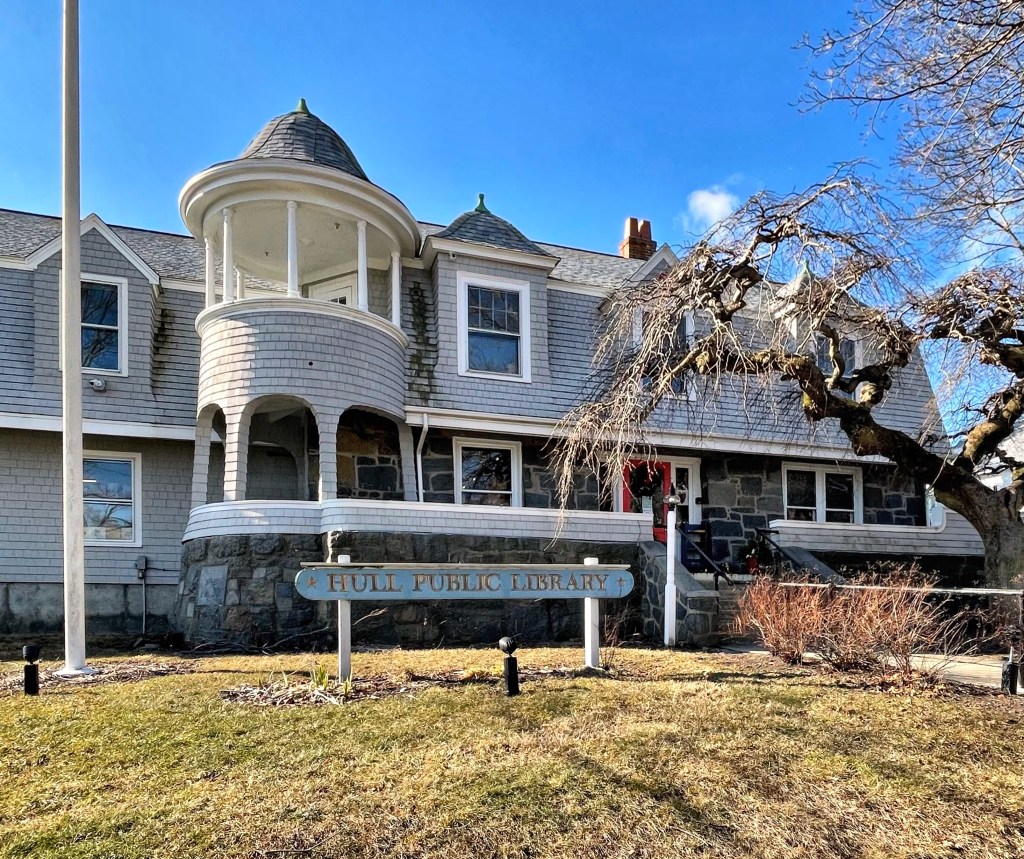
“We must not be Irish or African, or black or white. Not in America. We are gathering here … not to build up any petty community but to make the greatest nation and the strongest brotherhood that God ever smiled upon.”-John Boyle O’Reilly. This home (now the Hull Public Library) replaced the old Hunt House, which was the first parsonage of Hull, which was built around 1750. John Boyle O’Reilly, an Irish-American poet, journalist, author and activist bought the Hunt House in the 1870s and soon after demolished it as he felt it could not be salvaged. There are books about O’Reilly’s life story, so I recommend checking out his Wikipedia page. He constructed this house as a summer home by 1879, an excellent example of an early Shingle-style home. I cannot locate the architect, but am dying to learn! In the summer of 1890, O’Reilly took an early boat to his residence in Hull, Massachusetts from Boston. He had been suffering from bouts of insomnia during this time. That evening he took a long walk with his brother-in-law hoping that physical fatigue would induce the needed sleep.Later on that night he took some of his wife’s sleeping medicine and he apparently suffered an overdose of the medicine at this home, passing away at 46. Thousands of Bostonians mourned O’Reilly, and memorials were erected in the city, including the iconic 1896 John Boyle O’Reilly Memorial by Daniel Chester French.
Perched atop a seaside cliff on a neck jutting into the Atlantic ocean, this large summer cottage exhibits the rugged, yet enchanting character of the Maine coast. The house is part of the Cape Arundel Summer Colony and is one of the last built as part of the original period of development. The home was designed by Henry Paston Clark, a Boston architect who previously built a home on Cape Arundel and had summered there for years. His most notable design here is St. Ann’s Church, built for the summer residents of the area. The Bayberry Cove Cottage was built in 1915 for James Harrison and his wife and employed the use of cedar shingles, stone, and slate, to blend in with the rugged plot of land.


 Buildings of New England