Originally built in the Carpenter Gothic style in 1863, the Sawyer-Gillett Mansion in Whitingham, Vermont, is the highest-style house in town today. Indistinguishable from its Civil War-era original construction, the house was greatly expanded and altered into an elaborate take on Queen Anne / Shingle styles in 1914. The house was originally constructed by John W. Sawyer, but it was his son, Lincoln H. Sawyer who renovated the house and etched his name “L.H. Sawyer” on the glass of the new front door. The updated house style reflects a nostalgic Victorian preference by the owner, who sawed all the trim and materials on site at the family sawmill. It was recently sold and is now a B&B!
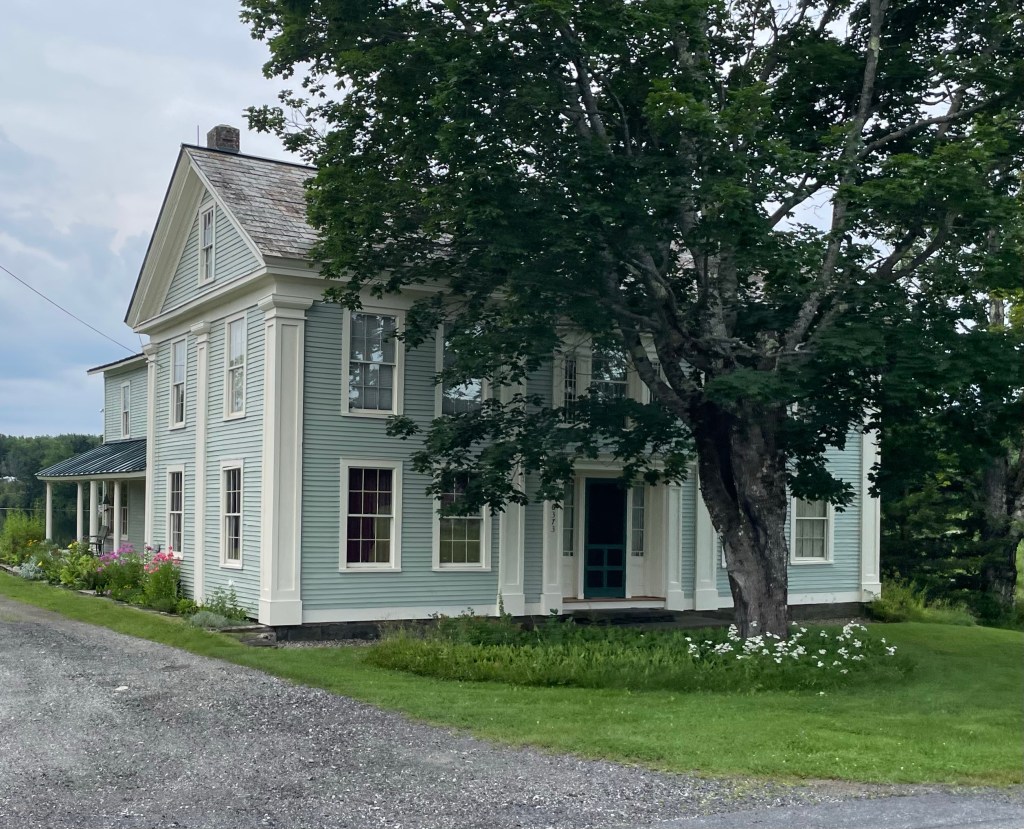
The main part of this stunning Greek Revival house in Whitingham, Vermont was built by Reuben Winn around 1840 and was originally located on the town common, southeast of the present village of Whitingham. The building was the only one to be moved from the hill to the valley as development shifted westward to the current town center and its access to water power for industry. This house was moved in 1889 and was run as the Sadawga Lake House hotel by Charles E. Putnam who also was listed in local directories as a slate dealer. The present slate roof was likely added by Putnam! The architectural element which stood out to me was the three part Palladian window directly above the front door that uses the motifs of the Greek Revival pilasters and entablature common to the other façade elements. The home is very well-preserved and even maintains a detached barn on the property!
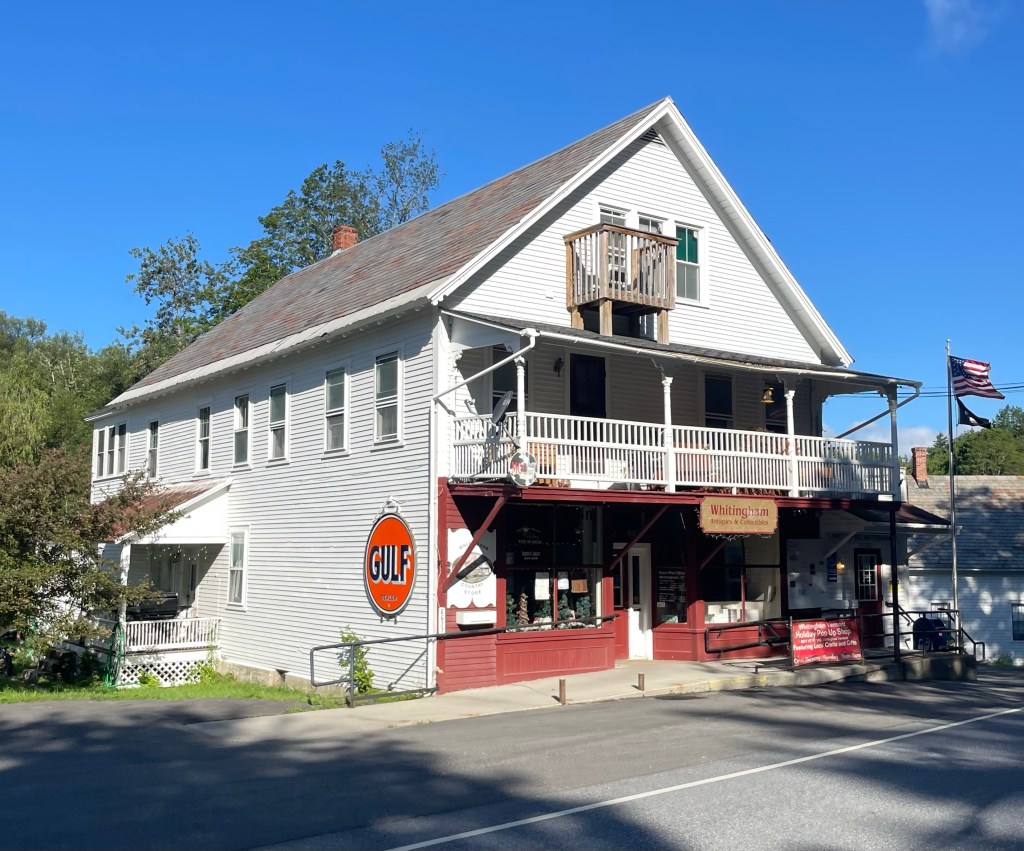
To me, Vermont is synonymous with Vernacular architecture. The state obviously has high-style and architect-designed buildings all over, but the character of the state (to me) is based around local builders, local materials, and local traditions. The patchwork of towns and villages in Vermont all have one thing in common, at least one general store. These buildings serve as an informal meeting place or community center where residents and visitors alike can hear the local gossip and events taking place. The general store in Whitingham, Vermont is located in the middle of the village, perfect for stopping in. The building was constructed in the first decade of the 20th century, replacing a former hotel/tavern on the site. The late-folk Victorian style store exhibits some decorative columns and storefronts, likely produced at one of the working lumber mills in town at the time. The store was originally built by Arthur and Carl Wheeler as the “Wheeler Brothers Store” but after 15 years changed hands and became the “F.W. Jillson & Son Store”. Since then, the Jillson’s opened up an antique store in the building which serves as a multi-use facility (collectively as a country store). Keep it local Vermont!
Tucked away on a dirt road in rural Whitingham, Vermont, the Amos Brown House sits among fields of tall grass, bounded by historic stone walls and rows of apple trees planted centuries ago. I was lucky enough to be able to stay at the Amos Brown House this past weekend and it was everything I could have imagined…and more! The property is owned and managed by the Landmark Trust USA, a nonprofit organization based in southern Vermont that preserves and restores historic properties through creative and sustainable uses for public enjoyment, education and inspiration. In the past, I stayed at the Kipling Carriage House, another charming property. The Amos Brown House is thought to be the oldest house in Whitingham, Vermont, and is a well-preserved example of a Federal style brick farmhouse in this part of the state. The telescoping ells of a summer kitchen, barn, chicken house, and shed showcase how farms would grow over time to serve the needs of these families in the undeveloped wilderness of New England. By the time of The Landmark Trust USA’s acquisition of this property in 2000, the house had seriously deteriorated. Inappropriate repairs and alterations in the 1960s and 1970s had weakened the brick walls, leading to severe cracking and small areas of collapse. They underwent a massive restoration of the property inside and out, and it remains an absolute treasure in the state to this day.
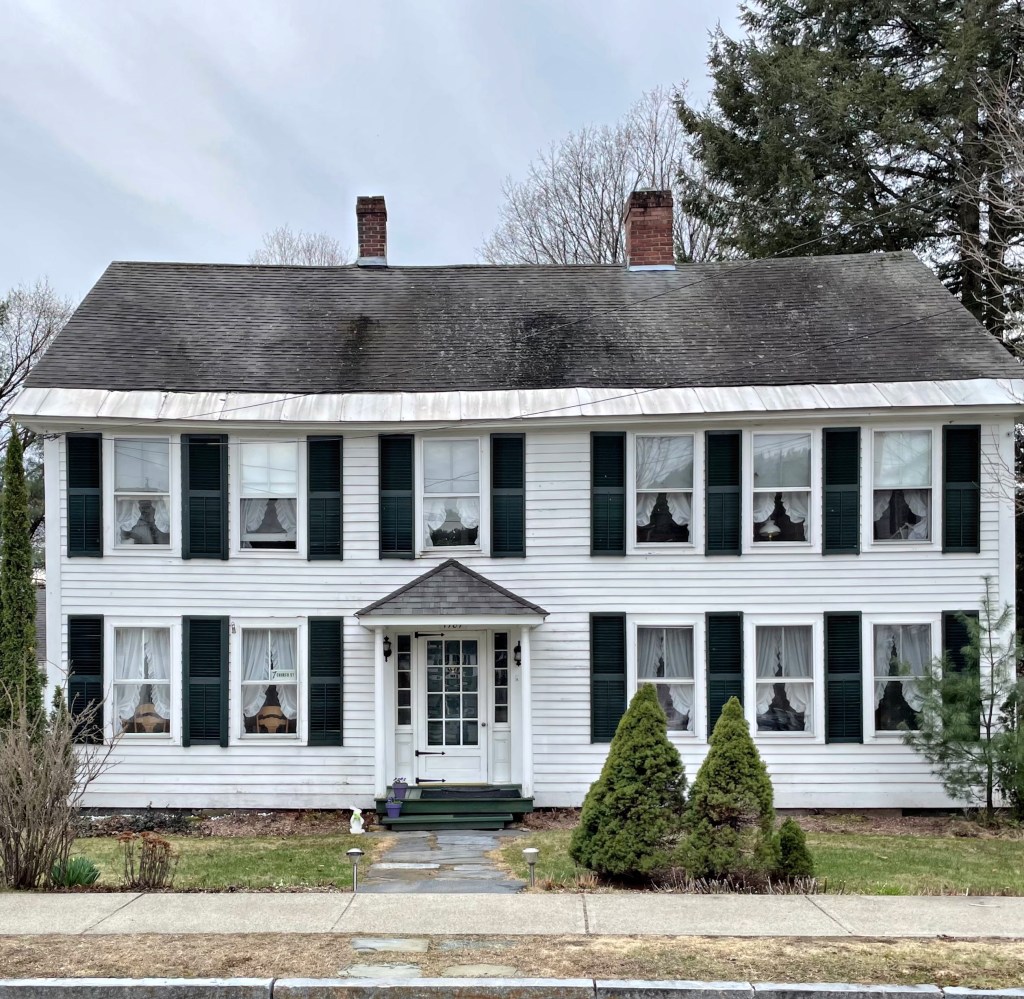
Among the earliest buildings in Newfane, this plain two-and-a-half-story, wood-framed and clapboarded gable-roofed house was constructed on its original site on Newfane Hill in 1787 to serve as the county jail. When the residents in town found that living on a hill in winter was less than ideal, much of the town relocated to the flat of town. In 1825, this building was dismantled and moved to its present site. With a new jail being built already, this building was reconstructed as the residence of Anthony Jones, an early resident and businessman. During the middle decades of the century (c.1840-1880), the house served as the Congregational Parsonage for the adjacent church.
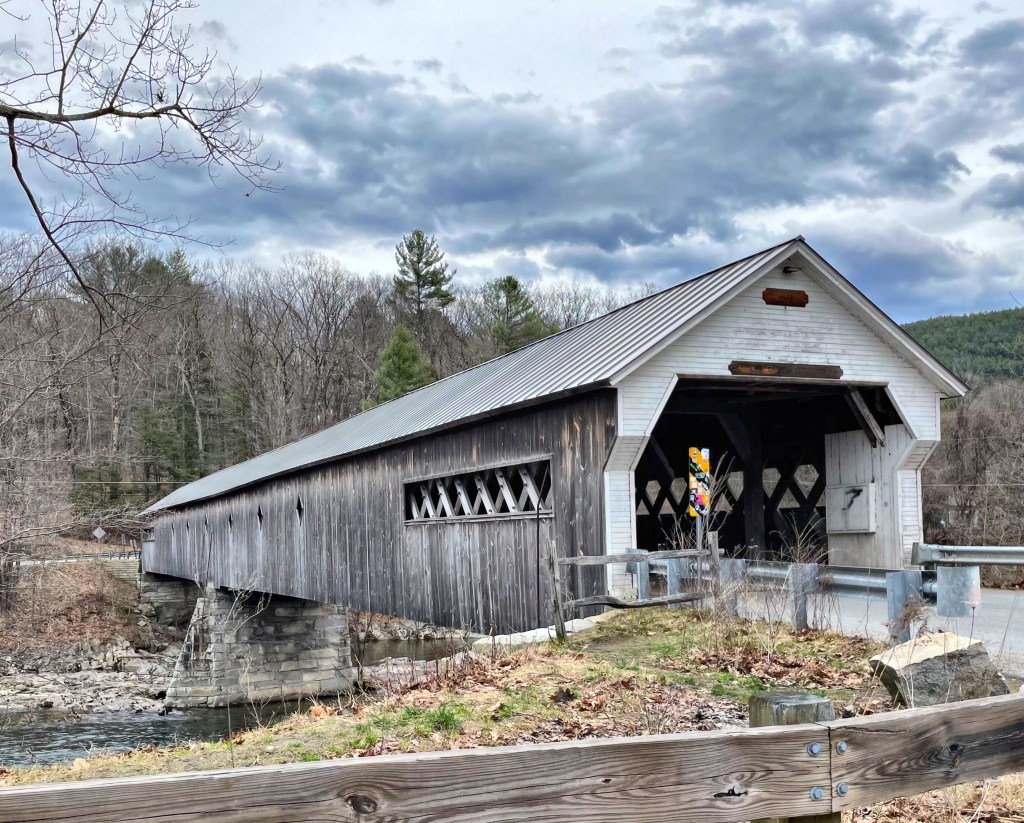
Oh covered bridges, one of the many symbols of New England that always give me joy when I see them! This beauty was constructed in 1872 to span the West River in Dummerston, Vermont and is the longest that is wholly within the State of Vermont. The bridge was designed by Caleb B. Lamson, a master carpenter and the bridge is the only known bridge built by Lamson that survives. Vermont is significant for covered bridges as about one hundred bridges still stand in the state, which is probably the greatest concentration by area of covered bridges in the nation. A reason we have to thank Vermont for this is purely population. With more people living in the state, transportation demands change, and these bridges are often replaced with modern steel structures. Keep doing you Vermont!
Brookline, Vermont is home to just 540 people but has one of the most beautiful brick churches in the state! The Brookline Baptist Church sits along a quiet road in town and is an excellent example of vernacular Gothic Revival architecture in the Vermont. Brookline’s first organized church congregation were Baptists, who established a formal organization in 1785 out of local homes and barns. By 1836, enough funds were gathered to erect a church, but of brick, a more substantial building material than traditional wood-frame buildings. The church remained active throughout the nineteenth century, and the vestry addition was constructed off the rear in 1895 to provide space for community gatherings and meals. Dwindling membership led the church to become mostly used for weddings, funerals, graduation ceremonies, and craft fairs by the second half of the 20th century. The Town of Brookline presently owns the significant structure, and while preserved, it does not appear to get much use.




 Buildings of New England