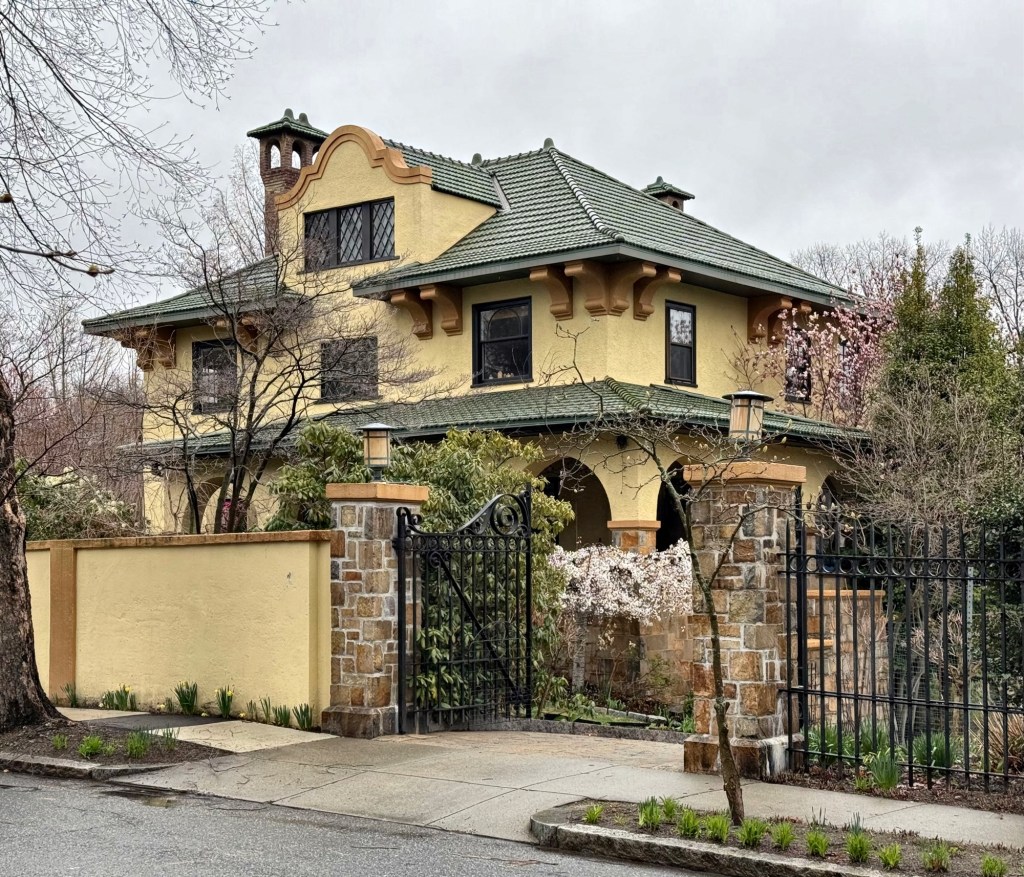
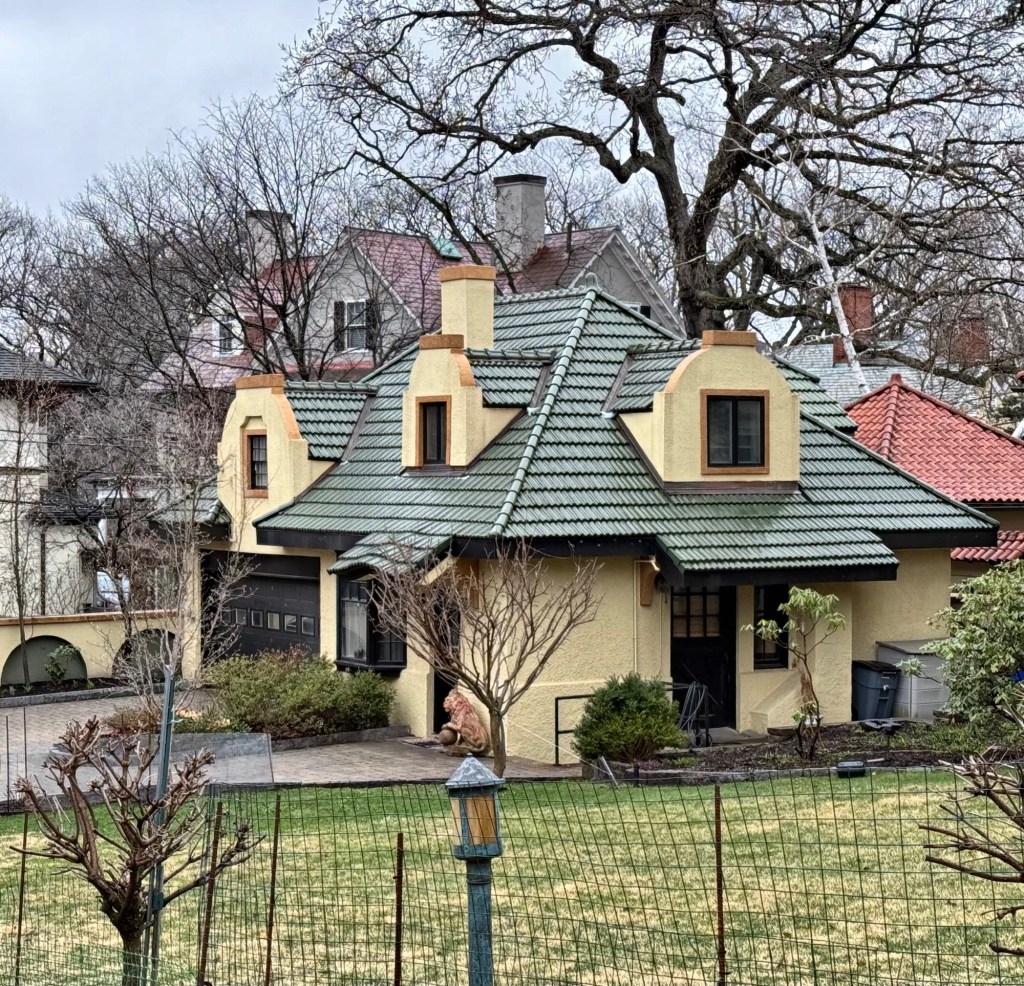
Louis C. Page House // 1906

As Paul Hunt, the son of famous painter, William Morris Hunt, and the nephew of famed architect Richard Morris Hunt, built his house in Brookline, Massachusetts, he also began constructing this neighboring property which was to be sold upon completion (that is one good way to pick your neighbors!) On an oversized lot on Powell Street, Paul Hunt worked with his architect, Milton W. Stratton of Bar Harbor, to furnish plans for a similar style home to his own next door. The Mission Revival style mansion is set behind a tall, stucco and metal fence, and is constructed of wood and covered with stucco siding and capped by a lovely green tile roof. Main architectural details include the Mission-style dormer and the chimneys with round arched tops that are capped with small hipped roofs, creating a whimsical addition to the house. When finished, the property was sold to Louis Coues Page (1869-1956), a wealthy publisher with offices in Boston. Louis C. Page would hire local architect Edward B. Stratton, in 1916, to design a detached automobile garage in a style mimicking the main house. What an incredible property. 
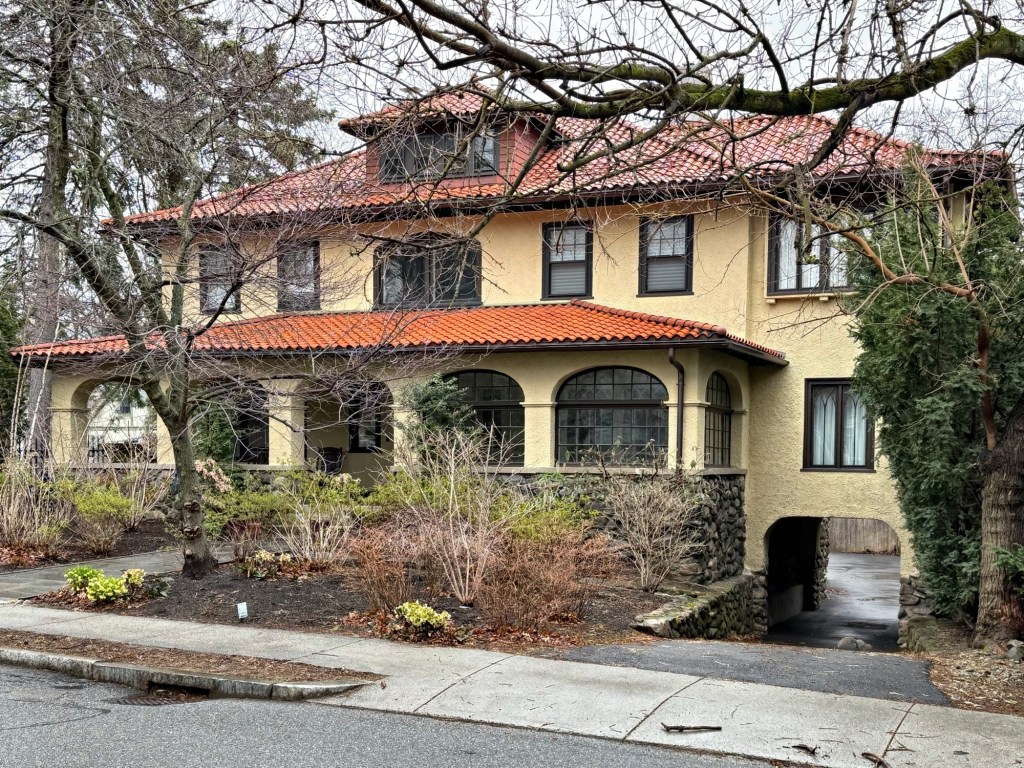
Paul and Caroline Hunt House // 1905

Paul Hunt, the son of famous painter, William Morris Hunt, and the nephew of famed architect Richard Morris Hunt, built this house in Brookline, Massachusetts for $15,000 for him and his wife, Caroline. Paul had been involved in real estate development in Bar Harbor, Maine, where his mother had a summer cottage, and while not an architect himself, he was very interested in design and took a keen interest in developing estates with the family funds. While developing property in the summer enclave of Bar Harbor, Maine, Paul met the Bar Harbor architect, Milton W. Stratton, and the two collaborated in the construction of houses there and two adjacent homes in Brookline. The two-story house is wood frame construction with a stucco finish on the exterior. Spanish Colonial Revival in style, the roof is hipped with terra cotta tile, as is the roof of the verandah which extends across the facade. In 1911, Paul Hunt worked with architect William Ewing Harding to add the two-story wing on the side of the house, which is built over the driveway, creating a really unique (though not as functional) design element. 

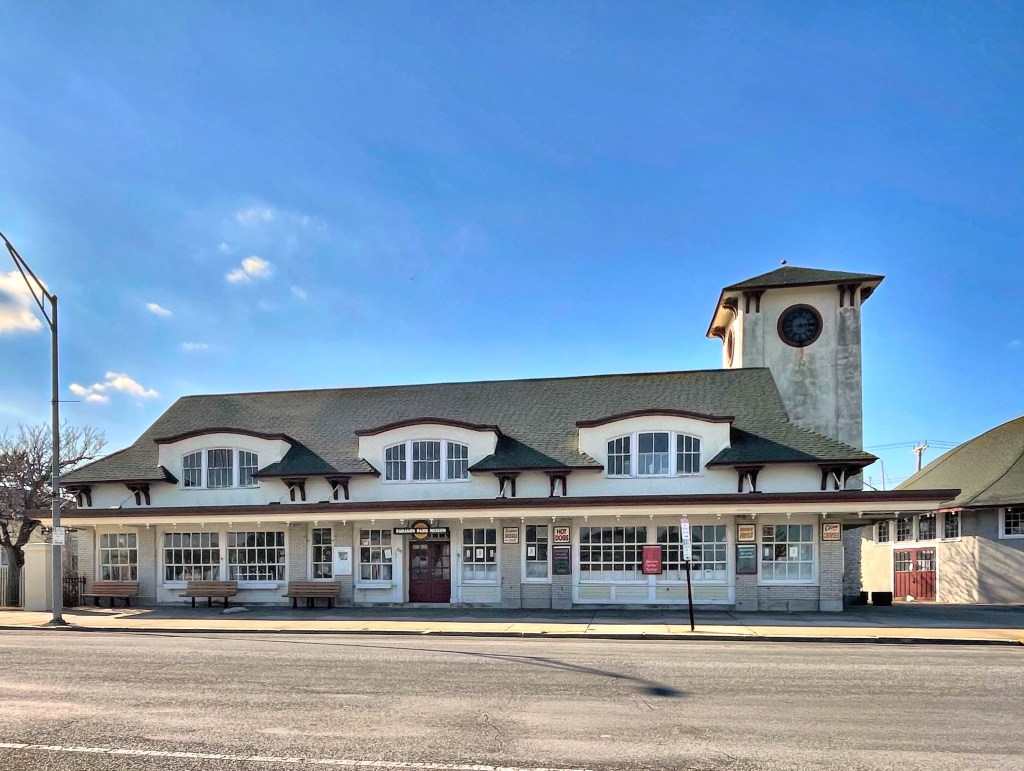
Nantasket Beach Waiting Room // 1903

The area of Nantasket Beach in Hull was in the late 19th century, a hotbed of taverns, thievery, and brothels. To counter this, the Metropolitan Park Commission of Greater Boston acquired about 25 acres at Nantasket, which included roughly one mile of shoreline extending north from Atlantic Hill in 1900. The initial appropriations provided for only minimal facilities, such as a bathhouse and a few incidental buildings, one of which was a waiting room for those arriving or departing from the new railroad station (since demolished) at the beach. The MPC hired the Olmsted Brothers landscape architects to design the paths and landscaping for the new park, and they worked with architects Stickney & Austin who designed many of the early buildings. Stickney & Austin designed this stucco-clad building with clock tower to provide shelter from the elements and summer sun for visitors of the reservation. The building is a blending of the Arts and Crafts and Spanish Revival styles, both common at the beginning of the 20th century. The building now houses the Paragon Park Museum, after they relocated the Paragon Park Carousel next door to this building.

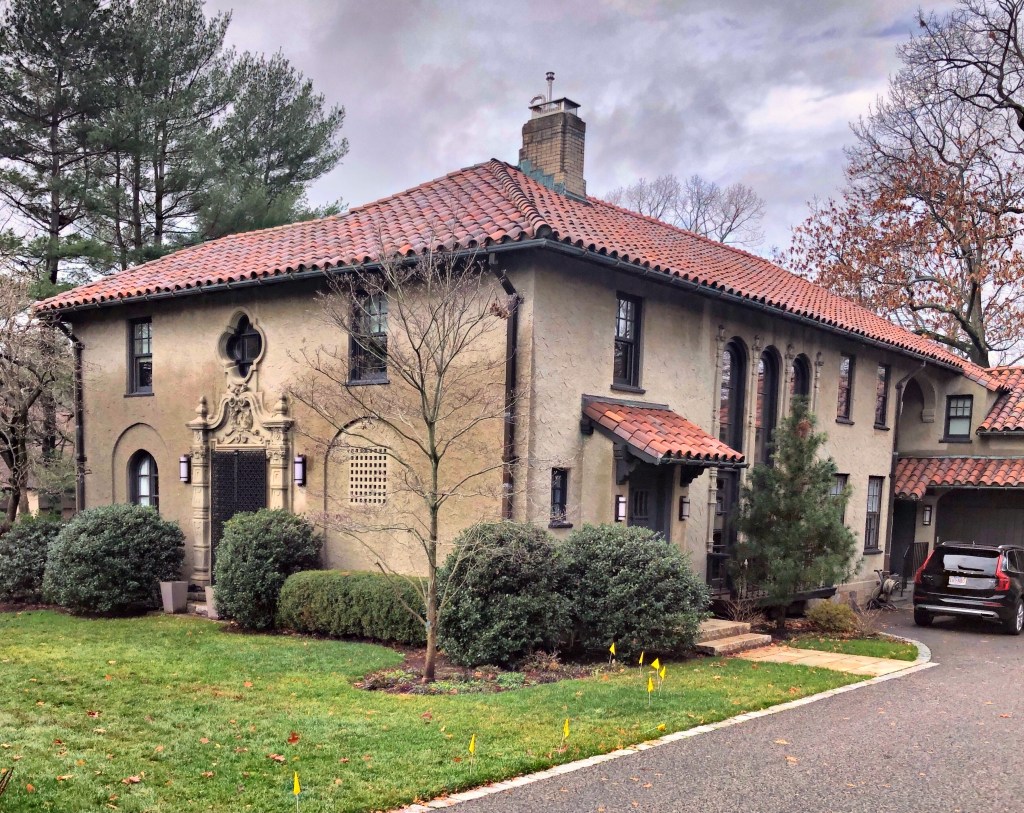
“Puddingstone” // 1927

Located across the street from Larz Anderson Park and the former Larz Anderson Estate, this stunning Spanish Revival home, built in 1927, was constructed as a guest house for visitors of Larz and Isabel Anderson. Between 1925-29 the Andersons constructed three guest houses outside the estate on Goddard Avenue. The designs were intended to call to mind places the Anderson’s had visited. “Puddingstone”, was named for a nearby outcropping of puddingstone on the Anderson estate, and was modeled after a house the couple had seen in Santa Monica, California. The Andersons used the buildings occasionally as guesthouses for relatives or friends who came for long stays at Weld, especially when Larz and Isabel were not in residence there. But for the most part, the houses remained empty and it was only after Larz’s death in 1937 that Isabel disposed of them. She donated them to Boston University for use as the Brookline Campus, who in turn, sold them off as private residences years later. Built in a Spanish Colonial style, it features a red terra cotta tile roof, adobe-colored stucco walls, and a center entrance framed by an elaborate cast stone surround in a Spanish Baroque style. To the right of the front door, a clathri (grid/lattice in architecture) over a window can be found in a blind arch.

.